Your Case for Support Guide to Win Funding in 2026
Learn how to write a compelling case for support that wins grants and inspires donors. Our guide covers core components, templates, and common pitfalls.

Abdifatah Ali
Co-Founder
You’re staring at a grant deadline, a board member just asked for “a stronger donor message,” and a funder meeting is on your calendar for tomorrow. You know your organization does important work. The hard part is saying why it matters, why your team is the right one to do it, and why someone should invest now.
That pressure hits a lot of nonprofit leaders. The problem usually isn’t lack of mission. It’s lack of a single, clear, reusable argument that holds everything together.
That argument is your case for support.
A good case for support isn’t just a document you write once and file away. It’s the strategic core of your fundraising. It gives shape to your grant proposals, donor conversations, campaign materials, and board talking points. When your team has it, fundraising gets more consistent. When your team doesn’t, every new ask starts from scratch.
Your Nonprofit's Most Powerful Fundraising Asset
A new executive director often thinks the next funding win depends on writing one great proposal. Then the next deadline appears. Then a donor asks for a one-page overview. Then a board member needs language for an introduction. Soon the team is rewriting the same story five different ways.
That’s exhausting, and it leads to uneven messaging.
A strong case for support solves that problem. It gives your nonprofit one central narrative about the need you address, the change you create, and the resources required to keep going. Instead of inventing your pitch every time, you adapt from a solid base.
Think of it as the master version of your fundraising story. Your appeal letter borrows from it. Your grant narrative pulls from it. Your campaign brochure echoes it. Even your verbal pitch in a donor meeting should sound like a live version of the same core case.
That matters because donors respond to both feeling and proof. Case statements with compelling narratives are 30% more likely to receive donations compared to those leading with statistics alone, according to the Institute for Philanthropy summary cited here. Story opens the door. Evidence helps someone walk through it.
Practical rule: If your team can’t explain your mission, impact, and urgency in a way that sounds consistent across channels, you don’t have a messaging problem. You have a case-for-support problem.
This is also where brand clarity helps. If your organization struggles to describe its voice, values, and public identity, a practical companion is this nonprofit branding guide. A case for support becomes much easier to draft when your message already has a recognizable tone.
The leaders who raise money steadily usually aren’t the ones improvising best under pressure. They’re the ones who built a dependable foundation first.
What a Case for Support Is and What It Is Not
The easiest way to understand a case for support is this. It’s the business plan for your mission.
Not in a corporate sense. In a practical one.
A business plan explains what an organization does, what problem it addresses, why its model works, and what resources it needs to succeed. A case for support does the same thing for a nonprofit. It organizes your reason for existence into a form that other people can understand and back.
What it is
At its best, a case for support is an internal source of truth. It brings together your mission, the community need, your program model, your evidence of impact, your credibility, and the resources you need. It helps staff, board members, consultants, and volunteers speak from the same script, even when they use different words.
It also answers the questions supporters often ask, even if they don’t ask them directly:
- Why does this issue matter now
- Why is your organization equipped to respond
- What change will support make possible
- Why should anyone trust your team with this investment
If those answers live only in one staff member’s head, your fundraising is fragile. If they live in a documented case for support, your fundraising becomes teachable and repeatable.
What it is not
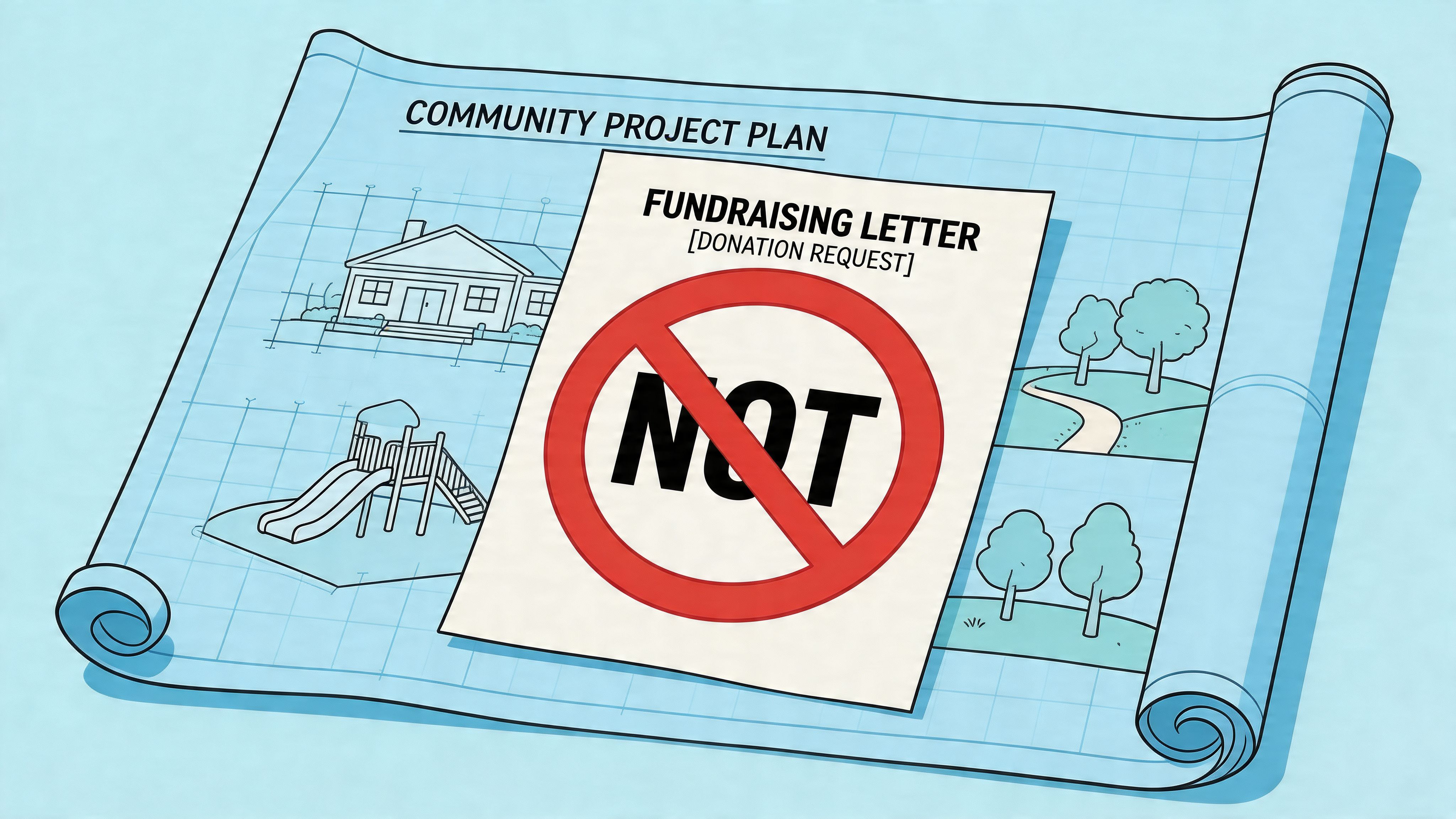
A case for support is not your grant proposal.
A grant proposal is designed for one funder, one opportunity, and one set of guidelines. The case for support sits underneath it. It gives you the raw material.
It’s also not your annual report, website homepage, campaign brochure, or donor letter. Those are outputs. The case is the engine.
Here’s a simple way to separate them:
| Document | Main job |
|---|---|
| Case for support | Defines the full argument for investment |
| Grant proposal | Adapts that argument to one funder’s requirements |
| Donor appeal | Distills that argument into a clear ask |
| Annual report | Reports what happened and reinforces trust |
| Brochure or webpage | Introduces the organization and invites interest |
People often get tripped up here because these materials overlap. They should overlap. But they don’t play the same role.
A brochure attracts attention. A proposal answers a funder. A case for support does the deeper work of holding your reasoning together.
Why that distinction matters
When teams mistake a case for support for a piece of outward-facing collateral, they usually make one of two mistakes. They either make it too polished and shallow, or too narrow and funder-specific.
A useful case for support can be longer, more detailed, and more candid than a donor-facing piece. It should contain working language, evidence, key messages, and supporting details your team can pull from later. Think of it as the kitchen, not the plated meal.
That’s why the strongest fundraising teams treat it like a living reference document. They update it as programs evolve, leadership changes, evidence improves, and community needs shift.
The Five Core Components of a Powerful Case
Most weak cases for support fail for one reason. They skip one of the load-bearing parts.
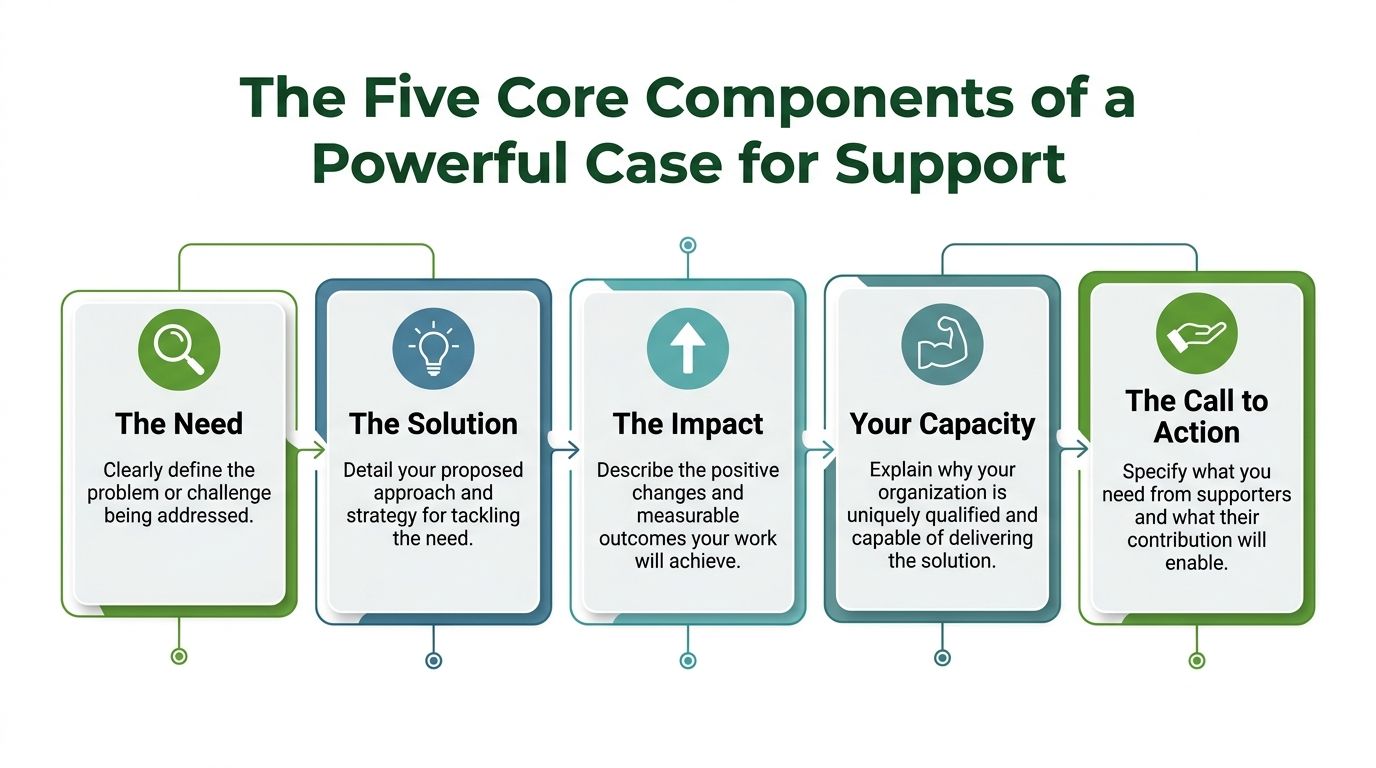
A persuasive document needs more than passion. It needs a clear structure. I like to build from five components: the need, the solution, the impact, your capacity, and the call to action. If one is missing, the whole case feels wobbly.
This visual captures the basic anatomy.
The need
Start with the problem your community faces. At this stage, many teams become too broad or too abstract.
“Children struggle in school” is true, but it’s too general. A stronger version names the challenge in a way your audience can picture: students are falling behind in reading, families can’t access after-school support, teachers are stretched, and the gap grows year after year.
For a fictional literacy nonprofit, that might sound like this:
In our city, too many elementary students leave the school day still needing reading support, but their families often can’t afford tutoring or transportation to extra help.
That sentence gives shape to the issue. It also invites urgency without relying on jargon.
If you’re working through this section, a useful companion is this guide to writing a statement of need. Many organizations find that once the need is defined well, the rest of the case becomes much easier to draft.
The solution
Once the reader understands the problem, explain how your organization responds. Keep this grounded. Avoid broad or vague declarations like ‘support’. Describe what you do.
For the literacy example:
- Program model: Volunteer tutors work with students after school in small groups.
- Access approach: Sessions happen at neighborhood schools so families don’t need extra transportation.
- Family connection: Caregivers receive simple reading tools to use at home.
Notice what changed. The solution moved from a slogan to an operating model.
A common confusion point lives here. Leaders sometimes think the solution section should list every program the nonprofit runs. It shouldn’t. It should focus on the approach most relevant to the funding conversation. If your case tries to carry every activity equally, readers won’t know what matters most.
The impact
It shows what changes because your work exists. It’s the bridge between intention and results.
You don’t need a mountain of data to write this well. You do need evidence that your method produces real change. Describe outcomes in language a funder or donor can follow. If your organization has stories, use them. If you have program evidence, use that too. The strongest cases blend both.
Donors rarely fund activity alone. They fund the change they believe the activity will create.
This is also the place to be specific about project details when you have them. Cases with quantified project details, like specific budget needs, raise 40% more in capital campaigns than those with vague goals, according to Kindsight analysis summarized here. That’s a useful reminder that clarity isn’t a cosmetic choice. It affects fundraising performance.
So instead of saying, “We need support for our learning center,” say what that support enables. New reading materials. Staff time. Family workshops. Expanded tutoring slots. Concrete beats cloudy every time.
Your capacity
Some people call this credibility. I prefer capacity because it reminds you to prove not only that your mission matters, but that your team can deliver.
This section should answer, “Why you?” What experience, community trust, staffing, partnerships, or operational discipline makes your organization a good steward of support?
For the literacy nonprofit, capacity might include:
- Program experience: The team has run after-school literacy support for several years.
- School partnerships: Principals invite the program back because it fits the school day and family schedules.
- Operational discipline: Staff track participation, tutor training, and student progress in a consistent way.
You don’t need to sound boastful. You do need to sound reliable.
Many nonprofits underwrite this section emotionally and overwrite it administratively. They either skip it or drown it in board lists and internal history. The goal is simpler. Show that your organization has the judgment and infrastructure to carry out what it promises.
The call to action
A case for support should end with a clear invitation. Not a vague hope. A real ask.
You state what resources are needed and what those resources will make possible. If you need unrestricted support, say why flexibility matters. If you need funding for a specific project, describe the project plainly. If there are multiple ways to invest, organize them so the reader can follow the options.
For the literacy nonprofit, a clear call to action might say that support will expand tutoring access, strengthen family reading engagement, and equip staff to sustain quality across school sites.
That’s much stronger than “Please consider a gift.”
A quick test for completeness
Before you finalize your draft, ask these five questions:
- Can a stranger understand the problem after one read?
- Can they explain what your organization does?
- Can they see evidence of change, not just effort?
- Can they tell why your team is credible?
- Can they identify what support is needed right now?
If the answer to any one of those is no, keep revising. A powerful case for support doesn’t need fancy language. It needs all five parts working together.
Drafting Your Foundational Case for Support
Most nonprofit leaders sit down to write a case for support too early. They open a blank document, type the mission statement, and hope momentum will carry them. It usually doesn’t.
A better process starts before the writing.
Gather your raw material first
Treat this as a team project, not a solo assignment.
Before anyone drafts paragraphs, collect the building blocks that will make the writing credible and efficient. That usually includes program descriptions, impact notes, recurring donor questions, budget summaries, client stories you have permission to use, strategic priorities, and language from recent proposals that already worked well.
Create one working folder or shared document with that material. If your evidence is scattered across annual reports, board decks, staff notebooks, and old grant files, your writing will sound scattered too.
Useful inputs often include:
- Program notes: What services do you deliver, and how do they work in practice?
- Impact evidence: What results or signs of progress can you responsibly point to?
- Financial context: What resources are needed, and what will they support?
- Stakeholder perspective: How do staff, board members, and community partners describe the value of the work?
Involve the people closest to the work
A case for support gets stronger when program and fundraising voices meet. Development staff often know what funders ask. Program staff know what the work looks like in practice. Executive leaders know where the organization is going. Board members often know which points inspire confidence.
You don’t need a giant committee. You do need real input from more than one angle.
Try a simple working session with prompts like these:
| Prompt | Who can answer it best |
|---|---|
| What community problem feels most urgent right now | Program staff |
| What do supporters consistently respond to | Development staff |
| What future are we trying to build | Executive leadership |
| Why should donors trust us to deliver | Board and senior staff |
Working advice: If your case for support sounds polished but oddly generic, it probably came from one department instead of the whole organization.
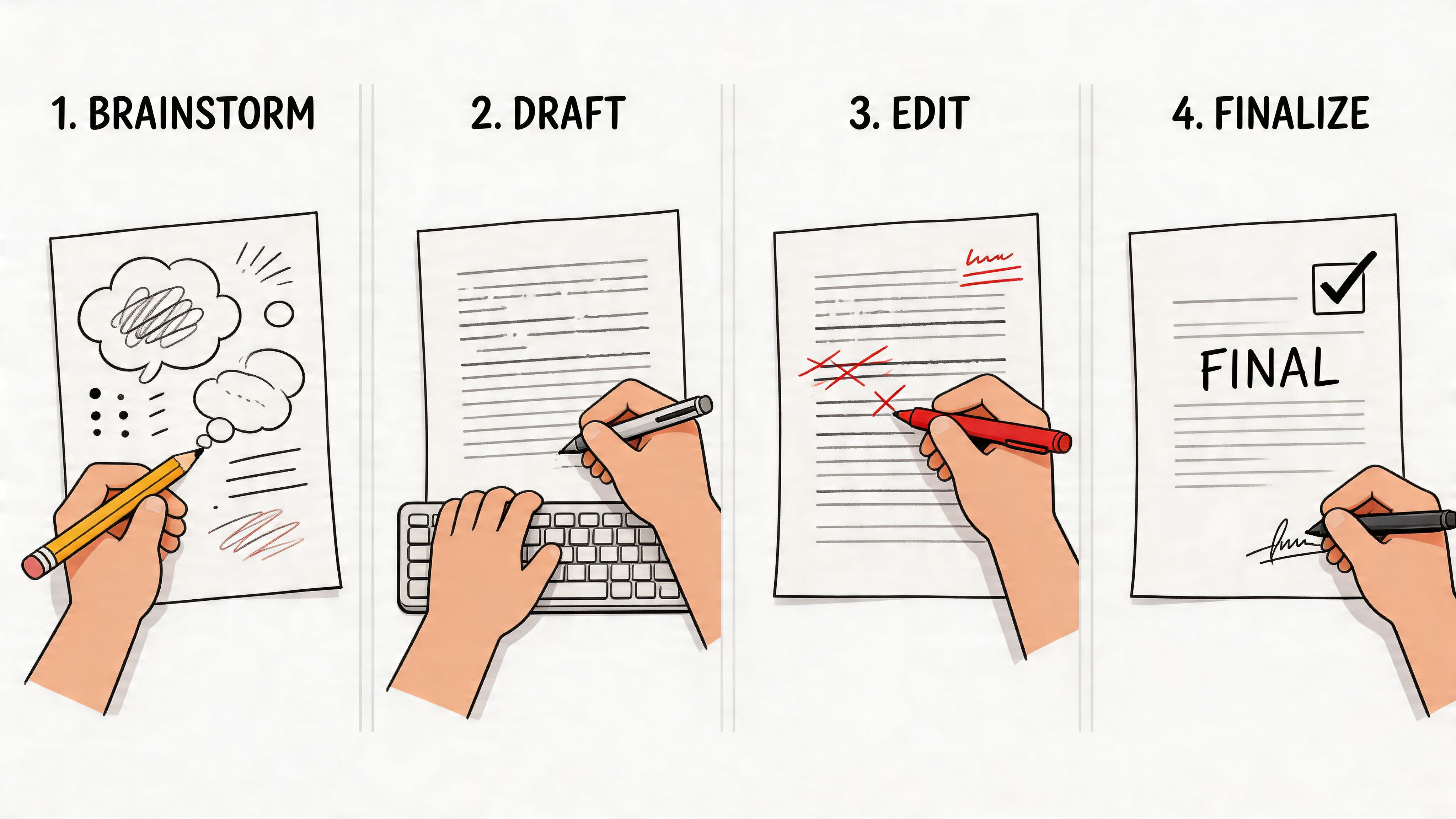
Draft in layers, not all at once
Start with bullets. Then shape paragraphs.
I often recommend this sequence:
- Write the core claims first. One sentence each for need, solution, impact, capacity, and ask.
- Add proof under each claim. Include examples, short evidence points, and concrete details.
- Build the narrative. Turn the strongest material into a readable story.
- Trim repetition. Most first drafts say the same thing three times in different language.
This approach keeps the draft from becoming flowery and unfocused. It also makes review easier because colleagues can react to substance before they argue over wording.
If your team struggles to express outcomes clearly, this guide on how to write impact statements can help sharpen the language before it lands in the final case.
Revise for clarity and reuse
The final draft should be clear enough to guide many future uses. That means it needs more discipline than a one-off appeal.
As you revise, test each section against real fundraising use:
- For grants: Can this language support outcomes, activities, and budget logic?
- For donor meetings: Can someone say this out loud without sounding scripted?
- For campaign materials: Are the key phrases short enough to reuse in smaller formats?
One practical editing move is to read it aloud. If a sentence feels hard to say, it will also feel hard to remember.
Another is to ask a colleague outside fundraising to read it and answer three questions: What problem do we solve, how do we solve it, and what do we need? If they hesitate, the draft still needs work.
Treat it like a living document
Your first approved version isn’t the finish line. It’s the foundation.
Programs evolve. Priorities shift. Evidence gets stronger. Staff language changes. A healthy case for support gets reviewed regularly so it reflects the organization you are now, not the one you were two years ago.
That habit matters because the document’s real value isn’t in existing. Its value is in being ready when opportunity appears.
Tailoring Your Case for Grants Versus Donors
One of the biggest mistakes I see is sending the same message to everyone with only minor edits. A solid case for support gives you a core argument, but it should never go out untouched. Different audiences look for different kinds of confidence.
That doesn’t mean changing your mission. It means changing emphasis.
For grantmakers, the case usually needs tighter logic. They want alignment, feasibility, and a direct connection between need, activities, outcomes, and budget. For individual donors, especially major donors, the same case often needs more emotional texture, a stronger sense of vision, and a clearer picture of what their giving makes possible.
Adapted cases increase win rates by 25% in competitive federal funding cycles, and campaigns supported by thorough cases achieve 20 to 30% higher donor conversion rates, according to CCS Fundraising. That’s a strong argument for adaptation instead of copy-paste fundraising.
Tailoring your message grantmaker vs. individual donor
| Element | Focus for Grantmakers | Focus for Individual Donors |
|---|---|---|
| Need | Define the problem clearly and connect it to the funder’s priorities | Make the problem human and immediate |
| Solution | Show program design, logic, and fit with the opportunity | Show vision, meaning, and why your approach matters |
| Impact | Emphasize outcomes, evidence, and accountability | Emphasize changed lives and tangible difference |
| Capacity | Highlight operational readiness, partnerships, and stewardship | Highlight trust, leadership, and belief in the mission |
| Ask | Tie funds to deliverables and use of grant dollars | Tie giving to possibility, legacy, and personal investment |
What grantmakers usually need to see
Grantmakers often read with a checklist in mind. They may not know your organization well. They need to understand the fit quickly.
That usually means your customized version should:
- Mirror the opportunity language: Reflect the funder’s stated goals and required terms where appropriate.
- Sequence information logically: Need, approach, implementation, outcomes, and budget should line up.
- Reduce extra storytelling: A story can help, but it can’t replace a clear explanation.
This is where researching your audience becomes surprisingly useful. While that resource comes from a different context, the core lesson applies well to fundraising. You get stronger results when you understand how a specific audience thinks, what they care about, and how they make decisions.
What individual donors usually need to feel
Individual donors don’t ignore evidence, but they often respond first to meaning. They want to know why this work matters, why now, and what role they can play in making change happen.
A donor-specific version often works better when it:
- Leads with a vivid human stake: Show what’s at risk or what becomes possible.
- Frames support as participation: Help the donor see their gift as part of the solution.
- Leaves room for conversation: Not every donor communication needs every operational detail.
A grantmaker may ask, “Does this program fit our guidelines?” A donor may ask, “Do I believe in this enough to join you?”
Keep one core, build many versions
The easiest way to manage this is to maintain one foundational case and create audience-specific derivatives. Think of the master document as the full pantry. Each audience-specific piece becomes a different meal.
That mindset keeps your messaging consistent while allowing enough flexibility to meet the moment. It also saves your team from rewriting the core argument every time a new opportunity arrives.
Common Pitfalls That Weaken Your Case
Even experienced teams fall into a few predictable traps. The tricky part is that these mistakes often sound reasonable while you’re drafting. They only become obvious when a reader feels confused, unconvinced, or unmoved.
Trap one using insider language
Every field has shorthand. Your staff may know what a multi-tier intervention framework or integrated service delivery model means. A donor probably won’t.
The escape route is simple. Write as if you’re speaking to an intelligent outsider who cares about your cause but doesn’t know your vocabulary yet. Replace internal terms with plain language, or explain them the first time they appear.
For example, instead of “participants receive tiered literacy intervention,” say “students receive reading support matched to their current skill level.”
Trap two centering the organization instead of the need
A weak case often sounds like this: “We need a new space. We need more staff. We need updated systems.”
Those things may be true. But they focus the spotlight on the organization’s discomfort rather than the community’s need.
A stronger version flips the lens. The new space matters because families need a reliable place to receive services. More staff matter because waitlists are keeping people from getting help. Updated systems matter because they improve delivery and follow-up.
Reality check: Funders rarely give because an organization wants something. They give because a community needs something and the organization can deliver it.
Trap three burying the main point
Some drafts spend three paragraphs on history before getting to the actual issue. Readers shouldn’t have to dig for the point.
Lead earlier. State the need and your response near the top. Background can support the case, but it shouldn’t delay the reason for reading.
A quick fix is to ask, “What do I most need this reader to understand in the first minute?” Put that near the beginning.
Trap four making claims without enough support
Statements like “our program transforms lives” aren’t persuasive on their own. They may be heartfelt, but they don’t give the reader much to trust.
The solution isn’t to overstuff the document with data. It’s to back important claims with concrete examples, program logic, or documented results. When possible, connect claims to observable changes. If you say your approach works, show how you know.
Trap five ending with a fuzzy ask
Many cases are strong until the final paragraph, where the language gets polite and vague. “We invite you to join us” sounds warm, but it doesn’t tell the reader what support is needed.
A stronger ending names the investment and what it enables. Clarity builds confidence. It shows your team knows what it’s asking for and why.
A simple self-edit checklist
Before you circulate your case for support, review it for these warning signs:
- Too much jargon: Would a new board member understand it easily?
- Too much “we” language: Does the document keep returning to community benefit?
- Too slow to the point: Does the need appear early enough?
- Too many broad claims: Have you shown, not just told?
- Too little direction: Can the reader tell what kind of support you want?
A strong case doesn’t avoid complexity by becoming simplistic. It handles complexity with clear language and disciplined choices.
Bringing Your Case to Life with Fundsprout
A case for support is only valuable if your team can use it. That’s where many nonprofits get stuck. They create a thoughtful draft, save it somewhere, then lose time rebuilding pieces of it for each grant, donor meeting, and renewal cycle.
That’s why it helps to think of the case for support as a dynamic strategic asset rather than a static file. It should be searchable, adaptable, current, and ready to deploy.
Fundsprout is built around that kind of workflow. Instead of treating fundraising as a series of disconnected writing tasks, the platform helps nonprofits manage the full lifecycle of their core messaging.
Here’s how that maps to the work covered above:
- Finding the right fit: Fundsprout scans funding opportunities daily and ranks them based on your programs, geography, and capacity.
- Structuring the response: The RFP Analyzer turns funding requirements into organized outlines, so your foundational case can be adapted to a specific grant opportunity without losing the thread.
- Drafting with consistency: The Writing Assistant uses your uploaded documents and impact data to generate narrative sections in your organization’s voice, which is especially helpful when multiple staff members contribute.
- Keeping versions straight: Version control helps teams manage specific cases for different funders, donors, and renewals without creating a mess of conflicting files.
- Supporting claims with evidence: Integrated impact data and citations make it easier to connect your narrative to documented results and keep that information current.
- Managing follow-through: Planning tools, reporting workflows, and audit trails help carry the case beyond drafting and into submission, compliance, and renewal.
A case for support shouldn’t live in one person’s laptop. It should live inside the daily fundraising system your team actually uses.
For small nonprofits, that’s a capacity issue. For larger teams, it’s a coordination issue. In both cases, the challenge is the same. The work isn’t just writing a good case once. It’s maintaining and applying that case every time opportunity appears.
If you want a simpler way to turn your case for support into stronger grant proposals, funder-specific narratives, and a more organized fundraising workflow, explore Fundsprout. It helps mission-driven nonprofits find relevant funding, build compliant proposals faster, and keep their core messaging usable from first application through renewal.
Try 14 days free
Get started with Fundsprout so you can focus on what really matters.