A Grant Seeker's Guide to The Booth Ferris Foundation
Unlock funding with our complete guide to the Booth Ferris Foundation. Learn about their mission, priorities, and how to craft a winning proposal in NYC.

Abdifatah Ali
Co-Founder
The Booth Ferris Foundation, a private grantmaker established back in 1957, has been a cornerstone of support for nonprofit organizations across New York City for nearly seven decades. Their focus is clear: strengthening the city's communities and cultural institutions, primarily through strategic investments in capital and capacity-building projects.
Understanding The Foundation's Legacy And Mission

Before you even think about writing a proposal, you need to get inside the mindset of the Booth Ferris Foundation. Don't just see them as a source of money. Think of them as a deeply committed partner who is invested in the long-term health of New York City’s nonprofit world. To really get them, you have to look at their history—it’s the key to understanding their funding philosophy.
The foundation was born from the wills of Willis H. Booth and his wife, Chancie Ferris Booth. This isn't just a fun fact; it's the very foundation of their mission. Willis Booth was a major figure in banking and civic life, and his passion for building strong, stable institutions is baked into the foundation's DNA. This explains their strong preference for projects that build an organization's strength for the long haul.
A Legacy of Sustained Impact
Knowing this history helps you frame your request in a way that resonates. The foundation isn’t interested in a quick fix or a temporary program. They're looking for partners whose projects will deliver a lasting return on investment for the communities they serve. And they practice what they preach.
Since its beginning, the Booth Ferris Foundation has made a remarkable philanthropic impact, contributing more than $425 million to organizations making a difference.
This incredible history of giving shows a deep, unwavering commitment to New York City. Even in recent years, their support hasn't slowed down. In 2026 alone, the foundation distributed over $10.5 million. It's clear they continue to be a pillar of support for NYC nonprofits.
Aligning Your Story with Theirs
This historical context is the "why" behind their funding decisions. It sets the stage for you to connect your organization's story with their enduring mission. When you grasp their origins and see their financial stability, you recognize them as a dependable funder dedicated to strengthening New York from the ground up.
This insight is your biggest asset for crafting a compelling narrative. For more on this, you might find our guide on securing foundation grants for nonprofit organizations helpful. Your goal is to show them that your project isn't just a one-time ask, but a strategic move toward greater resilience and impact—exactly the kind of vision the Booth family would have supported.
Decoding The Core Funding Priorities
To really get what the Booth Ferris Foundation is all about, you have to see their grants as strategic investments, not just charitable handouts. They aren't looking to pay for a single program's fuel for one trip. Instead, they want to invest in your organization's engine, making sure it runs stronger and more efficiently for years to come. This core philosophy is the thread connecting their two main funding areas.
Their grantmaking is split neatly into two categories. While each has a unique goal, they both share a laser focus on strengthening the very fabric of New York City.
Strengthening NYC Communities
This is the foundation’s broadest program area, aimed at organizations in the education and human services sectors. But here’s the crucial part: they typically don’t fund the day-to-day delivery of your services. They want to reinforce the structure of your organization itself, so you can do what you do best, but better.
Think of your nonprofit as a ship. The Booth Ferris Foundation isn't paying for the cargo (your programs). They’re funding improvements that make the ship more seaworthy—things like a new navigation system, a stronger hull, or better training for the crew.
In the nonprofit world, this translates to projects that build organizational capacity and improve infrastructure.
- Technology Upgrades: This could be implementing a new CRM to better manage your donors and volunteers.
- Infrastructure Projects: Think renovating a facility to expand your reach or serve clients more effectively.
- Strategic Planning: Need to hire a consultant to help your leadership chart a course for long-term growth? This is it.
- Staff Development: Funding professional development that gives your team critical new skills falls right in their wheelhouse.
The key is showing how a one-time investment will generate lasting returns. You need to connect the dots for them, explaining how upgrading your "engine" will lead to greater impact or enhanced sustainability long after the grant money is spent.
The Booth Ferris Foundation is interested in the “how” behind your mission. A winning proposal will clearly show how a specific, time-bound project will permanently upgrade your organization's ability to operate and serve the community.
Arts And Culture
The foundation’s support for Arts & Culture follows a very similar principle of promoting long-term stability. They know that NYC's cultural institutions are essential to the city's identity and economy, and their goal is to help these organizations thrive, not just survive.
So, instead of funding a single performance or a specific exhibit, they are far more interested in projects that secure an institution's future. This often means initiatives focused on ensuring the sustainability of the organization or expanding the reach of its cultural programs to a wider, more diverse audience. If you come to the table with a clear, strategic project, your chances go way up. You can learn more about how to find winnable grants that match your organization's readiness.
For instance, a museum might get a grant to digitize its collection. This not only makes its art accessible to a global audience but also opens up new potential revenue streams. A theater company might receive funding for a capital campaign to renovate its historic building, making it more welcoming for patrons and more energy-efficient.
In both of these examples, the investment strengthens the organization at its core, setting it up for a more secure and impactful future.
Figuring Out Grant Sizes and Who Qualifies
Before you pour your heart and soul into a grant application, it’s critical to know if you’re even in the right ballpark. Think of it as checking the height requirement before getting in line for a ride. For the Booth Ferris Foundation, understanding their typical grant sizes and strict eligibility rules is the first step, and it can save you a world of effort.
So, let's talk numbers. The foundation isn't about small, one-off grants; they aim for substantial, targeted support. While awards can range anywhere from $4,100 to $260,000, most grants land in the $75,000 to $150,000 per year sweet spot. In a recent year, they awarded roughly $9.3 million to over 170 organizations, with funding that can be a single check or a multi-year commitment. To get a real feel for their funding habits, it's worth taking a look at detailed information on recent Booth Ferris Foundation grants.
The Non-Negotiable Eligibility Rules
The foundation's rules are refreshingly clear, but they are firm. Don't even think about drafting a Letter of Inquiry until you can confidently check these two boxes.
Geographic Focus: Your organization must be based and operating within one of the five boroughs of New York City. This is their absolute, first-line screening criteria—no exceptions.
Nonprofit Status: You need to have a valid 501(c)(3) tax-exempt status from the IRS.
This flowchart is a great way to visualize whether your project will even get past the front door. You have to fit into one of two specific lanes: NYC Community Impact or Arts and Culture.

If your work doesn't align with one of those two tracks, this isn't the right funder for you.
One more crucial rule to remember: the foundation requires a three-year gap between the end of one grant period and a new application. If your last grant from them wrapped up two years ago, you'll need to wait another year before you're eligible to apply again.
This isn't just an arbitrary waiting period. It gives organizations the runway to see their funded project through to completion and demonstrate real, lasting impact before coming back to the table.
Booth Ferris Foundation Grant Profile At A Glance
To help you quickly size things up, we've pulled the most important details into one place. This table summarizes the key financial and logistical details for applicants, providing a quick reference for grant size, cycle, and frequency.
| Metric | Details |
|---|---|
| Typical Grant Size | $75,000 - $150,000 per year |
| Geographic Scope | New York City (Five Boroughs Only) |
| Eligibility Status | 501(c)(3) Public Charity |
| Application Frequency | A 3-year gap is required between grants |
This data is your strategic filter. If you're outside NYC, need funding less than three years after a previous grant, or are seeking an award under $50,000, then the Booth Ferris Foundation probably isn't the best fit right now. Grant seeking is all about strategy, and putting your energy toward funders that are a perfect match is always the smartest move.
How To Frame Your Project For Success
Knowing what the Booth Ferris Foundation funds is just the first step. The real art is in how you ask. This foundation isn't interested in simply keeping the lights on; they want to help you build a stronger, more resilient organization from the ground up.
Think of it this way: they’d much rather help you buy a new, bigger oven for your community kitchen than pay for the flour for this week’s bread. That means requests for general operating support—like covering an existing salary—are almost always dead on arrival. Your job is to show them how their grant is an investment, not just an expense.
Shifting From Operations To Investments
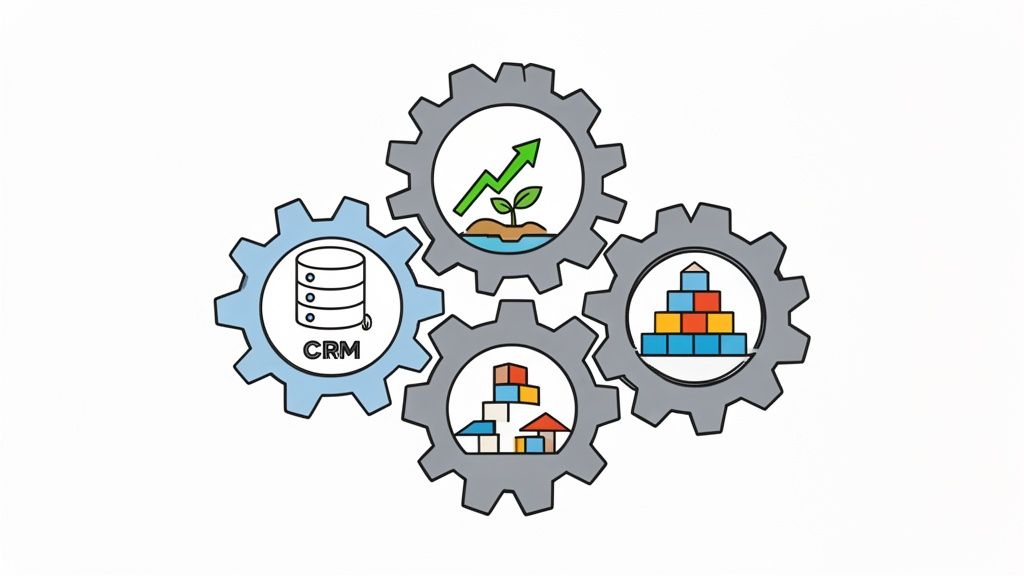
The trick is to reframe your needs as either a capital project or a capacity-building initiative. These are specific, one-time projects that create lasting value, making your organization more effective long after the grant money is gone.
Let's break that down. Asking for money to pay a program director's salary is an operational cost. But asking for a grant to install a new CRM system that helps you track donors and automate outreach? That's a capacity-building investment. The first covers a recurring bill; the second gives you a powerful tool to raise more money for years to come.
Here are a few ways to think about this shift:
Instead of: "Funding for our marketing manager's salary."
Try framing it as: "A one-time grant to develop and launch a new digital outreach strategy, complete with the tools and training to triple our online donor base."
Instead of: "Support for our after-school program."
Try framing it as: "A capital grant to overhaul our learning center with modern tech, allowing us to serve 50% more students each year."
The Booth Ferris Foundation wants to see a straight line from their check to your organization’s future growth. You need to make a clear case for the return on their investment. Show them how this single grant will make you stronger, more efficient, and more sustainable.
Crafting A Powerful Letter Of Inquiry
Your first real test is the Letter of Inquiry (LOI). This is your chance to make a great first impression by showing you’ve done your homework. It’s not a full-blown narrative; it’s a sharp, compelling pitch. For more on this, check out our guide on writing a persuasive statement of need.
Your LOI needs to get to the point, and fast. Right away, signal that you’re seeking a capital or capacity-building grant that will have a lasting impact. Use direct language to explain the problem you're solving, how your project is the solution, and what the long-term, measurable results will be. Getting this framing right from the very beginning is what gets you invited to submit a full proposal.
A Practical Approach to Your Booth Ferris Application
Knowing the ins and outs of a funder like the Booth Ferris Foundation is one thing. Actually turning that knowledge into a polished, efficient application is a whole different ballgame, especially when dealing with a highly competitive grantmaker. This is where a smart platform like Fundsprout can become an indispensable part of your toolkit, turning a potentially overwhelming task into a clear, step-by-step process.
Think of it as having a grant-writing co-pilot. Instead of manually cross-referencing your project against the foundation’s priorities for hours on end, you can quickly confirm your alignment. This simple check ensures you’re pointed in the right direction from the very start.
Nail the Basics: Eligibility and Requirements
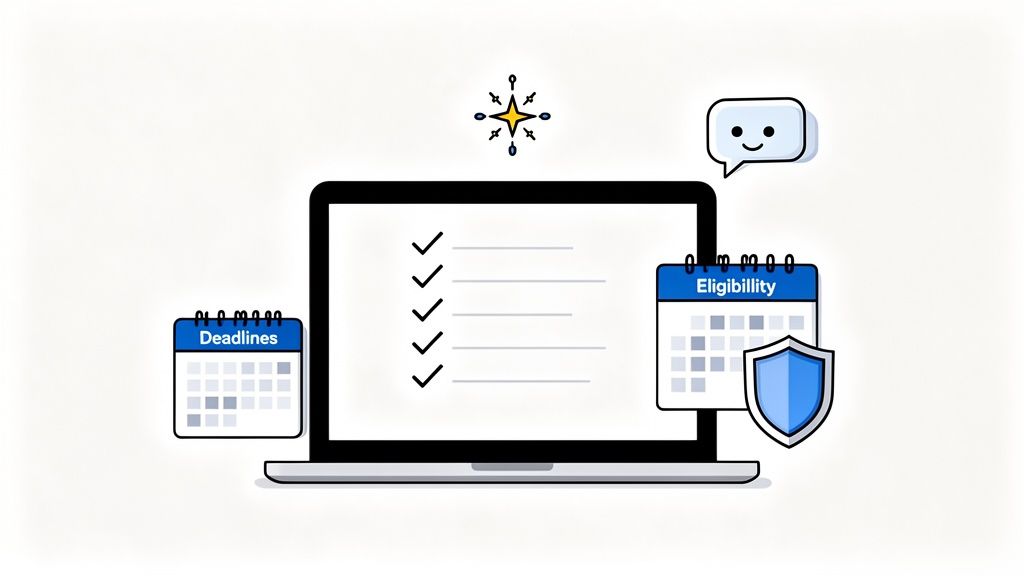
Let's be honest, the first and biggest hurdle is always eligibility. An AI-powered tool can be your first line of defense here. It can instantly screen your nonprofit against the Booth Ferris Foundation’s non-negotiable criteria—like its strict NYC-only geographic focus and 501(c)(3) status. This quick check prevents the all-too-common mistake of wasting precious time and energy on an application that’s dead on arrival.
Once you’ve confirmed you’re a fit, the next step is tackling the Letter of Inquiry (LOI). A tool like Fundsprout can break down the LOI guidelines into a simple, actionable checklist. It essentially deconstructs the process into smaller, more manageable tasks, making sure you hit every single point the foundation's reviewers are looking for in that critical first impression.
An AI assistant does more than just organize your to-do list; it helps you build a more powerful story. It can review your project's description and suggest phrasing that really emphasizes its capacity-building elements—precisely what the Booth Ferris Foundation wants to fund.
Crafting a Narrative That Connects
Writing a proposal that truly speaks the foundation's language is where the magic happens. This is where an AI writing assistant can really prove its worth. By looking at your organization's existing materials—past proposals, annual reports, program notes—it quickly learns your unique voice and style.
From there, it can help you draft sections of your LOI that powerfully frame your project as a strategic investment, not just another request for operational funds. This ensures your proposal for the Booth Ferris Foundation is positioned for maximum impact, dramatically improving your chances of getting invited to submit a full application. It gives you a clear, practical path toward securing the funding your work deserves.
Common Questions About The Booth Ferris Foundation
As you get serious about applying, the big-picture questions give way to the nitty-gritty details. Let’s walk through some of the most common sticking points we see from grant seekers looking at the Booth Ferris Foundation so you can move forward with confidence.
Can My Organization Apply If We Are Not In New York City?
Let's get this one out of the way first: no. The Booth Ferris Foundation has a hard-and-fast rule that it only funds organizations operating within the five boroughs of New York City.
This isn't just a guideline; it's a non-negotiable part of their mission to invest deeply in NYC's community fabric. If your work is based outside of the city, this funder won't be a fit, and it's best to focus your energy elsewhere.
Does The Foundation Fund General Operating Support?
This is a big one. While you can never say never, getting general operating support from the Booth Ferris Foundation is a long shot. They are very clear that their funding is almost exclusively focused on two specific areas:
- Capital Projects: Think large, one-time investments. This could be anything from a building renovation to new construction or buying a major piece of equipment that expands your capabilities.
- Capacity-Building Initiatives: This is all about strengthening your organization from the inside out. Projects might include crucial technology upgrades, hiring a consultant for strategic planning, or funding key staff training.
Essentially, they don't fund the "keeping the lights on" expenses like ongoing program costs or existing salaries. Your proposal needs to tell a story about a specific, time-bound project that will make your organization more effective for years to come.
The core question the foundation asks is: "How will this grant make the organization stronger in the long run?" Your application must provide a compelling answer to that question, demonstrating a clear return on their philanthropic investment.
We Received A Grant Two Years Ago. Can We Apply Again?
Not so fast. The foundation has a firm policy that you must wait three years after your previous grant period has officially closed before submitting a new application.
For example, if your last grant from Booth Ferris wrapped up in June 2023, you can't submit a new Letter of Inquiry until after June 2026. This gives your organization the time to really put their last investment to work and show what came of it before you ask for another. Make sure you check your records and time your next approach perfectly.
What Is The First Step In The Application Process?
Your journey starts with a Letter of Inquiry (LOI) submitted through their online portal. The foundation is very strict about this—they do not accept unsolicited full proposals, ever.
The LOI is your first and most important test. It's a short-form document where you introduce your organization, sketch out the project, and connect the dots to the foundation's priorities. If your LOI catches their interest, you'll earn an invitation to submit a full application.
Deadlines for the LOI are firm and usually land around March 1 and September 1. But remember, these dates can change, so always double-check the official Booth Ferris website before you start planning.
Trying to keep track of every funder's specific rules, like those for the Booth Ferris Foundation, can feel like a full-time job. That's where Fundsprout comes in. We help you cut through the complexity, from identifying funders that are a true match to helping you build a narrative that gets their attention. Our platform helps you confirm eligibility, structure your story, and stay on top of deadlines, freeing you up to focus on your mission. See how Fundsprout can help you secure your next grant.
Try 14 days free
Get started with Fundsprout so you can focus on what really matters.