Arthur Gilbert Foundation: Funding for Nonprofits 2026
Navigate the Arthur Gilbert Foundation's invitation-only process for nonprofits. Discover its mission, funding, and grant sizes.

Abdifatah Ali
Co-Founder
The Rosalinde and Arthur Gilbert Foundation is invitation-only and doesn't accept unsolicited grant applications. It still disbursed about $11.7 million in 2023 and $14.1 million in 2024 across 270+ awards, which means the primary challenge isn't filling out a form. It's getting known before an invitation is ever on the table.
That runs against the advice most nonprofits hear. Standard grant guidance says to find a match, study the guidelines, and submit a strong proposal. That works with open funders. It fails with closed-door foundations.
With the Arthur Gilbert Foundation, the practical question is different. You need to know whether your organization fits the foundation's mission, geography, and style of philanthropy well enough to justify a long game. If the answer is yes, your work shifts from application prep to visibility, trust, and network positioning. If the answer is no, the smart move is to stop chasing a foundation you can't access and redirect effort to funders that will review your materials.
An Introduction to the Gilbert Foundation
The first fact to keep in mind is simple. You can't cold-apply to this foundation. That changes how a nonprofit should evaluate the opportunity from day one.
The Rosalinde and Arthur Gilbert Foundation was established in 2002 in California and funded in 2003 through a merger with another foundation of the same name. It's a Los Angeles based independent foundation with EIN 56-2305694, and its stated mission is to invest in programs that promote education, tolerance, social services, healthcare, and the arts, according to the Foundation Directory profile for the Rosalinde and Arthur Gilbert Foundation.
That broad mission statement can mislead inexperienced grant seekers. On paper, it looks accessible because many nonprofits can fit somewhere inside those categories. In practice, broad mission language doesn't mean broad accessibility. A foundation can care about multiple issue areas and still keep the door mostly closed.
What matters before you spend time
Before anyone on your team drafts a case for support, check three things:
- Mission fit: Your work should clearly sit inside education, tolerance, social services, healthcare, or the arts.
- Geographic logic: The strongest prospects usually have a credible tie to the places and communities the foundation has historically cared about.
- Relationship pathway: If nobody in your network can plausibly connect your organization to the foundation's orbit, this isn't a short-term prospect.
Practical rule: Treat the Arthur Gilbert Foundation as a relationship target, not an application target.
What sophisticated nonprofits do differently
Strong development teams don't ask, “How do we apply?” They ask, “What would make this foundation hear our name from someone it already trusts?” That leads to better decisions.
It also avoids a common waste of time. Teams often pour energy into polishing an unsolicited inquiry that won't be read. A better use of that same effort is mapping aligned intermediaries, current grantee circles, board overlaps, and high-credibility introductions. With this foundation, access is part of eligibility even if it never appears in the formal mission statement.
The Legacy Behind the Foundation's Philanthropy
The Arthur Gilbert Foundation makes more sense when you understand the people behind it. This isn't just a capital pool with broad civic interests. It comes out of a family story shaped by immigration, entrepreneurship, collecting, and legacy.
The Gilberts immigrated to Los Angeles in 1949, built a successful real estate business, and assembled an art collection of over 800 pieces. After Rosalinde's death in 1995, Arthur permanently gifted the collection to Britain in 1996, and the collection later opened in new galleries at the Victoria and Albert Museum in 2009. A substantial portion of the Gilbert fortune was then given to the foundation to continue charitable work in California and Israel, as described in the donor profile on the Gilbert Foundation's philanthropic roots.

Why that history matters to applicants
Founders leave fingerprints on a foundation long after the original wealth transfer is complete. In this case, the fingerprints are visible in at least three ways.
- Cultural seriousness: The family's collecting history suggests a real respect for arts and cultural institutions, not a casual side interest.
- Place-based identity: Los Angeles isn't incidental. It sits at the center of the family's business and philanthropic life.
- Jewish and Israel-connected giving context: The continuation of charitable work in California and Israel tells you the foundation's worldview was never purely local.
That doesn't mean every proposal needs an art history lesson. It means your framing should feel grounded in the kind of legacy this family built. A shallow pitch that says “we serve youth” or “we provide services” won't carry much force with a funder tied to a long, values-driven philanthropic story.
The subtext behind the portfolio
When I review closed-door foundation prospects, I look for the narrative that explains why certain organizations get traction while others never do. With the Arthur Gilbert Foundation, that narrative likely rewards institutions and nonprofits that combine credibility, stewardship, and public benefit.
Foundations born from a family legacy often respond better to organizations that can show permanence, seriousness, and community trust than to organizations chasing a one-off project grant.
If your work connects culture, education, social need, or civic understanding in a way that feels durable, you're closer to the foundation's philanthropic DNA. If your request feels transactional, trendy, or disconnected from place, you're probably not.
Decoding the Foundation's Funding Priorities
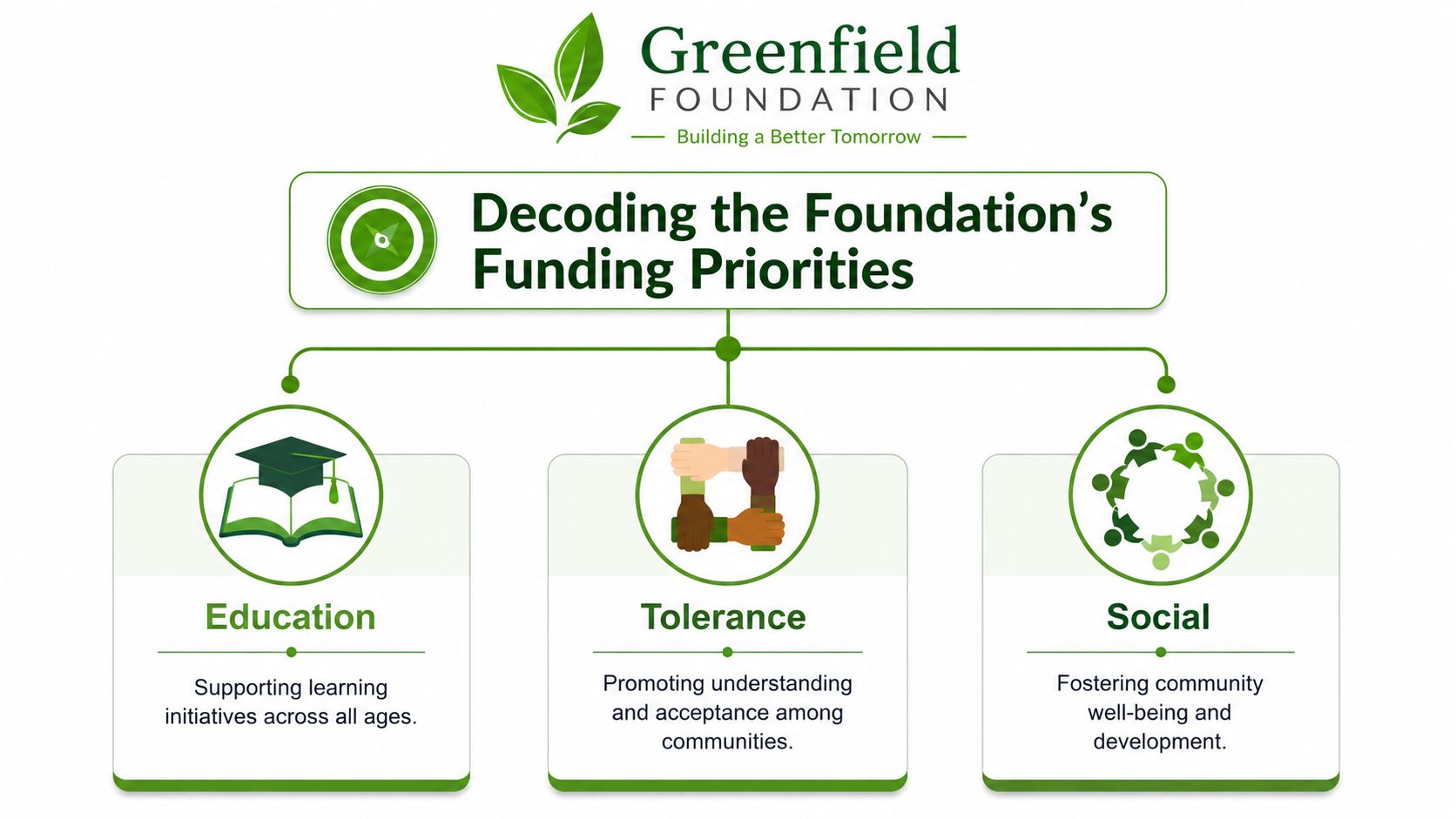
A broad mission only helps if you can translate it into a sharp yes-or-no decision. The Arthur Gilbert Foundation names education, tolerance, social services, healthcare, and the arts as its core areas. The mistake is assuming a loose fit is enough. With invitation-only funders, vague alignment doesn't hold up.
How to test your fit honestly
Use these five categories as a filter, not a wish list.
- Education: This is the easiest area for nonprofits to overclaim. General youth programming isn't automatically a match. Stronger candidates usually have a clear learning agenda, institutional credibility, and a defined community served.
- Tolerance: This word matters. It suggests work that reduces division, supports understanding across communities, or strengthens civic coexistence. If your program claims social impact but has no real bridge-building dimension, don't force it.
- Social services: This category can include direct service, family support, or community-based care. But broad human need alone won't separate you from many other organizations.
- Healthcare: Health-related nonprofits should show a concrete community role, not just a broad wellness narrative.
- The arts: Given the Gilbert family legacy, arts organizations should assume the bar is higher, not lower. Artistic quality, public access, and institutional stewardship likely matter a great deal.
For teams building a broader pipeline beyond one foundation, this guide to foundation grants for nonprofit organizations is useful because it helps separate true prospects from aspirational names that don't convert.
What usually works and what usually doesn't
Here's the practical distinction I'd use in a prospect meeting:
| Fit level | What it looks like |
|---|---|
| Strong fit | Established organization, clear alignment to one of the named priorities, visible work in relevant communities, respected leadership, and a believable path to warm introduction |
| Possible fit | Program fits the mission, but the organization is less visible or lacks a clear connection into the foundation's network |
| Weak fit | Mission language overlaps loosely, but geography, reputation, or relationship access is missing |
Screening question: If someone close to the foundation asked, “Why this organization?” could you answer in one sentence without stretching the facts?
If you can't, stop there. Closed-door funders rarely reward creative interpretation of fit. They reward obvious alignment.
Understanding Grant Sizes and Financial Scope
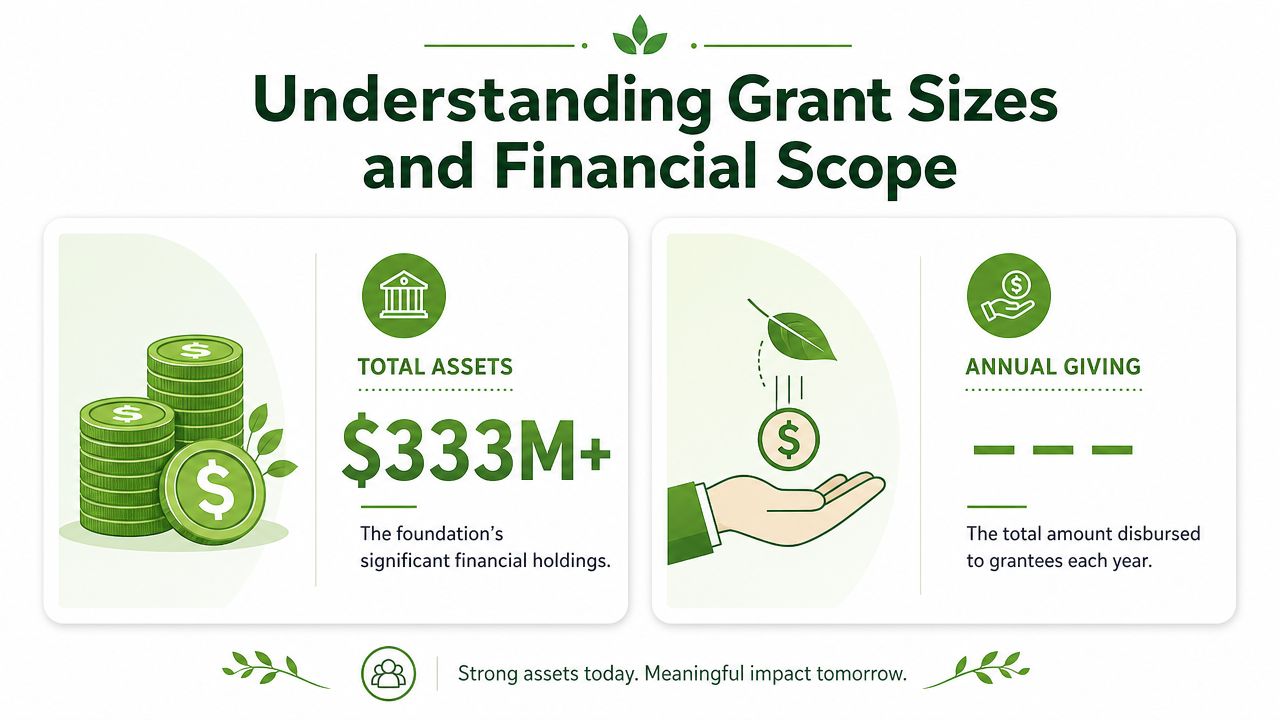
This is a large foundation by any practical nonprofit standard. Candid reports $24,564,043 in total revenue, $13,185,491 in total giving, and $333,977,820 in total assets, and ProPublica Nonprofit Explorer classifies the Rosalinde and Arthur Gilbert Foundation as a private independent foundation, as shown in the Candid profile for the foundation.
What private independent foundation status means in practice
For a grant seeker, “private independent foundation” isn't just a tax classification. It tells you something about behavior.
- Governance tends to be tighter: Decision-making often reflects board judgment, legacy priorities, and long-term stewardship.
- Grantmaking can be selective: These foundations don't need open competitions to meet their goals.
- Asset preservation matters: A large endowment-backed funder can give consistently while still protecting principal over time.
That profile often produces a funding style that values trust and fit over volume. It also means a nonprofit should expect deliberation. These aren't usually the fastest funders in the market.
What the scale suggests for nonprofits
The assets matter because they signal durability. This isn't a small pass-through fund that may disappear after one giving cycle. It has the financial weight to support serious grantees.
But don't read “large assets” as “easy money.” Large private foundations often become more selective precisely because they can afford to. They don't need to broaden intake to find enough qualified opportunities.
For organizations preparing for a serious request, detailed budget presentation becomes even more important. If your finance team needs a reference point, these sample grant budgets can help you tighten structure before an invited conversation turns into a formal ask.
A funder with this kind of asset base doesn't just ask whether your program is worthy. It asks whether your organization can responsibly absorb and report on meaningful support.
If your budgeting is loose, your financials are inconsistent, or your revenue story raises questions, scale becomes a disadvantage. The more established the funder, the less patience it tends to have for preventable sloppiness.
Navigating the Invitation-Only Application Process
Most grant advice assumes there's an application funnel. Search for a prospect, check deadlines, draft a letter of inquiry, then submit. That model breaks here.
The Arthur Gilbert Foundation operates primarily by invitation and doesn't accept unsolicited applications. Public summaries also indicate it disbursed approximately $11.7 million in 2023 and $14.1 million in 2024 across 270+ awards, according to the funder overview describing the foundation's invitation-only approach.
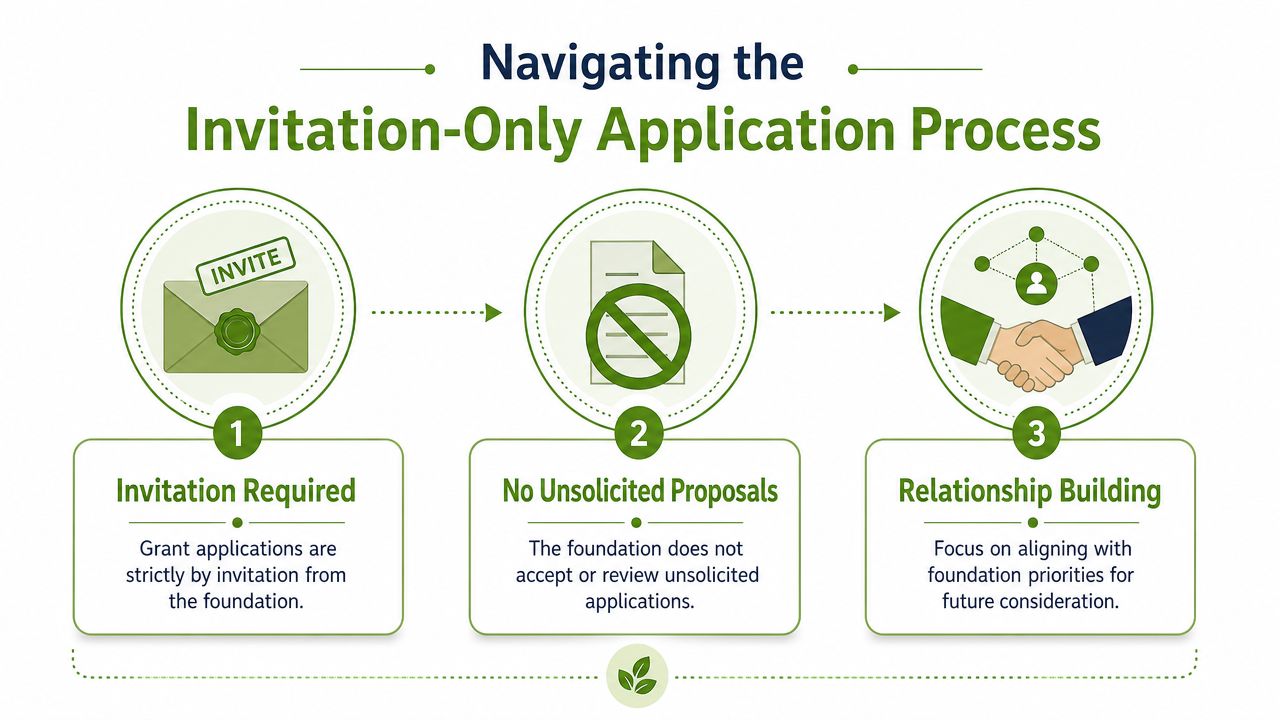
That single fact should change your strategy immediately. If you're writing cold outreach as though a strong narrative alone will open the door, you're using the wrong playbook.
What to do instead of sending an unsolicited proposal
Relationship-based foundations still need to discover organizations somehow. They just prefer discovery through trusted channels rather than open submission.
Here's the smarter path:
Map proximity
Start with your board, major donors, institutional partners, and peer nonprofits. You're looking for credible overlap, not random introductions. A warm path through someone who knows your work is far more useful than a generic referral.Study visible alignment
Look at how your organization shows up publicly. Are you known in Los Angeles or Israel-connected philanthropic circles for work that matches the foundation's priorities? If not, your first job may be reputation building, not fundraising.Use your letter of inquiry as a private tool
Even when a foundation won't accept unsolicited materials, you still need a concise positioning document. A clean one-page framing memo or a strong letter of intent for a grant helps intermediaries understand your case and advocate for you accurately.
A short explainer on relationship-centered grant strategy can also help teams reset expectations before they burn time on dead-end outreach.
What actually gets a closed-door funder's attention
I've seen nonprofits make the same mistake over and over with invitation-only foundations. They confuse persistence with traction.
These actions tend to help:
- Be visible in the field: Publish credible results, lead respected collaborations, and be recognized by peers who already move in foundation circles.
- Earn third-party validation: Closed-door funders often trust known institutions, co-funders, and established civic actors more than self-description.
- Build before you ask: Invite foundation-adjacent people to see the work. Share concise updates when you have something substantive, not every time you need money.
These actions usually don't help:
- Cold proposals: If the foundation says it doesn't accept them, believe it.
- Mass networking: Generic coffee requests and broad board-targeting can make your organization look opportunistic.
- Overfitted messaging: Trying to sound like all five funding priorities at once weakens credibility.
If your only connection strategy is “send a strong deck and hope,” you don't have a strategy.
A realistic timeline mindset
This kind of funder belongs in a long-horizon portfolio. That means your development plan should treat the Arthur Gilbert Foundation as one prospect among several, not the prospect your year depends on.
A relationship may take shape through peer organizations, collaborative initiatives, arts and culture ecosystems, Jewish philanthropy networks, or Los Angeles civic channels. Or it may never happen. That's normal. The discipline is knowing the difference between patient cultivation and fantasy prospecting.
Tips for Crafting a Winning Invited Proposal
Once you receive an invitation, the rules change again. At that point, this is no longer about getting noticed. It's about proving the invitation was well placed.
An invited proposal should feel like the next step in an informed relationship, not like a standard grant package recycled from another funder. The strongest submissions usually reflect prior conversation, clear understanding of mission fit, and disciplined financial presentation.
Build the proposal around the relationship
Start with the context that led to the invitation. If a program officer, board contact, collaborator, or mutual funder opened the door, your proposal should reflect that shared frame. Don't overdo the name-dropping. Do show that you understood what the foundation wanted to explore.
A strong invited proposal usually does three things well:
- Names the aligned priority clearly: Pick the core area your request best fits and build around it.
- Defines the geography plainly: If your work is rooted in the communities the foundation cares about, make that visible early.
- Shows institutional readiness: This funder doesn't need to take avoidable risk on messy operations.
Make your financials easy to trust
Many invited proposals lose force in the budget and attachments. The narrative sounds focused, then the finance section gets vague. If your team needs a simple benchmark for presentation quality, it helps to explore nonprofit financial statement examples so your statements and supporting documents read cleanly to a discerning reviewer.
Use plain labels. Reconcile program costs carefully. Make sure restricted, unrestricted, and in-kind treatment is consistent across documents. If the numbers create confusion, confidence drops fast.
An invited proposal should answer unspoken questions before the reviewer has to ask them.
Tailor tone as much as content
The wrong instinct is to make the proposal grander because the foundation is large. The better instinct is to make it sharper.
Avoid inflated language, inflated need statements, and inflated promises. Show measurable outcomes in the terms your organization can deliver. Keep stewardship front and center. With a legacy-oriented funder, confidence comes from disciplined execution and fit, not from hype.
If your proposal reads like it could have gone to any regional foundation, it's not ready. A winning invited request should sound like it belongs specifically in front of the Arthur Gilbert Foundation.
Alternative Funders to Consider in Los Angeles
Some nonprofits are good mission fits for the Arthur Gilbert Foundation but have no realistic access path. Others need revenue sooner than a relationship-based strategy can deliver. In both cases, it makes sense to keep moving.
I'd treat the Arthur Gilbert Foundation as a parallel prospect while prioritizing funders that are easier to approach directly. You can also strengthen your overall fundraising mix with earned revenue events, donor campaigns, and these proven ways to raise money when foundation timelines don't line up with program needs.
Los Angeles Funder Comparison
| Foundation | Accepts Unsolicited Proposals? | Primary Focus Areas |
|---|---|---|
| Rosalinde and Arthur Gilbert Foundation | No, it operates primarily by invitation | Education, tolerance, social services, healthcare, arts |
| California Community Foundation | More accessible than invitation-only private foundations | Broad community needs in Los Angeles |
| Weingart Foundation | More accessible than invitation-only private foundations | Community well-being and systems change |
| The Ahmanson Foundation | More accessible than invitation-only private foundations in many cases | Arts, education, health and human services |
How to choose the next best option
Use a simple rule. If a funder has similar issue interests but an open inquiry path, it belongs ahead of Arthur Gilbert in your active pipeline unless you already have a warm route in.
That isn't giving up. It's portfolio discipline. Strong development teams keep some relationship prospects in cultivation while feeding the pipeline with funders they can reach now.
If your team needs a faster way to identify realistic foundation prospects, organize deadlines, and turn funder requirements into usable drafts, Fundsprout can help you build a grant pipeline around fit and access instead of guesswork.
Try 14 days free
Get started with Fundsprout so you can focus on what really matters.