Role of secretary in nonprofit board: Strategic governance and compliance
Role of secretary in nonprofit board: Discover how board secretaries drive governance, ensure compliance, and sharpen strategic leadership.


Abdifatah Ali
Co-Founder
Forget the outdated image of a secretary quietly typing in a corner. In the world of nonprofit governance, the board secretary is the central nervous system, the keeper of institutional memory, and the procedural conscience of the entire organization.
Think of them as the architect of your board's accountability. They ensure every critical discussion, debate, and decision is captured, preserved, and legally sound.
Imagine you're facing an IRS audit or applying for a major grant. It’s the secretary’s meticulous records—the official bylaws, signed meeting minutes, and formal resolutions—that become your organization's lifeline. These documents are the tangible proof of your commitment to good governance. This isn't just an administrative task; it's a strategic cornerstone for organizational integrity.
As many seasoned nonprofit leaders will tell you, the board secretary is often the "glue that keeps the board together." In fact, every nonprofit board legally needs a detail-oriented secretary to maintain its efficiency and legal standing. You can find more great insights into this essential role over at Board-Room.org.
More Than Just Meeting Minutes
While taking minutes is the most visible part of the job, the true role of a nonprofit board secretary runs much deeper. This is a strategic officer, not just a clerk. Their work ensures the entire governance structure operates smoothly, legally, and effectively.
Their responsibilities really break down into three main areas:
- Meeting Management: This involves working hand-in-glove with the Board Chair and Executive Director to craft agendas, get meeting packets out on time, and help ensure meetings are productive and stick to proper procedure.
- Corporate Record Keeper: They are the official guardian of all critical governance documents. This includes everything from the articles of incorporation and bylaws to board policies and, of course, the minutes from every meeting.
- Compliance Officer: A huge part of the role is making sure the organization follows its own rules (the bylaws) as well as state and federal regulations. This means tracking board member term limits, managing annual conflict-of-interest disclosures, and flagging potential issues.
The Secretary is the officer responsible for keeping track of the organization’s activities to make sure the actions of the organization are in accordance with the organization’s Bylaws.
This isn't a passive job. A great secretary is proactive, gently guiding the board on procedural questions and raising a hand when a potential compliance problem is on the horizon—long before it becomes a real headache.
The Strategic Impact of the Secretary
Here’s where a good secretary becomes a great one. An effective secretary can truly transform a board from being merely functional to strategically powerful.
When discussions are documented accurately and decisions are recorded clearly, you build a solid foundation for action and accountability. Board members can then shift their focus from procedural debates to high-level strategy and visionary thinking, completely confident that the details are being handled by an expert.
This clarity prevents the "I thought we decided..." conversations, gives the Executive Director a clear roadmap for implementing board directives, and shields the entire organization from unnecessary legal risks.
To put it simply, here is a quick look at how the secretary's duties translate into direct impact for the nonprofit.
Board Secretary Core Functions At-a-Glance
Ultimately, the secretary’s work is the bedrock upon which sound governance, clear strategy, and legal integrity are built.
Mastering the Art of Board Meetings
A great board meeting doesn't just happen by chance—it's carefully engineered. The role of the secretary in a nonprofit board is the linchpin in this process, acting as the architect who designs the meeting's flow from start to finish. This job goes way beyond just taking notes; it's a full cycle of thoughtful preparation, focused participation, and diligent follow-up.
This disciplined approach ensures that every meeting is a valuable use of everyone’s time. It elevates a simple get-together into a powerhouse session where strategies are forged, decisions are locked in, and the organization's mission takes a real step forward.
The Pre-Meeting Hustle
Long before anyone calls the meeting to order, the secretary is already hard at work. This phase is all about laying the groundwork through collaboration and preparation, setting the stage for a focused and productive conversation. The most important relationship here is the partnership between the Board Chair and the Executive Director (ED).
This leadership trio works together to craft a truly strategic agenda. It's not just a to-do list; a well-designed agenda puts the most critical issues front and center, carves out enough time for real discussion, and makes the meeting's goals crystal clear. The secretary's input is crucial for bringing context from past meetings and keeping the conversation moving forward.
Once the agenda is locked in, the next step is to assemble and send out the board packet. This vital bundle of documents usually contains:
- The Meeting Agenda: The clear roadmap for the discussion.
- Minutes from the Previous Meeting: Ready for review and official approval.
- Financial Reports: Typically provided by the Treasurer or finance team.
- Executive Director's Report: A snapshot of what’s happening on the ground.
- Committee Reports: Updates from the board's various working groups.
- Supporting Documents: Any background materials needed for specific agenda items.
Getting this packet out the door at least one week in advance is non-negotiable. It gives board members the time they need to actually read the materials, think through tough questions, and show up ready for a meaningful debate—not just a first-time briefing.
During the Meeting: Documenting Decisions, Not Conversations
As soon as the meeting starts, the secretary’s role shifts from preparation to precise documentation. This is where the true art of minute-taking shines. A classic rookie mistake is trying to write down every single word said, creating a massive, unhelpful transcript.
The goal of meeting minutes is not to capture every word spoken, but to create a clear, concise, and legally defensible record of the board's actions and decisions.
Think of the minutes as the official logbook of the organization's governance journey. They have to reflect the board's collective will, which means focusing on the final outcomes, not the blow-by-blow of the debate. The key things to capture are:
- The exact wording of any motions made.
- The names of the people who made and seconded the motions.
- The final result of every vote, including the specific counts of "ayes," "nays," and any abstentions.
It's also essential for the secretary to remain neutral, especially when discussions get heated. Your job is to be an impartial recorder of fact, making sure the minutes are a completely objective account of what happened.
This visual shows how the secretary's duties flow from one to the next, starting with compliance, moving through meeting management, and ending with secure record-keeping.

This simple flow illustrates how each phase of the work builds on the last, creating a rock-solid foundation for good governance.
The Post-Meeting Workflow
The secretary's work isn't done when the meeting ends. In fact, the post-meeting phase is where draft notes are turned into a permanent, official part of the nonprofit's history. The first order of business is to draft the minutes while the meeting is still fresh in your mind—ideally within 24-48 hours.
Next, that draft gets circulated to the Board Chair and Executive Director for a quick review. This simple check helps catch any glaring errors or forgotten details before the document goes out to the entire board. Once their feedback is worked in, the draft minutes are sent to all board members as part of the packet for the upcoming meeting.
The final step is formal approval. At the start of the next board meeting, a motion is made to approve the minutes from the last session. Once that motion passes, the secretary signs the final, approved version, and it is officially filed as part of the corporate record. For a deeper dive into this entire process, this modern guide on how to do minutes for a meeting is an incredibly helpful resource. This careful, step-by-step process guarantees accuracy and creates an airtight historical account for auditors, funders, and future leaders.
Your Role as Guardian of Legal Compliance
Beyond taking notes and setting agendas, the secretary holds one of the most critical roles on the board: you are the guardian of your nonprofit’s legal and ethical integrity. This isn't just a background task; it's the frontline defense that ensures your organization operates within the law and, just as importantly, by its own rules.
Think of the board secretary as the keeper of a ship's log. That log doesn't just track where the ship has been. It proves the vessel followed its charted course, navigated tricky waters correctly, and adhered to every maritime law. For a nonprofit, your corporate records are that log, and they are absolutely indispensable.
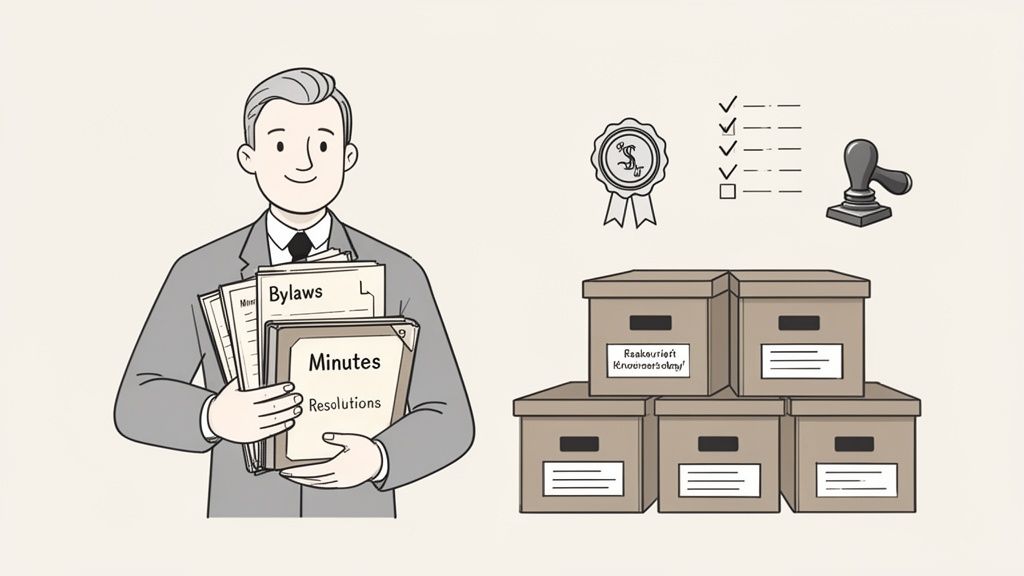
This collection of documents is the definitive proof of good governance. It’s what you rely on for state filings, what backs up your IRS Form 990, and what ultimately protects your precious 501(c)(3) status. As secretary, you are the officer entrusted with its care.
Curating the Corporate Record
The "corporate record" isn’t just a dusty pile of papers. It's a living, organized library of your nonprofit's most vital documents. The secretary’s job is to maintain and safeguard these foundational materials, making sure they are accurate, complete, and always accessible when the board needs them.
Here are the essentials that fall under the secretary's watch:
- Articles of Incorporation: The birth certificate of your nonprofit.
- Bylaws: The internal rulebook that governs how everything gets done.
- IRS Determination Letter: The official proof of your tax-exempt status.
- Board-Approved Policies: This includes crucial documents like your conflict of interest policy.
- Official Board Roster: A current list showing who is on the board and when their terms expire.
- Meeting Minutes: The complete, approved historical record of every decision the board has ever made.
This isn’t just administrative busywork. Meticulous record-keeping is a core part of the board’s fiduciary duty—its legal obligation to act in the organization’s best interest. Your work provides the tangible evidence that this duty is being met.
The Secretary is responsible for keeping track of the organization’s activities to make sure the actions of the organization are in accordance to the organization’s Bylaws. This ensures procedural integrity and protects the nonprofit from legal challenges.
This guardianship requires proactive management. You’re not just filing papers away; you’re constantly ensuring the records are current and compliant, cementing your role as a key protector of the organization.
Upholding Governance Protocols
The secretary's role goes beyond records; you are the one who ensures the board follows its own rules. You need to become the resident expert on the bylaws, often guiding the Board Chair on procedural matters and protocols during meetings. This is where your role becomes one of active, supportive oversight.
Your key governance responsibilities include:
- Tracking Board Terms: You'll maintain the official record of when each board member's term begins and ends. This is crucial for ensuring timely elections and preventing gaps in leadership.
- Managing Conflict of Interest Disclosures: Every year, the secretary is responsible for distributing, collecting, and filing conflict of interest disclosure forms from each board member. This is a non-negotiable step for maintaining transparency and ethical integrity. You can learn more about this by reviewing this helpful sample conflict of interest policy for non-profits.
- Ensuring Quorum: Before any vote can happen, you need to confirm that enough board members are present to constitute a quorum (as defined in your bylaws). This ensures that any business conducted is official and legally binding.
This diligence directly contributes to building stronger leaders. A 2018 study highlighted how valuable the skills honed through nonprofit board service are, and your meticulous governance work supports that development. In fact, an impressive 80% of participants reported becoming better leaders after their time on a board.
The Leadership Triangle with the Chair and ED
A board secretary who works in a silo is an ineffective one. The most successful secretaries are part of a critical leadership team—a power trio, really—that includes the Board Chair and the Executive Director (ED). When this relationship is humming, it becomes the engine that drives the whole organization forward.
This dynamic isn't magic; it’s built on constant communication and a crystal-clear understanding of who does what. Each person brings a different piece of the puzzle: the Chair provides the high-level governance and vision, the ED brings the day-to-day operational realities, and the secretary supplies the procedural glue and institutional memory that holds it all together.

Supporting the Board Chair
The bond between the secretary and the Board Chair is the bedrock of good governance. The secretary acts as the Chair’s right hand, a trusted advisor on everything from Robert's Rules to historical precedent. You really see this partnership in action as a meeting approaches.
Together, they work to:
- Build Smart Agendas: The secretary makes sure the agenda isn't just a list of topics, but a logical narrative that connects back to previous discussions and includes all the right background documents.
- Keep Governance on Track: In the heat of a meeting, the secretary can subtly guide the Chair on parliamentary procedure, confirm if a quorum is present, or clarify the exact wording of a motion according to the bylaws.
- Prepare for What's Ahead: A great secretary helps the Chair anticipate tricky conversations or areas of debate, ensuring the board has what it needs to make sound decisions without getting bogged down.
This level of support empowers the Chair to focus on what they do best: leading a thoughtful, productive discussion, knowing all the procedural details are in expert hands.
The synergy between the Secretary and the Chair is the bedrock of an orderly and effective board meeting. The Secretary provides the procedural map, allowing the Chair to navigate the strategic terrain with confidence.
A Symbiotic Relationship with the Executive Director
If the Chair's focus is governance, the Executive Director's is management. The secretary is the indispensable link between the two worlds, translating board decisions into a clear roadmap for the staff. It’s a truly symbiotic relationship where each person makes the other better.
Here’s how the secretary helps the ED:
- Providing Institutional Memory: When a new idea comes up, the secretary can instantly find minutes from three years ago when a similar topic was debated. This saves everyone from reinventing the wheel.
- Acting as a Sounding Board: The ED can bounce ideas off the secretary for an honest take on how the board might react or whether a proposal fits within existing policies.
- Delivering Clear Marching Orders: By capturing motions and decisions perfectly, the secretary hands the ED an unambiguous action plan after every single meeting. There's no guesswork.
Think about planning the annual board retreat. The ED might be booking the venue, but it's the secretary and Chair who are shaping the governance-focused agenda. When the board approves a major new policy, the secretary’s pristine record of that decision becomes the ED’s official mandate to put it into action.
To see how these roles fit into the bigger picture, you can learn more about crafting an effective nonprofit organizational structure in our guide. This vital collaboration is what ensures the board's vision actually becomes reality.
Facing Down the Tough Stuff: Common Secretary Challenges
Sooner or later, every board secretary hits a few bumps in the road. That’s perfectly normal. The real test isn't about avoiding these challenges, but about knowing they're coming and having a plan to handle them with confidence and grace. Let's look at some of the most common pitfalls and how to navigate them.
Pitfall 1: Drowning in Detail While Taking Minutes
One of the first traps many new secretaries fall into is trying to write down everything. They act like a court stenographer, capturing every "um," "ah," and side comment. This results in minutes that are pages long, completely overwhelming, and frankly, pretty useless. They hide the important stuff in a sea of chatter.
The fix? Stop transcribing the conversation and start documenting the conclusions. Your job is to create a clear, concise record of what the board decided and what it committed to do. Focus on motions, votes, and assigned action items. Everything else is just noise.
Pitfall 2: Getting Pulled into the Fray
When a debate gets heated, it's incredibly tempting to jump in, especially if you have a strong opinion. But as the secretary, your most valuable asset is your neutrality. You're the impartial record-keeper, the one everyone has to trust to document the proceedings fairly.
Your best defense against getting drawn into the drama is formal procedure. Lean on a system like Robert's Rules of Order as your guide. When things get tense, you can be the calm voice that says, "We have a motion on the floor. Is there a second?" This simple act shifts the focus from emotion back to process, reinforcing your role as the guardian of good governance, not a participant in the argument.
The secretary's job is to capture the board's collective decisions with total objectivity. This impartiality is what makes the corporate record trustworthy and ensures every director feels their voice was heard and the outcome was recorded accurately.
Pitfall 3: The Document Black Hole
Minutes, bylaws, policies, financial disclosures, committee reports... the paperwork can feel endless. Without a solid system, you'll be buried in documents, and finding a critical file from six months ago can become a frantic, stressful search.
The solution is to get organized from day one. It doesn’t have to be complicated! A simple, clearly labeled folder system in Google Drive or a physical binder can work wonders. The most important thing is consistency—name and file every document the same way, every time.
Finally, a challenge too many boards ignore is succession planning. What happens when it's your time to pass the torch? A chaotic handover can erase years of institutional knowledge. Protect your organization's future by identifying and mentoring your replacement. Look for a board member who is organized, detail-oriented, and understands the importance of the process. Let them take minutes for a committee meeting, show them your filing system, and walk them through the annual compliance calendar. A smooth transition is one of the most valuable gifts you can give your nonprofit.
Essential Tools and Templates for Your Role
A great board secretary knows it’s not just about showing up—it’s about having the right tools ready to go. Think of it as a toolkit. A well-organized set of templates, plans, and technology gives you the structure and confidence to do your job well, saving you precious time that’s better spent on strategic governance issues.
This is especially true if you're in a smaller nonprofit where you're probably juggling multiple responsibilities. The right resources can turn what feels like an overwhelming mountain of tasks into a series of manageable steps. Let's dig into a few practical tools every board secretary should have in their back pocket.
Sample Board Secretary Job Description
It all starts with clarity. A solid job description isn't just for recruiting a new secretary; it sets clear expectations for the entire board. When everyone understands the role's responsibilities, required skills, and time commitment, you avoid a lot of confusion down the road.
Your job description should cover a few key areas:
- Meeting Management: Lay out the duties for creating agendas, distributing board packets, and, of course, taking minutes.
- Records Management: Clearly state the responsibility for maintaining and protecting corporate records like bylaws, policies, and meeting minutes.
- Compliance and Governance: Note the secretary's role in tracking board member terms and making sure the organization follows its own bylaws.
- Collaboration: Emphasize the close working relationship with the Board Chair and Executive Director.
Having this document ready makes succession planning so much smoother. It ensures every new secretary understands from day one that their role is far more than just taking notes.
Customizable Board Meeting Minutes Template
Your meeting minutes need to be consistent. Period. A standardized template is the best way to make sure you capture all the essential information every single time, creating a uniform and professional corporate record. It’s like a pre-flight checklist for your meetings.
A great template doesn't just record what happened; it provides a clear, legally defensible summary of the board’s actions. It focuses on decisions, not just discussions, which is the cornerstone of effective minute-taking.
Every good template should include these non-negotiable sections:
- Header Information: Organization name, meeting date, time, and location (or virtual platform).
- Attendance: Who was there, who was absent, and any guests who joined.
- Call to Order: The exact time the Chair officially started the meeting.
- Approval of Prior Minutes: A formal motion to approve the minutes from the last meeting.
- Reports: Designated spots for reports from the ED, Treasurer, and key committees.
- Motions: A structured format to record the motion's exact wording, who made it, who seconded it, and the final vote count (ayes, nays, abstentions).
- Adjournment: The official time the meeting ended.
This framework is invaluable. It guides your note-taking during the controlled chaos of a meeting and makes drafting the final minutes so much easier. It's a simple tool with a massive impact.
New Board Secretary 90-Day Action Plan
Jumping into the secretary role can feel like drinking from a firehose. A 90-day action plan is a lifesaver, breaking the job down into smaller, more manageable pieces to help new secretaries get up to speed without feeling completely overwhelmed. It’s a roadmap for their first three months.
A structured onboarding plan empowers a new secretary to build their knowledge and confidence progressively. It helps them find their footing within the board's leadership team and master the core functions of the role.
Here's a simple plan to guide a new secretary through their first quarter.
New Board Secretary 90-Day Action Plan
By the end of this period, the new secretary should feel equipped and ready to contribute meaningfully, having moved from learning the ropes to actively managing their duties.
Technology to Streamline Your Workflow
Don't be afraid to lean on technology to make your life easier. Secure cloud storage platforms like Google Drive or Dropbox are fantastic for organizing and sharing board documents, ensuring everyone has the most current versions. It’s a huge step up from the security risks and confusion of emailing sensitive files. And for demonstrating your impact, tools that help you craft a compelling nonprofit annual report format can be invaluable.
If your board is ready for the next level, dedicated board management software can be a game-changer. These platforms create a central hub for agendas, minutes, document archives, and board communications. While they do have a cost, the investment can pay off by improving security, simplifying your workflow, and freeing you up to focus on the more strategic parts of governance.
A Few Common Questions About the Secretary Role
Even with the best job description, some questions always pop up once you're in the boardroom. The nonprofit board secretary role has its own unique quirks, so let's tackle some of the most common ones that new (and even seasoned) secretaries run into.
How Detailed Do the Minutes Really Need to Be?
This is probably the number one question, and the answer is refreshingly simple: document actions, not conversations. Your minutes are a legal record of the board's decisions, not a word-for-word transcript of who said what.
While a little context can be helpful, you want to avoid getting lost in the weeds of every debate. A great test is to make sure your minutes clearly answer these three questions:
- What decisions did we make? (Think motions passed, resolutions adopted, or initiatives voted down.)
- Who is taking the lead on the next steps? (Note any specific action items assigned to individuals or committees.)
- What’s the deadline? (If a due date was set, make sure it's in there.)
Stick to this, and you'll create a clear, useful record that stands up to scrutiny without becoming a novel. The goal here is clarity, not clutter.
Can Our Executive Director Double as the Board Secretary?
It can be tempting, especially for smaller nonprofits, to have the Executive Director (ED) also take on the secretary role. It seems efficient, right? But this is one shortcut you really want to avoid. In some states, it’s even prohibited by law.
Think of it this way: the ED is the key management staff member who reports to the board. The Secretary, on the other hand, is a governance officer responsible for impartially documenting the board's oversight of management.
Good governance is built on a healthy separation of duties. When the ED also serves as Secretary, it creates a built-in conflict of interest. The lines get blurred between the people doing the work and the people overseeing that work.
Keeping these roles separate is a crucial check and balance. It protects both the ED and the board by ensuring the official corporate record is an objective account of governance, free from any hint of bias.
What's the Best Way to Store All These Board Records?
The era of overflowing filing cabinets is thankfully behind us. Today, the standard is secure, cloud-based storage. Using a platform like Google Drive, Dropbox, or specialized board management software is the way to go.
Here's why this approach works so well:
- A Single Source of Truth: Everyone has access to the same, up-to-date documents. No more emailing outdated versions back and forth.
- Version Control: You can easily see the history of a document and ensure you're working from the final draft.
- Serious Security: It protects your nonprofit's sensitive information from being lost, damaged, or accessed by the wrong people.
The real trick is to set up a logical folder structure and a consistent naming system right from the beginning. A little discipline upfront goes a long way, ensuring that critical documents are always organized, safe, and easy to find. It’s how the secretary truly becomes the reliable guardian of the nonprofit's institutional memory.
At Fundsprout, we know that solid governance is the bedrock of any successful nonprofit. Our AI-powered platform is designed to help you lock down the funding you need by finding the right grants and making proposal writing easier, so you can pour your energy into your mission. See how Fundsprout can help your organization by visiting our website.
Try 14 days free
Get started with Fundsprout so you can focus on what really matters.