Line Item Number: A Guide for Nonprofit Grants
Master the grant line item number. Our guide explains its role in nonprofit budgets, proposals, and compliance, with practical examples and best practices.

Abdifatah Ali
Co-Founder
You're probably looking at a budget template right now with rows like Personnel, Fringe, Travel, Supplies, Contractual, Other, and a small column labeled something like “Line Item No.” It feels minor. It isn't.
For a lot of nonprofit teams, that little identifier gets treated like formatting. Someone types 1, 2, 3, maybe A, B, C, sends the proposal, and moves on. Then six months later the finance manager is trying to prepare a reimbursement request, the program director is using different budget labels in a narrative report, and the development lead is digging through old drafts to figure out whether “community outreach materials” belonged under Supplies or Other Direct Costs.
That's when the line item number stops looking small.
Used well, a line item number gives every budgeted cost a home that stays consistent from proposal through implementation, reporting, and audit. Used poorly, it creates confusion, weakens documentation, and makes a funder wonder whether your team is controlling the award as carefully as promised.
Your Guide to the Grant Budget Labyrinth
A junior grants manager once showed me a spreadsheet with color-coded tabs, tracked changes, and comments from three people arguing over the same expense. One person labeled it “Volunteer training supplies.” Another called it “Program materials.” Finance had posted it to a broader education account. The funder's template wanted it under “Supplies.” Nobody was wrong, exactly. But nobody had anchored the expense to one approved line item number that everyone would use afterward.
That's the problem.
In plain language, a line item number is the identifier attached to a specific budget entry. It tells you which cost you're talking about, where it belongs, and how to trace it later. In a simple nonprofit budget, that might be as basic as Item 1 for salaries and Item 2 for supplies. In a government setting, the numbering can be more structured because the number ties directly to payment, delivery, and accountability.
For nonprofits, the confusion usually starts because different people use budgets for different jobs:
- Development staff need line items to build a persuasive, clean proposal.
- Program staff need them to connect activities to approved spending.
- Finance staff need them to code expenses and support invoicing.
- Leadership needs them to show the funder that the organization spends money as proposed.
A budget isn't just a request for money. It's a promise about how that money will be organized, tracked, and defended later.
When you treat the line item number as the thread connecting those tasks, a lot of grant management gets easier. Budget narratives become clearer. Reimbursement requests require less detective work. Final reports stop turning into reconciliation marathons.
What Is a Line Item Number Really?
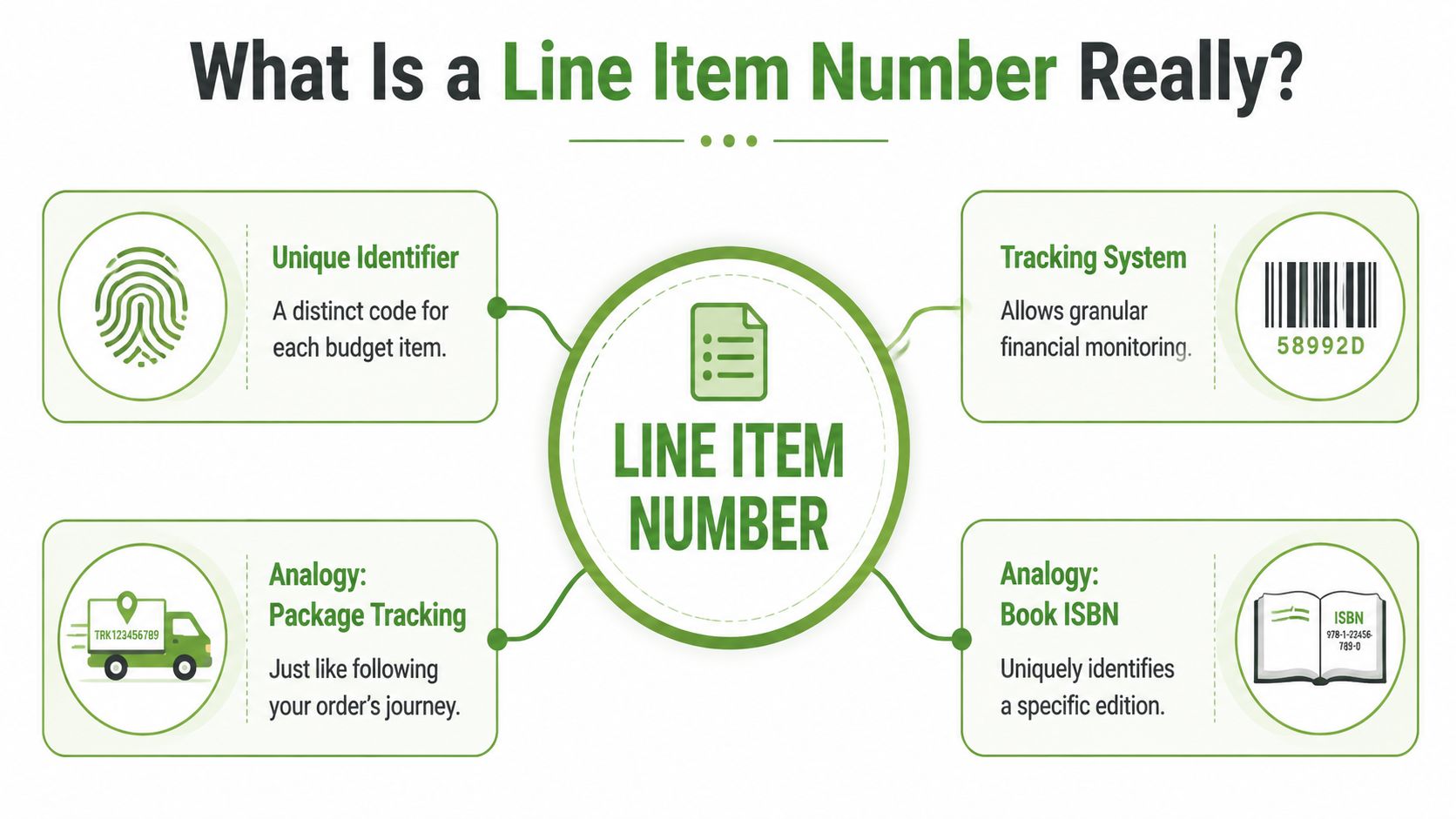
A line item number is best understood as a tracking address for a budgeted cost. If “Program Coordinator Salary” appears in your budget, the line item number is the handle everyone uses to refer back to that exact cost without guessing. It tells the reader, “This is the same item we approved, the same item you're charging against, and the same item you're reporting on.”
That's why the label matters less than the consistency.
Some funders use simple numbering. You might see 1, 2, 3, or A-1, A-2, A-3. Others give you a template with predefined categories and ask you to fill them in. In large procurement systems, the numbering becomes much more formal because it supports payment controls and audit trails.
A simple nonprofit example
Say your youth program grant budget includes:
- Program Manager salary
- Payroll taxes and benefits
- Curriculum materials
- Local travel for site visits
- External evaluator
If each one gets its own line item number, your team can refer to them the same way everywhere. The budget narrative can explain the cost. The accounting staff can map internal expenses to the approved item. The report writer can show what was spent against the approved budget category.
That's why I often tell newer staff to think of the line item number as the ISBN for a budget entry. It identifies the exact item everyone means.
The federal example shows the deeper purpose
Federal procurement makes this role very explicit. In the U.S. federal Contract Line Item Number, or CLIN, system, line item numbers use four numeric digits and run from 0001 through 9999, with guidance not to use numbers beyond 9999. Each line item is separately identifiable and tied to pricing, delivery or performance timing, and a single accounting classification, according to the Defense pricing and contracting guidance for CLIN structure.
For nonprofit readers, you don't need to adopt federal CLIN formatting to learn from it. The lesson is that the number isn't cosmetic. It's a control point.
If your organization is tightening its financial systems overall, this kind of discipline fits naturally with stronger accounting for grants practices.
Practical rule: If a team member can't look at a line item number and tell what expense it refers to, where it appears in the approved budget, and how it will be documented later, the numbering system isn't doing enough work.
The Role of Line Items Across the Grant Lifecycle
The easiest mistake is thinking the line item number matters only when you submit the budget. In practice, it does its most valuable work after the award begins.
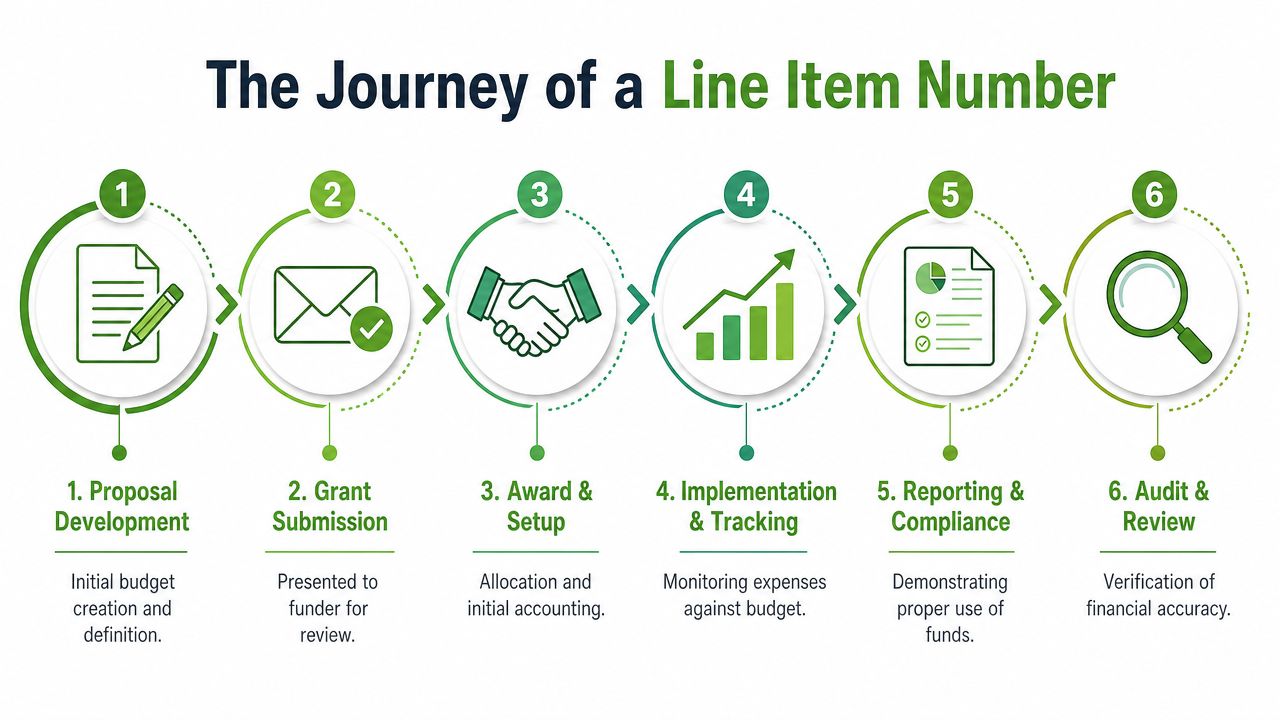
In the proposal stage
During proposal development, the line item number gives structure to your budget. It helps your team break a project into manageable, reviewable pieces. Instead of discussing “staff costs” in the abstract, you can review a specific item such as personnel for case management or contracted translation services.
That makes internal review sharper. It also forces decisions early. Is this expense direct or indirect? Is it personnel or contractual? Should it be grouped with similar costs or stand alone because the funder may ask about it later?
In the budget narrative
Good numbering yields dividends. A clear narrative can point the reviewer directly to the item being justified.
For example, a narrative might explain that one staff position supports outreach, enrollment coordination, and partner communication, and then tie that explanation to the relevant personnel line item number. That simple connection reduces ambiguity. The reviewer doesn't have to guess which salary figure the narrative describes.
During implementation and invoicing
Once the grant is active, the line item number becomes the bridge between approval and spending. Program staff approve purchases. Finance codes expenses. Development or grants staff prepare reimbursement packets or financial reports. If each group uses different labels, reconciliation gets messy fast.
A stable line item number gives everyone a common reference. It also helps when one internal account feeds a single grant line, or when one grant line includes several routine transactions over time.
At reporting and closeout
The reporting process either reinforces or weakens trust. A funder wants to see that money was spent as proposed, or that approved changes were documented properly. If the final report uses categories or identifiers that don't match the original budget, reviewers have to reconstruct your story.
According to FAR Subpart 4.10 on line items, line items are used to improve the accuracy, traceability, and usability of procurement data, and each line item should describe deliverables with pricing, delivery, and funding information. For nonprofit grant teams, the wording may come from a procurement context, but the operational message carries over cleanly. A line item is not just an identifier. It is part of how spending remains traceable and auditable.
The golden thread in practice
When I coach grant teams, I tell them to test every major expense against four documents:
- Approved budget
- Budget narrative
- Accounting record or invoice support
- Interim or final report
If a line item number or description changes along the way, ask why. Sometimes the answer is harmless. More often, it signals that the team never set up a clean handoff from proposal to post-award management.
When a funder asks about a cost months later, you don't want a debate. You want one number, one description, and one clear path through the file.
Mapping Your Budget to Funder Line Item Numbers
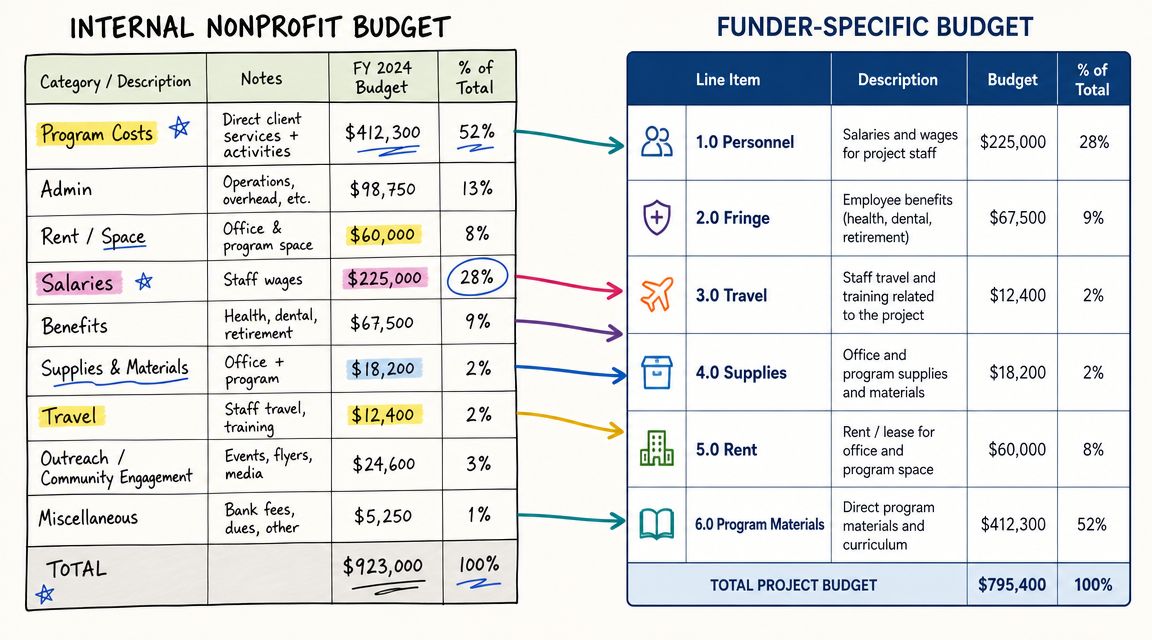
Most nonprofits don't start from a blank page. You already have an internal chart of accounts, payroll structure, vendor list, and program budget. The problem is that funders rarely ask for your internal logic. They ask for theirs.
That means the core job is mapping.
Start with your internal detail
Your accounting system may track separate accounts for program salaries, employer taxes, retirement, mileage, printing, background checks, software subscriptions, and consultant fees. A funder template might collapse all of that into a smaller set of required categories.
Don't fight that. Map it carefully.
A good approach is to keep your internal detail intact and create a crosswalk to the funder's line item numbers. That way, you don't rebuild your accounting system every time you apply for a grant.
Example of a simple mapping table
| Your Internal Account | Maps To -> | Funder Line Item Number | Funder Line Item Category |
|---|---|---|---|
| Program Director Salary | -> | 01 | Personnel |
| Case Manager Salary | -> | 01 | Personnel |
| Payroll Taxes | -> | 02 | Fringe Benefits |
| Health Insurance | -> | 02 | Fringe Benefits |
| Mileage Reimbursement | -> | 03 | Travel |
| Workshop Handouts | -> | 04 | Supplies |
| External Evaluator | -> | 05 | Contractual |
| Shared Admin Overhead | -> | 06 | Indirect Costs |
This table does something important. It separates your internal bookkeeping from the funder's reporting structure without losing the relationship between them.
A practical workflow that works
Use this sequence when you're building a proposal budget:
- List every anticipated project cost from your internal planning notes, staff assumptions, and vendor expectations.
- Group costs by allowability and function before you ever touch the funder template.
- Assign each grouped cost to the funder's category and give it the line item number required by that template.
- Create a crosswalk sheet that lives with the grant file and shows how internal accounts roll up.
- Lock the naming conventions early so finance, program, and development use the same labels later.
If the award will involve contract terms or funded service agreements, careful document review matters too. Teams that need help comparing versions and spotting wording changes often benefit from learning mastering contract redlining, especially when budget attachments and scopes of work are still moving.
For teams building proposal budgets regularly, a reusable grant budget template can save time as long as you still tailor the final mapping to each funder's required line items.
Working rule: Never force your accounting system to “become” the funder's template. Build a reliable bridge between them.
Common Pitfalls and How to Avoid Them
Line item numbering problems usually don't show up on submission day. They show up later, when someone tries to explain a charge, revise a budget, or assemble final documentation. Here are the mistakes I see most often.
The categorization trap
Symptom: The team squeezes an expense into the nearest category because the template seems limited.
A common example is putting training materials under “Other” because no one slows down to decide whether the funder expects them under Supplies or Program Materials. Months later, the final report groups them differently and nobody can reconcile the change cleanly.
Solution: Decide category logic before numbers are assigned. If a cost is borderline, write a short internal note explaining why it was placed where it was. That note can save hours later.
The version control void
Symptom: The proposal budget, the board-approved budget, and the post-award working budget all use slightly different numbering or descriptions.
This happens all the time when a development draft becomes the “official” grant budget by accident. Then finance works from a different export, and program staff reference the narrative wording from an earlier version.
Solution: Designate one approved post-submission file as the source of truth. Archive the drafts, but don't let staff pull line item references from old versions.
The indirect cost blind spot
Symptom: The team remembers direct costs but handles overhead inconsistently.
Indirect costs are where small nonprofits often get tangled. You may know the project uses supervision, rent, technology, and administrative support, but if the funder requires a separate indirect line and your team doesn't assign it clearly, reporting gets muddy fast.
Solution: Treat indirect costs as a planned, documented line item decision, not an afterthought. If your team needs a refresher on what belongs in direct spending versus overhead, this example of direct costs is a useful starting point.
The undocumented change problem
Symptom: Spending shifts during implementation, but the line item structure never gets updated or approved.
Maybe travel costs drop and supply costs rise. Maybe a consultant takes on work a staff member was going to do. Operationally, that can be reasonable. Compliance-wise, it may require funder approval depending on the terms.
Solution: When spending changes materially, document the reason, the internal approval, and any required funder communication. Then update the working budget file so the line item trail stays intact.
The red flag isn't that a budget changed. The red flag is that nobody can show when it changed, who approved it, and how the revised spending still ties back to the award terms.
Best Practices for Flawless Line Item Management
A well-run grant budget should let you answer a simple question at any point in the grant. What does this charge belong to, and can we prove it? Good line item management makes that answer easy during proposal review, monthly invoicing, and the final audit.
Build a reusable crosswalk library
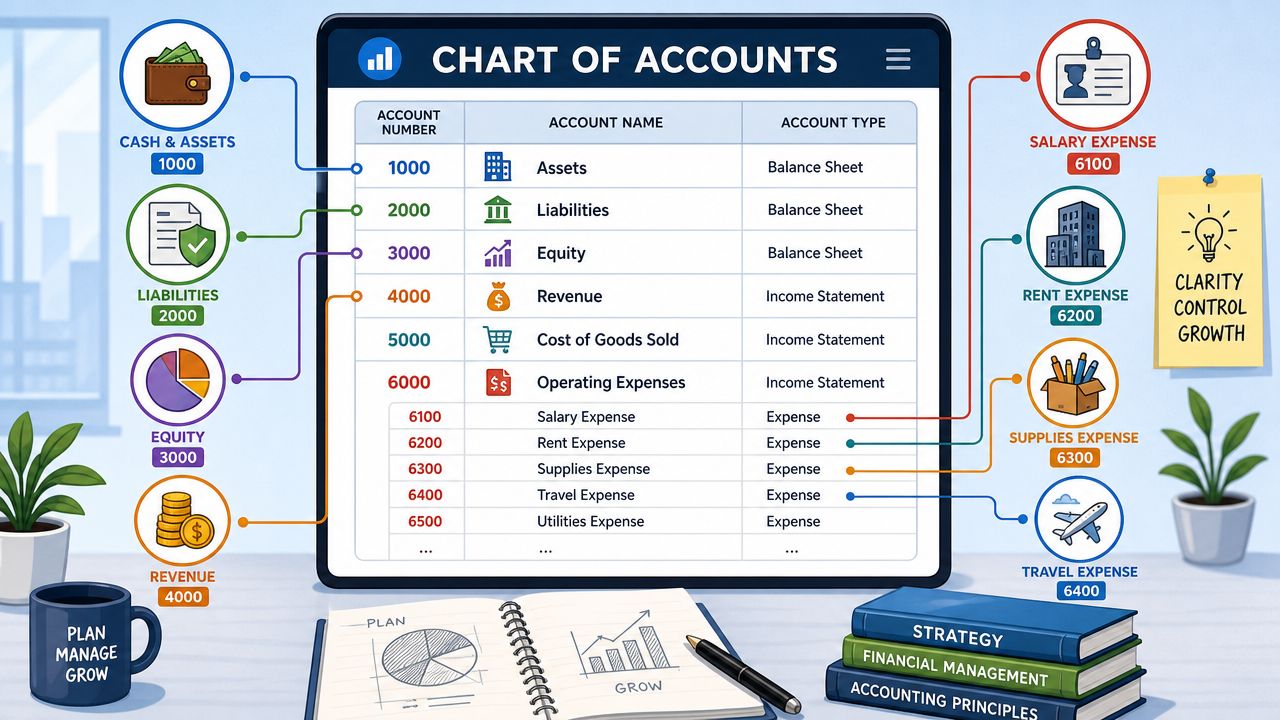
If your organization applies for similar grants each year, create one master crosswalk that links your internal chart of accounts to the funder categories you see repeatedly. For many nonprofits, that includes personnel, fringe, travel, equipment, supplies, contractual, and indirect costs.
This works like a translation key between development and finance. The grant writer may call a cost "program supplies," while accounting records it under a more specific expense code. A crosswalk keeps both teams aligned, so the same cost does not get described three different ways over the life of the award.
Keep the library practical. Add notes about common restrictions, required backup, and any line items that often need funder approval before rebudgeting.
Treat line items as data, not just rows
A line item number is not only a spot for an amount. It is a container for the rules that follow that spending across the grant.
In advanced quoting systems, line items can carry detailed fields such as warranty, power consumption, weight, shipping dimensions, country of origin, and more. The guidance may call for using the maximum value when a range exists, as described in Jetbuilt's guidance on product technical data for line items. Grant budgets work differently, but the lesson carries over. Your line items should also hold supporting details such as cost assumptions, allocation method, reporting labels, approval requirements, and documentation standards.
That extra context matters later. If a funder asks why a consultant invoice was charged to one budget category instead of another, your team should not have to rely on memory.
Use version control like a finance control
Many budget problems start with two files that both look final.
Use clear file names with dates and status labels. Limit authority for renumbering or remapping line items to one owner. Save the approved budget, the working budget, and the reporting version in an organized folder structure. Keep the budget narrative close to the spreadsheet so references stay matched.
This is not clerical housekeeping. It protects the audit trail. A reviewer should be able to trace a line item from the proposal you submitted, to the expenses you charged, to the report you filed at closeout.
Choose tools that preserve traceability
The right tool is the one your team can use consistently and explain clearly. Some organizations manage line items well with spreadsheets, shared folders, and strict review habits. Others need grant management software, accounting workflows, or approval logs that make the history easier to follow. If you are comparing approaches, Cloudvara on grant management solutions offers a practical overview of process-centered grant administration.
Fundsprout is one example of a tool nonprofits may use to organize proposal work, budgeting, requirement tracking, and reporting in one place. The value is not automation by itself. The value is keeping line item decisions, supporting notes, and version history from drifting across email threads and duplicate files.
Manager's advice: Your system is working when a new program manager can trace one budget line from proposal to invoice to final report without needing a verbal explanation from the last grant writer.
From Confusion to Control of Your Grant Budget
A grant starts with a promise on paper. Months later, that same promise has to show up in your invoices, financial reports, and closeout file. The line item number is one of the small details that keeps those moments connected.
Used well, it works like a claim check. The program team uses it to show what was proposed. Finance uses it to charge costs to the right bucket. Development uses it to explain spending to the funder. An auditor uses it to trace one expense back to the approved budget and confirm that your records match your request.
That continuity matters because compliance problems rarely begin with a dramatic mistake. More often, they start with small breaks in the chain. A consultant invoice gets coded to the wrong budget line. A budget revision is approved, but one tracker still shows the old numbering. The final report groups costs differently than the proposal did. Each issue may look minor on its own, but together they create doubt about whether the grant was managed carefully.
Clear line item management also makes day-to-day work easier. Program staff know where costs belong. Finance spends less time translating grant language into accounting language. Development can prepare reports without sorting through old attachments to figure out which version was final. Leadership gets a cleaner view of how restricted funds are being used and where adjustments need approval.
The same discipline supports broader budget management too, especially for shared costs and internal systems. For organizations reviewing overhead and infrastructure, the same habits can help nonprofits optimise IT spending while keeping indirect cost planning easier to explain.
Control comes from consistency. When your line item numbers stay aligned from proposal to reimbursement request to audit file, your budget stops feeling like a maze and starts functioning like a reliable record of stewardship.
If you want a simpler way to keep proposal budgets, funder requirements, versions, and reporting records aligned, take a look at Fundsprout. It is built for nonprofits that need a clearer path from application to compliance without relying on scattered files and manual rework.
Try 14 days free
Get started with Fundsprout so you can focus on what really matters.