Legacy Giving Programs: A Practical Guide to Building Your Nonprofit's Future
Discover how to build legacy giving programs with practical guidance to launch and grow a program that secures your nonprofit's future.

Abdifatah Ali
Co-Founder
Legacy giving programs are, at their heart, a structured way for your nonprofit to accept gifts that are arranged today but come to you down the road. These are often called planned gifts, and they're typically made through a supporter's will or estate plan. Think of it as building a bridge to your organization's future, ensuring your mission can thrive for generations to come.
The Enduring Power Of Legacy Giving
This isn't just another fundraising channel; a legacy giving program is the very bedrock of your nonprofit's long-term sustainability. It takes the sometimes-intimidating idea of planned giving and makes it an accessible, powerful strategy for organizations of any size. While a single, unexpected bequest can be a game-changer, a formal program is what truly multiplies that potential.
What I’ve seen over the years is that these programs are incredibly resilient. They create a stable revenue stream that can ride out economic storms far better than most other funding sources. Annual campaigns can dip when the market gets rocky, but legacy gifts are often planned years, or even decades, in advance. This provides a predictable pipeline of support you can count on.
The Financial Cornerstone of Nonprofit Sustainability
The numbers really drive home the importance of planned gifts. Legacy giving has become an incredibly reliable and high-impact funding source. In 2024 alone, charitable bequests hit an astonishing $45.84 billion.
This figure has consistently made up about 8% of total charitable giving for the last four decades. When you combine bequests with other gifts from individuals, they account for roughly 74% of all charitable dollars given each year. It’s clear they are central to modern philanthropy. For a deeper dive into these numbers, I always recommend the annual Giving USA report.
A mature legacy giving program signals long-term vision. It tells major donors, foundations, and grantmakers that your organization isn’t just thinking about the next fiscal year—it’s built to last for the next generation. This perception of stability is critical for securing other forms of major funding.
Building a legacy giving program is less about financial transactions and more about forging deep, meaningful connections with your most loyal supporters. It’s a way to help them turn a lifelong passion for your cause into an enduring impact that continues long after they are gone. Don't see this as just another administrative task. See it as an essential investment in your mission's future. If you're looking to broaden your funding sources even further, our guide on how to https://www.fundsprout.ai/resources/increase-nonprofit-revenue-streams offers some great complementary strategies.
Shifting The Conversation From Giving To Legacy
To really connect with donors about planned gifts, you need to shift the conversation. Instead of just asking for a donation, you're inviting them to build a legacy.
It's helpful to understand the different ways donors can give, like through charitable giving in estate planning, and the tax benefits that can come with it. Giving your supporters this knowledge empowers them to make smart decisions that line up with their financial plans and their philanthropic goals.
Focus on the "why" behind their gift—the values, memories, and hopes a donor wants to see live on. When you do this, you transform the conversation from a one-time transaction into a collaborative act of legacy building. This approach honors the donor's life and commitment, making the whole process deeply personal and rewarding for everyone.
Legacy Giving Vs Annual Fundraising At A Glance
Many organizations wonder how legacy giving fits with their existing annual fundraising. The reality is they aren't competing; they are complementary strategies that work together to secure both your present and your future. The table below breaks down the key differences.
As you can see, both are vital. Annual giving keeps the lights on day-to-day, while legacy giving builds the endowment and capital that will ensure your mission endures for decades. A healthy nonprofit needs both.
Building The Foundation For Your Legacy Program

Before you can confidently ask donors to leave their legacy with you, your organization has to be truly ready to receive it. This foundational work—getting the right policies, people, and processes in place—is the unglamorous but absolutely essential part of any successful legacy giving program. Getting this right from the start prevents future legal headaches and, most importantly, ensures you honor every gift exactly as intended.
Think about it from a donor's perspective. A nonprofit that seems to be just scrambling to survive isn't going to inspire someone to entrust them with their life's final, most personal gift. They want to give to an organization that looks and acts like it belongs in the future.
Having a solid administrative and legal foundation is the clearest signal you can send that your organization is built to last. It’s the proof that you’re planning for the next decade, not just the next fiscal year. This kind of preparation shows maturity and stability, telling major donors and foundations you’re a serious, responsible partner worthy of their long-term investment.
Create A Board-Approved Gift Acceptance Policy
The absolute cornerstone of your program is a formal Gift Acceptance Policy. This document is your official rulebook, and it needs to be reviewed and approved by your board of directors. It’s what protects your nonprofit from accepting problematic assets and makes sure everyone on your team handles inquiries with consistency and professionalism.
A strong policy doesn’t just say "we accept planned gifts." It gets specific about which types of gifts your organization is actually prepared to handle. This isn't about accepting everything that comes your way; it's about being strategic and prepared.
At a minimum, your policy should clearly state your organization's position on accepting:
- Bequests: The most common type of planned gift, left through a donor's will or trust.
- Life Insurance Policies: Where your nonprofit is named as a beneficiary.
- Retirement Plan Assets: Such as funds from an IRA, 401(k), or 403(b).
- Complex Assets: This is a big one. It includes things like real estate, closely held stock, or other kinds of property.
For those complex assets, your policy needs to spell out a clear review process. For example, you might decide to accept real estate only after a formal appraisal and environmental assessment, and only if it’s free of any mortgages or liens. This is what keeps you from accidentally accepting a "gift" that ends up costing you more than it’s worth.
A gift acceptance policy isn't just a legal document; it’s a strategic tool. It empowers your team to have clear, confident conversations with donors and their advisors, showing that your organization is professional, prepared, and trustworthy.
Establishing these ground rules from the very beginning helps you avoid incredibly difficult situations down the road. Imagine having to decline a gift because it comes with unmanageable restrictions or liabilities. A clear policy makes that process objective rather than personal.
Assemble Your Legacy Giving Team
Good news: you don't need a huge department to run an effective legacy giving program. You can start small and still be incredibly successful. The key is simply having dedicated people in clearly defined roles.
A great first step is to form a small Legacy Giving Committee. This group can oversee the program, and it should bring together a mix of internal staff and outside expertise.
- A Board Champion: Find a board member who is genuinely passionate about your organization's long-term vision. They can advocate for the program at the leadership level and keep it top-of-mind.
- A Staff Lead: You need one dedicated staff member, even if they only spend part of their time on this, to manage the day-to-day. This person is the main point of contact for donor inquiries, tracking, and stewardship.
- Professional Advisors: Try to recruit volunteers from your community—an estate planning attorney, a financial advisor, or a CPA. They can provide invaluable pro-bono advice on complex gift structures and help review your policies.
This committee doesn't need to meet constantly, but it should be the guiding force that provides oversight and expert counsel when you need it. Just having these experts involved lends significant credibility to your program.
Finally, get your internal systems ready. This can be as simple as adding a custom field in your existing CRM to tag and track legacy prospects and confirmed donors. The goal is to create a simple, reliable process for documenting inquiries, conversations, and formal gift intentions. This ensures that no potential gift—or valued donor relationship—falls through the cracks.
Identifying And Engaging Your Best Legacy Prospects
Your best legacy prospects aren't strangers. They're already in your database, quietly and consistently showing their support for your mission. The real challenge isn't finding them—it's learning to recognize the right signals and then engaging them with genuine respect and authenticity.
Forget the old myth that legacy giving programs are just about finding your wealthiest donors. The true foundation of a successful program is built on loyalty. It’s a shift in mindset from aggressive wealth screening to genuine, long-term relationship building. This approach honors your supporters and builds trust, which is really the currency of all planned giving.
Spotting Loyalty: The True Predictor Of A Legacy Gift
The most reliable sign of a future legacy donor isn't the size of their last check. It's the consistency of their support over many years. These are the people who have stood by you through thick and thin, proving their deep commitment to your cause.
Your job is to dig into your database and find these hidden gems. Start by looking for donors who show a clear and undeniable pattern of loyalty.
- Longevity of Giving: Who has given to your organization for 5, 10, or even 20+ consecutive years? Even small, steady annual gifts are a powerful indicator of a deep-seated belief in your work.
- Volunteer History: Have they given their time? Volunteers have a firsthand connection to your mission and often feel a profound sense of ownership for its future.
- Consistent Event Attendance: Regulars at your galas, community events, or even free webinars show a desire to stay connected beyond just writing a check.
- Non-Financial Engagement: Who opens every email, shares your social media posts, or takes the time to respond to surveys? This kind of digital body language signals a high level of interest and emotional investment.
A donor who ticks several boxes on this list is a prime candidate for a legacy conversation. They've already proven they care; your role is to introduce them to a new, powerful way to express that long-term commitment. A robust CRM is absolutely invaluable for this. If you're exploring your options, our guide on the best CRM software for nonprofits is a great place to start.
A planned gift is often the ultimate expression of a donor's values and life story. Identifying prospects is less about data mining and more about recognizing who has already woven your organization into the fabric of their lives. Loyalty, not wealth, is the key that unlocks these profound conversations.
Initiating The Conversation With Care
Once you’ve pinpointed your most loyal supporters, the next step is reaching out. This is where a lot of nonprofits get nervous, fearing the conversation will be awkward or morbid. It doesn't have to be.
The secret is to lead with gratitude and keep the focus squarely on impact, not assets.
Instead of a direct, transactional ask, try a "soft touch"—a gentle discovery question that opens the door to a deeper chat. You’re simply trying to learn more about their personal connection to your cause and what they hope for its future.
Here are a few ways to frame these soft-touch questions, whether on a call, in a personal email, or over coffee:
- "You've been such a dedicated supporter for over a decade, and we're just so grateful. I'd love to hear what has inspired you to stay with us for so long."
- "As we plan for the future, we're thinking a lot about the kind of long-term impact we want to have. Have you ever thought about the legacy you'd like to leave through your philanthropy?"
- "I was so inspired by your volunteer work at our last event. It's clear our mission means a lot to you. We're always curious to learn what drives our most passionate supporters."
Notice a pattern? None of these questions mention money, wills, or estate plans. They are open-ended and centered entirely on the donor's personal journey, values, and vision. This respectful approach builds trust and gives them the space to share their intentions when—and if—they are ready.
Moving From Mass Marketing To Personal Engagement
This entire strategy marks a critical shift from blasting out generic appeals to cultivating personalized, one-on-one relationships. While broad marketing materials have their place in raising general awareness, the most meaningful legacy gifts almost always come from a direct, human connection.
Your team’s role is to be a thoughtful facilitator, not a salesperson. You can equip them with the confidence to have these conversations by focusing on a few core principles.
- Lead with Gratitude: Always start by thanking the donor for their specific history of support. Make it personal.
- Be Genuinely Curious: Ask questions to understand their "why." Listen more than you talk.
- Focus on Impact: Talk about the future of the mission, not the financial mechanics of a gift.
- Offer to Help: Position yourself as a helpful resource who can provide information or connect them with professional advisors when the time is right.
By moving away from a wealth-first mentality and embracing a strategy rooted in loyalty, you create a legacy giving program that is not only more effective but also deeply respectful of the supporters who make all your work possible.
Marketing Your Legacy Program With Heart And Strategy
Effective legacy giving marketing is a delicate art. It’s far more about inspiration and education than it is about high-pressure asks or urgent appeals. Your real goal is to gently and consistently make planned giving feel accessible, meaningful, and like a natural extension of a supporter’s lifelong commitment to your cause. This is all about heartfelt storytelling and clear, simple communication.
The timing for this couldn't be better. The legacy giving sector is seeing incredible growth that far outpaces general philanthropic trends. Legacy income grew by a remarkable 9% in 2024, compared to just 1.3% the previous year. This signals a huge shift in donor behavior, and with forecasts showing legacy income could more than double by 2050, a thoughtful marketing plan isn't just nice to have—it's essential. You can read more about these philanthropic trends on LegacyFutures.com.
Craft Compelling Stories, Not Technical Jargon
Your single most powerful tool is the story of a donor who has already made a planned gift. These personal narratives bring the abstract concept of "legacy" to life. My advice? Focus on the why behind their decision, not the how.
Instead of explaining the dense mechanics of a charitable remainder trust, share a quote from a donor like Mary, a retired teacher, who said, "I included the children's literacy program in my will because I want the joy of reading to be there for kids in my community forever." That's what resonates.
Your content should always aim to answer these core emotional questions:
- What inspired this person to make a planned gift?
- What future impact did they hope to create?
- How does this gift connect to their personal life story and values?
A donor story is worth a thousand brochures. It shifts the conversation from a financial transaction to a profound act of hope and vision, making a planned gift feel both personal and powerful.
When you focus on these human elements, the idea of legacy giving becomes relatable to a much wider audience. It shows them that people just like them are making these incredible commitments.
Build A Multi-Channel Communication Plan
To keep legacy giving top-of-mind, you need a steady, gentle drumbeat of communication across a few key channels. The trick is integration—weaving your message into existing materials rather than always creating standalone campaigns. Of course, all your marketing should be consistent with your organization's identity, a concept you can explore further in our nonprofit branding guide.
Here’s what a simple but effective multi-channel plan looks like in practice:
A Dedicated Landing Page: Create one easy-to-find page on your website with a title like "Create Your Legacy" or "Ways to Make a Lasting Impact." This page is your home base. It should feature donor stories, simple explanations of the most common gift types (like a bequest in a will), and a clear contact person for anyone wanting more information.
Newsletter and Blog Articles: Regularly feature content about your legacy program. One month, it could be a story about what a past bequest accomplished. The next, it might be a piece celebrating the members of your legacy society. It’s a soft touch that keeps the idea present.
Simple Print Materials: Develop a straightforward, one-page handout or a simple brochure that explains giving options in non-technical language. You can include this in event packets, pop it into direct mailings, or just have it available in your office. The goal is a tangible takeaway.
Email and Social Media Signatures: This is one of the easiest wins. Add a simple, unobtrusive line to the bottom of all staff email signatures and social media profiles, such as, "Interested in leaving a lasting legacy? Learn more here," with a link to your landing page.
This consistent, low-pressure approach ensures your supporters see the idea of planned giving regularly, allowing them to explore it on their own terms. It makes the option feel familiar and approachable for when they are truly ready to consider it.
Cultivating and Stewarding Your Legacy Donors For Life
When a donor tells you they've included your organization in their will, that’s not the end of the conversation. It’s the start of a completely new kind of relationship. Your job now shifts from marketing to lifelong stewardship, a commitment to showing genuine gratitude and keeping these incredible supporters connected to your mission for the rest of their lives.
This isn’t just about good manners; it’s about honoring their decision. A donor can change their mind—and their will—at any time. Consistent, heartfelt stewardship is what reinforces their choice, making them feel valued and confident that their ultimate gift will be used exactly as they hoped.
The journey from a supporter's initial interest to a documented planned gift often follows a clear path.
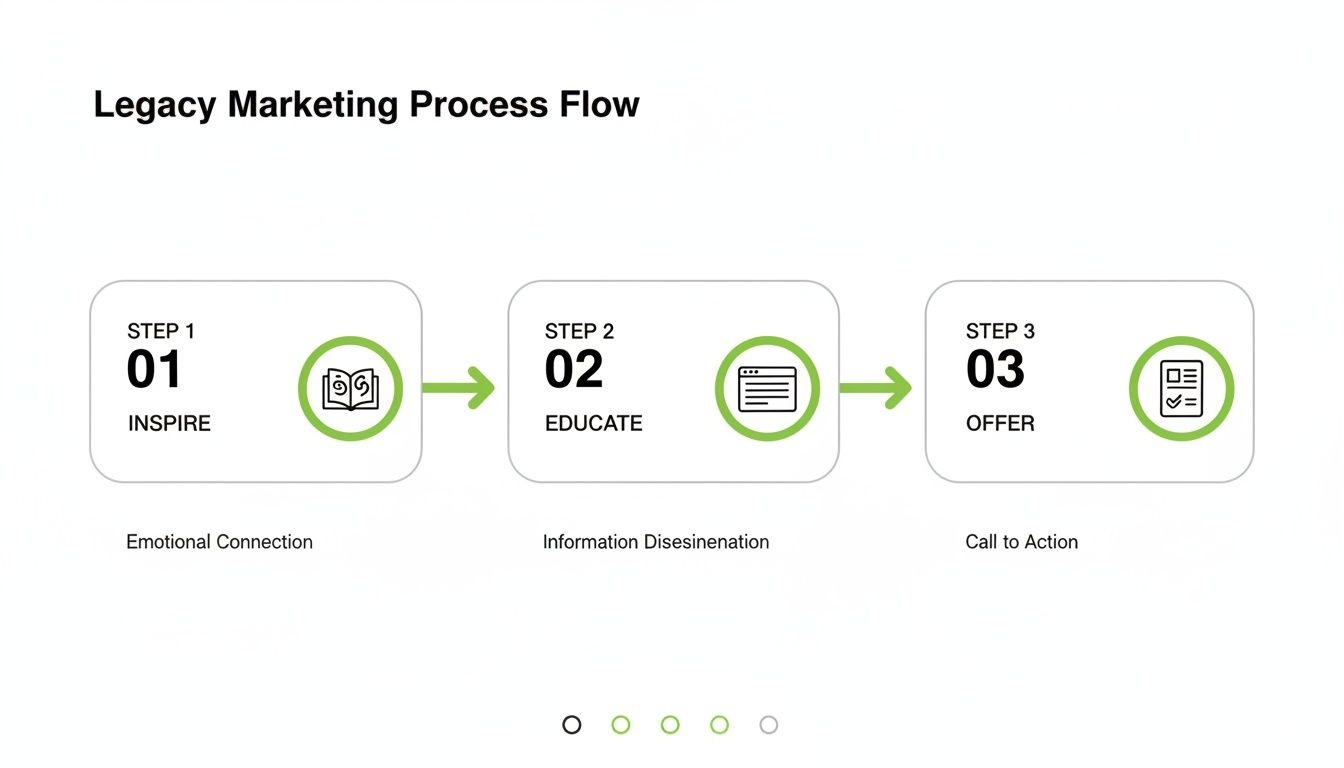
As you can see, it really boils down to three stages: inspiring them with powerful stories, educating them with clear information on your website, and then giving them a straightforward way to formalize their intent.
Create an Exclusive Legacy Society
One of the most effective ways to steward these donors is by creating a dedicated recognition group—often called a "Legacy Society" or "Heritage Circle." This isn't just another mailing list. It's an exclusive community for those who have made the ultimate commitment to securing your organization's future.
Having a formal society gives you a natural reason to communicate with them in a special way, separate from your general fundraising appeals. It’s a brilliant tool for building a sense of belonging and a shared long-term vision.
What does membership look like? It could include things like:
- Exclusive Updates: "Insider" communications from your CEO or Board Chair about your long-term plans and vision.
- Special Invitations: Invites to unique events, like a small luncheon with program leaders or a behind-the-scenes tour.
- Public Recognition: With their permission, of course, you can list their names in your annual report or on a dedicated "Legacy Wall" on your website.
The goal is to make membership feel like a true honor, a heartfelt thank you for their extraordinary generosity.
The Art of Meaningful Stewardship
Beyond a formal legacy society, the ongoing, personal touches are what really make the difference. These small gestures show your donor they are more than just a future dollar amount in your database.
Think of stewardship as a series of small, consistent actions that build trust and connection over many years. You're making them feel like part of your organization's family.
The most impactful stewardship is personal, consistent, and comes from the heart. A handwritten card or a simple check-in call can be more powerful than a glossy report, as it reaffirms the human connection at the core of their gift.
Consider weaving these high-touch, low-cost actions into your regular workflow:
- Personal Check-In Calls: Have a board member or senior leader call just to say thank you and see how they are—with no ask attached.
- Handwritten Notes: Send a card on their birthday or on the anniversary of when they joined your legacy society.
- Impact Reporting: When you have a big win, send a quick, personal note saying, "I thought you'd love to see what we've been able to accomplish, which is only possible because of forward-thinking supporters like you."
This kind of personalized attention is crucial. Global charitable giving hit an incredible $2.3 trillion worldwide in 2024, and in the U.S., individuals—including those making planned gifts—account for about 66% of all contributions. Bequest marketing consistently delivers the highest ROI of any fundraising activity, making it an exceptionally cost-effective strategy. You can discover more revealing nonprofit stats from Nonprofit Pro.
Most importantly, carefully segment your legacy donors out of all standard fundraising appeals. Nothing undermines this special relationship faster than receiving a generic, high-ask email right after they’ve made their ultimate commitment. Your stewardship plan protects both the donor's experience and your organization's future.
Answering Your Top Legacy Giving Questions
Diving into legacy giving can feel daunting. I've heard the same questions and concerns from countless nonprofit leaders: Is it too complicated? Too expensive? Will we sound insensitive? It's completely normal to feel that way.
The good news is that most of these worries are based on common myths. Let's tackle them head-on with some straight-talking, practical answers. My goal here is to help you move past any hesitation and feel confident that a thriving legacy program is well within your grasp.
Can My Small Nonprofit Realistically Start a Legacy Program?
Yes, absolutely. In my experience, smaller nonprofits are often perfectly positioned to succeed because legacy giving is built on relationships, not massive marketing budgets. You don't need a huge team; a strong program can start with just one dedicated staff member or even a passionate board volunteer.
What truly matters isn't the size of your team, but your consistency. You can begin laying the groundwork right now with simple, no-cost actions.
- Add a simple sentence to the footer of your emails and newsletters. Something like: "Want to make a lasting impact? Consider leaving a gift in your will."
- Create a basic one-pager or a simple webpage. Explain how someone can make a bequest and provide contact info for a confidential chat.
- Start with conversations. Talk to your most loyal, long-time donors first. These are the people who already trust you and believe in your mission.
These first steps cost virtually nothing but send a powerful signal that you’re planning for the long haul. Remember, studies consistently show that bequest marketing delivers the highest ROI in all of fundraising. It’s one of the most efficient ways for a small shop to build lasting financial stability.
What Are the Easiest Types of Legacy Gifts to Manage?
When you’re just starting, the key is to keep it simple. Focus on the most straightforward gift types that won’t bury your team in administrative work. This makes it easier for everyone—your staff and your donors.
For most nonprofits, there are two clear winners for easy-to-manage planned gifts:
A Simple Bequest in a Will: This is the bread and butter of legacy giving. A donor simply works with their attorney to add language to their will, leaving a specific amount, a percentage, or the remainder of their estate to your organization. It’s hands-off for you until the gift is actually realized.
A Beneficiary Designation: This one is incredibly simple and often overlooked. A donor can name your nonprofit as a beneficiary of a retirement account (like an IRA or 401(k)), a life insurance policy, or a bank account. All it usually takes is filling out a form, and it completely bypasses the probate process, making the eventual transfer quick and seamless.
By focusing on just these two options, you make the entire process approachable for both your supporters and your organization.
When you launch, don’t feel pressured to become an expert on every complex gift vehicle out there. Just master the simple bequest and beneficiary designations. These two will likely make up over 90% of your planned gifts and are the easiest for donors to understand and act on.
How Do We Talk About Legacy Giving Without Sounding Morbid or Pushy?
This is probably the biggest fear I hear, but it's one you can easily overcome by changing your perspective. A conversation about legacy giving should never be about death. It should always be about life, impact, and vision.
Think of it this way: you're offering your supporters a chance to turn their lifelong passion for your cause into a permanent legacy. The conversation is about empowerment and fulfillment—giving them a powerful way to make their ultimate statement of support.
To keep the tone positive and inspiring, always use forward-looking, visionary language.
Frame the discussion around their vision for a better future—a future your organization can help them build. Always lead with gratitude for their past support, and then gently open the door to a conversation about their hopes for the years to come. Sharing stories of what past legacy gifts have accomplished makes the impact real, tangible, and deeply inspiring.
At Fundsprout, we believe that every mission-driven organization deserves a sustainable future. Our AI-powered platform helps you secure the funding you need today while you build the legacy gifts of tomorrow. Find relevant grants, write winning proposals, and manage your funding pipeline with ease by visiting the Fundsprout website.
Try 14 days free
Get started with Fundsprout so you can focus on what really matters.