Irving Harris Foundation: 2026 Guide to Mission & Sunset
Get the 2026 guide to Irving Harris Foundation. Learn their mission, priorities, & strategy for applying before their 2032 sunset.

Abdifatah Ali
Co-Founder
You've probably had this moment already. A program lead sends over a foundation name that looks promising, the mission sounds close to your work, and then the research trail goes thin. There's enough to suggest real fit, but not enough to tell you how to approach the funder without wasting a week on the wrong concept.
That's exactly how many teams encounter the Irving Harris Foundation. It looks straightforward at first glance. Early childhood. Families. Equity. Arts and culture. Chicago roots. Then the strategic wrinkle appears. The foundation is not operating like a perpetual institution. It's in a closing chapter, and that changes how you should read everything else.
Is the Irving Harris Foundation Your Next Funder
Your team has a program that serves babies, young children, caregivers, or the adults around them. A prospect researcher adds the Irving Harris Foundation to a list of foundation grants for nonprofit organizations. On paper, the fit looks promising. In practice, the harder question is whether this is a foundation you can approach with a case that matches where it is in its life cycle.
That distinction matters.
With some private foundations, limited public guidance is just an annoyance. Here, it shapes strategy. The Irving Harris Foundation is a long-established Chicago family philanthropy with a clear identity around children, families, equity, and arts and culture. The part grant teams cannot afford to treat as background is the planned spend-down.
A spend-down foundation does not review opportunities the same way a perpetual funder does. The working question shifts from simple program fit to legacy fit, time horizon, and what the foundation can still accomplish before it closes. That changes how I would qualify this prospect internally. I would not ask only whether our work aligns with the mission. I would ask whether our work helps the foundation finish a body of work it wants to be known for.
For nonprofits, that creates a narrower but more usable screen. If your organization serves very young children and families in ways that can show field-level influence, durable community value, or a credible contribution to the foundation's final chapter, this funder may be worth serious attention. If your case is episodic, geographically diffuse, or hard to connect to a legacy outcome, the fit gets weaker fast.
The practical read is simple. Treat the Irving Harris Foundation as a mission-aligned funder operating under a closing clock, and assess it that way from the start.
Understanding the Foundation's Core Mission
A team can lose weeks here by reading the Irving Harris Foundation as a standard child-serving prospect and drafting around program outputs. The mission asks a different question. It is concerned with the conditions that shape early childhood well-being, which means reviewers are likely to look past activity counts and ask whether the work changes family environment, access, stability, or developmental support in a meaningful way.
Read the mission as a systems statement
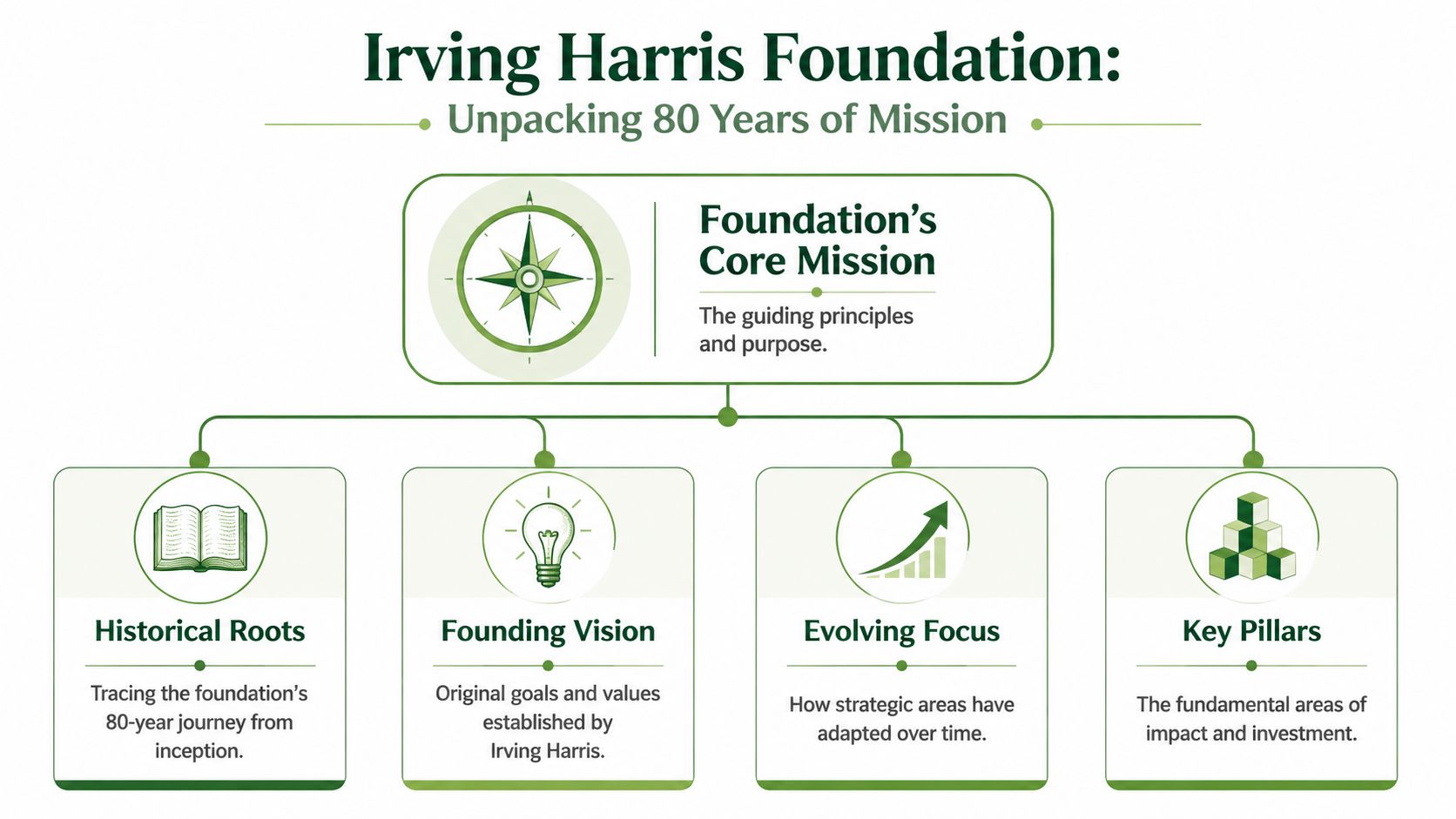
As noted earlier, the foundation frames its work around improving quality of life for children, families, and communities through human potential, social justice, and equity, with primary attention to infants, young children, and their families, while also supporting arts and culture.
For applicants, the operative phrase is the one about conditions affecting infants, young children, and their families. That wording usually signals a preference for work that reaches beyond a single service transaction. Stronger fits often show how a program affects caregiver capacity, family stability, mental health, community support, or another driver of healthy early development.
Direct service can still fit well.
But the case has to show more than demand and throughput. A proposal is stronger when it explains how the service changes the setting around the child, what barriers it reduces, and why that matters in the earliest years. With a spend-down foundation, that framing matters even more because the grant is not just buying one cycle of services. It is contributing to a final body of work the foundation wants to leave behind.
What the Chicago history tells you
The foundation's long Chicago presence also matters in practical terms. Family foundations with deep local roots often fund for civic effect as much as for program performance. They pay attention to who is building durable institutions, who can influence practice beyond one site, and which organizations help define the local response to issues affecting children and families.
That reading helps explain why arts and culture belongs in the mission instead of sitting off to the side. In this context, arts and culture can support belonging, family connection, community identity, and healthier environments for children. The same logic applies to social justice. It is not decorative language. It signals that the foundation cares about who has access to opportunity, which communities face structural barriers, and whether a grant helps correct those patterns.
A practical way to sort the mission is this:
| Mission language | What it often means for applicants |
|---|---|
| Human potential | Support healthy development early, not only respond after problems are entrenched |
| Social justice | Address structural barriers and unequal access, not just individual hardship |
| Equity | Be specific about who benefits, where disparities show up, and how the work responds |
| Infants and young children | Keep the earliest years central, even when the program serves whole families |
| Arts and culture | Show developmental, relational, or community value, not a stand-alone arts case |
Strong alignment usually comes from showing how early childhood, family conditions, and equity connect in day-to-day implementation.
What works and what doesn't
The strongest cases usually make a clean line from intervention to healthier early childhood conditions. Caregiver support, prenatal and postpartum services, infant and early childhood mental health, family economic supports tied to child well-being, and community-based environments that help families thrive all fit that logic.
Weaker cases tend to mention children without making the earliest years the center of the work. Reviewers can usually spot when infants and young children are secondary beneficiaries rather than the reason the program exists. For this foundation, especially under a closing timeline, mission fit is not about attaching the right labels. It is about showing that your work belongs in the foundation's legacy on early childhood, family well-being, and equity.
Decoding Their Funding Priorities and Grant Types
A common mistake with Irving Harris is treating it like a standard early childhood funder with a broad menu of grants. The public values are visible. The operating preferences are much less so, and that changes how a team should qualify the opportunity.
Public materials leave out many of the details grant teams usually want before investing time in outreach: typical grant size, renewal habits, decision timing, and how open the process really is. That gap matters because it shifts the work back to the applicant. Instead of matching yourself to a published checklist, you have to read the foundation through its partners, issue choices, and the kind of legacy a spend-down funder is likely trying to build.
Read for function, not category
The best clues come from how the foundation shows up in the field. Its profile with the Early Childhood Funders Collaborative points toward equity of outcomes and nurturing environments for pregnant women and very young children. For applicants, that usually translates into work tied to infant and maternal mental health, family stability, trauma-responsive care, and supports that improve the conditions around very young children rather than serving them only indirectly.
That distinction affects grant strategy.
A proposal centered on direct service can still fit, but it needs to do more than promise helpful programming. Stronger concepts usually show one of three things: the work improves practice, it strengthens a model others can use, or it changes a local system that affects families with infants and young children. Under a planned sunset, foundations often look for grants that leave behind something durable.
What they are likely willing to fund
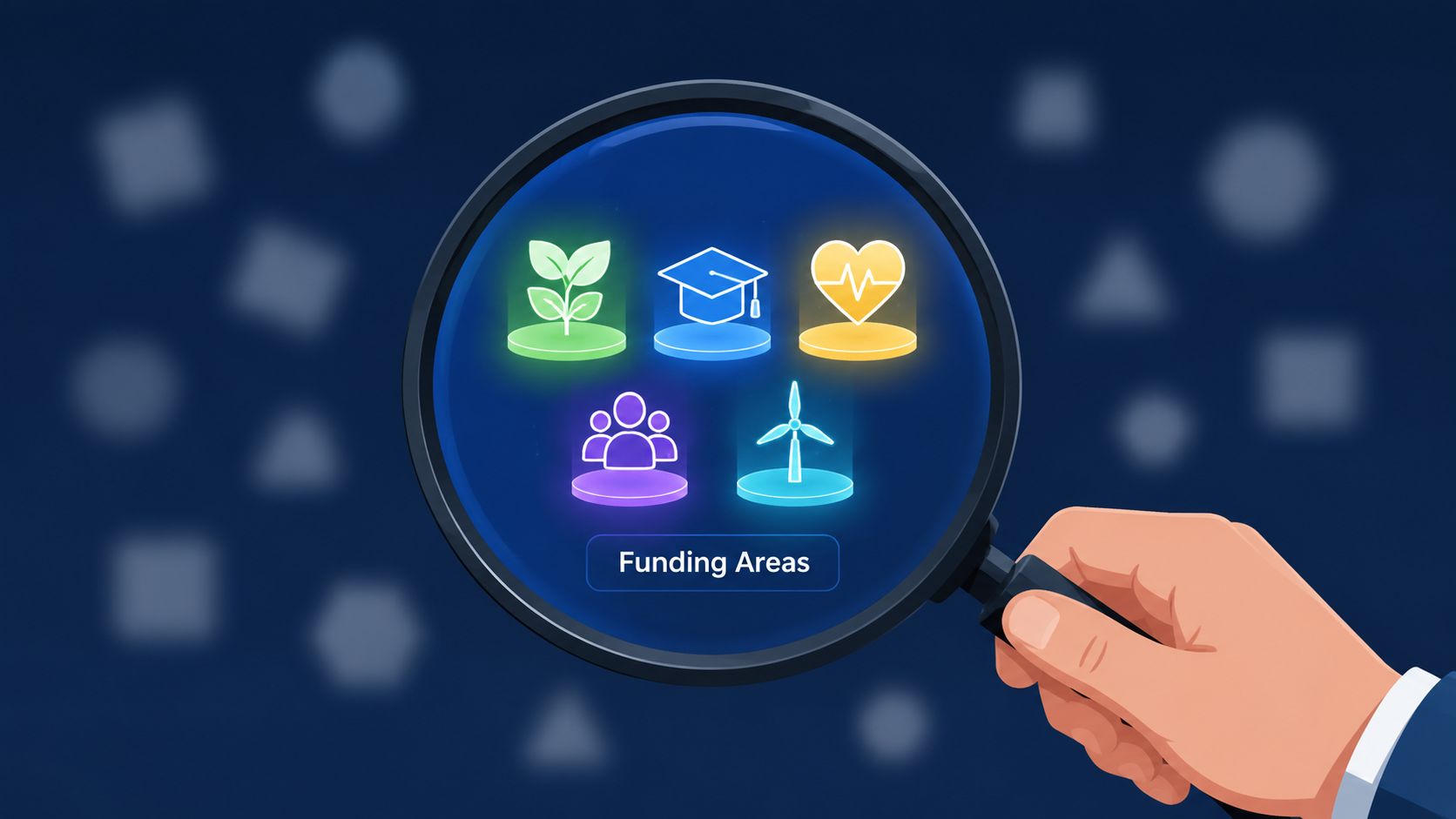
The foundation does not publish a tidy grant taxonomy, so it helps to think in terms of function:
- Program support for interventions closely tied to pregnancy, infancy, and the earliest years
- Capacity or model-building support when it improves how organizations deliver or spread effective early childhood work
- Field-building or systems work that can influence policy, practice, workforce development, or cross-sector coordination
- Time-bound strategic projects that can show progress within a defined window and continue after the grant ends
That last category deserves extra attention. A funder heading toward 2032 has less reason to back work that depends on indefinite renewal. Teams should be ready to show a realistic continuation path, whether through public funding, earned revenue, a larger donor base, or a partner institution. If that piece is weak, build it before you submit. A clear nonprofit sustainability plan is often the difference between an interesting idea and a fundable one.
Questions worth asking before you pursue
Use a harder screen than mission fit alone:
- Does the project improve conditions for families with infants and very young children in a way you can name precisely?
- Is the request tied to a model, practice change, or system effect that could outlast the grant?
- Can your team show progress on a timeline that makes sense for a closing funder?
- Does the work belong in the foundation's legacy, not just in your annual budget?
Many organizations can answer yes to the first question. Fewer can answer yes to all four. That is usually where the field narrows.
Sparse guidance often means the foundation is choosing carefully, relying on pattern recognition, relationships, and a high bar for interpretive fit. Generic requests tend to fail in that environment. The better approach is to present a tightly reasoned case for why your work fits the foundation's remaining years of grantmaking, what the grant would build, and what will still stand when the foundation is gone.
The Strategic Impact of the 2032 Sunset
A team spends weeks shaping a careful proposal around a strong ongoing program, asks for multi-year support, and still misses the mark. The problem usually is not mission fit. It is timing. A foundation that plans to close in 2032 reviews requests through a different lens.
The spend-down should shape how you frame the opportunity, the budget, the outcomes, and the endgame. In practice, closing foundations often shift away from work that mainly sustains current operations and toward work that leaves something standing after the grant period ends. That does not mean general support is impossible. It means even flexible funding usually needs a legacy case.
What a sunset funder is trying to accomplish
A perpetual funder can revisit, renew, and adjust over time. A spend-down funder has a shorter decision horizon. It has to decide what its remaining capital can establish before the foundation itself is gone.
That tends to reward proposals with four traits:
- Fast start: The work can begin without a long planning phase or major unresolved dependencies.
- Credible proof: The organization can show progress clearly enough that the foundation can point to results during its remaining years.
- Lasting value: The grant leaves behind a model, trained workforce, policy gain, implementation tool, or partnership structure that outlives the grant.
- Limited renewal risk: The request does not assume the foundation will be available for another round because the work is worthwhile.
This is the practical trade-off. A funder in spend-down mode may still care about urgent need, but need alone is rarely enough. The stronger case is that your project helps convert final-year capital into durable field impact.
If your team has not mapped that post-grant path yet, build one before submission. A clear nonprofit sustainability plan that shows what continues after grant funding ends makes the request easier to trust.
A useful primer on the broader idea of planned sunset strategy is below.
How this changes proposal strategy
The shift is easy to miss. Applicants often present the work as a good program that deserves support. For a closing funder, the sharper question is different: what will still matter because this grant was made?
That changes the framing.
| Weaker framing | Stronger framing |
|---|---|
| We need support to continue an ongoing program | This investment will strengthen a model with use beyond the grant term |
| Our organization serves families with significant needs | Our work improves early childhood conditions in a way partners can keep using |
| We hope to build a long-term relationship with the funder | We can produce meaningful value within the foundation's remaining window |
| This is a worthy project | This is a legacy-fit investment |
I would treat the 2032 date as more than background context. It is a screen. Projects that rely on indefinite subsidy, slow organizational turnaround, or vague future influence are harder to justify in a closing portfolio.
The best requests answer a stricter question: if this foundation wants its final grants to matter after it sunsets, why is this one a smart use of finite capital?
How to Craft a Competitive Proposal
A draft can look polished, align with the mission, and still miss the mark with this foundation. The common failure is strategic. Teams describe a good program but do not make the case for why this project deserves capital during a funder's final years.
Because public details on the foundation's approach are limited, a successful request must show clear judgment about fit, scale, and legacy value. The proposal needs to read like it understands the foundation is not just funding current services. It is deciding what work should still matter after 2032.
Lead with the post-2032 case
The strongest opening does not start with organizational history or a broad statement of need. It starts with what changes because this grant was made, and what remains usable after the foundation closes.
That staying power can show up in several ways:
- A model other providers can adopt
- A practice change inside a hospital, school, or family support system
- Training and supervision that leave stronger staff capacity in place
- A cross-sector process that improves referrals or coordination
- An organizational shift that makes the work more durable without future foundation support
Trade-offs matter. If the project depends on repeat grants to keep operating in its current form, say less about expansion and more about what can be retained by partners, public systems, or earned support. If the work is early-stage, explain why the timing still makes sense in a spend-down portfolio.
Build from evidence you already control
Do not over-claim. Do not pad the narrative with generic outcomes.
Use your own records, partner input, and operating results to answer five practical questions:
- Who benefits first? Keep infants, young children, pregnant women, caregivers, or family systems visible.
- What condition changes? Name the problem being reduced, not just the service being delivered.
- Why is your organization the right vehicle? Show the capability, trust, or partnerships that make execution believable.
- What remains after the grant ends? Spell out the asset, process, capacity, or system change that stays in place.
- What can you measure credibly? Use outcomes your team already tracks or can track without adding a complicated evaluation burden.
If your team needs a drafting structure, this nonprofit grant proposal template for grant narrative planning can help organize the case before you tailor it to this funder.
Do the off-website research
This is not a foundation where the website does all the work for you. The useful clues often sit outside the formal guidelines.
Review past partners, board connections, institutional relationships, public announcements, and collaborative efforts. Look for a pattern in where the foundation appears to place trust. I would pay close attention to organizations that combine direct service credibility with influence over practice, policy, training, or cultural norms. That combination often matters more in a spend-down context because it increases the odds that the work outlasts the grant.
A short internal memo before drafting should answer the questions below.
| Research question | What your team should look for |
|---|---|
| Where does the foundation seem to sit in the field? | Early childhood, family support, arts, equity, and social change intersections |
| What kinds of organizations appear plausible? | Service providers, intermediaries, policy groups, cultural institutions, conveners |
| What level of ambition fits? | Projects with consequences beyond one isolated program site |
| What makes an applicant harder to fund? | Dependence on renewal, weak measurement, unclear legacy value, slow path to results |
One more test helps. Remove your organization's name from the draft and read it cold. If the proposal could go to any family foundation with a child-focused mission, it is still too generic.
A competitive request to the Irving Harris Foundation should sound specific about what lasts, honest about the trade-offs, and adapted to a funder using finite capital to shape its final body of work.
Examples of Funded Projects and Partners
The public record doesn't hand applicants a neat catalog of current examples with all the practical details they'd like. That's part of the challenge. But the foundation's broader legacy still tells you something important about its taste.
A tribute to Irving B. Harris notes that Irving and Joan Harris had given $20 million to other causes beyond the foundation's grants, and the same legacy material describes sustained impact at significant scale over the past decade in early childhood through the Erikson tribute document. For a grant professional, that's not just an interesting family history point. It signals comfort with ambitious, field-shaping philanthropy.
What that looks like in practice
Think less about isolated pilot activity and more about projects that sit in one of these categories:
- Early childhood systems work that changes how support reaches families, not just how one nonprofit delivers a service
- Equity-centered family initiatives that improve environments for pregnant women, infants, and young children
- Arts and culture efforts that strengthen community conditions tied to child and family well-being
- Social change partnerships that move beyond charity into structural improvement
The lesson isn't that every proposal must be huge. It's that the idea should have consequence. Even a local project can look fundable if it influences practice, coordination, or learning outside a single transaction.
How to use examples without overclaiming
When teams see a legacy funder with broad influence, they sometimes overcorrect and pitch a grand theory with no operational discipline. That also misses. The right read is balanced: substantial ambition, tight execution.
A useful way to pressure-test your concept is to ask whether it sounds like a capstone investment or a routine subsidy. The Irving Harris Foundation's history suggests stronger alignment with the first category.
A project can be place-based and still be field-relevant. The key is whether others can learn from it, build on it, or carry it forward.
That's the kind of example worth putting in front of a closing foundation.
Your Nonprofit's Next Steps
At this point, the go or no-go decision should be easier. The Irving Harris Foundation is worth serious attention if your organization works at the intersection of early childhood, family conditions, and equity, and if you can frame your request as part of a closing-stage legacy, not a generic annual ask.
If your fit is only thematic, pause. Plenty of nonprofits can truthfully say they serve children and families. Fewer can show why their work is a strong use of finite spend-down capital.
Use this decision screen
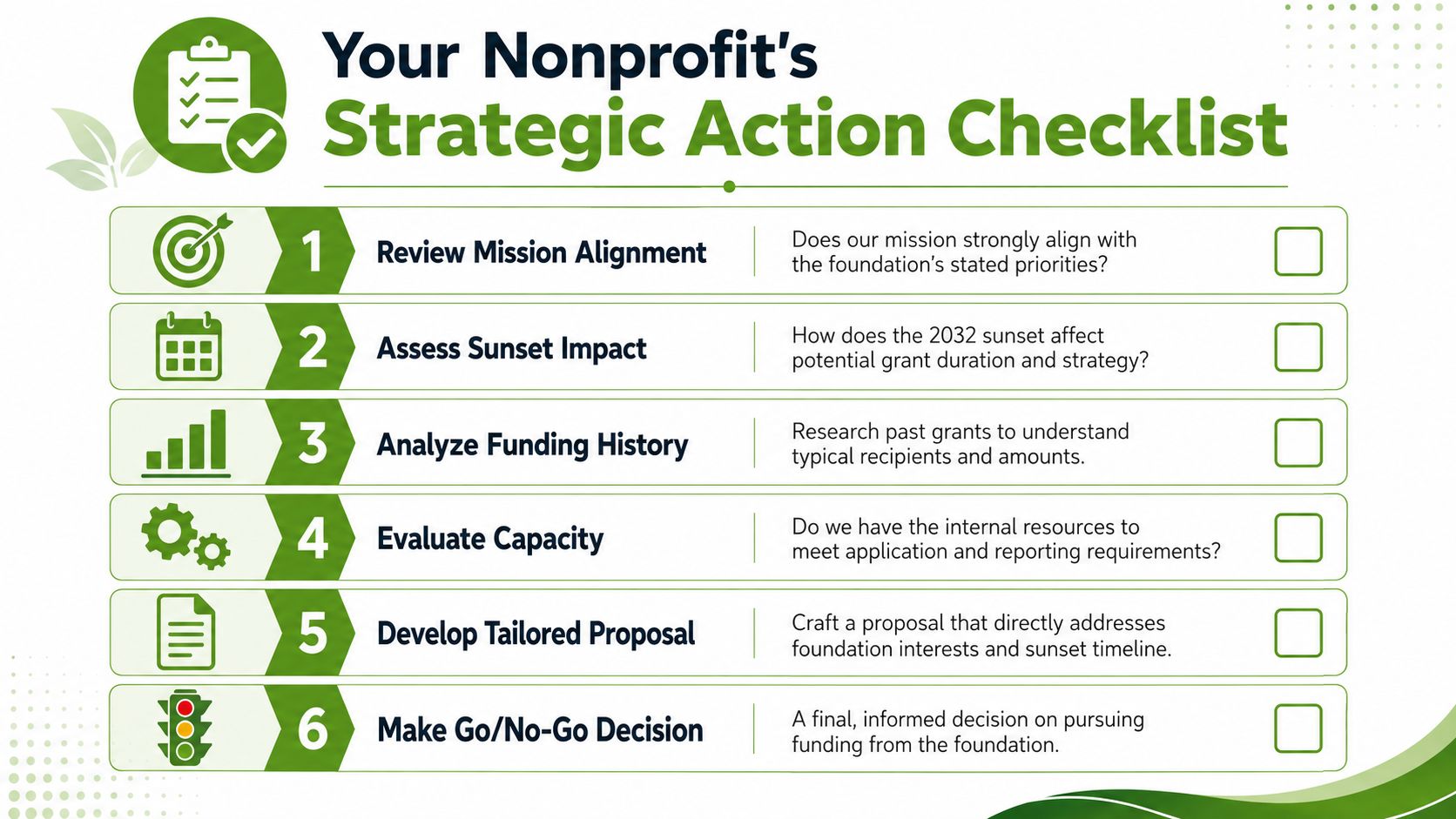
Before assigning writing time, run this short internal review:
- Mission fit is direct: Your work clearly connects to infants, young children, families, pregnancy-related support, or the conditions around them.
- Equity is embedded: Equity isn't a paragraph near the end. It is visible in who you serve, how you design services, and what barriers you address.
- Legacy value is real: The grant would leave behind something durable, useful, or transferable.
- Outcomes are documentable: Your team can show progress without inventing new measurement systems midstream.
- Dependency is manageable: The concept does not collapse if the foundation cannot renew.
- Research capacity exists: Someone on your team can investigate partners, patterns, and past positioning before drafting.
What to do this week
If the answer is go, don't start by writing the narrative. Start by writing the argument.
Draft a one-page concept note that names the target population, the condition you will improve, the measurable results you can credibly report, and what remains after the grant ends. Then compare that note against the foundation's mission language and your research on likely priorities.
After that, gather your internal proof points. Pull program data, evaluation language, partnership details, and budget assumptions into one place. You want a compact evidence file before the first draft starts.
For teams that need a visual prompt during this review, the screenshot below can serve as a simple reminder to keep your opportunity research and decision process organized.
The Irving Harris Foundation is not a fit for everyone. But for organizations with strong early childhood alignment and a credible legacy proposition, it may be one of the more strategic private foundation targets still available in this window.
If your team needs help finding aligned funders, pressure-testing fit, and turning scattered research into a stronger grant pipeline, Fundsprout is built for that work. It helps nonprofits identify relevant opportunities, organize proposal inputs, and move from prospect research to submission with less guesswork.
Try 14 days free
Get started with Fundsprout so you can focus on what really matters.