Grant Writing Compensation: Fair Rates
Unlock fair grant writing compensation. Our guide covers salaries, hourly rates, and ROI, helping nonprofits budget effectively and attract top talent.

Abdifatah Ali
Co-Founder
Figuring out how much to pay a grant writer is one of the most common questions I hear from nonprofit leaders. It's a tricky balance. You need top talent to secure funding, but you also have to be a responsible steward of your organization’s resources.
Before we dive in, let’s get one critical point out of the way: never, ever pay a grant writer a percentage or commission on the funds they raise. This practice is a major red flag, considered unethical by professional associations, and can even violate a funder's terms and conditions. Stick to established, professional compensation models.
Decoding Grant Writer Compensation in 2026
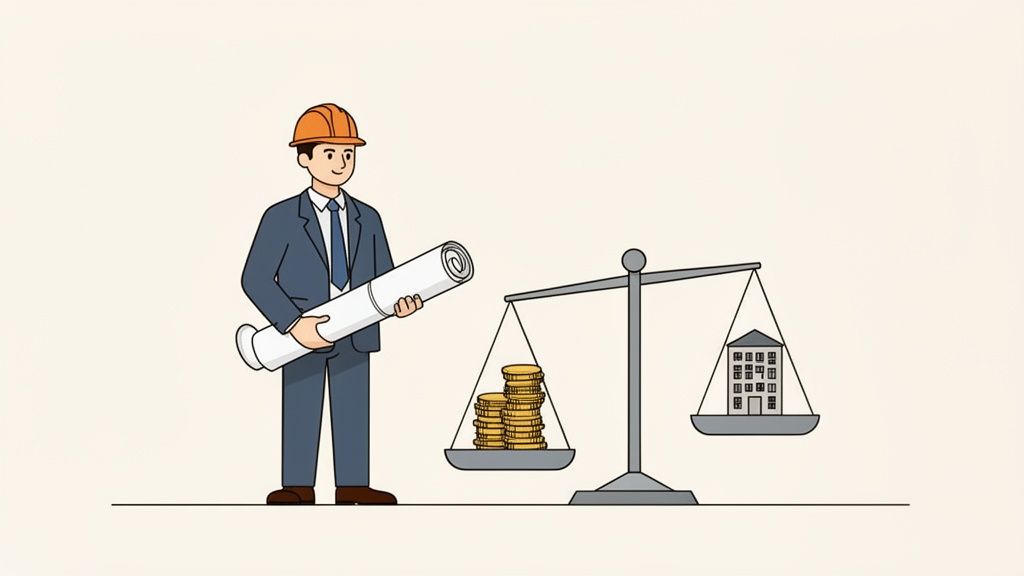
Think of hiring a grant writer like hiring an architect to design a new community center. You wouldn't pay them a percentage of the building's final value; you pay for their expertise, their time, and the detailed blueprints they create. The cost depends on the project's complexity and the architect's experience.
Grant writing is the same. The right compensation structure depends entirely on your specific needs. Are you submitting grants year-round? A salaried employee might be your best bet. Tackling one massive federal grant? A project-based fee provides clarity and a fixed budget. Or maybe you just need an expert to review proposals or provide guidance a few hours a month? An hourly contractor offers that flexibility.
To help you choose, here’s a quick-reference table that breaks down the most common compensation models.
Grant Writer Compensation Models at a Glance
| Compensation Model | Typical Rate or Salary | Best For |
|---|---|---|
| Salaried Employee | $47,000 - $87,000+ per year | Organizations with consistent, high-volume grant needs. |
| Hourly Contractor | $50 - $150+ per hour | Flexible support, grant reviews, or organizations with fluctuating needs. |
| Project-Based Fee | $2,000 - $10,000+ per grant | One-time, large-scale grant applications with a defined scope. |
| Retainer Fee | $1,000 - $5,000+ per month | Ongoing strategic support, prospect research, and proposal development. |
Each of these models has its place. The key is to match the payment structure to your grant strategy and budget, ensuring you get the expert support you need without overextending your finances.
Understanding the Numbers
The market for grant professionals is always shifting based on experience, location, and the type of grants being pursued. As of 2026, the data shows an average base salary for a U.S. grant writer sits at $57,386, with some total compensation packages reaching $87,000 or more with bonuses.
On the entry-level side, someone new to the field might start around $46,936. With just a few years of solid experience, that can quickly jump to nearly $54,000. It's a stable career path, which is valuable in a sector where the turnover rate among foundation staff can be as high as 12.3%. That instability on the funder side often pushes more nonprofits to hire dependable freelance experts. For a deeper look at these trends, the Council on Foundations' latest report is an excellent resource.
The Impact of Modern Tools
One of the biggest changes I've seen in recent years is how technology, particularly AI-powered platforms, is reshaping the cost equation. These tools are fantastic for automating the more tedious parts of the job, like initial prospect research or creating first drafts.
This doesn't replace the grant writer. Instead, it frees up your human expert—whether they're on staff or a contractor—to focus on what truly matters: building relationships with funders, developing a winning strategy, and weaving a powerful story that connects your mission to their goals. The result is that organizations can often get better results while keeping a tighter rein on their budget.
How Should We Pay Our Grant Writer? Exploring the Options
One of the first questions I get from nonprofit leaders is, "How should we pay a grant writer?" There's no single right answer. The best compensation model depends entirely on your organization’s reality—your budget, your goals, and just how many grants you plan to tackle in a year.
Think of it this way: the way you pay for grant writing help should be a direct reflection of your strategy. Let's walk through the most common structures so you can figure out what makes the most sense for your mission.
The In-House Salaried Position
For organizations with a constant, heavy stream of grant activity, bringing a writer on as a full-time, salaried employee is a game-changer. This isn't just about hiring a writer; it's about embedding a strategic partner into the very fabric of your team.
This is the right move if your nonprofit:
- Is constantly juggling multiple grant deadlines all year long.
- Needs someone dedicated to prospect research and building relationships with funders.
- Relies on a writer who has a deep, intuitive grasp of your programs and can pivot quickly.
Imagine a large hospital foundation with a continuous grant cycle. They need someone on the inside who lives and breathes their work. That in-house expert becomes the steward of their entire grants program, from finding opportunities to filing the final reports. This creates incredible consistency and builds a deep well of institutional knowledge.
By bringing a grant writer onto your staff, you're investing in someone who grows right alongside your mission. Their intimate knowledge of your work is what transforms a good proposal into an unforgettable one.
Of course, a full-time hire is a significant financial commitment. It's not just the salary; you have to factor in benefits, taxes, and all the other overhead costs. For a smaller organization or one with sporadic grant needs, other options are often a better fit.
Freelance and Contractor Models
When you don't have the workload (or budget) for a full-time employee, hiring a freelance or contract grant writer gives you fantastic flexibility. It’s about getting top-tier expertise exactly when you need it, without the long-term overhead. You’ll generally see this arranged in two ways: by the hour or by the project.
Hourly Rates for Flexible Support
Paying by the hour works beautifully for tasks with a fuzzy timeline or when you need short-term help. Maybe you need an expert to review a proposal your team drafted, coach you through a tricky application, or spend a few hours researching new funding sources.
The cost for hourly help can vary quite a bit, and for good reason. It all depends on:
- The writer's experience: A veteran who has secured multi-million dollar federal grants will naturally charge more than someone who is newer to the field and focuses on local foundations.
- The grant's complexity: A simple letter of inquiry is a world away from a 100-page federal behemoth that requires mountains of data and coordination.
- The funder: Federal grants are notoriously complex and time-consuming, and the rates reflect that specialized skill set.
As of 2026, experienced grant writers are typically billing between $40 and $150 per hour. A full proposal might run anywhere from $500 to $7,500, and complex federal applications will be even higher. One thing is non-negotiable: both the Association of Fundraising Professionals (AFP) and the Grant Professionals Association (GPA) have strict ethical codes that forbid paying grant writers on commission. You can read more about these standards from professional groups like the Professional Grant Writer group.
Per-Project Flat Fees for Predictable Budgets
For a grant application with a clear beginning and end, a flat-fee, per-project rate is often the cleanest approach for everyone. It offers total budget predictability. You and the writer agree on a single price for a specific scope of work, like taking one grant proposal from initial draft to final submission.
This is the perfect model for, say, a local theater company that applies for a big state arts council grant once a year. They know exactly what that grant will cost them to prepare, and they can build it right into their annual budget. This clarity removes any financial surprises and makes sure everyone is aligned on the work and the timeline from day one.
Of all the ways to pay a grant writer, there's one that you should run from immediately: paying them on commission. It's an idea that pops up often, usually from well-meaning board members. "Let's pay them a percentage of the grant money," they say. "It'll motivate them!"
While it seems logical on the surface, this approach is a massive ethical problem. It's so problematic, in fact, that major professional groups like the Association of Fundraising Professionals (AFP) and the Grant Professionals Association (GPA) have banned it outright.
Here’s why it’s a red line you should never cross.
It Puts Everyone in a Terrible Position
Paying a writer a cut of the grant award creates a fundamental conflict of interest. Suddenly, the writer’s primary goal isn't to help your nonprofit fulfill its mission; it's to get paid.
This skewed incentive can lead them to:
- Chase any and all funding, even if a grant is a terrible fit for your programs or long-term strategy.
- Stretch the truth about your organization's capabilities or past results to make an application seem more appealing.
- Push your team to warp your programs just to fit a funder’s quirky guidelines, pulling you away from the work you're meant to do.
A grant professional’s true value is in finding the best funding to support your mission, not just any funding. Commission pay pits their financial needs directly against your nonprofit's best interests. This is exactly the kind of situation that demands clear internal policies. For guidance, check out our resource on creating a conflict of interest policy for nonprofits.
The Doctor Analogy
Think about it this way: would you ever agree to pay a surgeon only if the patient makes a complete and total recovery? Of course not. We pay doctors for their time, their skill, and their best professional judgment. We understand they can't control every variable, like a patient's genetics or lifestyle choices.
A grant writer is like that doctor. They use their expertise to build the strongest possible case for funding, but they don't control the final outcome. Success depends on numerous external factors.
A grant's success is influenced by so much more than just the proposal itself. Things that are completely out of the writer’s hands include:
- The strength of your programs and your nonprofit's reputation in the community.
- How many other organizations applied and the quality of their proposals.
- A foundation’s internal politics or shifting priorities.
- Pre-existing relationships the funder might have with other applicants.
Paying on commission unfairly punishes a writer for things they can’t possibly influence. Ethical pay—like an hourly rate or a flat project fee—compensates them for what they can control: their expertise, their effort, and a high-quality finished product.
On top of all that, most foundations and government funders explicitly forbid using their grant money to pay for fundraising commissions. If you get caught using grant funds to pay your writer's "success fee," you could be forced to return the entire award. It’s a costly mistake that can damage your reputation for years.
The bottom line? Stick to ethical grant writing compensation. You'll protect your organization, maintain your integrity, and build healthier, more successful relationships with your grant professionals.
How Much Should You Pay a Grant Writer?
Let's get right to it—figuring out how much to pay a grant writer can feel like a total guessing game. You know you need the expertise, but what’s a fair price? To budget with any real confidence, you need to understand the market.
This isn't about pulling a number out of thin air. It’s about making a strategic investment in your nonprofit's future. The first thing to get straight is that you're paying for a professional service, not for a guaranteed win. This is a critical ethical line.
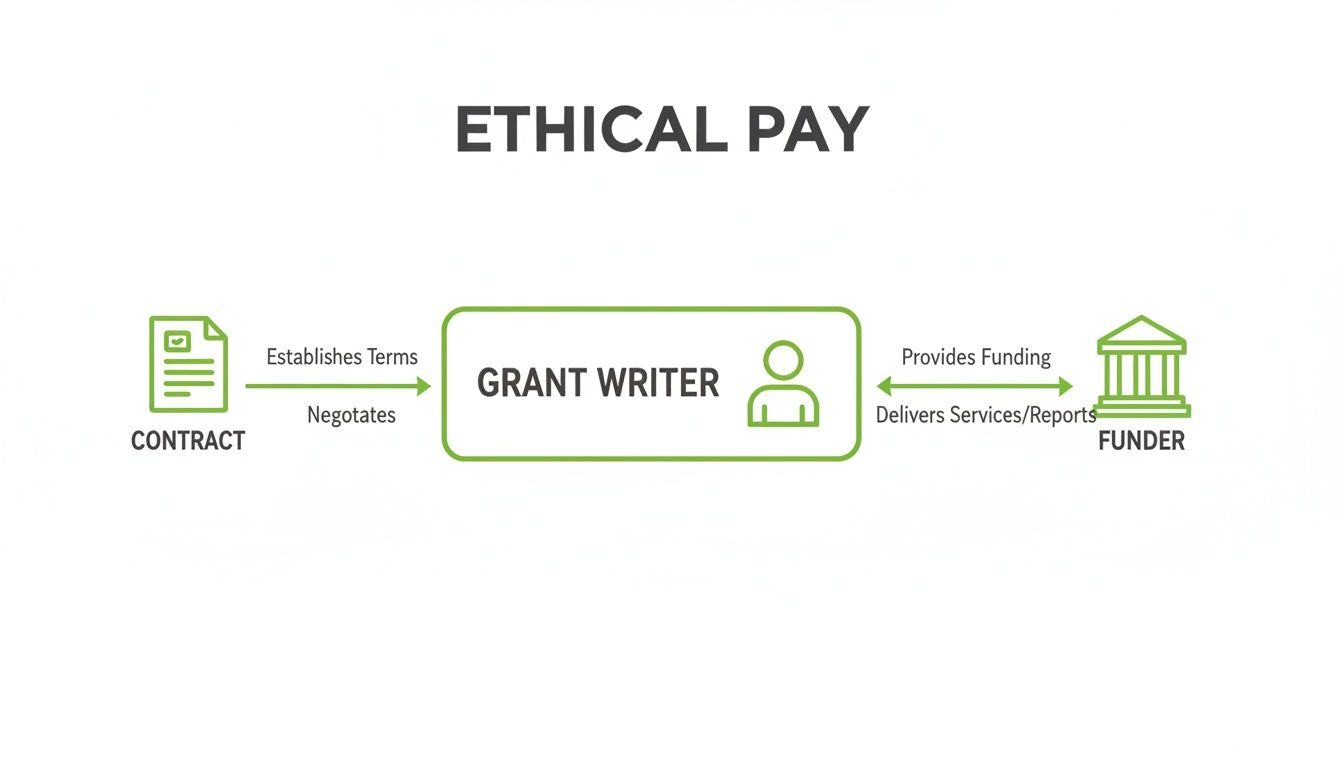
As the diagram above shows, the relationship is governed by a contract between your organization and the writer. Their payment comes from you for their time, skill, and effort—completely separate from the funder's decision. This keeps everything professional and above board.
What Shapes a Grant Writer's Rate?
A grant writer's fee isn't a one-size-fits-all number. Just like any other profession, it’s shaped by a few key factors you absolutely need to consider.
- Experience Level: There's a world of difference between someone new to the field and a seasoned pro with a long track record of securing multi-million dollar federal grants. You’re paying for that experience, the refined strategy, and the invaluable "spidey-sense" they've developed over years of work.
- Geographic Location: This one’s pretty straightforward. The cost of living and doing business in New York City or San Francisco is dramatically higher than in a small town in the Midwest. Rates, both for employees and freelancers, will reflect that reality.
- Grant Complexity: Don't make the mistake of thinking all grants are created equal. A simple two-page letter of inquiry to a local foundation is a molehill compared to the mountain of a 150-page federal proposal that requires coordinating with multiple partners and compiling dozens of attachments. The fee must match the climb.
Think of it as an investment in specialized expertise. A higher rate often comes with a veteran writer whose strategic mind can spot opportunities—and potential pitfalls—that others might miss. Their guidance can deliver a return that makes the initial cost look like a bargain.
2026 Grant Writer Compensation Benchmarks
The demand for skilled grant writers is on the rise. We saw freelancers have incredible success in early 2025, with some mentorship programs reporting their members secured over $33 million in grant funding for their clients. That’s a testament to the value they bring.
For 2026, the ERI Economic Research Institute projects the average U.S. grant writer will earn $78,284 per year or $38 per hour. Of course, that’s just an average; actual pay starts around $55,190 for entry-level roles and climbs significantly for top-tier experts. You can see more details on grant writer salary trends from PayScale.
What's driving this? For one, instability on the funder side. The Council on Foundations reported a 12.3% turnover rate for their own staff in 2025. With program officers changing constantly, many nonprofits are looking for the steady hand of an experienced writer to navigate the chaos.
To make sure your compensation is competitive, you can use metrics like the Comp Ratio Formula to compare your proposed pay against market benchmarks.
To help you visualize what this looks like in practice, here is a breakdown of typical compensation ranges you can expect to see in 2026.
2026 Grant Writer Compensation Benchmarks
| Role and Experience | Average Annual Salary (In-House) | Typical Hourly Rate (Freelance) | Typical Per-Project Fee (Freelance) |
|---|---|---|---|
| Entry-Level (0-2 years) | $55,000 – $65,000 | $40 – $75 | $1,500 – $4,000 |
| Mid-Career (3-7 years) | $65,000 – $80,000 | $75 – $125 | $3,000 – $8,000 |
| Senior/Expert (8+ years) | $80,000 – $110,000+ | $125 – $200+ | $5,000 – $15,000+ |
These figures are a great starting point for your budget conversations. Remember that complex federal grants or highly specialized fields (like medical research) will often command fees at the highest end of—or even above—these ranges.
How Technology Can Help Manage Costs
Newer tools are also changing the financial picture for nonprofits. AI platforms like Fundsprout are fantastic for handling the grunt work—automating prospect research, generating first drafts, and organizing data. This slashes the billable hours your writer needs to spend on tedious tasks.
You can learn more about how to account for this in our guide on optimizing grant writing time.
This is a game-changer. By letting technology handle the basics, your grant writer—whether they’re on staff or a freelancer—can focus their brilliant mind on the work that truly moves the needle. They get more time for refining your story, building relationships with funders, and crafting a proposal that’s impossible to ignore. It’s a smarter, more strategic way to fund your mission.
Calculating the ROI of Your Grant Writer
It’s easy to get stuck on the price tag when you think about bringing on a grant writer. But focusing only on the cost is like looking at just one side of a coin. The real question isn't "How much will this cost us?" but "What will we get back from this investment?"
Calculating the Return on Investment (ROI) for your grant writer shifts the entire conversation. It turns an expense into a strategic move, framing it as an investment in the revenue that fuels your mission.
The Financial ROI Formula
At its core, calculating the financial return is pretty straightforward. You're just comparing the grant money you won to the amount you spent to get it.
Here's the simple formula: (Total Grant Funding Awarded - Grant Writing Costs) / Grant Writing Costs
Let's put that into a real-world scenario. Imagine your nonprofit invests $5,000 to hire a freelance grant writer for a complex federal application. A few months later, you get the good news: you've been awarded $100,000.
Here’s how the math breaks down:
- ($100,000 Award - $5,000 Cost) / $5,000 Cost = 19
- To turn that into a percentage, just multiply by 100.
- That’s a 1,900% ROI.
That single number gives you a powerful, data-driven argument to show your board and stakeholders just how valuable a skilled grant professional can be.
Beyond the Bottom Line
But the story doesn't end with the numbers. A great grant writer creates a ripple effect of benefits throughout your organization, and many of them are much harder to put a price tag on.
Think of it this way—they aren't just bringing in cash; they're building long-term assets.
- A Reusable Content Library: A professional writer doesn’t just write one grant; they build a treasure chest of compelling content. They craft the definitive narrative about your mission, programs, and impact. You can then dip into this "case for support" for future grants, donor letters, and marketing campaigns, saving countless hours down the road.
- Freed-Up Leadership: When a dedicated writer is managing the grant process, your executive director and key program staff are no longer bogged down. They can get back to what they do best—steering the ship, delivering services, and building relationships with the people who matter most to your mission.
- Stronger Program Design: The grant writing process is rigorous. It forces you to get crystal clear on your goals, how you'll measure success, and what your budget truly needs to be. This sharpens not just the proposal, but your entire program.
The most significant return from hiring a professional grant writer isn't just the money they bring in. It's the capacity and clarity they build within your organization, strengthening your mission from the inside out.
Modern tools can amplify these returns even further. AI-powered platforms can help fine-tune your proposals and improve win rates, giving your ROI a serious boost. These systems can also make the budgeting part of the process much smoother. If you need a hand structuring your grant financials, you might find our comprehensive grant proposal budget template helpful.
By looking at the full picture—both the financial and non-financial returns—you can make a confident, strategic decision that will pay dividends for years to come.
Attracting Top Talent with Clear Agreements
So, you’ve landed on the right grant writing compensation model for your nonprofit. That's a huge step. But the next one is just as important—formalizing the relationship with a rock-solid agreement. This isn't just about covering your legal bases; it's your single best tool for attracting and keeping an incredible grant professional.
Think of your job description or contract as a shared roadmap. It shows where you're going (successful grant submissions!) and clearly marks the path to get there. When expectations are fuzzy, you’re just inviting confusion, disputes, and a whole lot of frustration for everyone involved.
Crafting the In-House Job Description
When you're hiring a full-time, salaried grant writer, the job description is your first handshake. It needs to do more than list tasks. It has to sell the opportunity and paint a vivid picture of the impact a great candidate can make.
A compelling job description should detail:
- Core Responsibilities: Get specific. Go beyond "write grants" and include things like prospecting for new funding sources, managing the grants calendar, collaborating with program staff, and handling post-award reporting.
- Essential Skills: What does "great" look like for you? Be clear about must-haves like exceptional persuasive writing, meticulous research skills, and direct experience with certain funders (e.g., federal grants vs. family foundations).
- Success Metrics: How will you measure performance? This isn't about hitting a 100% win rate. It's about process-driven goals like the number of high-quality proposals submitted quarterly or the timeliness of stewardship reports.
The Freelance Contractor's Checklist
For a freelance or contract writer, the agreement is the entire foundation of your relationship. A handshake deal is a recipe for disaster. This is where you need a detailed blueprint to prevent scope creep and ensure both sides are perfectly aligned from day one. Using dedicated tools to build professional agreements can be a lifesaver here.
Your freelance contract absolutely must cover:
- Detailed Scope of Work: What, precisely, is the project? Is it one federal grant proposal or a package of 5 foundation letters of inquiry? Define the exact deliverables.
- Clear Timelines: Map out the key dates. When is the first draft due? When do you need to provide feedback? What’s the final submission deadline?
- Payment Schedule: How and when will payments be made? A common structure is 50% upfront and 50% upon submission.
- Revision Rounds: This is a classic friction point. Specify how many rounds of edits are included in the fee to avoid endless back-and-forth.
- Ownership of Materials: Clarify that the nonprofit retains ownership of all proposal content once the contract is complete.
- Communication Plan: Set expectations for check-ins. Will you have a weekly 15-minute call or communicate primarily via email?
A strong contract is the foundation of a successful partnership. It replaces assumptions with agreements, preventing future conflicts by fostering radical clarity from the very beginning.
Taking the time to build a thorough, transparent agreement does more than just protect your organization. It signals to a potential hire that you are professional, organized, and serious about their work. For a seasoned grant writer weighing multiple offers, that level of clarity and respect is often the deciding factor. Don't leave it to chance—put it in writing.
Your Top Compensation Questions, Answered
Okay, we’ve walked through the different compensation models, from hourly rates to retainers. But theory is one thing—real life is another. This is where the rubber meets the road, and you're faced with specific, tricky situations.
Let's dig into some of the most common questions that pop up when you're actually trying to hire and pay a grant writer.
Can We Offer a Bonus for a Successful Grant?
This is probably the most frequent—and most critical—question I hear. So let's be crystal clear: paying a writer a straight commission or a percentage of the grant money is a major ethical red flag. It’s forbidden by the Association of Fundraising Professionals (AFP) for good reason.
However, that doesn't mean you can't reward great work. A pre-negotiated performance bonus is a perfectly acceptable alternative, as long as you do it right. The key is that the bonus can't be a percentage of the grant itself.
Instead, think of it as a flat-rate reward for meeting specific work-related goals the writer can actually control. For instance, you might offer a modest bonus for submitting five high-quality, on-time proposals within a single quarter.
The crucial difference is this: you’re rewarding the process and effort (excellent, efficient work), not the outcome (the funder's decision), which is often unpredictable. This bonus structure must be spelled out in the contract from day one to avoid any hint of a commission-based deal. A fair base pay—whether hourly or per-project—should always be the foundation of their compensation.
How Can a Small Nonprofit Afford a Professional Writer?
For a small or brand-new nonprofit, the thought of hiring a professional grant writer can feel completely out of reach. I get it. But it doesn't have to be. The trick is to start small and get creative instead of jumping straight to a full-time hire.
Here are a few strategies I’ve seen work wonders:
- Start with a single project. Find your most promising grant opportunity and hire a freelancer for just that one proposal. It’s a contained investment that lets you test the waters and see a direct return.
- Share the cost. Team up with another small nonprofit in your community. You can split the cost of a contract grant writer, giving you both access to top-tier talent for a fraction of what it would cost alone.
- Use tech to your advantage. Modern tools can help automate the most time-consuming parts of the job, like researching funders or structuring first drafts. This cuts down on the billable hours you’d need to pay a writer for, making their strategic guidance much more affordable.
What Should We Look for Besides the Cost?
While your budget is obviously important, focusing only on the price tag is a classic mistake. When it comes to grant writing, the lowest bidder is almost never the best value. A cheap writer who doesn't secure funding is a 100% loss. An experienced pro who costs more but delivers results provides an incredible return.
So, look past the hourly rate and search for these signs of a true professional:
- A proven track record with glowing, relevant references. Don't be afraid to ask for them.
- Clear and compelling writing samples that match the style of funders you’re targeting.
- Deep experience with funders in your specific niche or community.
- They ask great questions. During the interview, a real strategist will ask insightful questions that show they’re already thinking about your mission and how to position it for success.
A great grant writer isn't just a wordsmith; they are a strategist, a project manager, and a genuine partner in your mission. Finding someone who truly connects with your work is always worth more than saving a few dollars an hour.
At Fundsprout, we believe every great mission deserves a chance to be funded. Our AI-powered platform helps you find the perfect grant opportunities and craft winning proposals faster. Discover how Fundsprout can amplify your impact by visiting https://www.fundsprout.ai.
Try 14 days free
Get started with Fundsprout so you can focus on what really matters.