Sustainable Funding for Charter Schools
Unlock funding for charter schools. Explore public revenue, federal grants, facility financing, and sustainable pipeline strategies.


Abdifatah Ali
Co-Founder
You’re probably dealing with this right now. Enrollment is steady, your team is delivering for students, and yet the financial picture still feels fragile. One grant ends, a facility invoice lands, a compliance deadline creeps up, and suddenly “funding for charter schools” stops feeling like a policy topic and starts feeling like a daily operating problem.
That confusion is normal. Charter school finance is rarely a single stream of money that arrives neatly and predictably. It’s a layered system with public revenue, targeted grants, facility financing, and private support all moving on different calendars with different rules. If you don’t organize those pieces intentionally, the school can look funded on paper while still facing real cash flow stress in practice.
The good news is that the system gets easier to manage once you stop treating each opportunity as a one-off win and start treating funding as a structure you build.
The Charter School Funding Quilt Explained
A charter school budget works less like a blanket and more like a quilt. A blanket is one piece. A quilt is stitched together from many pieces that each serve a different purpose. That’s the right mental model for funding for charter schools.
One patch is your recurring public revenue. Another patch might be a startup or expansion grant. Another pays for facilities. Another supports a specialized student population or a new program. When leaders expect one funding source to do everything, they usually run into trouble. The school ends up using operating dollars to cover costs that should have been supported elsewhere.

The base layer is public funding
Most charter schools start with per-pupil public funding. In simple terms, the money generally follows students. If enrollment changes, revenue changes. That sounds straightforward until you see how uneven the situation is across states.
The charter schools industry is projected to reach $61.8 billion in 2026, and national per-pupil funding gaps exceed $17,000 between the highest-funding and lowest-funding states. The same analysis notes that 17 states have only modestly progressive funding relative to poverty, which helps explain why some schools face far steeper resource pressure than others even when student needs are similar (IBISWorld charter schools industry analysis).
That’s where many nonprofit leaders get confused. They hear “public school” and assume charter schools have roughly the same financial footing as district schools. Often, they don’t.
Practical rule: Never assume your primary funding stream is sufficient just because it’s public. Public doesn’t always mean comprehensive.
Why the gap feels bigger than expected
Per-pupil funding is a strong foundation, but it often leaves visible holes. Charter schools still need staff, curriculum, student supports, technology, transportation arrangements, compliance systems, and a building. If some of those costs aren’t fully covered by the base formula, the school has to patch the gap elsewhere.
A helpful way to think about the quilt is by category:
- Public funding streams carry routine operations and are usually tied to enrollment.
- Facilities and capital funding helps with buildings, acquisition, renovation, and major physical costs.
- Private and philanthropic support can fund expansion, innovation, donor-backed initiatives, or needs that public formulas don’t address well.
What each patch is good for
Not every patch should be used for every purpose. That’s a common planning error.
| Funding patch | Best use | Common mistake |
|---|---|---|
| Per-pupil public revenue | Core operations | Using it to absorb all facility strain |
| Grants and competitive programs | Growth, launch, expansion, targeted initiatives | Treating them as guaranteed annual revenue |
| Private giving and philanthropy | Flexible support, innovation, campaign-based needs | Waiting until there’s a budget crisis to build donor relationships |
A strong school doesn’t just chase money. It matches each funding source to the job it’s meant to do.
Diversification is a survival skill
When one patch weakens, the quilt shouldn’t fall apart. That’s why diversification matters so much. A school that depends too heavily on one revenue type is more exposed to enrollment swings, grant timing, policy changes, and reimbursement delays.
If you’re leading a charter school or supporting one as a nonprofit partner, the strategic question isn’t “Where can we get money?” It’s “How do we build a funding quilt that stays intact when one patch shifts?”
That shift in thinking makes everything else easier.
Navigating Public Funding Streams
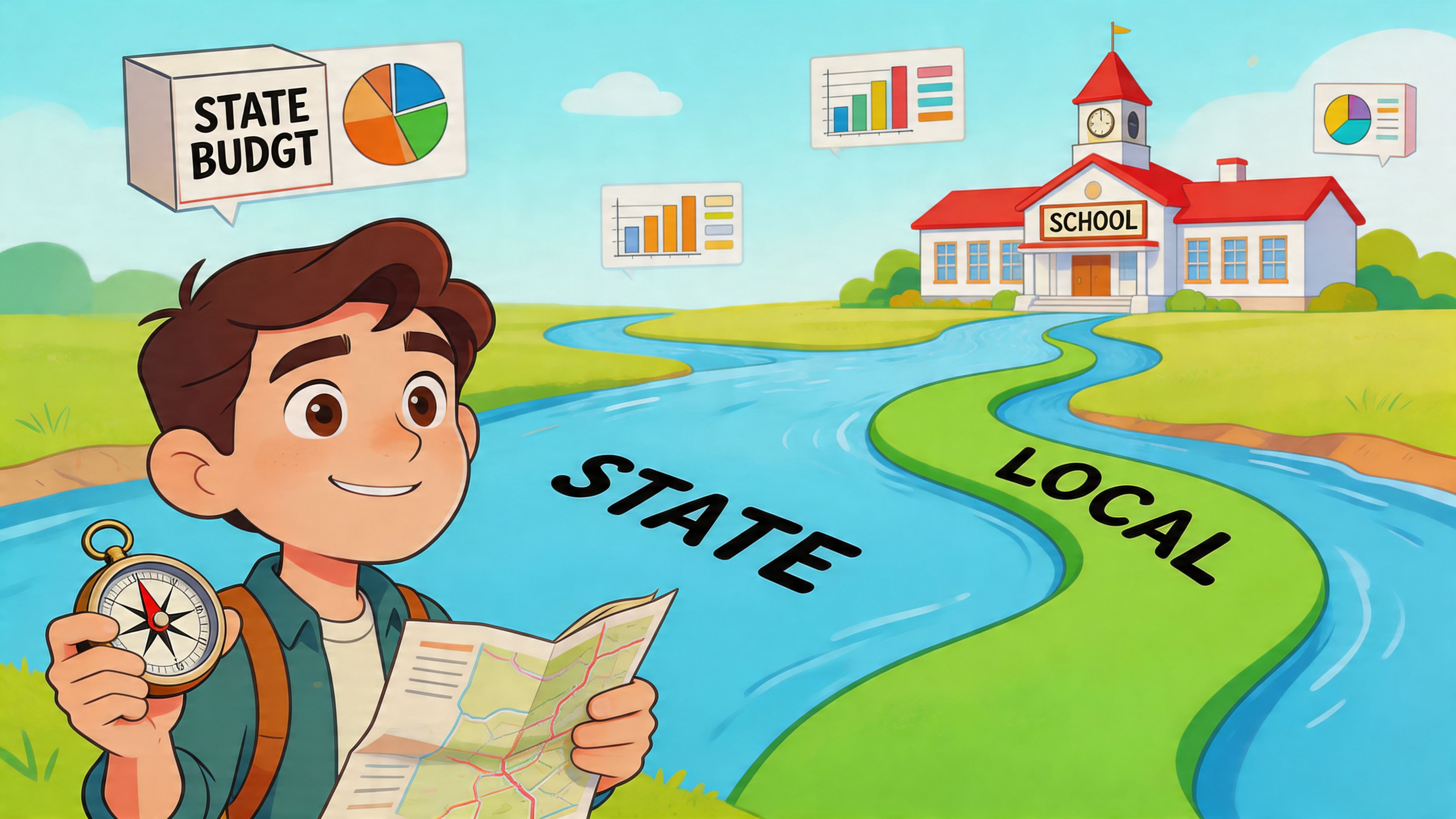
Public funding is the bedrock, but it’s also where people often oversimplify. They hear terms like LCFF, ECS, or ADA and assume those are technical labels for a system that more or less works the same everywhere. It doesn’t.
State funding models vary sharply, and those differences affect not only how much money comes in, but when it arrives, what it can cover, and how much local pressure it creates.
Enrollment drives revenue
At the operational level, public charter funding is often tied to student count or attendance-based measures. That creates a direct link between recruitment, retention, attendance practices, and budget stability. If your enrollment team and your finance team aren’t talking, you can end up budgeting for students who never generate the expected revenue.
School leaders can get tripped up. A budget may look balanced in spring planning, then shift fast if fall enrollment lands differently than expected or if attendance patterns affect funding calculations.
Your finance model should treat enrollment as a monitored operational indicator, not just an academic or outreach metric.
States solve the same problem in different ways
Massachusetts and Connecticut offer a good example of how different these systems can be. In Massachusetts, districts front facilities costs and are reimbursed by the state over a multi-year schedule. In Connecticut, charter schools can access start-up grants up to $500,000 plus per-student grants of $3,000 for facility and operational costs through a fixed-grant framework rather than a district pass-through model (MassBudget charter school funding explainer).
Those two approaches create very different planning conditions.
Why this matters in practice
Here’s a plain-language comparison:
- Massachusetts-style reimbursement dynamics can create timing friction because another public actor fronts costs before the state settles them.
- Connecticut-style grant support is easier to model in a startup budget because the amount is more clearly defined.
- Both models still require planning because neither guarantees that every cost pressure disappears.
A leader who copies another state’s assumptions into their own budget model can make bad decisions quickly. That’s why “how charter schools are funded” always needs a state-specific answer.
Public funding is necessary, but it rarely solves everything
Even where the formula is relatively clear, the formula usually isn’t enough. Public dollars are often expected to carry the core instructional mission, but facility strain, startup costs, growth needs, and special initiatives can still stretch the budget.
That doesn’t mean public funding is weak. It means it has limits.
| Public funding question | What leaders should ask |
|---|---|
| How is revenue calculated? | Is it based on enrollment, attendance, or another state formula? |
| When is revenue paid? | Monthly, in installments, or with lag time that affects cash flow? |
| What costs are not fully covered? | Facilities, startup needs, expansion costs, or specialized supports? |
A smarter way to read your state formula
When you review your state’s charter funding rules, don’t just ask how much the school receives. Ask these three practical questions:
What triggers the funding?
Student count, attendance, grade span, weighted student groups, or another formula component.What is excluded or undercovered?
Facility obligations are the most common issue, but staffing ramps and compliance costs can also be thinly covered.What timing assumptions are built into it?
Even a generous formula can create pressure if money arrives later than bills do.
Many charter schools feel underfunded not only because the amount is tight, but because the structure is difficult to manage. Understanding that distinction helps leaders make better choices about grants, reserves, and supplemental fundraising.
Unlocking Federal and State Grant Programs
Competitive grants are where many charter schools create room to launch, replicate, expand, or test new approaches. If public funding is the school’s base salary, grants are often the strategic capital that lets the organization move.
The most important federal program in this area is the Charter Schools Program, or CSP. In fiscal year 2025, the U.S. Department of Education increased the CSP budget by $60 million to a total of $500 million, a historic investment designed to support new, replicating, and expanding charter schools nationwide (U.S. Department of Education announcement on CSP funding).
For leaders who hear “federal grant” and immediately think “too complicated,” the better approach is to break CSP into a set of doors instead of one giant maze.
The main doors into CSP
Some competitions are aimed at state entities. Others are structured for developers. Still others support charter management organizations. The names can feel bureaucratic, but the underlying logic is simple. The federal government is funding charter growth through different channels depending on who is best positioned to carry out the work.
A practical reading of the program usually starts with one question: Are we applying directly, or are we accessing funds through a state-level process?
That distinction matters because it affects your eligibility, your timeline, your required documentation, and the amount of tailoring your proposal will need.
How to judge whether a grant is worth pursuing
Not every grant that looks attractive is a good fit. Experienced grant teams screen opportunities before they write a word. They usually review:
- Eligibility first so they don’t waste time on a technically ineligible application.
- Use of funds to see whether the grant supports planning, startup, replication, expansion, facilities, or a restricted program area.
- Readiness because some schools have a strong concept but weak documentation, and that mismatch can sink a proposal.
- Reporting burden since a grant that looks large can still be a poor strategic choice if the compliance demands outstrip staff capacity.
That last point matters more than many leaders realize. A grant isn’t only an award. It’s an ongoing obligation.
State grants can be just as important
Federal programs get the most attention, but state-level opportunities often deserve equal scrutiny. Some are built for new schools. Some support specific populations. Some fill operational or facility gaps left by the core formula.
The challenge is that these opportunities don’t always sit in one neat place. They can be spread across department pages, state application portals, or agency notices that appear and disappear on uneven calendars.
That’s why a grant search process needs structure. A good workflow includes recurring scans, saved eligibility criteria, and a clear decision path for whether to apply. Teams that want a starting point for broader federal searches can review federal funding opportunities for nonprofits and schools and adapt that process to charter-specific screening.
Don’t evaluate grants by dollar size alone. Evaluate them by fit, timing, readiness, and reporting load.
A simple way to reduce grant overwhelm
When leaders feel swamped, I usually recommend sorting opportunities into only three buckets:
| Grant bucket | What belongs there | Main question |
|---|---|---|
| Now | Applications open and school is ready | Can we submit a credible proposal on time? |
| Next | Good fit but prep work is missing | What documents, approvals, or data do we need first? |
| Watch | Relevant but not yet actionable | Who on the team owns monitoring this? |
That approach lowers stress fast. It keeps your team from chasing every notice and helps you build a realistic application calendar.
Grant funding isn’t magic money. But when a school knows where it fits, reads eligibility carefully, and plans before deadlines hit, grants become much more attainable than they first appear.
Solving the Facilities and Capital Funding Puzzle
Facilities are where many charter school budgets stop behaving like a normal operating budget. A district school may have building access built into a public system. A charter school often has to solve that question separately, and sometimes painfully.
That’s why facilities aren’t just another budget line. They’re a financing puzzle with moving pieces: acquisition, leasing, renovation, compliance, and timing.

The common assumption that gets leaders in trouble
A lot of people assume that if a federal or state facility program exists, the building problem is solved. It usually isn’t. The issue is often less about whether support exists and more about how the money flows.
The federal Charter Schools Program is the only dedicated federal funding source for charter growth and facilities, but its funds are typically distributed on a reimbursement basis, which means schools often have to secure initial capital before they can access federal support (2024 CSP impact report from the National Alliance for Public Charter Schools).
That reimbursement structure creates the main puzzle. You may be eligible for support and still not have the cash needed to act.
Why reimbursement timing matters so much
Think of reimbursement funding like paying for a major repair on a personal credit card and waiting to be paid back later. The support is real, but you still need the upfront capacity to carry the cost. For schools, that can mean bridge financing, reserves, loans, or a separate capital strategy.
Leaders often focus on the grant award and underestimate the timeline between approved spending and reimbursed spending. That gap can destabilize a healthy school if nobody plans for it.
Field note: A facility award doesn’t replace cash flow planning. It increases the need for it.
What belongs in the facilities toolbox
A practical facilities strategy usually pulls from several tools at once, not one.
- Federal facilities-related charter support can help with eligible development or growth costs.
- Credit enhancement programs can improve access to financing by reducing lender risk.
- State facility aid may offset some costs, depending on where the school operates.
- Tax-exempt bonds and low-interest loans can play a role when a project is too large or too time-sensitive for grants alone.
- Private campaign support may be needed for spaces that also function as community assets, like playgrounds or multipurpose learning areas.
If your school is planning an outdoor capital need alongside broader facility improvements, it can help to review funding examples beyond the classroom. This roundup of grants for school playgrounds is useful because it shows how schools often layer targeted project funding onto a larger capital plan.
A practical sequence for facility planning
Most facilities financing gets easier when the team works in the right order.
Define the actual need
Is this a lease issue, a renovation, a move, or a long-term acquisition strategy?Separate capital from operations
Don’t let routine budget discussions absorb big one-time building costs.Map timing before funding sources
The project calendar matters just as much as the funding list.Identify what is reimbursable and what must be fronted
In doing so, many schools discover they need bridge capital.
Here’s a quick planning view:
| Facility question | Why it matters |
|---|---|
| Can we front eligible costs? | Reimbursement programs won’t solve upfront cash needs |
| Do we need lender support? | Grants may not be enough for acquisition or renovation |
| Which expenses are restricted? | Some dollars can’t be moved across project categories |
A short explainer can help boards and non-finance leaders grasp the issue before decisions are made:
The bigger lesson
The facility challenge isn’t just “we need more money.” Often it’s “we need the right stack of money at the right time.” That’s a different problem, and it needs a different kind of planning.
Schools that handle facilities well usually don’t rely on one heroic grant. They combine reimbursement programs, financing tools, state aid, and careful sequencing so the project can survive real-world timing.
Tapping into Private and Philanthropic Support
The strongest charter schools I’ve seen don’t wait for a funding shortfall to start talking to private funders. They build those relationships early, before the budget pressure becomes urgent.
Private support works differently from public revenue. It’s more relational. It often depends on mission alignment, trust, and a clear story about why this school matters to this community.

What private dollars can do well
Private funding is often at its best when the school needs flexibility. It can support growth campaigns, targeted initiatives, program quality improvements, family-facing projects, or expansion plans that don’t fit neatly inside public formulas.
The sector also has some recognizable private funding pathways. Charter schools can pursue support such as the Charter School Growth Fund’s SCALE grants, which offer $750,000+ for expansions, and foundations like the Miller Foundation, which supports charters serving majority underserved students (National Alliance for Public Charter Schools overview of charter funding options).
That matters because it shows private giving isn’t limited to bake-sale fundraising or broad annual appeals. There are serious philanthropic vehicles in this space.
How relationships usually start
Most successful private fundraising follows a progression, even if it looks informal from the outside:
- A school identifies aligned funders whose giving priorities match the student population or program model.
- Leadership starts a conversation before there is an urgent ask.
- The school shares a clear case for support rooted in mission, community need, and execution capacity.
- The ask becomes specific once trust and alignment are established.
Nonprofit discipline proves beneficial. Charter leaders often think like operators first, which makes sense. But private fundraising rewards habits that are common in the nonprofit world: cultivation, stewardship, follow-up, and donor communication.
Private funders usually respond to clarity. They want to know what problem you’re solving, why your school is equipped to solve it, and what their support unlocks.
Don’t overlook local and individual giving
National philanthropy gets attention, but local giving is often more durable. Community foundations, family foundations, local business sponsors, and individual donors may become repeat supporters if the relationship is handled well.
For individual giving, schools should also make it easy for donors to understand the tax side of a charitable contribution. If your team needs a simple explainer you can share during campaign planning, this guide to a tax write-off for donations gives plain-language context that can help donor communications feel more concrete.
A useful private funding mix
| Private support type | Best fit |
|---|---|
| National charter-focused funds | Expansion and growth-stage strategy |
| Mission-aligned foundations | Support for underserved student populations or special initiatives |
| Local donors and sponsors | Flexible community-backed funding and recurring support |
The key is not to treat philanthropy as emergency cash. Treat it as a parallel funding lane with its own calendar, relationships, and expectations. Schools that do that build a funding base that feels steadier and less reactive.
Building Your Strategic Funding Pipeline
A lot of funding stress comes from doing everything too late. The grant gets attention when the deadline opens. Compliance gets attention when a report is due. Donor outreach starts when the budget gets tight. That reactive pattern burns out staff and lowers your chances of winning support.
A better approach is to build a funding pipeline. Think of it as a working system that tracks what you’re pursuing, what stage it’s in, what documents are needed, and what reporting obligations follow after an award.
Move from chasing grants to managing a portfolio
A school with a healthy pipeline usually manages several timelines at once. One opportunity is in discovery. Another is in drafting. A third is under review. A fourth has already been awarded and is now in reporting mode.
That portfolio view matters because many grant programs are competitive and some are oversubscribed. Oregon’s equity grant program has had to prorate awards, which is a useful reminder that even eligible schools may not receive the full amount they seek or expect (Oregon charter school equity grants guidance).
If a team only has one or two opportunities in motion, that kind of competition can hit hard. A broader pipeline protects against that.
What belongs in a real pipeline
At minimum, your funding pipeline should track:
- Opportunity name and funder
- Fit and eligibility notes
- Deadline and internal draft dates
- Required attachments and approvals
- Award status
- Reporting and renewal obligations
That last line is the one teams skip most often. Winning a grant without planning for reporting is how future funding gets harder.
Build a calendar that starts earlier than you think
Strong grant teams work backward from deadlines. If the submission is due in one month, the narrative draft may need to be ready much earlier. Budget review, board signoff, enrollment data, partnership letters, and compliance checks all take time.
A simple tracking tool can help you get disciplined. Teams that need a starting template can use a grant tracking spreadsheet template and then customize it for charter-specific items like authorizer documents, enrollment projections, and facility attachments.
Proposal quality depends on operational readiness
A competitive proposal usually comes from a school that can answer four questions clearly:
What need are we addressing?
Keep this grounded in your school’s actual students and setting.What will we do with the funds?
Be concrete about the program, expansion step, or capacity investment.Why are we ready now?
Readiness is often what separates a decent application from a fundable one.How will we manage and report the award?
Funders want confidence that the school can execute responsibly.
Tools can help, especially for small teams. One option is Fundsprout, which scans funding opportunities, screens for eligibility, structures RFP requirements, supports proposal drafting with citations, and tracks deadlines and reporting in one workflow. Used well, a tool like that doesn’t replace judgment. It reduces the administrative drag that keeps teams from acting early.
Leadership lens: The funding pipeline should live close to school operations, not off to the side as a separate fundraising hobby.
A simple governance rhythm
You don’t need a massive development department to run this well. You do need a routine.
| Monthly check | What to review |
|---|---|
| Pipeline review | What’s active, what’s upcoming, what’s stalled |
| Compliance review | Reports due, restricted spending, documentation gaps |
| Strategy review | Are we overrelying on one funding patch in the quilt? |
When leaders install that rhythm, funding work becomes more predictable. You stop reacting to every notice as if it were the only chance. You start building a pipeline that can support the school year after year.
Common Questions on Charter School Funding
How is funding handled for students with greater needs
In many systems, charter schools may access targeted support tied to specific student groups, but the rules vary by state and by program. Some grant programs and public formulas consider factors such as students with disabilities, English learners, or other underserved populations. The practical takeaway is to verify both the formula and the application criteria, because those supports are often tied to documentation and compliance requirements.
What’s the difference between a startup grant and an expansion grant
A startup grant usually supports the launch phase of a new school or a new operator. An expansion grant usually supports growth in an existing school, such as adding grades, replicating a model, or increasing capacity. The same school may be a strong fit for one and not the other, so read the eligibility language closely before investing time in the application.
Can charter schools fundraise like other nonprofits
Many charter schools can fundraise and receive charitable gifts when they are structured to do so under the relevant nonprofit framework. In practice, that means school leaders should confirm how donations are received, acknowledged, and tracked, and make sure fundraising messaging matches the school’s legal structure and policies.
What’s the biggest mistake schools make
They treat funding as a series of disconnected events. Public revenue, grants, facility planning, and donor support all affect one another. If those workstreams sit in different silos, the school may miss deadlines, create cash flow strain, or pursue grants that don’t fit its actual needs.
If your team wants a more organized way to find, evaluate, write, and track grants, Fundsprout is built for that workflow. It helps mission-driven organizations monitor opportunities, screen eligibility, draft proposals, and manage compliance so funding doesn’t stay trapped in spreadsheets, inboxes, and last-minute scramble.
Try 14 days free
Get started with Fundsprout so you can focus on what really matters.