Pledge vs Donation Differences A Guide for Nonprofits
Uncover the critical pledge vs donation differences in accounting, donor management, and strategy. A definitive guide for nonprofit financial health.

Abdifatah Ali
Co-Founder
It all boils down to timing. A donation is money in the bank right now, a completed gift you can put to work immediately. A pledge, on the other hand, is a formal promise to give a specific amount over time. Deciding which to prioritize really depends on whether you need cash on hand today or are building a financial foundation for your long-term vision.
Understanding the Core Difference Between a Pledge and a Donation
For any nonprofit leader, getting a handle on the distinction between pledges and donations is absolutely essential for smart financial planning and building strong donor relationships. Think of a donation as a straightforward, one-time transaction. The money lands in your account, and you can use it for daily operations, urgent needs, or your annual fund. It’s the lifeblood of day-to-day work.
A pledge works more like a committed IOU—it’s an accounts receivable for your organization. This makes pledges incredibly powerful for those big, ambitious goals like a capital campaign or a major program expansion. They give donors the ability to commit to a much larger gift than they could likely afford in a single payment by breaking it down into manageable installments over a few years.
This visual perfectly captures the core concept: a donation is an immediate exchange, while a pledge is a promise for the future.
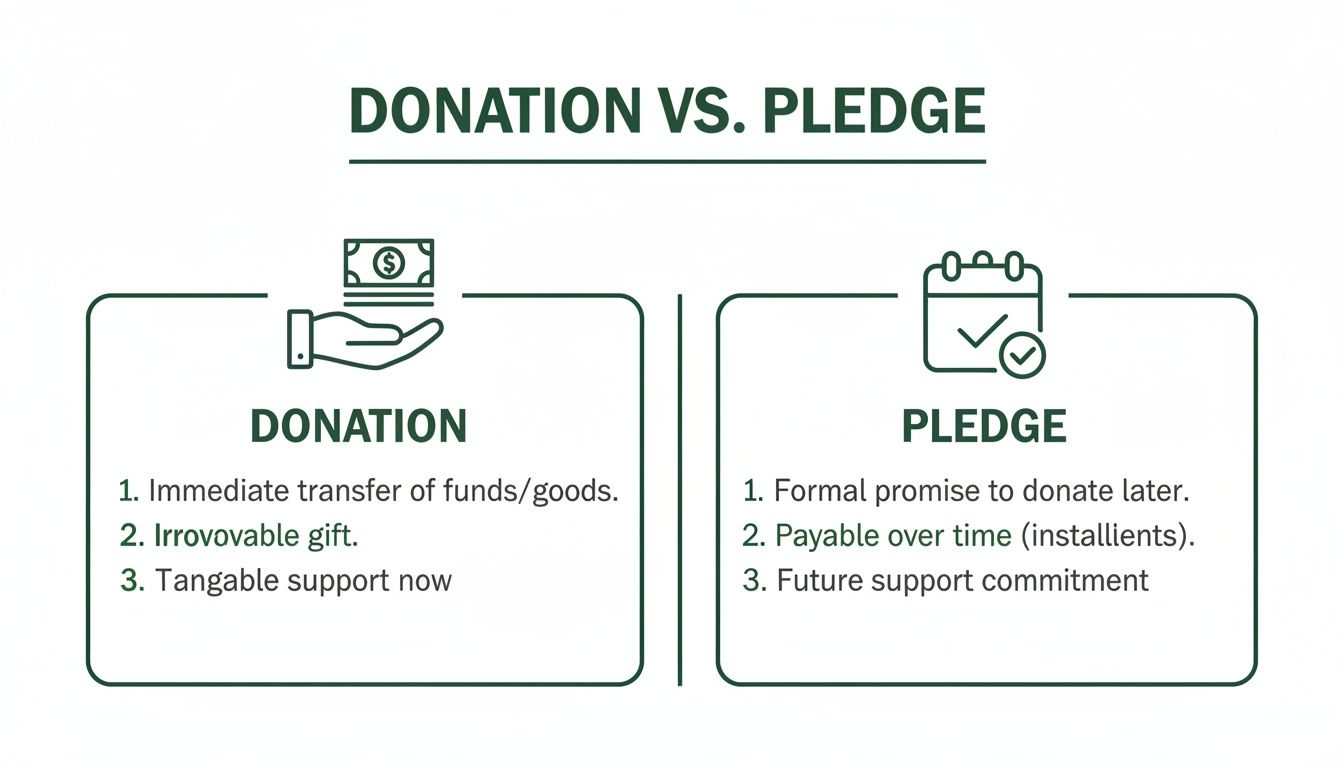
While both are critical forms of support, you can see how they affect your cash flow and strategic planning in completely different ways.
Key Distinctions at a Glance
The numbers also tell a story. An impressive 84% of event fundraising pledges are fulfilled, which is a testament to donor commitment when a pledge program is managed well. Mobile pledges, specifically, average $167. While you should always budget for a small percentage of pledges that don't come through, that high follow-through rate makes them a reliable planning tool.
In comparison, the average one-time online donation is $128. It provides a smaller, but instant, injection of cash. These figures highlight the strategic role each plays in a balanced fundraising portfolio.
To make it even clearer, here’s a quick-reference table summarizing the main differences.
Pledge vs Donation At a Glance
Internalizing these nuances is the first step toward building a more resilient fundraising program. For a deeper dive into building a robust financial base, you might want to explore our guide on funding for nonprofits.
Navigating the Financial and Accounting Implications
The moment a donor makes a commitment, the financial paths for a pledge and a donation split dramatically. For a straightforward donation, it’s simple: you receive the cash or asset, and you record the revenue that same day. It's a clean transaction that gives an immediate boost to your cash on hand.
Pledges, on the other hand, introduce a layer of complexity governed by Generally Accepted Accounting Principles (GAAP). Getting this right isn’t just about staying compliant—it’s about accurately portraying your organization's financial reality to your board, funders, and auditors.
How GAAP Treats Pledges as Revenue
The biggest difference comes down to revenue recognition. When a donor makes an unconditional pledge—meaning there are no strings attached that you must satisfy first—you have to record the entire promised amount as revenue right then and there. It doesn't matter if the cash won't actually hit your bank account for another three years.
This entry creates an accounts receivable on your books, which is essentially an IOU from the donor. At the same time, your revenue skyrockets on your income statement. This can be misleading, as it inflates your reported income for the year the pledge is made, even if your cash position hasn't changed at all.
"Under GAAP, an unconditional promise to give is recognized as revenue in the period the promise is received. This means a five-year, $50,000 pledge is recorded as $50,000 in revenue in Year 1, not as $10,000 annually as payments are made."
This single rule has huge implications. Imagine securing several large, multi-year pledges in one fiscal year. Your financial statements would show a massive revenue spike, which could confuse stakeholders into thinking you're flush with cash. That's why careful management, clear reporting, and accurate accounting for grants and pledges are so critical.
The Donor's Tax Deduction Timing
Here’s where things often get confused. While your nonprofit recognizes the full pledge amount as revenue upfront, the donor’s tax deduction works on a completely different schedule.
A donor can only claim a tax deduction for the amount they've actually paid within a tax year. So, if a donor pledges $15,000 over three years and makes their first $5,000 payment in December, they can only deduct $5,000 on that year's taxes. The promise itself isn’t deductible; only the cash that leaves their account is.
Let's break it down:
- Donations: The donor gets a tax deduction for the full gift amount in the year it's made.
- Pledges: The donor’s tax deduction is limited to the actual payments made during the tax year.
Forecasting Cash Flow and Financial Health
Pledges and donations have very different impacts on your financial strategy. Pledges often bring in much larger commitments because donors aren't pressured to pay the full amount immediately. But this comes with the risk that some pledges won't be fully paid.
The numbers tell the story: the average mobile pledge is $167, and it's not uncommon for fundraising events to bring in over $100,000 from pledges alone. This easily surpasses the $128 average for a one-time donation.
This potential for larger gifts makes pledges a powerful tool for long-range planning, but it also demands a disciplined approach to forecasting your cash flow. You can't build your operating budget based on the total revenue you've recognized from new pledges. Instead, you have to ground your budget in a realistic projection of the cash you expect to collect from pledge payments each year.
Effective forecasting boils down to a few key steps:
- Map out payment schedules: Keep a clear, detailed calendar of when every pledge installment is due.
- Apply an attrition rate: Let's be realistic—not every pledge gets fulfilled. It’s smart to discount your projected pledge income by a conservative percentage, like 5-10%, to account for donors who may default.
- Monitor delinquencies: Stay on top of overdue payments. A consistent follow-up process not only helps keep donors on track but also keeps your financial forecasts from becoming wishful thinking.
How to Set Up Your CRM for Pledges vs. Donations
Strong fundraising isn’t just about getting a "yes"—it's about managing that commitment all the way to the bank. How you track a simple, one-time donation in your CRM is worlds apart from how you should handle a multi-year pledge. If you treat them the same, you’re setting yourself up for messy financial reports and missed chances to connect with your donors.
A donation is clean and simple. You log the gift, send a thank-you and a tax receipt, and add the donor to your regular communications. It’s a single, completed transaction. Done.
A pledge, on the other hand, is a living, breathing commitment. It's a long-term relationship that needs its own dedicated workflow in your CRM. You can’t just log it and forget it; you have to track it, nurture it, and report on it over its entire lifecycle.
Configuring Your CRM for Smart Pledge Management
To do this right, your CRM needs to be set up to capture more than just a gift amount and date. These extra details are non-negotiable for keeping your accounting straight and your donor relationships strong.
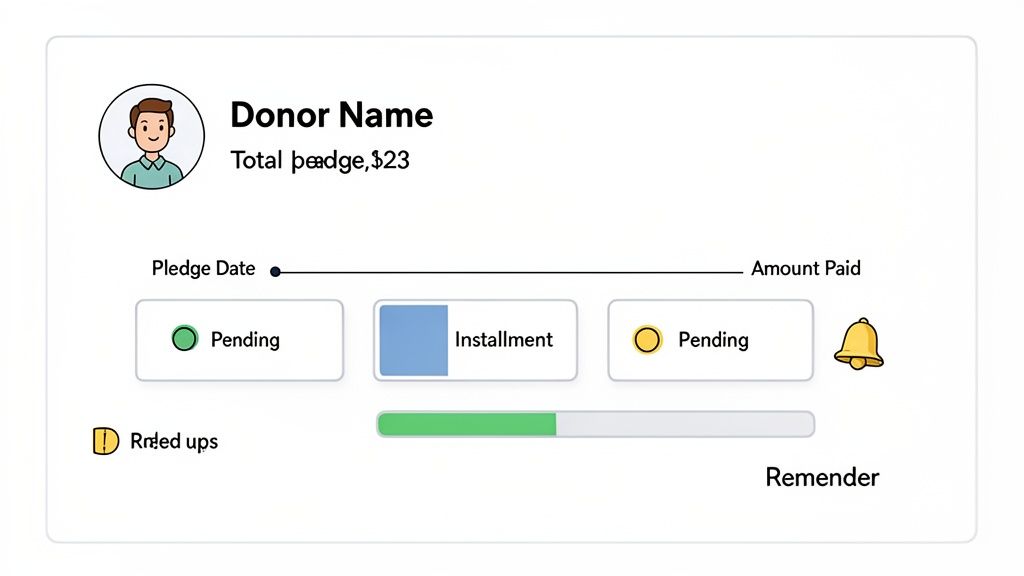
The first step is creating a dedicated "pledge" record type, completely separate from a "donation." Inside that pledge record, you'll need a few key fields to keep everything organized from the initial promise to the final payment.
Here are the must-have CRM fields for tracking pledges:
- Pledge Date: When did the donor officially make the commitment?
- Total Pledge Amount: The full value they promised to give.
- Payment Schedule: How will they pay it? (e.g., $100 monthly, $2,500 quarterly).
- First Payment Due Date: When does that schedule kick off?
- Amount Paid: A live running total of every payment received.
- Remaining Balance: The outstanding amount left on the pledge.
- Pledge Status: A simple dropdown to mark the pledge as Active, Fulfilled, or Delinquent.
With these fields in place, anyone on your team can see exactly where a pledge stands in a matter of seconds. If you're looking for a platform with these features already built-in, take a look at our guide on the https://www.fundsprout.ai/resources/best-crm-software-for-nonprofits.
A well-configured CRM transforms pledge management from a manual, error-prone chore into an automated, strategic asset. It frees you up to focus on building relationships instead of chasing down numbers in a spreadsheet.
Building Reports That Give You Real Financial Oversight
Once your data is clean, you can start building reports that actually mean something. A good dashboard gives your leadership a clear, real-time picture of your organization's financial health, which is vital for accurate forecasting.
Your pledge dashboard should instantly show you a few key performance indicators (KPIs) that tell the full story. This is what your board needs to see to understand future revenue and gauge the health of your pledge program. To help streamline everything, you can explore various app solutions designed to integrate with your existing CRM.
Your pledge fulfillment dashboard absolutely needs to include:
- Total Pledged vs. Total Received: A side-by-side view of commitments versus cash-in-hand for a given campaign or fiscal year.
- Pledge Fulfillment Rate: This is your program's health score in a single number. Just divide the total amount paid by the total amount pledged.
- Aging Pledges Report: This is your early warning system. It flags delinquent pledges and sorts them by how overdue they are (30, 60, 90+ days).
- Future Revenue Forecast: By mapping out all scheduled payments, this report gives you a reliable projection of cash flow for the coming months and years.
Putting these systems in place creates a dependable framework for managing promises. It's how you ensure that the commitments you secure today turn into the funds that fuel your mission tomorrow.
Crafting Strategic Donor Stewardship Plans
The fundamental pledge vs. donation differences aren’t just a matter of accounting; they demand entirely separate approaches to donor stewardship. Think of it this way: a one-time donation is a finished transaction that needs a powerful thank-you to inspire a second gift. A pledge, on the other hand, is the start of a long-term partnership, and it requires a sustained engagement plan to keep that commitment strong.
For a one-time donor, the stewardship cycle is compact. It’s all about immediate impact. Your primary goal is to make them feel so great about their gift that they can’t wait to do it again. Your follow-up needs to be prompt, personal, and prove their money made a real difference.
In contrast, stewarding a pledge donor is a marathon, not a sprint. The communication strategy here is designed to keep them connected to your mission over months or even years. This journey isn't about a single thank-you; it's about building a genuine, ongoing relationship that validates their decision to make a long-term investment.
Nurturing One-Time Donors for a Second Gift
When someone makes a donation, the clock starts ticking. Those first 48 hours are your golden window to make a lasting impression and begin moving them from a transactional giver to a repeat supporter.
A simple but effective stewardship plan for one-time donors looks something like this:
- Immediate Acknowledgment: An automated thank-you email with the tax receipt should land in their inbox within minutes. This is non-negotiable.
- Personal Touch: Within a week, follow up with a personalized thank-you letter or a quick phone call from a staff member or volunteer. This one action can dramatically boost retention rates.
- Impact Reporting: In about 30-60 days, send a brief update showing what their gift helped accomplish. A short video, a story about someone they helped, or a simple infographic works wonders here.
- A Gentle Nudge: After roughly 90 days of demonstrating impact, it’s perfectly appropriate to make a soft ask for a second gift, maybe even inviting them to become a monthly donor.
This cycle focuses on closing the loop quickly, showing the donor their contribution mattered, and then inviting them to become a more consistent part of your story.
A Multi-Touchpoint Strategy for Pledge Donors
Stewarding pledge donors requires a more patient and strategic hand. You aren't just thanking them for money received; you are nurturing their promise. This calls for a multi-touchpoint plan that spans the entire life of the pledge, keeping them engaged between payments.
The goal is to make them feel like valued partners, not just names on an accounts receivable report. Every piece of communication should reinforce their importance to your long-term vision and celebrate their commitment.
A pledge stewardship plan transforms the donor relationship from a series of payment reminders into a shared journey toward a common goal. It’s about celebrating milestones together, not just collecting installments.
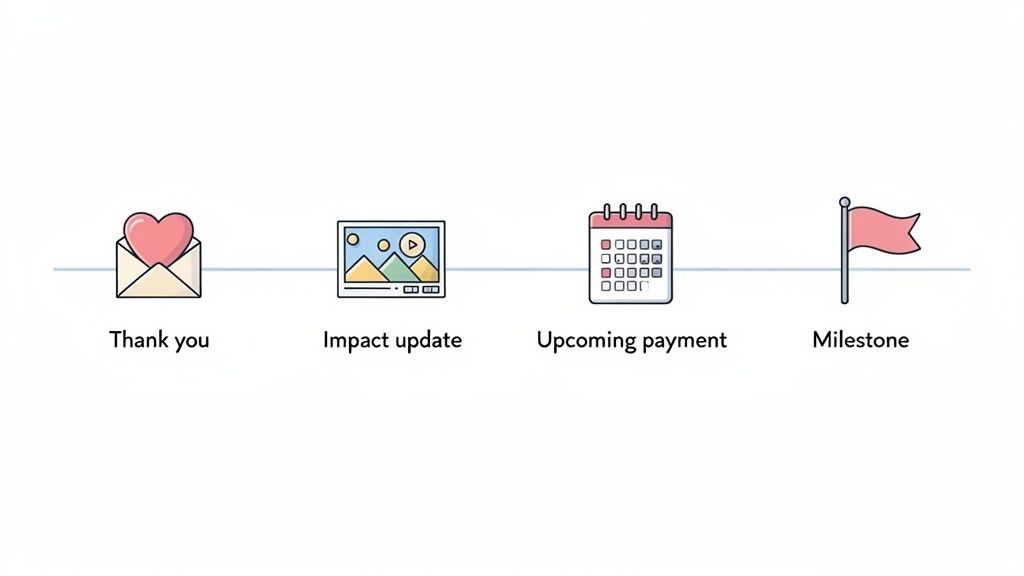
Here’s what a successful multi-year pledge stewardship timeline often looks like:
- The Initial Thank You: Right after the pledge is made, send a heartfelt thank-you that specifically acknowledges the promise and its future impact. This isn't just a receipt; it’s a celebration of their incredible commitment.
- Regular Impact Updates: Send exclusive updates tied directly to the project or campaign they are funding. If they pledged to a capital campaign, share construction photos. If it's for a program, share a success story from the field.
- Personalized Reminders: Before an installment is due, send a friendly, personalized reminder. Frame it as an opportunity to continue their impact, not as an invoice. It should mention the great work their ongoing support is making possible.
- Celebrate Milestones: When they hit the halfway point of their pledge, do something special. A call from the Executive Director or a short, personalized video message can reinvigorate their commitment and make them feel truly seen.
This kind of sustained engagement is what makes the difference between a fulfilled pledge and one that drops off. It ensures your donors remain connected, confident, and proud of their incredible long-term investment in your mission.
Creating a Formal Pledge Policy and Agreement
While a verbal promise feels good, a formal pledge policy and a written agreement are what turn good intentions into predictable revenue. When you establish clear guidelines from the start, you prevent misunderstandings, manage everyone's expectations, and dramatically lower the risk of a pledge going unfulfilled. This framework isn't just about protecting your nonprofit; it gives your donors a sense of confidence, showing them you’re organized, professional, and truly value their commitment.
Think of a strong pledge policy as your internal rulebook. It sets the ground rules for what kinds of pledges your team will actively seek and accept. This document doesn't have to be complicated, but it absolutely must provide clear answers to key operational questions before they pop up. This ensures your team handles every single pledge with consistency.
Core Components of a Pledge Policy
Your internal policy should be the single source of truth for your entire development team. It guides their conversations with donors and spells out the exact processes for managing these important long-term commitments.
Your policy must define:
- Minimum Pledge Amount: Decide on a practical threshold for what you'll consider a formal pledge. For instance, you might only track pledges of $1,000 or more over multiple years, while smaller, regular gifts are simply managed as recurring donations.
- Standard Fulfillment Periods: The most common pledge periods run for three to five years. Your policy should state this standard timeframe, as it’s crucial for helping you manage long-term financial forecasts.
- Delinquency Procedures: What happens when a payment is late? Outline the specific steps your team will take. This should include the timing and content of reminders, like a gentle email at 30 days overdue followed by a personal phone call at 60 days.
- Write-Off Process: Specify the conditions under which a pledge is considered uncollectible and officially written off your books. This is a critical step for accurate accounting and usually happens after several failed contact attempts over a few months.
Structuring a Clear Pledge Agreement Form
Once your internal policy is locked in, the pledge agreement form is the actual document that solidifies the commitment with your donor. While it's often not a legally binding contract in the strictest sense, a signed agreement is a powerful tool for moral commitment and procedural clarity. It firms up the donor's intent and provides a crystal-clear record for both of you, which has been shown to significantly boost fulfillment rates.
A well-crafted agreement leaves no room for ambiguity. It lays out all the essential details of the donor's promise in one easy-to-find place.
A signed pledge agreement isn't about setting up a legal battle; it's about establishing a shared understanding. It elevates a casual chat into a documented commitment, giving everyone a clear roadmap for the donor's philanthropic journey with your organization.
To make sure your agreements are comprehensive, you can use tools like an AI Contract Generator to help draft a solid template. Your final form should always be simple and direct.
Every good pledge agreement needs a few key elements to be effective. The table below breaks down the essential components that turn a simple form into a clear and actionable commitment.
Key Components of a Nonprofit Pledge Agreement
By making both a smart policy and a clear agreement part of your fundraising process, you’re not just collecting promises—you’re building a structured, transparent, and much more effective pledge program.
Sidestepping the Common Stumbles in Pledge Management
Pledges are fantastic tools for locking in future support, but they aren't without their risks. If you don't handle them carefully, you can end up straining donor relationships and working with wildly inaccurate financial projections. Knowing what to watch out for is the key to making pledges work for you, not against you.
Let's walk through a few of the most common missteps that can turn a well-intentioned promise into a major headache.
The Danger of Overly Optimistic Forecasting
One of the biggest traps is budgeting as if you'll collect 100% of every pledge. That's just not realistic. Life happens—donors' financial situations change, and some promises will inevitably fall through. When you build a budget based on the full amount of your outstanding pledges, you're setting your organization up for a painful shortfall down the road.
A much safer—and smarter—approach is to factor in an attrition rate from the get-go. Most seasoned fundraisers will tell you to expect a non-fulfillment rate of at least 5-10%, even in a healthy program.
- DON'T: Draft your annual budget assuming every pledged dollar will land in your bank account.
- DO: Discount your projected pledge income to create a buffer. If you have a $500,000 pledge pipeline, it's far more prudent to budget for collecting $450,000 - $475,000. This builds a resilient forecast that can handle a few bumps.
When Reminders Feel Like Invoices
Another frequent mistake is sending pledge reminders that feel cold and transactional. A follow-up that reads like an overdue bill can make a passionate supporter feel like just another number on a spreadsheet. This can quickly chip away at the goodwill you've worked so hard to cultivate.
The difference between a great reminder and a bad one is tone. A reminder should celebrate the donor's impact and gently nudge them to fulfill their commitment. An invoice just demands payment.
The whole point is to nurture the relationship, not just chase the money. Your follow-up process needs to be consistent, but it also needs a human touch that reinforces how much you value their long-term partnership.
- DON'T: Automate a generic email that says, "Your payment of $500 is 30 days past due." It feels impersonal and accusatory.
- DO: Frame it with gratitude. A personalized message like, "Hi [Donor Name], we're so grateful for your incredible commitment! This is just a friendly reminder that your next installment of $500 is coming up. Your support is already helping us [mention a specific, recent impact]," works wonders.
Relying on Manual Tracking and Fuzzy Policies
Finally, trying to manage pledges with spreadsheets is a recipe for disaster. They're prone to human error, can't automate reminders, and make it a nightmare to get a clear picture of your fulfillment rates or future cash flow. On a related note, not having a formal policy for handling uncollectible pledges creates confusion and messes up your financial statements.
It's essential to have a clear, documented process for what to do when a pledge goes unpaid. Your policy should spell out exactly when a pledge is considered uncollectible (for instance, after 90-120 days of non-payment with no response) and the exact steps for writing it off your books. This keeps your financial reporting clean, accurate, and trustworthy.
Frequently Asked Questions About Pledges and Donations
Working with pledges and donations always brings up a few common questions, especially when it comes to the trickier situations. Getting these details right from the start helps you manage expectations, relationships, and your bottom line. Here are the answers to the questions we hear most often from development teams.
Is a Pledge Legally Binding for a Donor?
This is a big one. For the most part, a pledge is considered a moral obligation, not a legally enforceable contract. Think of it as a good-faith promise. The reality is, your relationship with the donor is a much more powerful tool for ensuring they follow through than any legal threat ever could be.
That said, there are exceptions. If a very large pledge is made in writing and your nonprofit takes significant action based on that promise—like hiring a contractor to start building a new wing—it can become legally binding. When the stakes are that high, it's always best to consult with legal counsel to understand your specific position.
The goal is to inspire generosity, not enforce it. Focus your energy on great stewardship and building trust to see pledges through. Legal action should be an absolute last resort, reserved for truly exceptional circumstances.
When Should We Focus on Pledges Over Donations?
The choice between asking for a pledge versus an immediate donation really comes down to strategic timing. A pledge-focused strategy shines when you’re running an ambitious, time-bound campaign and need to lock in large commitments to hit a major goal.
Pledges are perfect for scenarios like:
- Capital Campaigns: You're raising millions for a new building and need to show you have the funds secured before breaking ground.
- Program Expansions: You’re launching a multi-year initiative and need a predictable revenue stream to support it.
- Endowment Growth: You're building your organization's long-term financial stability with significant, forward-looking commitments.
For everything else—like day-to-day operating costs, emergency appeals, and attracting new donors—focusing on immediate one-time or recurring donations is the way to go. That's what keeps the lights on and provides vital cash flow.
How Do We Handle a Donor Who Cannot Fulfill a Major Pledge?
This is a delicate moment that calls for compassion and flexibility. If a donor tells you they can't meet their commitment, your first priority is the relationship. Approach the conversation with understanding, not pressure. A private, respectful chat to hear about their situation is the right first step.
Instead of demanding payment, offer solutions. You could suggest extending the payment schedule, formally reducing the pledge amount, or even pausing payments for a year. Having a formal pledge policy that outlines these options ahead of time is incredibly helpful. That policy should also detail the internal process for writing off the uncollectible portion, which is crucial for keeping your financial reports accurate.
Fundsprout is the AI-powered grant success platform designed to help your nonprofit find funding, write winning proposals, and manage compliance with ease. Discover how our tools can help you build a stronger, more predictable funding pipeline at https://www.fundsprout.ai.
Try 14 days free
Get started with Fundsprout so you can focus on what really matters.