8 Powerful need statement examples for Grant Proposals
Explore need statement examples to strengthen grant proposals, with practical templates and tips to boost funding chances.

Abdifatah Ali
Co-Founder
Before a funder reads your budget, your program plan, or your organization's history, they read one critical section: the need statement. It is the "why" behind your work, the foundational argument that can make or break an entire proposal. A weak or generic need statement fails to convey urgency and leaves funders unconvinced. A powerful one, however, connects emotionally and logically, proving that your project is not just a good idea but an essential solution to a documented, pressing problem.
Staring at a blank page and trying to distill complex community challenges into a few compelling paragraphs is one of the most significant hurdles for grant writers, program managers, and nonprofit leaders. How do you balance data with storytelling? How do you create a sense of urgency without resorting to hyperbole? The answer lies in mastering the structure and strategy behind this vital component.
This guide is designed to eliminate that guesswork. We will dissect eight potent need statement examples across various sectors, from social impact and healthcare to business efficiency and education. For each example, you will find a strategic blueprint you can adapt to craft proposals that don't just ask for funding but demand it through sheer, undeniable logic and data-backed narratives. We will break down exactly what makes them work and provide actionable takeaways to help you write your own with confidence and clarity.
1. User Experience (UX) Problem Need Statement
A User Experience (UX) Problem Need Statement defines a specific challenge or "pain point" a user faces while interacting with a product, service, or system. Unlike broad problem statements, a UX need statement is laser-focused on usability, accessibility, and efficiency, articulating the gap between a user's goal and their current, frustrating reality. It’s a critical tool in product development, digital design, and even nonprofit program delivery to ensure solutions are built around genuine human needs, not organizational assumptions.

This type of statement follows a simple but powerful structure: [A user] needs [a way to do something] so that [they can achieve a desired outcome]. This framework forces clarity and empathy, shifting the focus from "what we want to build" to "what our user needs to accomplish."
Strategic Breakdown
Pioneered by experts like Don Norman and Steve Krug, the UX need statement is grounded in deep user research. For example, Slack didn't just set out to build another chat app; their implicit need statement was something like: “A project team member needs a way to consolidate all project-related communication in one searchable place so that they can reduce time lost to fragmented email chains and find critical information quickly.” This targeted approach solved a specific, widely felt pain point, leading to its massive adoption.
This method excels by translating qualitative user feedback into an actionable directive. It provides a "North Star" for development teams, ensuring every feature and design choice directly addresses the core user problem.
Key Insight: A strong UX need statement prevents wasted resources on features no one asked for. It anchors the entire project in solving a real-world problem, making it one of the most effective need statement examples for technology or service design grants.
How to Implement This Strategy
To craft a compelling UX need statement, you must gather direct evidence from your target audience.
- Conduct User Research: Use methods like user interviews, surveys, and usability testing to observe firsthand where people struggle.
- Analyze User Data: Leverage tools like heatmaps and website analytics to identify where users drop off or show signs of confusion.
- Create User Personas: Develop fictional but realistic profiles of your key user types. This helps you frame the need from a specific, relatable perspective. For example, "Maria, a single working mother with limited time, needs a way to..." is more powerful than "A user needs a way to..."
- Validate and Refine: Test your need statement with actual users. Does it resonate with their experience? Their feedback will help you sharpen the focus and ensure you are solving the right problem.
For a deeper dive into defining problems from a user-centric perspective, the Nielsen Norman Group offers excellent resources and foundational principles.
2. Social Impact and Community Problem Need Statement
A Social Impact and Community Problem Need Statement identifies a widespread social, environmental, or economic challenge affecting a specific population or geographic area. Unlike a UX statement that focuses on an individual user, this type addresses collective issues like food insecurity, lack of affordable housing, or environmental degradation. It serves as the foundational argument for nonprofits, social enterprises, and public sector initiatives seeking funding and community support.
This type of statement articulates the gap between a community's current, adverse condition and its potential for a healthier, more equitable future. Its structure often looks like: [A specific population/community] is facing [a significant, measurable problem], which results in [negative consequences]. This framework establishes the urgency and scale of the issue, compelling stakeholders to act.
Strategic Breakdown
Pioneered by visionaries in social entrepreneurship like Muhammad Yunus and institutionalized by funders like the Bill and Melinda Gates Foundation, the social impact need statement is rooted in community-level data and lived experiences. For instance, Habitat for Humanity’s implicit need statement is not just about building houses. It’s: “Low-income families in our county lack access to affordable, stable homeownership, which leads to generational poverty, housing instability, and poor health outcomes.” This focus on root causes and broad consequences galvanizes support.
This approach is powerful because it connects an organization’s proposed activities directly to a tangible, large-scale community benefit. It provides the "why" behind a grant proposal or fundraising campaign, ensuring that every dollar and hour invested is aimed at alleviating a well-defined societal problem.
Key Insight: A compelling social impact statement demonstrates a deep understanding of the community's context and proves the problem is significant enough to warrant intervention. This makes it one of the most crucial need statement examples for securing grants from foundations and government agencies.
How to Implement This Strategy
Crafting an effective social impact need statement requires rigorous research and community engagement.
- Conduct a Community Needs Assessment: Use surveys, focus groups, and public data to quantify the problem. A thorough assessment provides the hard evidence funders look for. To get started, explore these community needs assessment tools.
- Incorporate Lived Experience: Supplement quantitative data with personal stories and testimonials from community members. This humanizes the problem and creates an emotional connection.
- Define Clear Metrics: Articulate the problem using specific, measurable data points (e.g., “35% of children in the district are reading below grade level,” not “many children struggle to read”).
- Engage Community Stakeholders: Partner with local leaders, established nonprofits, and affected residents to define the problem. This ensures your statement is culturally sensitive and reflects the community’s own priorities, not just outside assumptions.
3. Healthcare and Medical Problem Need Statement
A Healthcare and Medical Problem Need Statement identifies a critical gap in health outcomes, patient care, or medical technology. This type of statement articulates an unmet need related to disease prevention, treatment accessibility, or quality of life improvements. It serves as the foundational argument for research grants, public health initiatives, and the development of new medical devices or pharmaceuticals, ensuring that innovation is directly tied to a tangible human health challenge.
The framework often follows a clinical or community-based logic: [A specific patient population] experiences [a negative health condition or barrier] due to [a lack of effective treatments, access, or technology], resulting in [a measurable adverse outcome]. This structure grounds the problem in evidence-based reality, making it compelling for funders, researchers, and policymakers.
Strategic Breakdown
Pioneered by public health leaders like Dr. Paul Farmer and institutions like the Mayo Clinic, the medical need statement translates complex clinical data into a clear call to action. For instance, the development of continuous glucose monitors (CGMs) stemmed from a precise need: “Patients with Type 1 diabetes lack a reliable way to monitor blood glucose levels in real-time, leading to a high risk of dangerous hypoglycemic or hyperglycemic events and long-term complications.” This statement pinpointed a daily, life-threatening problem that finger-prick tests could not adequately solve.
This approach is powerful because it connects scientific or technological goals directly to patient well-being. It moves beyond abstract research to address a specific, urgent human need, providing a clear rationale for investment and innovation.
Key Insight: A well-defined medical need statement establishes clinical relevance and urgency. It answers the crucial "so what?" question, making it one of the most persuasive need statement examples for securing funding from federal agencies like the NIH or major health foundations.
How to Implement This Strategy
Crafting a strong healthcare need statement requires a foundation of rigorous data and stakeholder input.
- Review Clinical Literature: Use epidemiological data, peer-reviewed studies, and public health reports to quantify the problem's scope, severity, and impact on the target population.
- Involve Patient Advocacy Groups: Engage directly with patients and their advocates to understand the lived experience of a disease or healthcare barrier. Their insights add a crucial layer of qualitative evidence.
- Consult with Healthcare Providers: Clinicians on the front lines can validate the problem and provide context on existing treatment gaps and practical challenges in care delivery.
- Understand Regulatory Pathways: Acknowledge the regulatory environment (e.g., FDA approval) early on, as it can shape the scope and feasibility of your proposed solution.
To explore this topic further, you can find a comprehensive guide on how to structure a compelling needs statement on Fundsprout.ai. Learn more about what a needs statement is and how to apply these principles effectively.
4. Business Process Efficiency Need Statement
A Business Process Efficiency Need Statement identifies operational bottlenecks, resource waste, or productivity gaps within an organization. It moves beyond external community needs to focus inward on how an organization functions, articulating the gap between current inefficient workflows and a desired state of streamlined, cost-effective operations. This is a vital tool for securing funding for capacity building, technology upgrades, and consulting services that promise to make an organization stronger and more sustainable.
This statement frames the problem around internal systems: [An organization or department] is hampered by [a specific inefficient process], which results in [a negative operational or financial outcome]. This structure helps funders and stakeholders understand that investing in internal infrastructure directly enhances the organization's ability to deliver its mission externally.
Strategic Breakdown
Pioneered by management theorists like W. Edwards Deming and consulting firms such as McKinsey & Company, the business process efficiency need statement is rooted in continuous improvement methodologies. For example, a nonprofit using manual spreadsheets for donor management might frame a need like this: “Our development team is hampered by a manual data entry process for tracking donations, which results in an average of 15 staff hours lost per week and a 5% data error rate.” This statement clearly quantifies the problem, making the case for a new CRM system.
This approach is powerful because it connects internal operations to external impact. It shows funders that their investment will not only fix a process but also free up resources (time, money, and staff) to be redirected toward core mission activities, thus increasing the return on every dollar invested in the organization.
Key Insight: A well-crafted efficiency need statement demonstrates fiscal responsibility and a commitment to sustainability. It proves an organization is thinking strategically about maximizing its impact, making it one of the most compelling need statement examples for capacity-building grants.
How to Implement This Strategy
To build a convincing case for process improvement, you need to ground your statement in solid operational data.
- Map Current Processes: Before proposing a change, create a detailed flowchart of the existing workflow. Identify every step, handover, and potential point of failure to pinpoint the exact source of the inefficiency.
- Quantify the Inefficiency: Calculate the true cost of the problem. Measure wasted staff hours, material costs, error rates, or opportunity costs. For instance, "Each manual report takes 8 hours to compile, preventing our program manager from conducting 2 essential site visits per month."
- Pilot the Solution: Before requesting funds for a full-scale rollout, propose a pilot program. This demonstrates a thoughtful, low-risk approach to change and allows you to gather data on the proposed solution’s effectiveness.
- Develop a Change Management Plan: Acknowledge that process changes affect people. Include a brief communication and training plan to show funders you have considered the human element of implementation, ensuring smoother adoption and long-term success.
For more on process improvement methodologies, the Lean Enterprise Institute provides extensive resources on eliminating waste and maximizing value.
5. Educational and Learning Gap Need Statement
An Educational and Learning Gap Need Statement articulates a specific disparity between the knowledge or skills a population needs and what they currently possess. This type of statement is crucial for initiatives focused on workforce development, academic achievement, and lifelong learning, as it pinpoints the precise educational intervention required to bridge a gap. It moves beyond general statements about "improving education" to define a measurable learning deficit.
This statement frames the problem around a clear formula: [A specific learner group] lacks [a critical skill or knowledge set], which prevents them from [achieving a specific educational, career, or personal milestone]. This structure is foundational for grant proposals in education, from K-12 programs to adult job retraining.
Strategic Breakdown
Pioneered by visionaries like Sal Khan of Khan Academy and Daphne Koller of Coursera, the educational need statement is driven by data-backed evidence of a learning gap. For instance, Khan Academy’s implicit need statement was: “K-12 students struggling with core math concepts need a free, self-paced way to access quality instructional videos so they can master foundational topics and overcome classroom learning barriers.” This directly addressed the well-documented achievement gaps in mathematics.
Similarly, Codecademy identified a pressing economic need: “Aspiring tech professionals need an accessible, hands-on way to learn coding skills so that they can fill the growing talent shortage in the technology industry.” This statement connects a specific learning gap (coding skills) directly to a significant economic opportunity (high-demand jobs), making it highly compelling for funders.
Key Insight: An effective educational need statement makes the consequences of the learning gap tangible. It connects the lack of skills or knowledge to real-world outcomes like unemployment, low wages, or limited academic progression, creating urgency and justifying the proposed solution.
How to Implement This Strategy
Crafting a powerful educational need statement requires a data-centric approach to define the problem accurately.
- Analyze Labor Market Data: Use reports from the Bureau of Labor Statistics or local workforce development boards to identify the most in-demand skills in your region and highlight specific shortages.
- Use Academic Assessments: Cite standardized test scores, graduation rates, or proficiency levels from state education departments to quantify the achievement gap your program will address.
- Involve Learners in Design: Conduct surveys, focus groups, or interviews with your target learners to understand their perceived barriers to learning and career goals. Their direct feedback adds a crucial qualitative layer.
- Define Clear Pathways: Your statement should allude to a solution that offers a clear pathway to a tangible outcome, such as a certification, a job interview, or college readiness. This demonstrates a well-considered program design.
For programs focused on specific learning challenges, understanding funding sources is key. Find more information on securing grants for specialized educational needs and learn more about special education grants for teachers on FundSprout.
6. Environmental and Sustainability Problem Need Statement
An Environmental and Sustainability Problem Need Statement identifies a critical gap between current human activities and the long-term health of our planet. This type of statement articulates challenges related to resource depletion, pollution, climate change, or biodiversity loss. It is the foundational argument for innovations in clean technology, sustainable business practices, conservation projects, and environmental policy, framing the problem in terms of ecological impact and the necessity for a more sustainable future.
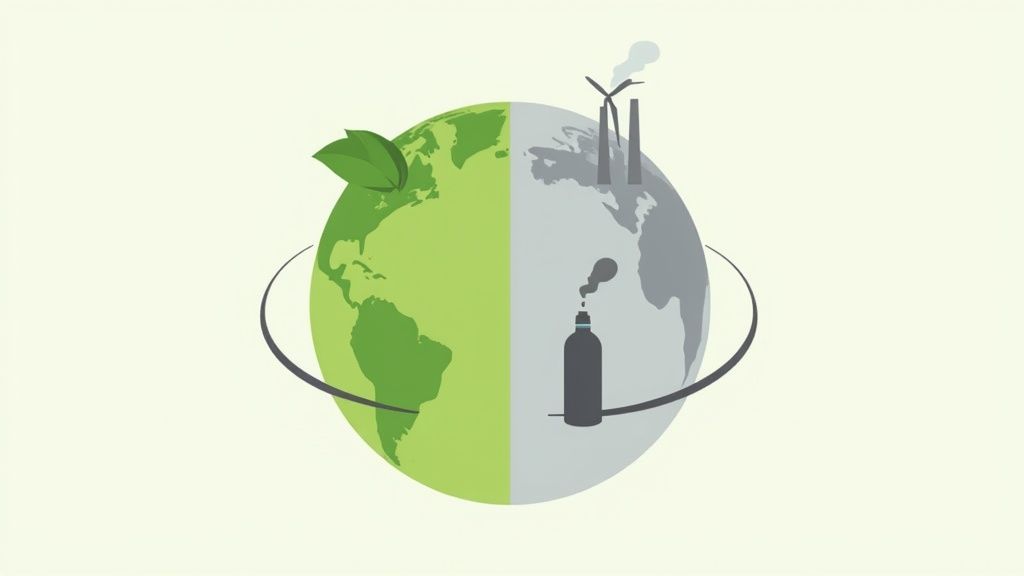
The structure for this statement is: [A specific ecosystem, community, or the planet] is facing [a measurable environmental threat] due to [a root cause activity], which requires [a sustainable solution] to [achieve a desired ecological outcome]. This framework connects a tangible problem to a solvable cause, making the need for action clear and urgent.
Strategic Breakdown
Pioneered by visionaries like Elon Musk and organizations such as the Ellen MacArthur Foundation, this approach moves beyond simple conservation. For instance, Tesla’s implicit need statement was not just about building electric cars. It was: “Global transportation needs a viable alternative to fossil fuel-powered vehicles to significantly reduce carbon emissions and mitigate the catastrophic effects of climate change.” Similarly, Beyond Meat addressed the immense environmental footprint of animal agriculture by identifying a need: “Consumers need a satisfying, plant-based protein source to reduce the demand for industrial livestock farming, which is a leading cause of deforestation, water use, and methane emissions.”
This method works by framing the problem on a systemic level, making it compelling for funders, investors, and policymakers who are focused on large-scale, long-term impact. It transforms an abstract environmental issue into a specific, addressable challenge.
Key Insight: A powerful environmental need statement uses data-driven urgency to justify innovation. It is one of the most critical need statement examples for securing grants from environmental foundations, impact investors, and government agencies focused on climate action.
How to Implement This Strategy
Crafting a potent environmental need statement requires rigorous research and a clear vision for the future.
- Conduct a Lifecycle Assessment: Analyze the full environmental impact of a product, industry, or practice from creation to disposal. This data provides the concrete evidence needed to define the problem.
- Set Science-Based Targets: Align your desired outcomes with established scientific consensus, such as the goals set by the Intergovernmental Panel on Climate Change (IPCC). This adds credibility and urgency.
- Engage with Stakeholders: Collaborate with environmental organizations, scientific experts, and affected communities to validate your understanding of the problem and the viability of your proposed solution.
- Communicate Transparently: Clearly articulate the problem using verifiable data (e.g., tons of CO2, gallons of water, acres of deforestation). Be equally transparent about the measurable impact your solution aims to achieve.
For those looking to build compelling arguments for sustainability, the Ellen MacArthur Foundation offers extensive resources on the principles of a circular economy.
7. Customer Pain Point Need Statement
A Customer Pain Point Need Statement zeroes in on a specific frustration, inefficiency, or dissatisfaction a customer experiences during their journey with a product or service. This type of statement moves beyond general problems to articulate the acute, often emotional, friction points that deter users or cause them to seek alternatives. It's a cornerstone of market research, product development, and customer experience strategy, ensuring that business solutions directly alleviate real-world annoyances.
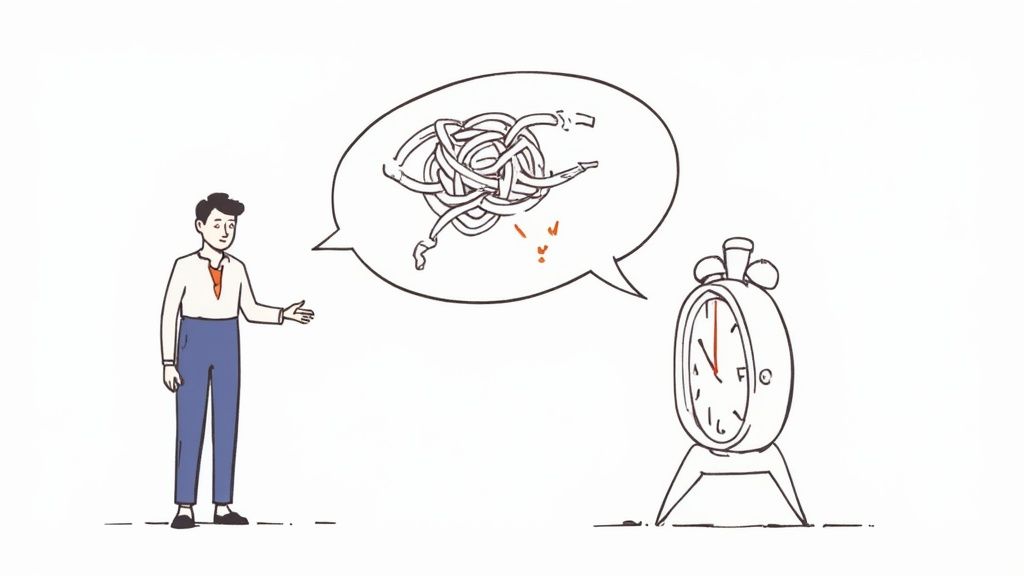
This statement is typically framed around the user's struggle: [A specific type of customer] is frustrated by [a specific friction point] while trying to [achieve a goal], leading to [a negative outcome]. This structure highlights not just the problem, but its tangible, negative impact.
Strategic Breakdown
Grounded in theories like Clayton Christensen's "Jobs to be Done," this approach focuses on the "job" a customer is "hiring" a product to do. The pain point is what makes that job difficult. For example, Uber's implicit need statement wasn't about transportation; it was about the pain points of the existing process: “A city-dweller needing a ride is frustrated by the unreliability of flagging a taxi and the uncertainty of payment, leading to wasted time and anxiety.” By solving these specific pains, Uber disrupted an entire industry.
Similarly, DoorDash addressed the friction in meal delivery, and Airbnb tackled the inflexibility of traditional travel accommodations. These companies succeeded by identifying and relentlessly solving a well-defined customer pain point.
Key Insight: Focusing on a pain point creates a powerful value proposition. Solutions that relieve a distinct frustration are often perceived as more valuable than those that simply add a new feature, making this one of the most commercially potent need statement examples.
How to Implement This Strategy
To write a powerful customer pain point need statement, you must immerse yourself in the customer's world.
- Use Voice-of-Customer Research: Systematically gather and analyze customer feedback from reviews, support tickets, social media, and interviews to identify recurring complaints and frustrations.
- Create Customer Journey Maps: Visually map every step a customer takes when interacting with your service or a competitor's. Pinpoint where they encounter delays, confusion, or negative emotions.
- Prioritize Pain Points: Not all pain points are equal. Rank them by frequency (how many people experience it) and severity (how much it bothers them) to focus your resources on the most impactful problems.
- Test Solutions Early: Develop a minimum viable product (MVP) or prototype that directly addresses the top pain point and test it with actual customers to validate your solution before investing heavily.
For further exploration of customer-centric problem-solving, resources from product strategy experts at Reforge offer deep insights into this methodology.
8. Regulatory Compliance and Risk Management Need Statement
A Regulatory Compliance and Risk Management Need Statement identifies a critical gap between an organization's current practices and its legal, ethical, or industry-mandated obligations. This statement articulates the necessity of new systems, training, or protocols to prevent penalties, data breaches, or reputational damage. It is essential in heavily regulated sectors like healthcare, finance, and data management, where non-compliance can lead to severe financial and operational consequences.
The structure for this type of statement is typically: [Our organization] lacks [a specific system, process, or resource] to meet [a specific regulatory requirement], which creates a risk of [a specific negative consequence]. This framework transforms abstract legal jargon into a tangible organizational threat that demands a solution.
Strategic Breakdown
Pioneered by global consulting firms like Deloitte and PwC and enforced by regulatory bodies like the SEC and FDA, this need statement is rooted in proactive risk mitigation. For example, a healthcare nonprofit's need statement might be: “Our clinic lacks an encrypted, HIPAA-compliant digital records system to manage patient data, creating a significant risk of a data breach that could result in federal fines and a complete loss of community trust.” This framing moves beyond a simple IT upgrade request to a critical issue of organizational survival.
This method is powerful because it connects internal operational needs to external, non-negotiable requirements. It provides a clear, defensible rationale for funders to invest in capacity building, demonstrating that the organization is a responsible steward of its resources and its mission.
Key Insight: A well-crafted regulatory need statement frames internal improvements not as overhead but as essential safeguards for mission delivery. This makes it one of the most compelling need statement examples for securing grants focused on organizational infrastructure and sustainability.
How to Implement This Strategy
To build a convincing case for compliance and risk management, you must ground your statement in concrete evidence and potential impacts.
- Conduct a Regulatory Landscape Analysis: Identify all federal, state, and local laws that apply to your operations. Clearly document the specific statutes or rules you are addressing.
- Perform a Gap Analysis: Audit your current processes against the regulatory requirements. Where are the specific shortfalls? Document these gaps with precision.
- Quantify the Risk: Research and cite the specific penalties for non-compliance, such as fines, loss of licensure, or legal action. Include the potential reputational cost of a public failure.
- Maintain Detailed Documentation: Keep meticulous records of your analysis, proposed solutions, and implementation plans. This creates a clear audit trail that demonstrates due diligence to funders and regulators alike. For ongoing support, consider resources from industry associations or regulatory bodies like the Information Commissioner's Office (ICO) for data privacy guidance.
8-Point Need Statement Comparison
From Example to Execution: Activating Your Need Statement
Throughout this guide, we have deconstructed a diverse array of need statement examples, moving far beyond simple templates to uncover the strategic architecture that makes them work. From pinpointing a user experience flaw to articulating a complex community-wide health crisis, each example demonstrates that a powerful need statement is not just a description of a problem; it is a meticulously crafted argument for change.
The journey from a generic issue to a compelling case for support hinges on three core pillars we've seen repeatedly: specificity, data, and alignment. A vague statement about "helping at-risk youth" becomes an urgent call to action when it's reframed as "closing the 34% literacy gap for 250 middle schoolers in the Northwood district." This transformation happens when you move from assumption to evidence.
Synthesizing the Core Strategies
As you prepare to write your next grant proposal, internal pitch, or funding request, distill the lessons from these examples into a strategic checklist. The most effective need statements consistently accomplish the following:
- They Define the Scope: They clearly identify who is affected, what the specific problem is, and where it is occurring. This tight focus prevents the problem from feeling too large or unsolvable.
- They Quantify the Problem: They use hard data (percentages, raw numbers, financial costs, comparative statistics) to build a foundation of credibility. Data answers the "so what?" question before it's even asked.
- They Create Urgency: They articulate the consequences of inaction. What will happen if this problem is not addressed? This element transforms the need from a chronic issue into an acute crisis requiring immediate intervention.
- They Bridge to the Solution: A great need statement seamlessly sets the stage for your proposed solution without explicitly stating it. It creates a logical vacuum that your project is perfectly designed to fill.
Ultimately, the goal is to shift the funder’s or stakeholder’s perspective. You want them to see the problem through your eyes, feel its weight, and recognize the clear, logical opening for your organization’s unique intervention.
Actionable Next Steps: Putting Theory into Practice
Reviewing need statement examples is the first step; activating those insights is what secures funding. Before you draft your next proposal, take these concrete actions:
- Conduct a Data Audit: What internal and external data do you have? What are the key statistics that paint the most vivid picture of the need? Identify gaps and start gathering the necessary information from sources like census data, public health reports, or academic studies now.
- Define Your "One Person" Story: Behind every statistic is a human story. While your need statement should be data-driven, frame it around a single, relatable archetype. This helps make large, abstract numbers feel personal and tangible.
- Frame and Reframe: Write three different versions of your need statement, each with a different strategic frame. Frame one around economic impact, another around social equity, and a third around public health. This exercise will reveal which angle is most compelling and best aligned with a specific funder’s priorities.
Mastering the art of the need statement is a force multiplier for your mission. It is the single most critical element that determines whether a reader skims your proposal or becomes a champion for your cause. By combining irrefutable data with a clear, urgent narrative, you transform a request for funds into an undeniable invitation to partner in solving a critical problem. Your ability to articulate need with precision and passion is what will unlock the resources required to create lasting, meaningful impact.
Ready to move from manual drafting to intelligent grant writing? Fundsprout uses AI to analyze funder priorities and help you craft perfectly tailored need statements backed by relevant data. Stop guessing what funders want to hear and start building your strongest case for support. Explore how at Fundsprout.
Try 14 days free
Get started with Fundsprout so you can focus on what really matters.