What to Do After Missing Grant Application Deadlines
A practical guide for nonprofits on missing grant application deadlines. Learn immediate recovery steps, funder communication, and prevention strategies.

Abdifatah Ali
Co-Founder
That sinking feeling when you realize you've missed a grant deadline is awful. We've all been there. But what you do in the next 24 hours can make all the difference—not in saving this grant, but in strengthening your entire process for the future.
This isn't about panic or blame. It's about a calm, strategic triage.
Your First 24 Hours: A Triage Plan for a Missed Deadline
It happened. You just looked at the calendar and the submission portal for that perfect-fit grant closed yesterday. Before the dread sets in, take a breath. How you handle this moment is critical for turning a mistake into a masterclass on improving your grant-seeking system.
First, Are You Absolutely Sure It's Too Late?
Before you do anything else, you need to verify the deadline is truly passed. It’s surprising how often a last-minute reprieve is hiding in the details.
- Check the Time Zone: Was it 5:00 PM EST, PST, or the funder's local time? This simple mix-up trips up even seasoned grant professionals.
- Look for a Grace Period: Some funders, especially smaller family foundations, might have a quiet grace period. Check their social media or news page for any announcements about technical issues that might have extended the deadline.
- Test the Portal: Can you still log in and access the submission page? Sometimes, portals stay open for a few hours past the official cutoff. It’s worth a shot.
Once you’ve confirmed the door is shut, it’s time to shift gears from recovery to review.
Document Everything, Right Now
While the memory is fresh, create a simple, factual timeline of what went wrong. This isn't about pointing fingers; it's a fact-finding mission to help your future self.
Note when the opportunity was first identified, who was assigned which tasks, when work began, and where the breakdown occurred. This immediate record is pure gold for the process analysis you'll do later.
Hold a Quick, "No-Blame" Debrief
Get the key people involved in a room (or on a quick call) for no more than 15 minutes. The tone here is everything. It must be supportive and focused on the process, not the people. Your goal is to understand how this happened, not who is at fault.
Your immediate debrief shouldn't feel like an interrogation. Frame it as a team effort to identify a system weakness. A productive question is, "What part of our process allowed this to slip through?" not "Who missed this?"
This approach fosters honesty and helps you uncover the tiny details that often cause big problems. Was it a simple calendar error? A miscommunication about who was doing the final review? An unexpected tech glitch? Getting these answers now is crucial for building a more resilient system down the road.
Missing a single grant can be a huge blow. With federal grant approval rates around 25% and private foundations funding only 15–30% of applicants, every shot counts. When you miss a deadline, that opportunity is often gone for a full year, which can delay critical funding for months. You can learn more about grant approval odds on GrantWatch.
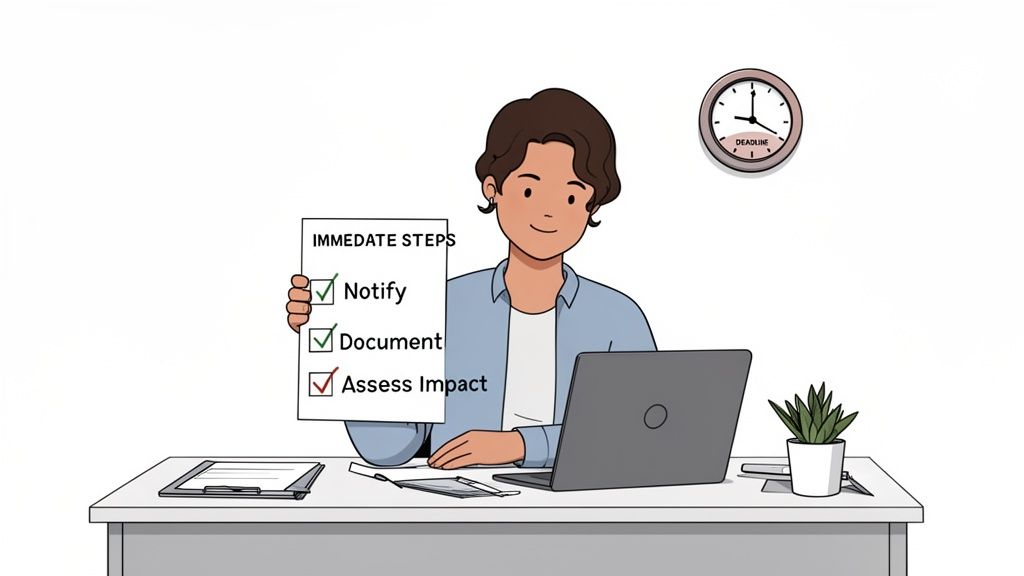
A Checklist for Immediate Damage Control
With the facts in hand, your final immediate actions are about managing the internal fallout and understanding the real impact. A quick checklist can help you stay focused during a stressful time.
Here's a simple table to guide you through the first day.
Immediate Triage Checklist for a Missed Deadline
A step-by-step checklist to guide your actions in the first 24 hours after discovering a missed grant application deadline.
This structured triage stops the panic and turns a gut-wrenching moment into a valuable data point. It’s the first step in making sure this specific mistake never happens again.
What to Say to Funders After Missing a Deadline
Once you’ve sorted things out internally, the big question is always, "Should we call the funder?" The answer is usually no, but not always. Knowing when and how to reach out can sometimes salvage a relationship, even if it can’t save the application. The key is to be strategic, humble, and professional.
First, you have to know who you're dealing with. Deadlines for government grants—think federal programs—are almost always set in stone. They operate under strict rules to ensure fairness, so these deadlines are non-negotiable. Reaching out after missing one is a waste of time and can make your organization look like it doesn't understand how public funding works.
Private and community foundations, on the other hand, can sometimes be more forgiving. Their internal processes are usually less bureaucratic. If you’ve already built a relationship with a program officer, a polite, well-crafted message might just keep a door open for the future.
To Reach Out or Not to Reach Out?
Before you even think about typing an email, you need to be brutally honest with yourself. Contacting a funder without a genuinely compelling reason is a bad look and can do more harm than good.
Run through this quick mental checklist:
- Do we actually have a relationship here? A cold email to a stranger explaining why you missed their deadline is dead on arrival. But if you’ve spoken with the program officer before, you at least have a foot in the door.
- Was there a legitimate, unavoidable reason? A documented technical glitch on their end (the submission portal crashing) or a verifiable local emergency (a major power outage) might work. Your own team’s poor time management? That’s not their problem.
- Is the proposal basically done? If you can honestly say your application is 99% finished and ready to go, it shows you were serious about the opportunity and not just scrambling at the last minute.
If the answer to these is "no," your best bet is to chalk it up as a lesson learned. Make a note for the next grant cycle and focus on fixing your internal process. But if you feel you have a solid case, your outreach needs to be handled delicately.
How to Write a Professional and Honest Message
When you do decide to reach out, your goal isn't just to beg for an extension. It's to respectfully inquire about any potential flexibility and maintain a positive relationship for the future, no matter what they say.
This is not the time for excuses or a long story about internal drama. Keep your message short, honest, and focused on your deep interest in their mission. Think of it less as asking for a favor and more as a professional courtesy to express your disappointment in missing the chance to partner with them. For more tips on that initial outreach, our guide on crafting a great grant inquiry letter has some useful pointers.
My Two Cents: Never, ever throw a team member under the bus. Take full institutional ownership. Saying "we mismanaged our internal timeline" sounds a lot better than "our grant writer dropped the ball." Accountability shows leadership.
Here’s a simple framework you can adapt. Just remember to personalize it based on your situation and your history with the funder.
Example Email Template
- Subject: Following up on [Grant Name] Opportunity
- Greeting: "Dear [Program Officer Name],"
- Opening: Start by reminding them of your respect for their work and your genuine interest in this specific grant.
- The Situation: Acknowledge that you missed the deadline. If—and only if—it was an unavoidable, external issue, state it simply. For example: "We ran into a persistent technical error with the submission portal in the final hour and were unfortunately unable to upload our completed application before the deadline passed."
- The Ask (Soft-pedal this): If it feels right, you can make a soft inquiry. "I'm writing on the off chance there might be any flexibility, as our full proposal is complete and ready for your review."
- Closing: End on a positive note. Reiterate your enthusiasm for their work and state your intention to apply in the next cycle. "Regardless of the outcome, we remain deeply impressed by your work in [Funder's Focus Area] and will be eagerly watching for the next opportunity to apply."
Taking "No" for an Answer
Let's be real: the most likely answer you'll get is "no." How you handle that rejection is just as important as your initial email. A graceful response builds goodwill and keeps the door open for another day.
The stakes here are high. In the U.S. alone, over 100,000 organizations compete for about $303 billion in government grants. For more than 35,000 of these nonprofits, that funding makes up over half their entire revenue. When you’re that reliant on grants, as data from Candid.org shows, every funder interaction matters.
If they come back with a "no," send a brief thank you note. Thank them for their time and consideration, and once again, mention that you look forward to applying next time. It’s a simple, professional courtesy that leaves a lasting positive impression, turning a mistake into a small relationship-building moment.
Rebuilding Your Internal Grant Management System
Let's be honest: a missed deadline is almost never one person's fault. It’s a system failure. That sinking feeling as the submission portal closes is just the final, painful symptom of deeper cracks in your grant management process.
Instead of pointing fingers, it’s far more productive to treat this as a costly but valuable lesson. This is your chance to perform a "post-mortem" on the entire grant lifecycle, diagnosing and reinforcing the very processes that are meant to protect your funding pipeline. This isn’t about one mistake; it’s about mapping every single touchpoint—from finding the opportunity to hitting "submit"—to see exactly where things went sideways.
Conducting a No-Blame Post-Mortem
To actually fix the problem for good, you need a painfully honest assessment of what happened. Get everyone who touched the application in a room for a candid conversation. The goal here isn't to assign blame, but to uncover the systemic weaknesses so you can finally shore them up.
Start by asking process-focused questions that get people talking:
- Discovery to Decision: When did we officially decide to go after this grant? Looking back, did we give ourselves enough runway from the start?
- Task Assignment: Who owned which section? Was there one person whose job it was to keep an eye on the entire timeline?
- Information Gathering: Where did we get bogged down? What data or documents were the hardest to track down? Were we scrambling for financials or program metrics at the last minute again?
- Review and Approval: How much time did we actually block out for internal reviews? Did our leadership have enough time to give meaningful feedback without rushing everyone?
These questions almost always bring the real culprits to light. Maybe the roles were fuzzy, or one person was stuck chasing down information from three different departments, creating a bottleneck no one saw until it was too late. This deep dive is absolutely critical to stop the cycle of missing deadlines.
Creating a Resilient Grant Workflow
Once you've identified the weak spots, you can start building a more durable system. The idea is to move from a reactive, crisis-driven scramble to a proactive, predictable workflow. That means creating structure and clarity at every single stage.
A great place to start is with a master grants calendar that’s visible to everyone on the development and program teams. This central source of truth shouldn't just list the final submission dates; it needs to be populated with all the key internal milestones.
To stop missing deadlines, you have to build in buffers. You can explore proven strategies to meet project deadlines that apply just as well to grants as they do to any other project. Set some non-negotiable internal deadlines—like having a full first draft ready two weeks before the funder's due date. This is the breathing room you need to handle the inevitable curveballs.
This simple flowchart shows how to think about the key phases of your work.
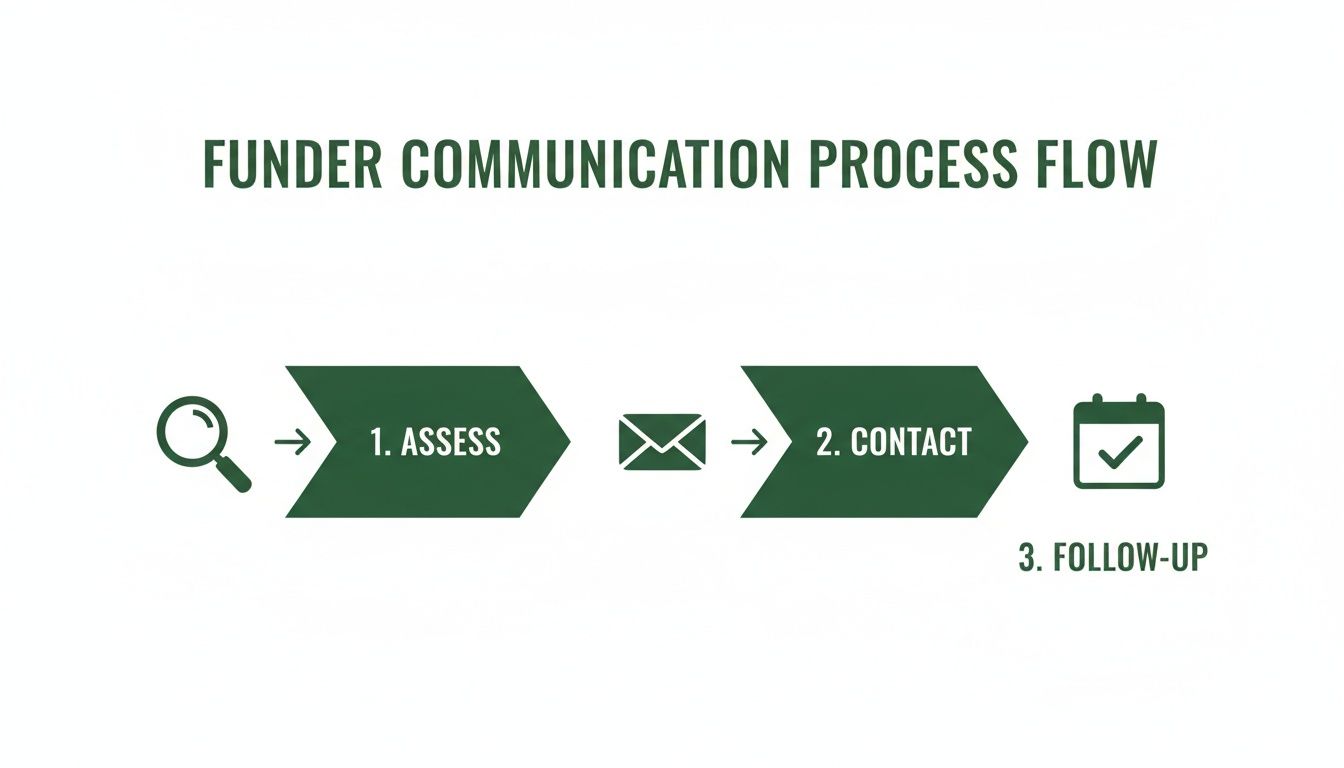
As you can see, successful grant management isn't one monolithic task. It's a series of distinct phases—assessing, reaching out, and following up—and each requires its own dedicated time.
Implementing Clear Roles and Responsibilities
Ambiguity is the absolute enemy of deadlines. When people aren’t 100% sure who is responsible for what, tasks will inevitably fall through the cracks. This is where a simple tool like a RACI chart can make a world of difference.
For every major grant application, quickly map out the key tasks and assign a specific role to each team member involved:
- Responsible: The person who actually does the work (e.g., writing the project narrative).
- Accountable: The single person ultimately on the hook for the task's completion (e.g., the Development Director).
- Consulted: The subject matter experts you need input from (e.g., a Program Manager who has the data).
- Informed: People who just need to be kept in the loop on progress (e.g., the Executive Director).
Defining roles with a RACI chart takes the guesswork out of the process. It transforms the vague idea of "teamwork" into a concrete action plan where everyone knows exactly what their part is.
The financial hit from a broken system is very real. Beyond the missed funding, you've also lost all the labor that went into the application. A typical federal grant can easily consume 100+ hours of staff time. When you miss the deadline after all that work is done, that investment is completely lost.
By rebuilding your internal system with a master calendar, firm internal deadlines, and crystal-clear roles, you create a safety net. For a closer look at how to structure these workflows, check out our comprehensive guide on grant management best practices. This is how you turn the painful experience of a missed deadline into the catalyst for a much stronger, more reliable fundraising operation.
Using Technology to Prevent Missed Deadlines
Rebuilding your internal system with shared calendars and Gantt charts is a huge step in the right direction. But let's be honest—manual processes always have a breaking point. When you’re juggling multiple proposals, each with its own dizzying web of deadlines and requirements, human error isn't a possibility; it's an inevitability.
The most bulletproof solution is to graduate from manual tracking to a purpose-built technological safety net.
This is where dedicated grant management software becomes a non-negotiable part of your toolkit. It’s not just another subscription to manage. It’s your central command center, designed from the ground up to eliminate the very chaos that causes you to miss grant application deadlines in the first place. It automates the tedious, soul-crushing work of tracking, reminding, and organizing, which frees up your team to do what they're truly great at—crafting a powerful story about your mission.
Creating Visual Timelines for Every Grant
One of the biggest culprits behind missed deadlines is a simple lack of clarity. A grant application isn't one task; it’s a collection of dozens of smaller ones, from rounding up financial documents to securing those crucial letters of support. When all those moving parts are tracked in a spreadsheet or buried in email chains, it's just too easy for a critical piece to fall off the radar.
Grant management platforms fix this by creating a visual, interactive timeline for every single opportunity. The moment you commit to pursuing a grant, the system can work backward from the final submission date, automatically mapping out key internal milestones along the way.
- Internal Checkpoints: Lock in firm due dates for first drafts, data collection, and final reviews.
- Automated Task Assignment: You can assign specific sections or tasks directly to team members right inside the timeline.
- Dependency Tracking: Link tasks together so everyone immediately sees how a delay in one area could create a domino effect for the entire project.
Suddenly, an abstract deadline transforms into a concrete, day-by-day action plan that everyone can see and follow.
Never Miss a Step with Automated Notifications
Even the most meticulously crafted plans will fall apart if people forget what they need to do and when. Relying on memory or manual calendar pings is a recipe for disaster. This is where automation gives you a massive advantage, building accountability directly into your workflow.
A good system will send out automated alerts and reminders to keep everyone on track. Using technology for things like effective email reminders has been proven to reduce the mental load on your team. Instead of one person having to play the role of project manager and constantly nudge people, the system does it for them.
The real power of a grant management platform is that it makes your process systematic rather than heroic. It removes the need for a single person to be the "deadline hero" and distributes accountability across the entire team, supported by automated checks and balances.
This means your grant writer gets a ping that their narrative draft is due next week, while the finance team gets an alert that updated budgets are needed by Friday. It's a simple feature with a profound impact on preventing items from slipping through the cracks.
From Complex RFP to Structured Project Plan
Another classic failure point is right at the beginning. A team might look at a 50-page Request for Proposal (RFP), feel completely overwhelmed, and procrastinate. The best platforms now include tools that can analyze an RFP and instantly break it down into a structured, manageable project plan.
You can see below how Fundsprout's planning tools can turn a grant's long list of requirements into an organized, actionable timeline from day one.
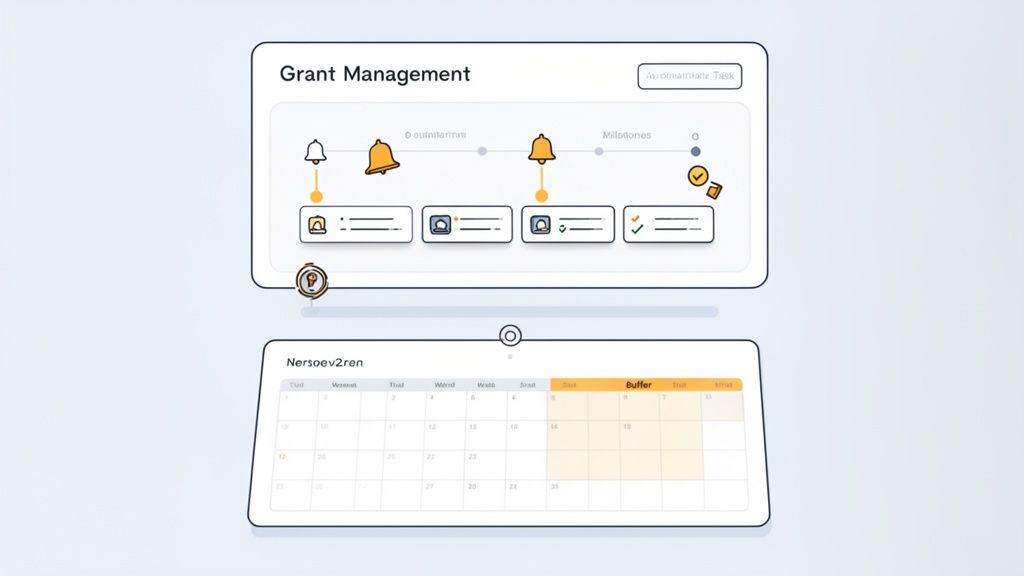
The interface clearly shows who is assigned what, what deadlines are coming up, and the overall progress of the project, giving everyone a single source of truth.
By weaving these features together, technology directly tackles the root causes of missed deadlines—poor visibility, fuzzy responsibilities, and the errors that come with manual tracking. If your organization is ready to build a truly resilient grant-seeking system, exploring the features of dedicated nonprofit grant management software is the logical next move. It transforms a high-stress, unpredictable process into a manageable and predictable one, safeguarding your most valuable funding opportunities.
Prioritizing Grants to Avoid Team Burnout
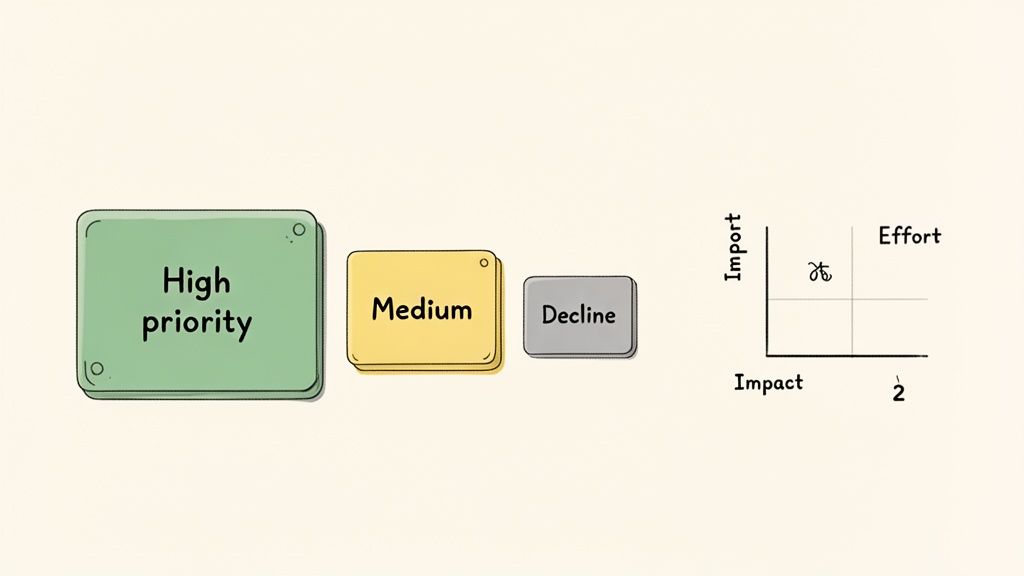
A near-miss on a deadline is rarely a one-off mistake. More often, it’s a symptom of a much bigger problem: your team is completely overstretched. It’s tempting to chase every dollar that comes across your desk, but that impulse is a direct path to burnout, sloppy applications, and—you guessed it—missed deadlines.
The most successful nonprofits aren't the ones applying for everything. They’re the ones who strategically say "no" to grants that are a poor fit, freeing up their best energy for the opportunities that truly matter. This is about shifting from a reactive, volume-based game to a proactive, value-based strategy.
Building a Simple Grant Scoring Framework
To stop chasing grants out of habit or desperation, you need a simple, objective way to score each one. This isn't about building a complex algorithm; it's about creating a quick gut-check backed by a few key metrics. This framework gives your team a shared language for making tough but necessary choices.
Before your next grant cycle kicks off, sit down with your team and agree on a scoring system. Here are the core criteria every nonprofit should consider:
- Mission Alignment: How perfectly does this funder’s goal match your program’s purpose? A 10/10 score means you wouldn't have to change a single word of your mission statement to fit their guidelines.
- Funding Potential: What’s the award size, and how does it stack up against the effort required? A massive federal grant might look great on paper, but the intense reporting requirements could drain your resources for months.
- Internal Effort: Be brutally honest about the work involved. Is this a simple two-page letter of inquiry, or is it a 100-page federal application that needs input from five different departments?
Once you have these numbers, you can weigh them based on what’s most important to your organization right now. Is bringing in cash the absolute top priority, or is sticking to your core mission non-negotiable?
A simple scoring matrix can make this process incredibly clear and consistent. It helps turn subjective feelings into objective data, making it easier to defend your decisions and get everyone on the same page.
Grant Opportunity Scoring Matrix
By using a tool like this for every potential opportunity, you quickly see which grants rise to the top and which ones should be politely declined, saving your team from chasing low-impact funding.
How to Conduct a Strategic Pipeline Review
With a scoring system in hand, you can transform your pipeline review from a simple deadline-tracking exercise into a strategic planning session. This shouldn’t be a panicked, once-a-year activity; it needs to be a regular, quarterly rhythm for your team.
Start by laying out every potential grant on a single document or whiteboard. Go through each one and assign a score based on your agreed-upon criteria. This process instantly creates a visual hierarchy, sorting your opportunities into clear tiers of importance.
The most powerful word in grant seeking isn't "yes," it's "no." Every low-value grant you decline to pursue is a direct investment of time and energy into the high-value applications that will actually sustain your organization.
This clarity is liberating. It gives you and your team explicit permission to formally say "no" to low-scoring grants, clearing them from your calendar and your mental workload. The goal isn’t a longer pipeline—it’s a shorter, stronger, and far more manageable one.
Planning a Realistic Annual Grant Calendar
Once your pipeline is lean and focused, the final piece of the puzzle is mapping it out across the entire year. One of the top reasons teams miss deadlines is a compressed schedule where multiple major applications are all due in the same month. It creates an impossible crunch and guarantees something will fall through the cracks.
Look at your prioritized list and the anticipated deadlines. If your three most important and labor-intensive applications are all due in October, you’ve spotted a problem before it becomes a crisis.
This is your chance to get ahead of the chaos:
- Stagger Your Submissions: Can one of those October grants be submitted in an earlier funding cycle? Many foundations have multiple deadlines.
- Plan Your "Off-Season": Intentionally schedule lighter months. This is when your team can finally tackle prospect research, build relationships with program officers, and catch up on professional development.
- Work Backward: For each high-priority grant, block out the real preparation time on your calendar now. If a grant takes 80 hours of work, that’s two full weeks for one person that must be accounted for long before the submission date.
This annual view shifts your team from a constant state of reaction to one of thoughtful, strategic execution. By pursuing fewer, better-aligned grants with a realistic timeline, you slash the risk of burnout. More importantly, you create the space your team needs to produce their best work, ensuring you never again have that sinking feeling of watching a perfect opportunity disappear simply because you ran out of time.
Common Questions About Missing Grant Deadlines
Even with the best systems, things can go wrong. A missed grant deadline is stressful, but you're not the first to go through it. Having clear answers to the most common concerns can help your team move past the regret and focus on what to do next.
Let's tackle the questions that inevitably pop up when an opportunity slips through the cracks.
Is It Ever Possible to Get a Grant Deadline Extension?
This is always the first question, and honestly, the answer is a big "it depends."
If you're dealing with a government grant, the chances are practically zero. Federal agencies, like the U.S. Department of the Treasury, run a tight ship to keep the process fair for everyone. Those deadlines are almost always set in stone.
Private and corporate foundations, on the other hand, can sometimes offer a little wiggle room. Your best shot is if you already have a relationship with the program officer. If you do, a polite and immediate call or email is worth a try. Explain the situation briefly—especially if it was due to a truly unforeseen circumstance—and let them know you have a nearly complete application ready to go. Don't expect a "yes," but for foundations, a quick, humble check-in can occasionally open a door that was otherwise shut.
How Should I Explain a Missed Deadline to My Board?
This is a tough conversation, no doubt. But the way you handle it can actually show your leadership and build trust. The key is to be transparent, take ownership, and immediately pivot to the solution.
Don't wait. Inform your leadership team as soon as possible. Frame the conversation around process improvement, not blame.
- Just the facts: "I'm calling to let you know we missed the submission deadline for the XYZ Foundation grant, which was a potential $50,000 award."
- Show you've diagnosed the problem: "After reviewing what happened, we found the breakdown was due to unclear role assignments during the final review stage."
- Present your fix: "To make sure this never happens again, we're implementing a new grant management system and will use a RACI chart for all high-priority applications moving forward."
This proactive approach shows you're in control and have already put a permanent fix in place.
An honest conversation with your board that focuses on systemic solutions builds trust. It shows them you are managing the organization’s processes, not just reacting to crises.
Can Grant Management Software Truly Prevent Missed Deadlines?
Look, no tool can eliminate human error entirely, but a solid grant management platform gets you as close as possible. It’s the difference between relying on sticky notes and memory versus having a centralized, automated system keeping everyone on track.
Think of it as the central nervous system for your grant-seeking efforts. It tackles the most common points of failure head-on. By automating reminders, tracking every task and dependency, and keeping all your documents and communication in one place, it cuts through the chaos that causes deadlines to be missed. It transforms grant management from a frantic, reactive scramble into a calm, proactive process, creating a powerful safety net for your entire funding pipeline.
Ready to build a system where deadlines are never missed again? The tools from Fundsprout can help. Our AI-powered platform turns chaotic grant processes into predictable, automated workflows, so you can focus on your mission. Explore how to safeguard your funding at https://www.fundsprout.ai.
Try 14 days free
Get started with Fundsprout so you can focus on what really matters.