A Modern Guide to Launching Legacy Giving Programs
Discover how to plan, implement, and grow successful legacy giving programs. Our practical guide helps nonprofits secure sustainable, long-term funding.

Abdifatah Ali
Co-Founder
Legacy giving is about playing the long game. It's the strategic plan for securing your nonprofit's future by encouraging supporters to include your organization in their estate plans, like through a will or as a beneficiary. Think of it less as immediate cash flow and more as building a financial bedrock that will sustain your mission for decades.
This isn't just another fundraising campaign; it's a fundamental shift toward creating a truly resilient organization.
Why Legacy Giving Is a Game-Changer for Your Nonprofit
So much of fundraising feels like a constant sprint for right-now results. We're all focused on the next annual appeal, the next gala. Legacy giving offers a completely different path—one that builds lasting financial health and forges deeper connections with your most loyal supporters. It’s the key to weathering economic storms and confidently planning those big, ambitious projects you've been dreaming about.
Let me give you a real-world example. I once worked with a small community arts center that was hit hard by an unexpected recession. Their annual gala revenue plummeted by 30%, and panic was setting in. But their small, quietly-run legacy program became their lifeline. A single bequest from a supporter who had been with them since the beginning covered their entire operating shortfall for the year. That's the power of planned giving—it’s the ultimate safety net.
The Core of a Strong Program
A successful legacy program isn’t really about asking for money. It's about offering your supporters a powerful way to make their values last a lifetime. You're inviting them to weave their personal story into the future of your organization. When you frame it that way, the benefits become crystal clear:
- Financial Resilience: You create a predictable revenue stream that isn't tied to the whims of the economy.
- Deeper Donor Relationships: These conversations are about vision and impact, not just a transaction. They build incredible loyalty.
- Transformational Gifts: A planned gift is often the single largest and most meaningful donation a person will ever make.
This journey is all about turning today's relationships into tomorrow's stability and impact.
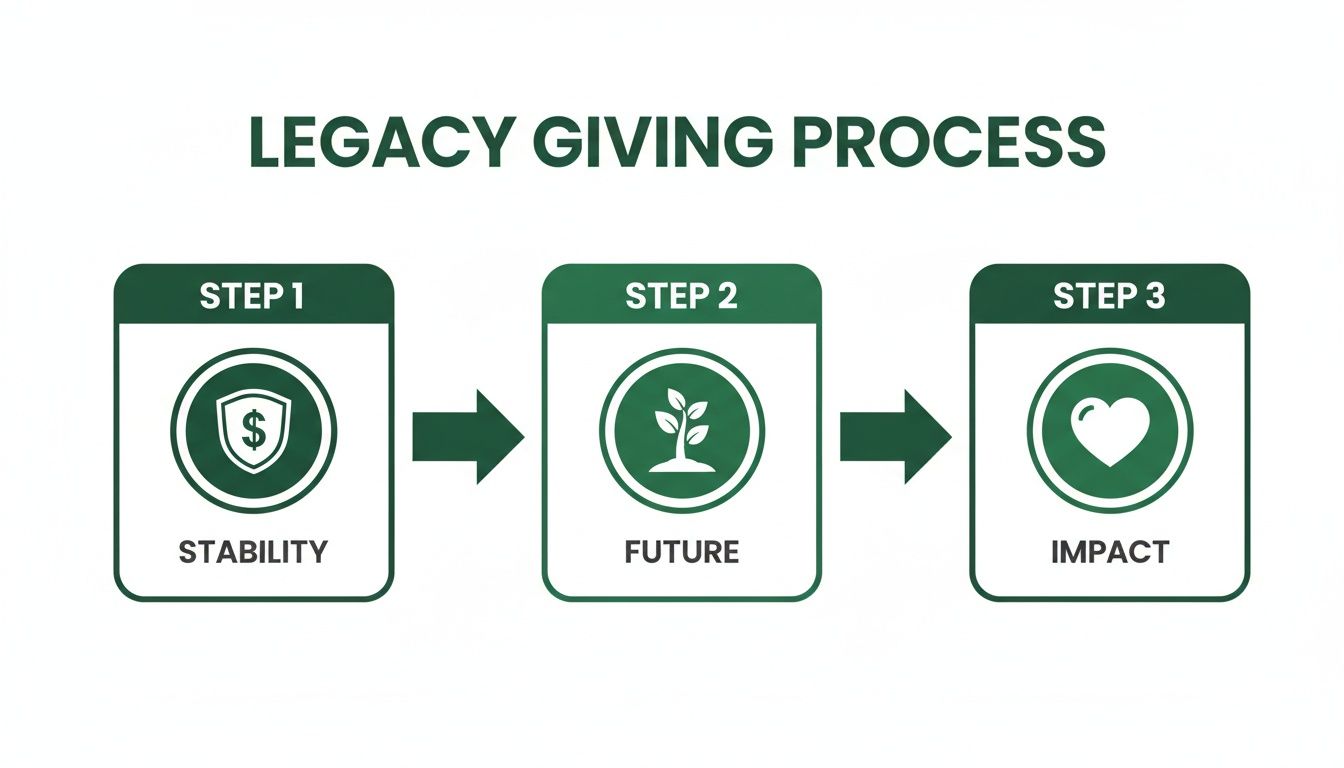
Securing these commitments today is what ensures your mission can grow and thrive for generations.
A Cornerstone of Modern Fundraising
The proof is in the numbers. According to Giving USA, charitable bequests recently accounted for a staggering $45.84 billion. And here’s the kicker: bequests have reliably made up 7% to 9% of all charitable giving in the U.S. for the last four decades. It's one of the most consistent sources of funding for nonprofits available.
For a quick overview, this table breaks down the most common types of legacy gifts and their benefits.
Legacy Giving At a Glance
Understanding these options helps you tailor your conversations to what truly matters to your donors.
By focusing only on your annual fund, you're leaving one of the most stable and significant revenue streams on the table. Legacy giving isn’t a nice-to-have; it's an essential part of a healthy, diversified fundraising strategy.
Ultimately, launching a legacy giving program is a powerful statement. It says you're committed to ensuring your organization doesn't just survive, but thrives long into the future, creating a permanent legacy that honors both your mission and the generosity of those who believe in it.
Building Your Legacy Program Foundation
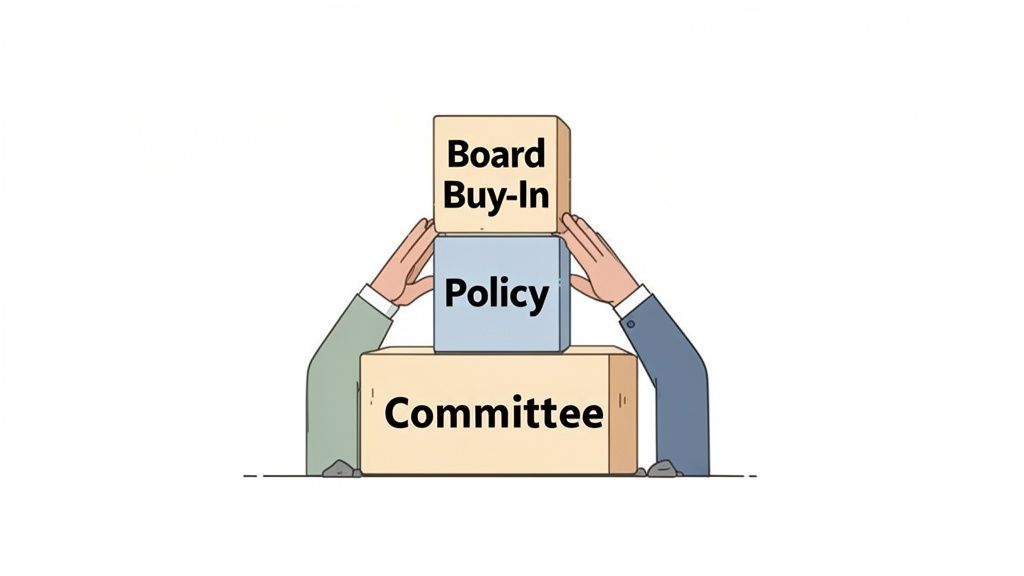
Before a single brochure gets printed or one email goes out, the real work of a legacy giving program begins internally. A successful program isn't built on a huge budget; it's built on a solid foundation of planning and preparation. This groundwork ensures your organization is ready to handle these significant, long-term commitments with the professionalism they deserve.
The first—and most important—piece of that foundation is getting your board of directors genuinely excited about the idea. As the ultimate guardians of your organization’s future, they need to see legacy giving for what it is: a core pillar of your long-term sustainability strategy, not just another side project.
Winning Over Your Board
To get that crucial buy-in, you need to bring more than just enthusiasm to the table; you need a clear, compelling case. This isn't about asking for permission. It's about presenting a vision. Frame the conversation around stability and future impact, showing them exactly how a legacy program can help recession-proof your mission for years to come.
Your presentation should be short, sharp, and powerful. Prepare a focused agenda that quickly moves from the "why" to the "how," proving you’ve already thought through the practicalities.
Here’s a sample agenda that I’ve seen work wonders in these meetings:
- The Big Picture: Kick things off by talking about the "Great Wealth Transfer." A single, stunning statistic about the trillions of dollars changing hands can really grab their attention.
- The Strategic Fit: Connect the dots for them. Show exactly how planned gifts support the long-term goals in your strategic plan that annual fundraising simply can't touch.
- The (Very) Small Ask: Make it clear you're not asking for a big budget. The real investment at this stage is staff time and a strategic focus, not a pile of cash.
- The Proposed Structure: Introduce the idea of a small advisory committee and, most importantly, the need for clear gift acceptance policies.
- The Path Forward: Show them you have a plan. Outline your immediate next steps, like drafting those policies and finding an internal champion to lead the charge.
An approach like this changes the entire dynamic. It’s no longer a financial request; it becomes a strategic conversation about securing the organization's future.
Establishing Your Gift Acceptance Policies
With the board’s blessing, your next job is to draft a comprehensive Gift Acceptance Policy. Think of this document as the official rulebook for your program. It’s what protects your organization from risky or inappropriate gifts and gives everyone—staff and donors—total clarity.
The policy doesn’t need to be 100 pages long, but it absolutely must be thorough. It should state, in no uncertain terms, what your organization will and will not accept. This is how you avoid headaches later. Imagine accepting a piece of real estate, only to discover it comes with significant environmental cleanup costs. A good policy prevents that kind of liability.
Your Gift Acceptance Policy is one of the most important documents you will create. It signals to major donors and foundations that you are a serious, professional organization that thinks and plans for the long term.
At a bare minimum, your policy should cover:
- Types of Assets Accepted: Get specific here. List out the most common planned gifts like bequests from a will, beneficiary designations on retirement accounts, and maybe more complex assets like real estate or securities, if you're ready for them.
- Minimum Gift Thresholds: Decide if you need to set a minimum value for certain gift types. For something like a charitable gift annuity, this ensures the gift is administratively worth it.
- Legal and Financial Review: Outline the process for reviewing more complex gifts. Who needs to sign off? At what point do you bring in outside legal or financial experts?
- Gift Refusal Clause: This is critical. You need a statement that gives your organization the right to decline a gift if it falls outside your policy, comes with too many strings attached, or just doesn't align with your mission. For a deeper dive, check out these nonprofit fundraising best practices.
Integrating Legacy Giving into Your Strategy
Finally, it’s absolutely essential to weave your new legacy program into the fabric of your overall development plan. It cannot operate in a silo. Legacy giving should feel like a natural, seamless extension of your existing fundraising—just another way for your most committed donors to express their support.
This integration starts with your messaging. The next time you send an annual appeal, try adding a simple line at the bottom: "P.S. Did you know you can support our future with a gift in your will?" It's a soft, consistent approach that keeps the idea top-of-mind without being pushy. This simple step alone can lay an incredibly strong foundation for growth.
Finding and Connecting With Legacy Donors
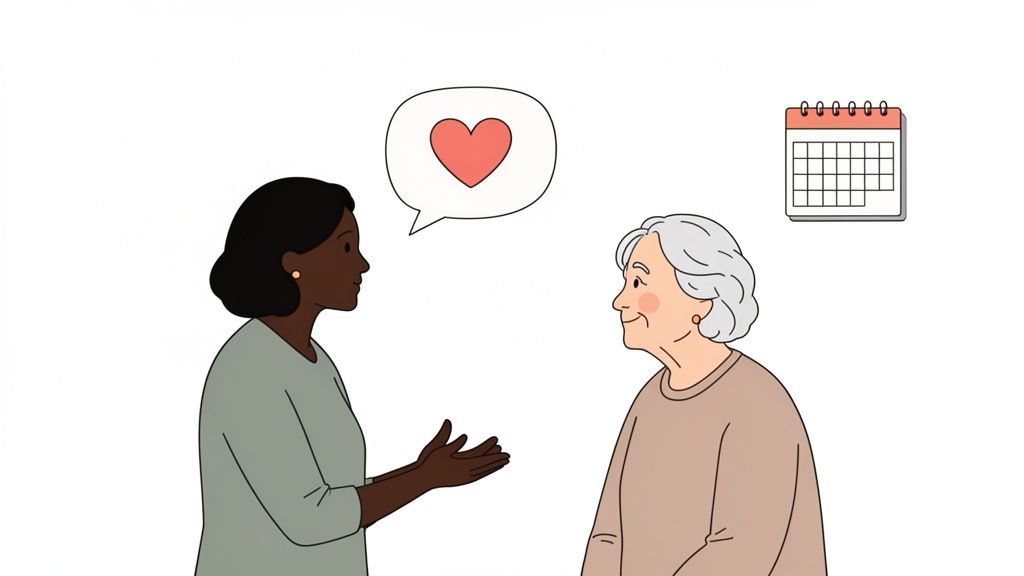
Now that you've got your internal systems sorted, it's time to turn your attention outward—to the people who believe most deeply in your mission.
The best candidates for a legacy gift often hide in plain sight. They aren't always your wealthiest donors; they're your most loyal ones. Before you even think about complex wealth screening, start with what you already know. The real clues are in their behavior. Look for the people who consistently show up, year after year, demonstrating a commitment that goes far beyond a single large check.
Uncovering Your Most Loyal Supporters
Your existing donor database—even if it's just a simple spreadsheet—is a goldmine. Stop focusing on donation size alone and start looking for patterns of loyalty and engagement. These are the people who have already raised their hands and shown you they care.
Start by digging into your data for these key signals:
- Consistent Givers: Who has given consecutively for five years or more? The amount doesn't matter as much as the unwavering belief this pattern demonstrates.
- Active Volunteers: These folks give you their most valuable asset—their time. That hands-on involvement signals a deep, personal connection to your mission.
- Event Attendees: Make a note of the people who regularly show up for your galas, community events, or even small virtual updates. Their presence shows they want to be part of your community.
- Repeat First-Time Donors: When a brand new donor makes a second gift within a year, that's a huge green flag. It’s a critical moment to build a deeper relationship.
This simple segmentation helps you focus your limited time and resources on the people who are most likely to welcome a conversation about their long-term impact.
The most powerful conversations about legacy giving are never transactional. They're about helping a passionate supporter realize their ultimate philanthropic vision for a cause they love.
Starting the Conversation Naturally
I get it—bringing up planned giving can feel intimidating. The trick is to shift your mindset. You aren't asking for money. You are exploring a donor's passion and offering them a way to create a lasting legacy.
The best way to do this is to weave these conversations into the stewardship you're already doing. A routine "thank you" call is the perfect, low-pressure opportunity to gently open the door.
A Real-World Scenario: The Stewardship Call
Let's say you're calling a donor named Carol, who has given small but consistent gifts for the past seven years.
You: "Hi Carol, this is [Your Name] from [Your Nonprofit]. I'm not calling to ask for anything today—I just wanted to personally thank you for your incredible support over the years. We truly couldn't do this work without you."
Carol: "Oh, thank you! I'm always happy to support your mission."
You: "I was just looking at your history with us, and your commitment really stands out. I'm curious, what part of our work is most meaningful to you?"
This one open-ended question changes everything. It invites Carol to share her personal story and her passion, turning a monologue into a dialogue about shared values. As she opens up, you can naturally introduce the idea of a lasting impact.
You: "That's wonderful to hear. It's that vision for the future that keeps us all going. You know, some of our most dedicated supporters like you have found a way to make that impact last forever by including us in their will. It's such a powerful way to ensure the work you care about continues for generations."
Notice the language is soft and inspirational. It places zero pressure on Carol and simply makes her aware of an opportunity she might not have considered.
Reaching Broader Audiences With Targeted Messaging
While personal outreach is a must for your most loyal segment, you can also plant the seeds of legacy giving with a wider audience through your regular communications.
Let’s talk about the demographic shifts happening in philanthropy. You've probably heard about the Great Wealth Transfer, where an estimated $124 trillion is set to shift to Millennials and Gen Z over the next 25 years. These generations are already highly engaged. Since 2021, Millennial charitable engagement has surged 16%, while Gen Z participation has grown an impressive 22%. To connect with them, you have to focus on impact and digital-first communication. You can explore more about these philanthropic shifts and what they mean for the future of fundraising.
Here’s a simple email template you can adapt for a newsletter or a targeted campaign to your long-time supporters.
Subject: A Note of Thanks and a Look to the Future
Dear [Donor Name],
For [Number] years, you have been a vital part of the [Your Nonprofit] family. Your consistent support has helped us [mention a specific, recent accomplishment].
As we look toward the future, we are inspired by the lasting impact our community can create together. We wanted to share that there are powerful ways to support our mission that cost nothing today, such as leaving a gift in your will or estate plan.
A legacy gift is your way of ensuring the work you believe in will continue to change lives for decades to come.
If you're interested in learning more about how you can create a lasting legacy with us, we would be honored to speak with you.
With gratitude,
[Your Name/Organization Name]
This approach is respectful, informative, and keeps the focus right where it belongs: on the donor's incredible power to make a difference.
Marketing Your Legacy Giving Program
Alright, you’ve done the internal work and your program is ready to go. Now, how do you let your most loyal supporters know this incredible opportunity even exists?
Marketing a legacy program isn't about splashy, aggressive fundraising campaigns. It’s a much more subtle and long-term conversation. Think of it as a marathon, not a sprint, where the real goal is to gently build awareness and trust over time.
You want to weave planned giving into the very fabric of your organization's story, making it a visible, normal, and inspiring option for anyone who loves your mission. The good news? You don't need a massive budget. What you need is a thoughtful, multi-channel approach that meets your donors where they already are.
Building Your Digital Welcome Mat
Your website is the front door to your legacy program. When a curious supporter decides to look into it, this page is where they’ll land. It needs to be easy to find, simple to understand, and speak directly to their heart.
This isn't just another page to slap on your site map; it's a dedicated space for donors to explore their potential impact on their own terms, without any pressure.
A really effective legacy giving page usually includes:
- A Clear, Inspiring Headline: Something like "Create Your Legacy" or "Secure Our Future" immediately frames the conversation around impact, not just money.
- Simple Explanations: Ditch the dense legal jargon. Briefly explain what a planned gift is and the most common ways to give (bequests, beneficiary designations) in plain, human language.
- Real Donor Stories: There is nothing more powerful than social proof. Featuring a short story or testimonial from someone who has already made a commitment makes the idea real and relatable.
- Sample Bequest Language: This is a game-changer. Providing a simple, copy-and-paste paragraph that donors can give to their attorney removes a huge practical barrier.
- A Gentle Call to Action: The next step shouldn't be "Give Now." Instead, offer something softer, like downloading an informational guide or requesting a confidential, no-obligation chat.
Think of this page as the central hub for all your marketing efforts—a safe destination for anyone wanting to learn more.
Weaving Legacy into Your Everyday Communications
The most effective (and budget-friendly) marketing integrates legacy messaging into the channels you’re already using. This steady "drip" approach keeps the idea top-of-mind and normalizes it for your audience. Consistency beats a one-off, expensive campaign every single time.
Start by adding a simple, consistent message to your existing materials.
Pro Tip: One of the most powerful, low-effort tactics I've seen is adding a permanent "P.S." to the bottom of email newsletters and appeal letters. A simple line like, "P.S. Did you know you can support our mission for generations to come with a gift in your will? Learn more here." can work wonders over months and years.
Beyond a simple P.S., you can dedicate specific content to planned giving. Why not run a feature story in your annual report about a beloved volunteer who left a bequest? This connects the abstract concept of a planned gift to a real person and their heartfelt motivations, making it deeply inspiring.
Your communications should always feel authentic to your organization. A strong, well-defined brand identity can guide the tone and visual style, ensuring everything feels cohesive. If you're refining your look and feel, exploring a comprehensive nonprofit branding guide can provide clarity on these essential elements.
Creating Simple, Tangible Resources
Even in our digital-first world, never underestimate the power of a simple, well-designed physical resource. A small brochure or a one-page flyer is the perfect thing to leave behind after a meeting or have on hand at community events.
This piece doesn't need to be glossy or expensive. Its job is to clearly and concisely answer the most basic questions a donor might have.
- Front Panel: Your logo and a powerful, vision-oriented tagline like "Your Legacy, Their Future."
- Inside Panels: Briefly explain what legacy giving is, highlight 2-3 of the simplest ways to give (like a bequest or retirement plan gift), and share a short, impactful donor story.
- Back Panel: Make it easy for them to take the next step. Include your contact information and a direct link to your website's legacy giving page.
This tangible piece gives donors something to hold onto and review later, reinforcing your digital messages and providing another valuable touchpoint in their journey.
Legacy Giving Marketing Channel Matrix
To get you started, here's a look at some common channels and how you might approach them. There's no single "right" way—the key is to choose the channels that best reach your specific audience.
Ultimately, a successful marketing plan for your legacy program is all about making a long-term commitment feel accessible, meaningful, and deeply appreciated. It’s a quiet, steady effort that builds momentum over time, securing a brighter future for the mission you all care so much about.
Nurturing Your Legacy Society Members
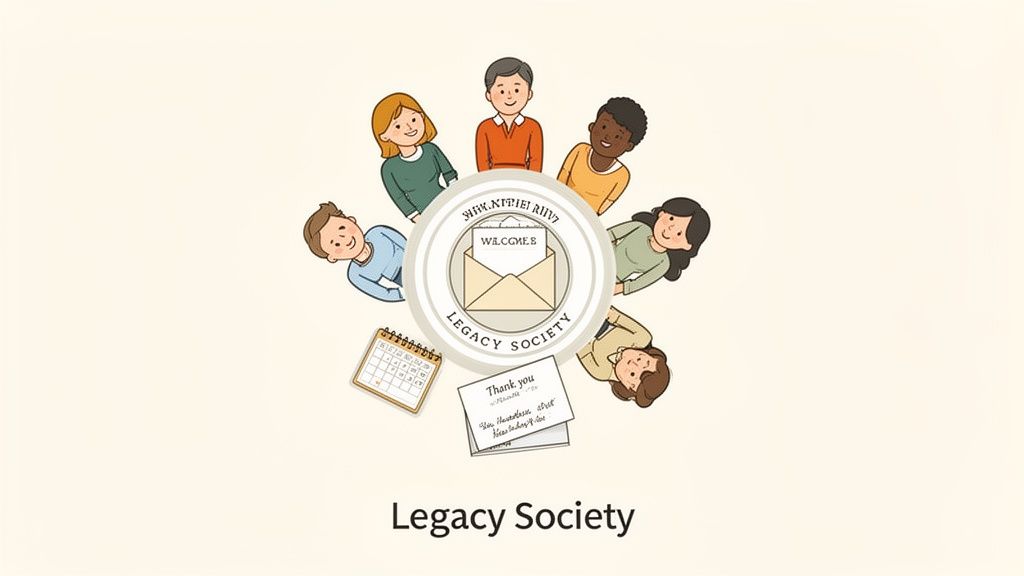
The moment a donor tells you they've included your organization in their estate plans is pivotal. It’s not the end of a conversation; it's the start of a profound, lifelong relationship. This is where your focus shifts from cultivation to true stewardship, making sure these incredible supporters feel seen, valued, and cherished for their ultimate commitment.
The best way to formalize this special relationship? Create a Legacy Society. Think of it as a dedicated group for everyone who has made a planned gift commitment. It's more than just a recognition tool; it's about building a genuine community around a shared vision for the future and giving you a structured way to stay connected.
Designing a Memorable Welcome Experience
Your very first communication after they share their news sets the tone for everything that follows. A generic form letter just won't cut it here. This moment calls for a personal touch that truly honors the significance of their decision.
A well-crafted welcome kit is a fantastic way to make new members feel like they've joined an exclusive, appreciated group. It doesn’t have to be expensive—thoughtfulness is what counts.
A simple but powerful welcome kit could include things like:
- A Personal Letter: A warm, heartfelt letter signed by your Executive Director or board chair, officially welcoming them to the Legacy Society.
- A Small Token of Appreciation: Something meaningful but not costly. A custom lapel pin or a framed photo of your work in action can be a wonderful, tangible gesture.
- An "Inside Look" Document: A brief, one-page summary of your organization's long-term strategic vision. Show them exactly how their future gift will power that vision.
- A Certificate of Membership: A professionally designed certificate they can display, formalizing their place in this special group.
This initial gesture immediately validates their decision and reassures them of their importance to your mission's long-term health.
Keeping Your Legacy Society Engaged
Once a donor is in your Legacy Society, your stewardship work is really just beginning. The goal is to maintain a connection that feels special and exclusive without ever feeling like a burden. An annual communication calendar is your best friend here, helping you map out consistent, meaningful outreach.
Engagement doesn't have to be complicated. The key is to provide access and information that isn't available to your general donor base. This reinforces their "insider" status and keeps them connected to the impact their future gift will one day make possible.
Stewardship for legacy donors is about celebrating their lifetime commitment, not just their future gift. It's an ongoing process of gratitude and connection that honors their belief in your mission.
Try mixing high-touch and low-touch engagement throughout the year:
- Exclusive Annual Event: Host a special luncheon or a virtual coffee chat just for Legacy Society members. Have your CEO give a "state-of-the-mission" address.
- Insider Updates: Send a semi-annual newsletter written specifically for this group, offering a behind-the-scenes look at your work and future plans.
- Personal Check-ins: Make a point to call each member on the anniversary of them joining the society. The purpose isn't to ask for anything, but simply to say thank you and see how they are.
- Special Recognition: Prominently and respectfully list the names of your Legacy Society members in your annual report (always with their permission, of course).
This steady drumbeat of communication ensures they never feel forgotten and remain confident in their decision to support your future.
A Real-World Stewardship Example
Think you need a huge budget for this? Not at all. I once worked with a small, local animal shelter that created their "Guardian Angels" legacy society on a shoestring. Their welcome kit was a simple folder with a heartfelt letter, a great photo of a recently adopted dog, and a hand-signed certificate.
Their big "insider" event each year was a simple breakfast at the shelter, where members got to meet the new litter of puppies before they were available to the public. The cost was minimal, but the emotional impact was immense. This thoughtful, low-cost approach built an incredibly loyal community, proving that authentic stewardship is about creativity and care, not cash.
The generosity of individual donors is the bedrock of philanthropy. In a recent record-breaking year, total charitable giving in America reached $592.50 billion, with individuals contributing $392.45 billion—that’s 66% of the total. These figures prove that people are deeply committed to supporting the causes they believe in, a hugely encouraging sign for every legacy giving program. You can discover more insights about these charitable giving trends.
Common Questions About Legacy Giving
Starting a legacy giving program always brings up a few key questions. For nonprofit leaders, especially at smaller shops, these can feel like major hurdles. Let's tackle them head-on so you can move forward with confidence.
Can Small Nonprofits Really Succeed with Legacy Giving?
Yes, absolutely. One of the biggest myths in fundraising is that you need a huge budget or a full-time planned giving officer to make this work. The truth is, the most successful programs I've seen started small and grew from there.
You don't need a massive launch. Just start weaving legacy giving messages into the communications you're already sending out. It could be as simple as adding a line to your newsletter signature or including a short story in your annual report. A basic, one-page PDF explaining the options can also work wonders.
In the end, consistency is far more important than a big budget. The most critical resource you have is your leadership's commitment to simply starting the conversation.
How Do We Discuss This Without Being Awkward?
The secret is to change your mindset. You’re not talking about death or asking for money. You are helping a dedicated supporter define their lasting impact. The entire conversation should be about their vision and the change they want to see in the world.
Instead of jumping straight to a bequest, try opening with mission-focused questions during your regular donor check-ins.
- "What part of our work are you most passionate about?"
- "When you think about the future, what is the one big change you hope we can achieve?"
- "What first inspired you to get involved with our cause?"
These kinds of questions shift the focus to long-term impact. This naturally creates an opening to introduce legacy giving as a way for them to make their most meaningful gift and ensure the mission they care about thrives for generations to come.
The best legacy giving conversations are never about a transaction. They are about helping a donor connect their life's values to the future of a mission they cherish.
What Metrics Should We Track at the Beginning?
Everyone wants to see realized gifts roll in, but that’s a long-term play. If you only focus on money in the bank during the early days, you're going to get discouraged. These gifts often take years to mature.
Instead, track the leading indicators that prove your program is healthy and building momentum. These engagement metrics tell a much better story about your progress.
Your early dashboard should focus on:
- The number of legacy conversations held with donors.
- The number of new legacy society members (donors who have confirmed a gift).
- Traffic to your legacy giving webpage.
- Downloads of your informational packet or sample bequest language.
What Are the Essential Legal and Admin Steps?
Before you go live with marketing, you need a few foundational pieces in place. This protects your organization and gives donors the clarity they need.
First, your board needs to approve a formal Gift Acceptance Policy. This is your rulebook, outlining exactly what types of planned gifts your organization is equipped to handle. Next, prepare sample bequest language that a donor can easily take to their attorney. For many supporters, understanding the basics of personal legacy planning is the first step, and having this language ready makes their process much smoother.
Finally, set up a simple system to track these commitments and steward your legacy donors. Honestly, a well-organized spreadsheet is perfectly fine to start. It's always a smart move to have legal counsel review your policy, too.
Fundsprout is the AI-powered grant success platform built to help your nonprofit secure the funding it needs to thrive. Find the right opportunities, write winning proposals, and manage compliance with ease. Discover how at https://www.fundsprout.ai.
Try 14 days free
Get started with Fundsprout so you can focus on what really matters.