Your Integrated Product Team: A Nonprofit's Guide
Learn how to build an integrated product team in your nonprofit. This guide explains the structure, benefits, and tools to win more grants and streamline work.

Abdifatah Ali
Co-Founder
The deadline is tonight. The program manager has the outcomes. Finance has the approved numbers, but only in last quarter’s spreadsheet. The executive director wants the narrative to sound bold, but also careful. Development is chasing attachments, signatures, and the one missing letter of support.
No one is confused about the mission. Everyone is confused about who owns what.
That is the moment when many nonprofits realize their grant process is not a writing problem. It is a coordination problem. An integrated product team offers a practical way to fix it. The idea comes from complex corporate and government work, but the core principle fits small nonprofits surprisingly well. Put the right people in one working group, give them a shared goal, and let them solve the whole problem together instead of passing pieces around in sequence.
For a nonprofit, the “product” is not a fighter jet or a software release. It might be a grant proposal, a new program launch, a reporting cycle, or a major partnership application. The model matters because mission work gets messy when information lives in separate heads, files, and departments.
The All-Too-Familiar Grant Application Scramble
You find a strong funding opportunity on Monday. The deadline is Friday.
The first meeting is quick and hopeful. Everyone agrees the grant is a fit. Then the scramble starts. Program staff draft the need statement from memory. Finance reviews the budget late and flags costs that were never discussed. The executive director asks for changes after the narrative is already stitched together. Development tries to turn four separate documents into one coherent application.
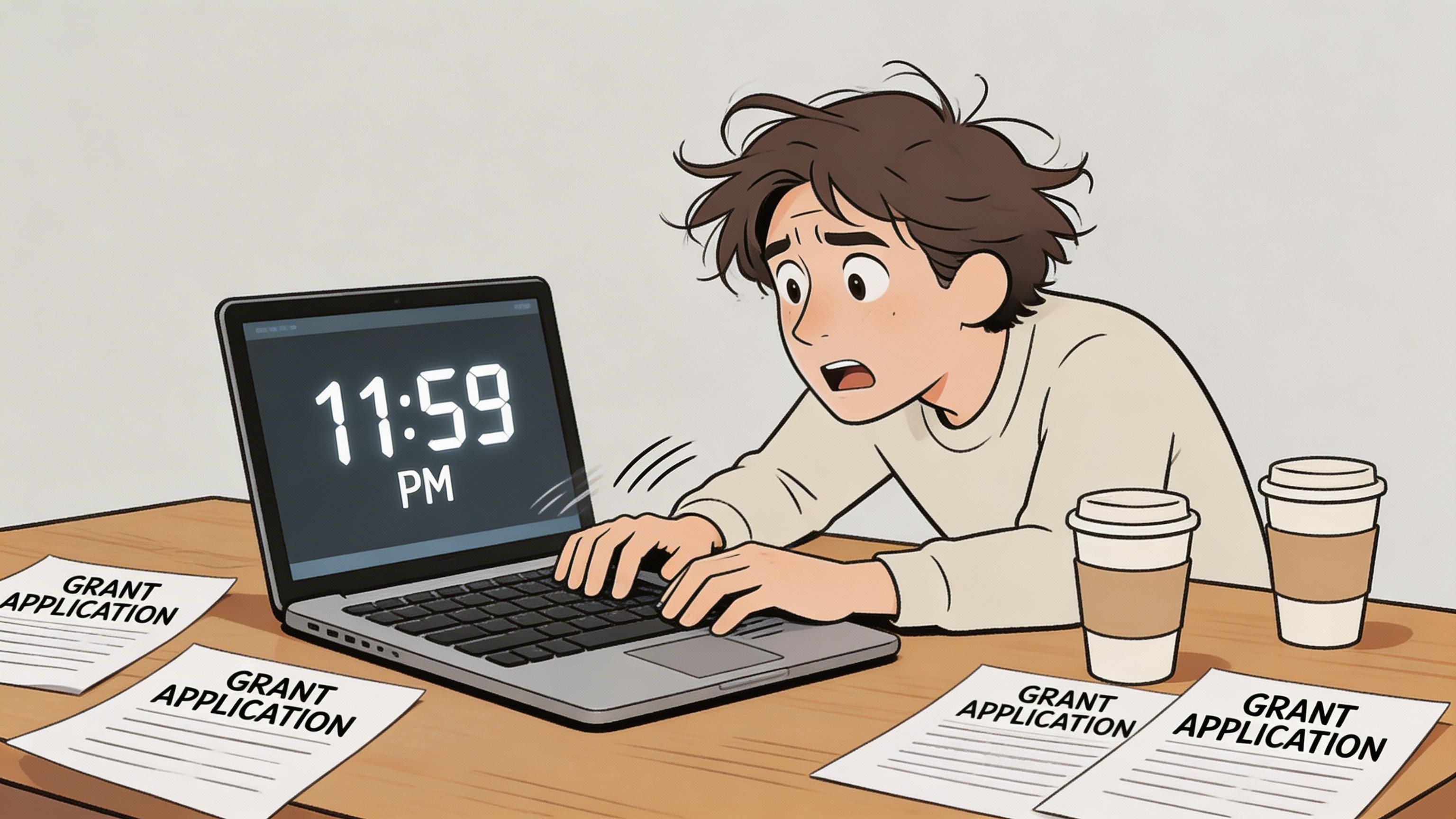
The symptoms look familiar.
What the scramble usually looks like
- Program writes alone: Staff know the community need, but they may not know the funder’s language, formatting rules, or attachment requirements.
- Finance reviews too late: Budget questions surface after the narrative has promised staffing, technology, or timelines that the organization cannot support.
- Leadership edits at the end: Final reviewers often reshape the story after key decisions should have been settled.
- Development acts as traffic control: Instead of leading strategy, the fundraiser spends time chasing files, reminders, approvals, and version confusion.
The result is not only stress. It is waste.
The same information gets re-entered. Good ideas arrive too late to shape the proposal. Staff feel blamed for delays that were built into the process from the start. If this sounds familiar, you may also benefit from stronger grant management best practices that connect pre-award planning with post-award follow-through.
Siloed work as a core issue
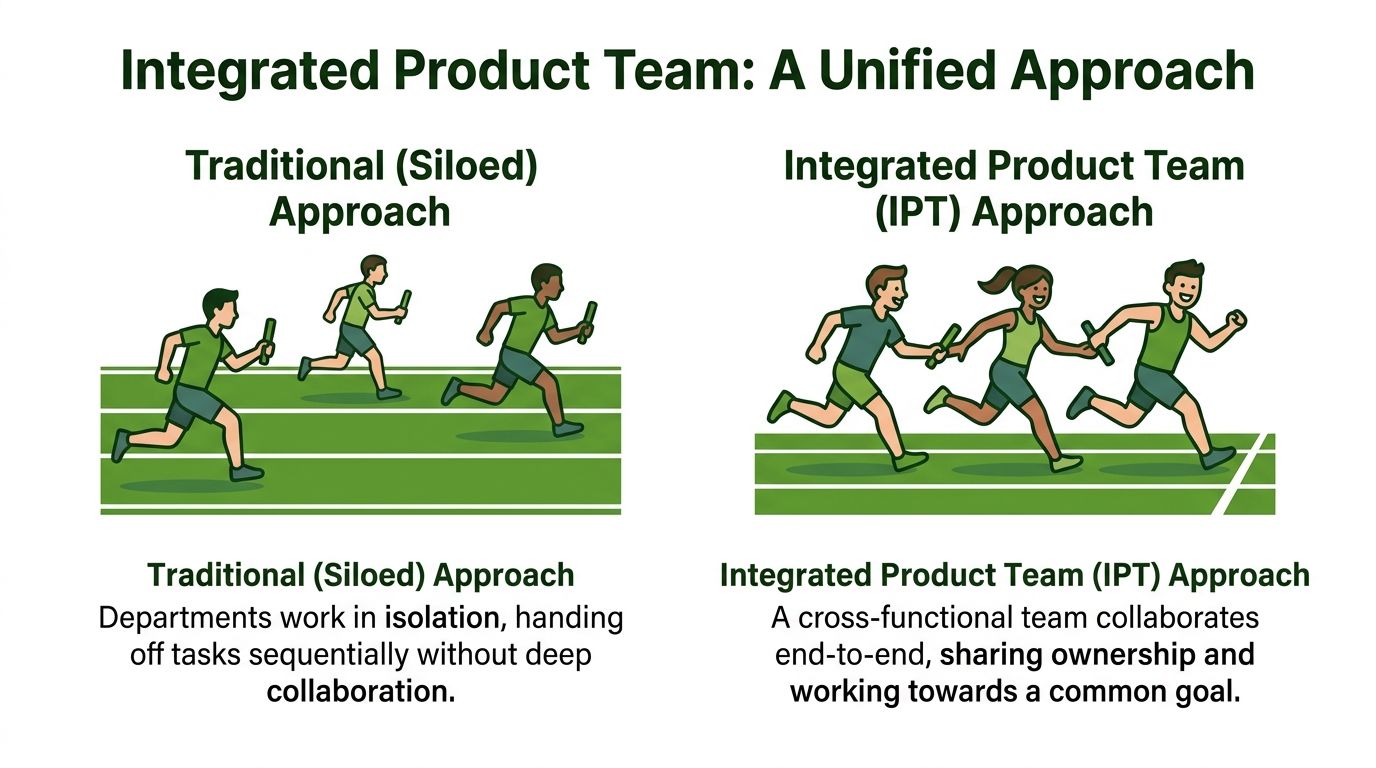
In many nonprofits, the grant process moves like a relay race. One person runs their leg, hands off the baton, and hopes the next person can make sense of it. That structure looks efficient on paper. In practice, it creates gaps.
A better model is to bring the key contributors together early and keep them connected through the life of the opportunity. That is the heart of an integrated product team.
When a grant application keeps falling into last-minute chaos, the fix is rarely “work harder.” The fix is to redesign how people work together.
A small nonprofit does not need a corporate org chart to use this idea. It needs a shared goal, a few clearly defined roles, and one place where decisions live.
What an Integrated Product Team Really Means
An integrated product team is a cross-functional group that shares responsibility for delivering one defined outcome. In defense and aerospace, IPTs emerged as a way to solve complex problems through collaboration across disciplines, and the PMI describes why these groups outperform individuals. They collectively understand more aspects of the problem, generate more options, improve on each other’s ideas, and share responsibility when empowered (PMI on setting up and managing integrated product teams).
That sounds formal. The nonprofit version is simpler.
Think of two ways to build a barn.
The barn-raising way
In the first version, one contractor designs it, another prices it, another sources materials, and another points out too late that the door placement does not work. Everyone is competent. The work still drags because each person sees only part of the whole.
In the second version, the people who understand structure, materials, use, and cost stand together from the beginning. They solve issues while they are still small. They build with shared ownership.
That second version is how an integrated product team works.
For a nonprofit, the “barn” might be a youth mentoring proposal, a capital campaign case statement, or a government reimbursement process. The principle stays the same. The people who shape the outcome should not be separated from each other until the last minute.
How this differs from a normal team
A traditional team often has departments contributing in sequence. Program writes. Finance checks. Leadership approves. Development submits.
An integrated product team works end to end. The team is small, but it includes the perspectives needed to make strong decisions early.
Three differences matter most:
- Shared ownership: The proposal is not “development’s grant.” It belongs to the team.
- Cross-functional representation: Program, finance, leadership, and fundraising each contribute at the right time.
- Authority to act: The group can make routine decisions without waiting for a long approval chain.
What “integrated” looks like
In practice, integration means:
- The budget and narrative are developed together.
- Program staff help define outcomes before the writing is polished.
- Compliance concerns surface before the application is submitted.
- Leadership gives direction early, not only at final review.
If your grant process feels like repeated handoffs, you do not need more handoffs. You need fewer, with better conversation inside them.
This is why the concept travels well beyond its corporate roots. Complex products in aerospace need engineering, quality, operations, and customer input. Complex grant applications need program, finance, compliance, and leadership input. Different mission. Same coordination challenge.
Key Benefits of an Integrated Approach for Nonprofits
The case for an integrated product team is practical. It helps nonprofits make better decisions sooner, with less rework later.
KnowledgeHut notes that IPTs improve efficiency and product quality, support quicker decision-making, and enable faster iterations by aligning the team around strategic objectives. It also highlights metrics such as reduced rework and higher customer satisfaction as indicators of effectiveness (KnowledgeHut on integrated product teams).
For nonprofits, those benefits show up in recognizable ways.
Better proposals because the right people shape them early
When program staff are part of the team from the start, the narrative reflects real service delivery instead of polished guesses. When finance joins early, the budget supports the story instead of contradicting it.
That means fewer awkward revisions near submission time. It also means the final application is easier to implement if funded.
Faster movement without cutting corners
Many nonprofits think collaboration slows things down. Bad collaboration does. A well-run IPT speeds things up because it reduces waiting.
Instead of sending drafts back and forth through separate channels, the group resolves questions while the work is still in motion. That is where quicker decision-making matters most.
Less rework after award
A siloed proposal can win funding and still create pain later. Staff discover that reporting requirements were overlooked. The budget assumptions were thin. A promised activity lacks internal capacity.
An integrated product team lowers that risk because the people who will deliver and track the grant have already had input.
A clearer line between mission and operations
Nonprofits often separate “program thinking” from “administrative thinking.” Funders do not. They evaluate whether the plan, staffing, budget, and reporting approach fit together.
An IPT helps your organization present one coherent picture.
Traditional Teams vs. Integrated Product Teams in Nonprofits
| Activity | Traditional (Siloed) Approach | Integrated Team (IPT) Approach |
|---|---|
| Opportunity review | Development screens fit alone, then asks others later | Program, finance, and leadership weigh fit together |
| Narrative drafting | One person assembles scattered input | Team aligns on goals, evidence, and language early |
| Budget development | Finance reacts to a near-final program design | Budget and program plan evolve together |
| Compliance review | Requirements are checked late | Compliance concerns shape the plan from the start |
| Final approval | Senior leaders make broad edits at the end | Senior leaders set direction early and review fewer surprises |
| Post-award handoff | Delivery team inherits assumptions | Delivery team already helped build the proposal |
Why leaders often feel the difference first
The earliest benefit is usually not a metric. It is relief.
Meetings become shorter because the right people are present. Staff stop chasing scattered approvals. The executive director sees stronger drafts earlier. Program and development stop treating each other like separate shops.
That does not mean every grant becomes easy. It means your process becomes sturdier.
How to Structure Your First Nonprofit IPT
Start by redefining one word. In your organization, the product is the thing the team is responsible for delivering.
That could be:
- A grant proposal
- A new program launch
- A funder report
- A major partnership application
- A multi-site initiative that needs both program and finance coordination
For most small nonprofits, the easiest first pilot is a grant-writing IPT.
Choose one outcome and keep the team small
Do not build a standing committee for everything. Build a working team for one specific result.
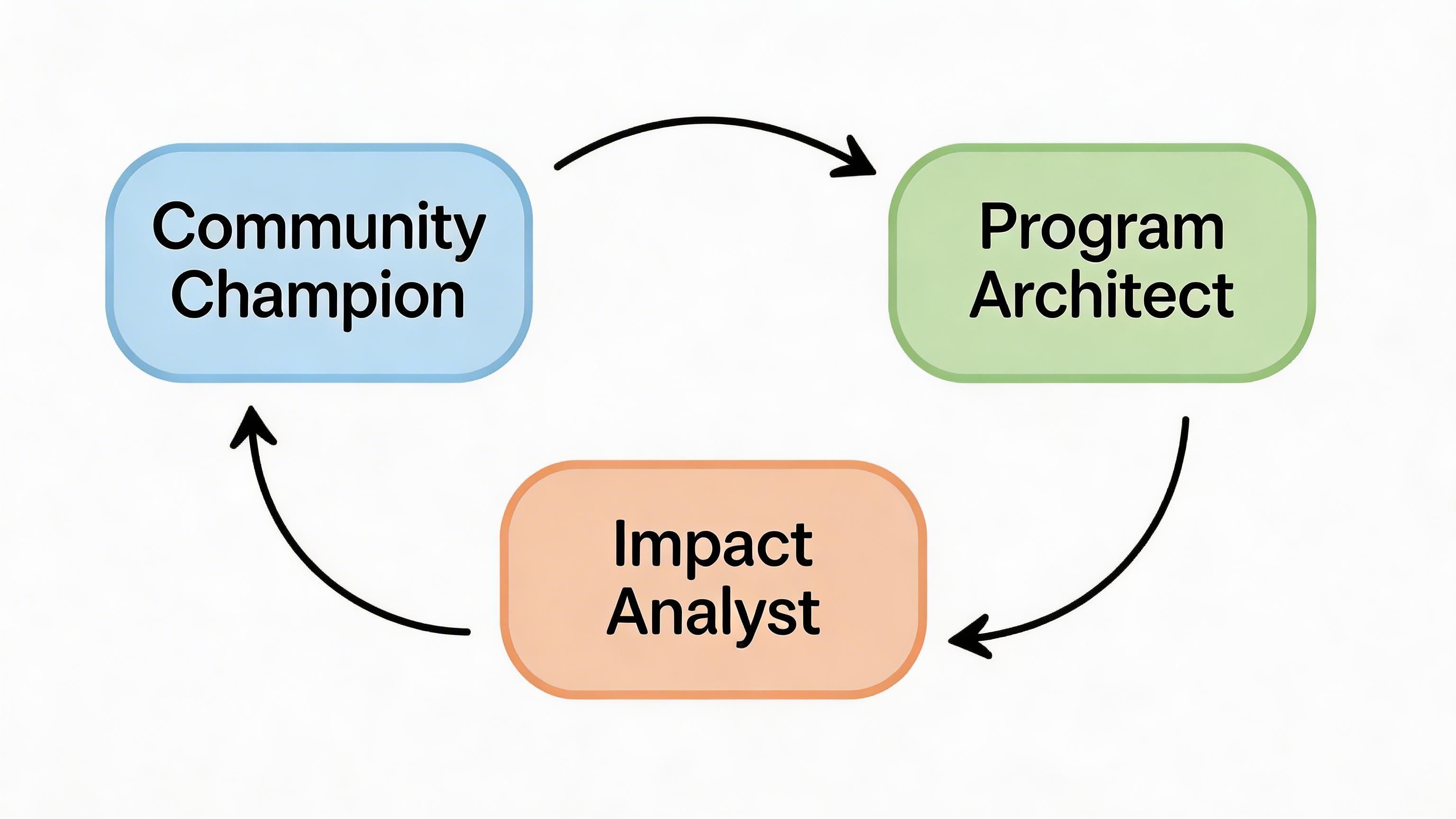
A first IPT can succeed with three to five people. One person may hold more than one role, which is normal in small organizations.
The core roles that matter
Program lead
This person knows what the organization does. They define the intervention, service model, timeline, beneficiaries, and realistic outcomes.
Without this role, the proposal can sound strong but feel hollow.
Funder and data specialist
In some nonprofits, this is the development director. In others, it may be a grant writer, advancement manager, or even the executive director.
This person translates the opportunity into clear requirements. They track submission elements, shape the narrative, and make sure the proposal answers what the funder asked.
Finance and compliance representative
This person checks the budget, cost assumptions, documentation requirements, and reporting feasibility.
Small teams often skip this role until the end. That is one of the most common mistakes.
Executive sponsor
This role is not there to rewrite every paragraph. The executive sponsor sets direction, removes roadblocks, and approves major choices.
In a tiny nonprofit, the executive director may also serve as another role. That is fine. The key is to separate strategic approval from daily drafting wherever possible.
Set a simple operating rhythm
The team does not need a complicated project management system to begin. It needs rhythm.
Use a structure like this:
Kickoff meeting
Review the opportunity, decide whether to pursue it, confirm the deadline, and assign roles.Weekly short check-in
Keep it brief. Review open questions, draft status, missing materials, and decisions needed.Central document hub
Store the narrative, budget, attachments, and decision log in one shared place.Final review with clear rules
Decide who can make line edits, who approves budget changes, and when the draft freezes.
For organizations that need a basic framework to support this, this resource on nonprofit project management can help shape the workflow: https://www.fundsprout.ai/resources/non-profit-project-management
The simplest useful IPT rhythm is one kickoff, one shared workspace, one short weekly meeting, and one named owner for every open task.
Define decisions before stress rises
Confusion usually comes from unspoken assumptions. Clarify these items early:
- Who decides go or no-go
- Who owns the final budget
- Who approves narrative themes
- Who gathers attachments
- Who submits
- Who keeps the record after submission
An integrated product team works because responsibility is shared, not blurred. Everyone contributes, but each task still has an owner.
Adapting the IPT Model for Small and Resource-Strapped Orgs
Many nonprofit leaders hear “integrated product team” and think, “That sounds like something for large agencies with dedicated departments.”
That reaction makes sense. Most IPT examples come from defense, manufacturing, or enterprise settings. Small nonprofits often have one development generalist, one finance lead with many duties, and program staff already stretched thin.
That is exactly why the model needs adaptation.
A source focused on this gap notes that 68% of small U.S. nonprofits lack formal cross-team structures, contributing to 40% lower grant success rates, and also points to a finding that AI-augmented mini-IPTs reduced proposal cycles by 35% in small nonprofits (AcqNotes reference with the cited small nonprofit adaptation data).
The lesson is not that every nonprofit needs a full corporate IPT. The lesson is that small organizations need a lighter version on purpose.
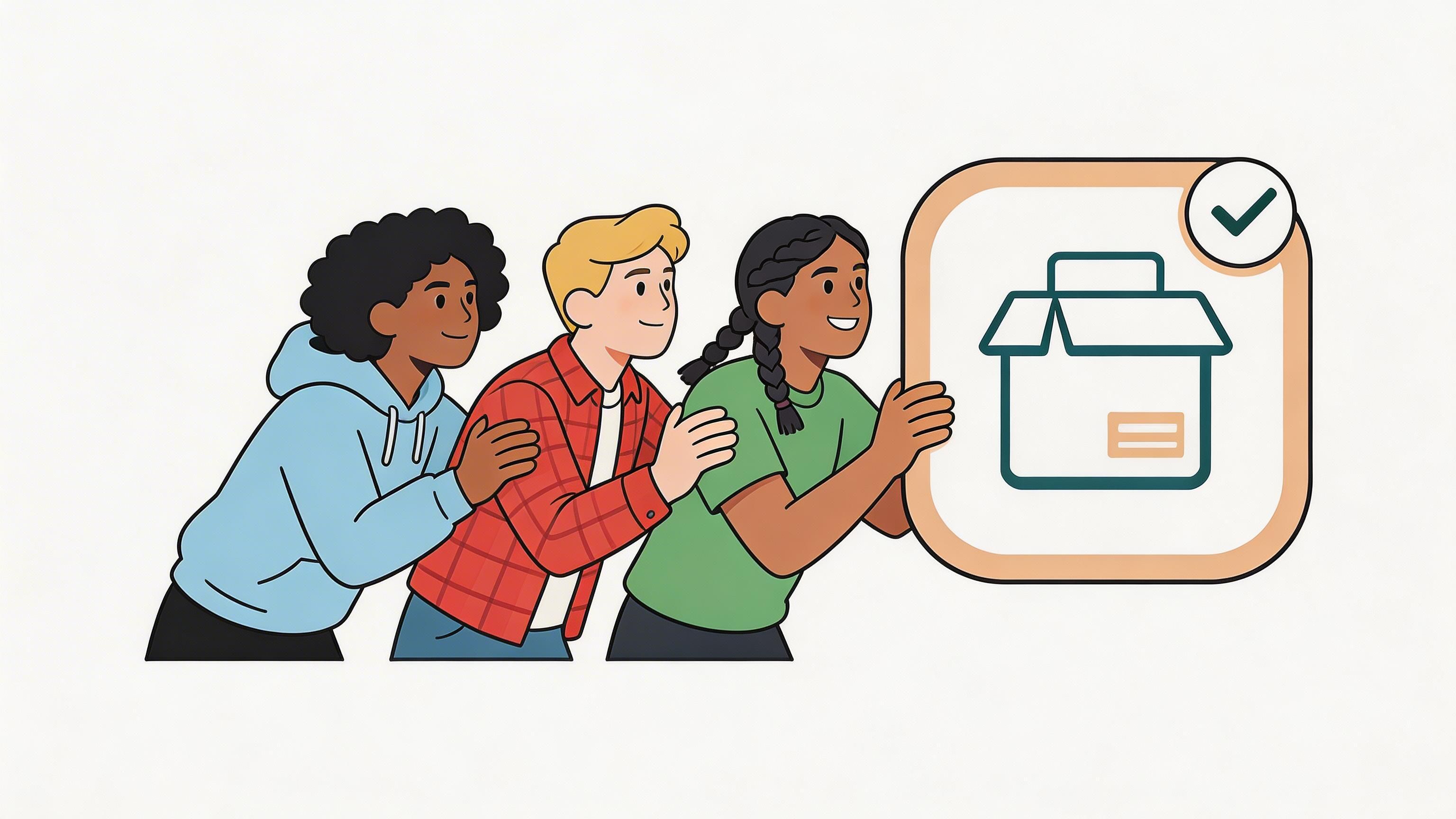
Build a lightweight IPT, not a miniature bureaucracy
A small nonprofit should strip the model down to essentials.
Use a mini-IPT when:
- One opportunity matters enough to coordinate around
- Different people hold critical information
- You cannot afford repeated rework
- Post-award compliance will be demanding
Skip extra titles, formal charters, and large recurring meetings. Keep the structure, lose the corporate theater.
What a virtual IPT can look like
In a resource-strapped organization, the “team” may not sit in one room. It may operate through a shared folder, a weekly call, a decision log, and a small task board.
A virtual IPT usually includes:
- One lead person who keeps the process moving
- One program voice who grounds the work in service reality
- One finance or operations reviewer who catches feasibility and compliance issues
- One leadership checkpoint for strategic alignment
That is enough to change the process if the group works as a unit.
Use tools to replace missing capacity
Small nonprofits often lack a dedicated project manager. Technology can help create the structure that people do not have time to maintain manually.
Useful support can include:
- Eligibility screening so the team does not waste energy on poor-fit opportunities
- Requirement analysis that turns an RFP into a checklist and outline
- Shared drafting tools so program and development can collaborate in one place
- Task planning that shows what must happen next
- Version control so no one works from the wrong file
For leaders thinking through how cross-functional work fits into a smaller shop, this guide to nonprofit organizational structure is a helpful companion: https://www.fundsprout.ai/resources/nonprofit-organizational-structure
A small organization does not need more staff to act in an integrated way. It needs fewer disconnected steps.
What to stop doing
Adapting the model also means dropping habits that make small teams slower:
- Do not wait for a “complete” draft before bringing in finance.
- Do not ask leadership to review without framing the decisions needed.
- Do not rely on email alone as the system of record.
- Do not treat the grant writer as the sole owner of a cross-functional outcome.
A lightweight IPT succeeds when everyone involved can see the same priorities, the same deadlines, and the same unresolved questions.
Measuring Success and Avoiding Common Pitfalls
An integrated product team should improve outcomes, not just create a new meeting pattern.
That means you need measures. You also need to watch for the softer issues that can undermine the model. One cited analysis found that nonprofit IPTs can boost grant win rates by 28%, but 55% fail because teams do not measure softer factors such as stakeholder alignment and burnout (Wikipedia reference summarizing the cited Bridgespan analysis).
The metrics that make sense for nonprofits
Start with a small scorecard.
Track items such as:
- Proposal cycle time: How long it takes from go decision to submission
- Rework level: How often major sections need late revision because key input was missing
- Budget accuracy: Whether budget assumptions hold up through review and award
- Submission quality: Whether attachments, forms, and requirements are complete on first pass
- Reporting readiness: Whether the post-award team can execute what was proposed
Then add team-health measures. They matter more than many leaders expect.
Ask simple questions after each major submission:
- Did people understand their role?
- Were decisions made early enough?
- Did the process create overload?
- Did anyone become a bottleneck?
Common failure points
Leadership never really lets go
Some executive directors approve the concept of collaboration but still insist on final authority over every paragraph. That turns the IPT into a waiting room.
The sponsor role should guide, clear barriers, and decide major issues. It should not absorb routine drafting work.
Goals stay vague
“Let’s all collaborate better” is not a team charter. A real IPT has one defined output, a deadline, and named decision owners.
Meetings multiply
This is the collaboration tax. Teams create more check-ins than the work requires, and staff begin to resent the model.
Keep meetings short, decision-focused, and tied to active work.
Burnout goes unmeasured
Cross-functional work can become invisible overtime if leaders keep layering it onto already full jobs. If you want this model to last, apply basic principles of risk management to your process. Identify bottlenecks, overload points, and recurring failure modes before they become routine.
Build one dashboard, not ten
Your dashboard can be simple. One page is enough.
Include:
| Area | What to review |
|---|---|
| Speed | Cycle time from pursuit decision to submission |
| Quality | Missing items, late edits, avoidable revisions |
| Feasibility | Budget issues, staffing mismatches, compliance concerns |
| Team health | Role clarity, overload, unresolved friction |
If you want a broader framework for connecting pre-award and post-award work, this nonprofit grant management resource is useful: https://www.fundsprout.ai/resources/grant-management-for-nonprofits
A healthy IPT tracks output and strain at the same time. Fast submissions are not a win if they leave the team depleted or set up delivery problems later.
Putting Your Integrated Team Into Action
The strongest reason to adopt an integrated product team is not that it sounds modern. It is that your organization already depends on cross-functional judgment, whether you have named it or not.
Program knows what is possible. Finance knows what is supportable. Development knows what the funder needs. Leadership knows what fits strategy. When those voices work separately, the grant process becomes a scramble. When they work as one team, the process becomes more deliberate.
You do not need a major reorganization to start.
Your first pilot
For your next good-fit grant opportunity, create a mini-IPT with just three people:
- A lead
- A program expert
- A finance reviewer
Set up one shared document hub. Hold one short weekly check-in. Decide at the kickoff who owns the budget, who gathers attachments, and who can approve final edits.
That small shift changes the flow of work. It moves important conversations earlier, where they are cheaper and calmer. It also gives your staff a better chance to build proposals they can deliver.
The goal is not to copy a defense contractor. The goal is to give a small nonprofit a smarter way to coordinate mission-critical work.
Frequently Asked Questions About Nonprofit IPTs
How many people should be on a nonprofit integrated product team
Start with the fewest people who hold essential knowledge. For most grant opportunities, that is three to five people. Small teams move faster and make ownership easier to see.
Can one person hold more than one role
Yes. In many nonprofits, one person may cover development and data, or leadership and external relations. The risk is not role overlap. The risk is failing to name which hat the person is wearing for each decision.
Should volunteers be part of the team
Sometimes. A volunteer can help if they bring useful expertise, such as editing, budgeting, or community knowledge. They should not be the only holder of critical institutional information.
What if program and development disagree
That is normal. The purpose of the IPT is not to eliminate disagreement. It is to surface it early enough to solve it. Use the funder requirements, the organizational strategy, and actual delivery capacity as your decision filters.
Do we need special software first
No. You can begin with a shared folder, a clear task list, and a decision log. Software becomes more helpful as your volume and complexity grow.
How do we know if the model is working
Look for fewer late surprises, better role clarity, stronger budget alignment, and less last-minute confusion. Then review whether the team feels more coordinated, not just more busy.
Fundsprout helps nonprofits operate this kind of integrated workflow without adding more chaos. If your team wants a better way to find aligned funding, break down RFPs into actionable plans, draft proposals collaboratively, and keep an audit trail from application through renewal, explore Fundsprout.
Try 14 days free
Get started with Fundsprout so you can focus on what really matters.