Grant Management for Nonprofits: A Practical Guide to Funding Success
Master grant management for nonprofits with our practical guide. Discover proven processes, tools, and strategies to secure funding and maximize impact.

Abdifatah Ali
Co-Founder
Grant management is the lifeblood of many nonprofits. It's the entire process you follow to find, win, track, and report on the grant funding that makes your work possible. Think of it less as a task and more as a strategic system—one that ensures you're not just getting money, but using it effectively, staying on the right side of grantor rules, and ultimately, building a foundation for sustainable funding.
When you get it right, you build trust, and that opens doors to even more opportunities down the road.
Understanding Your Grant Management Journey
Let's be clear: grant management is so much more than just filling out forms. It’s the engine that powers your mission forward. The best way to think about it is as a continuous cycle with a clear destination: stable funding that leads to real, measurable impact. Having an organized, proactive system isn't just a nice-to-have; it's essential for building credibility with funders and securing the resources you need.
This journey is about shifting from a reactive "apply-for-everything" mindset to a strategic one. Instead of just sending applications into the void and hoping for the best, a solid process gives your team the confidence and clarity to manage the entire grant lifecycle from start to finish.
The Core Grant Lifecycle
The grant management process might seem overwhelming at first, but it really just boils down to a few key stages. Each step logically flows into the next, and your success in one area directly impacts the others. When managed well, this creates a powerful, self-reinforcing cycle for your fundraising efforts.
At its simplest, the journey looks like this: you find the right opportunities, you apply for them, and then you report back on your results.
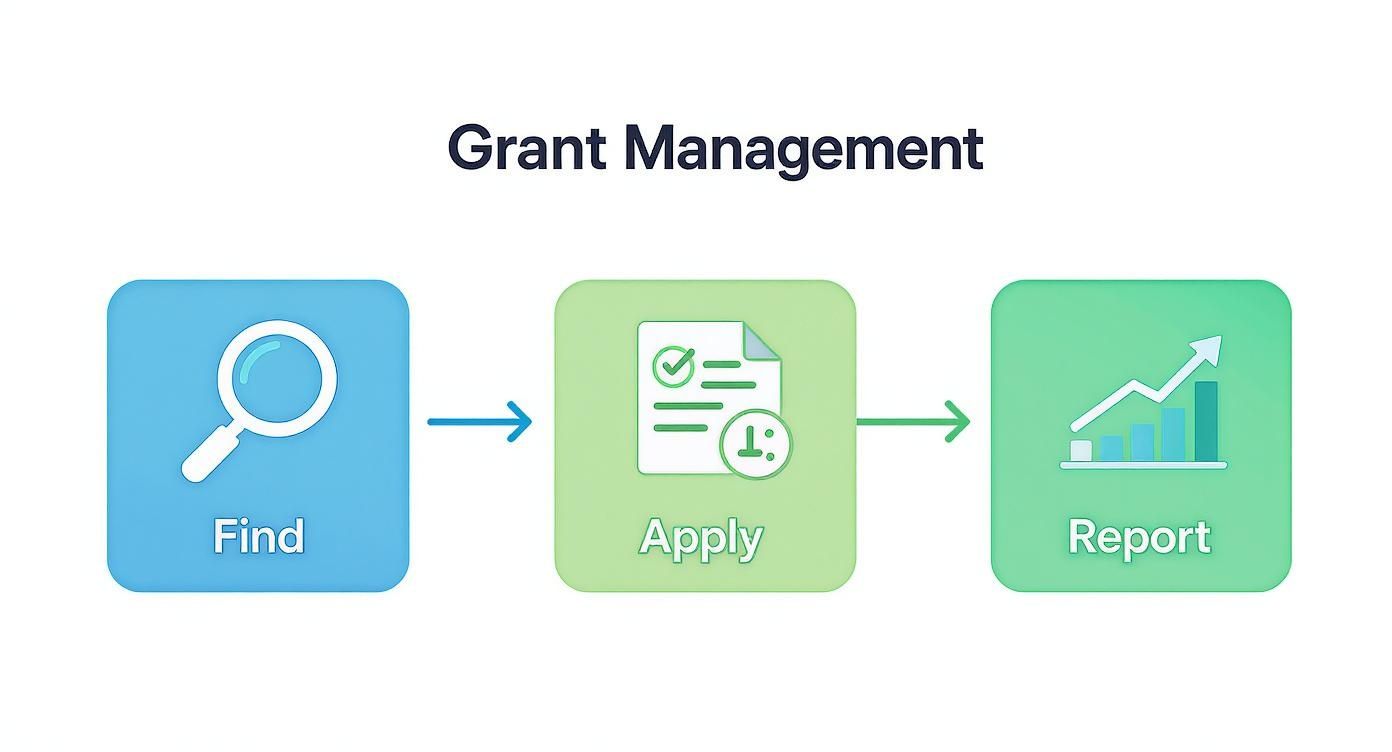
This simple visual makes a crucial point: the work doesn't stop when the application is submitted. It's the reporting that closes the loop, proves your impact, and strengthens your relationship with funders for the next cycle.
To give you a clearer picture, here’s a breakdown of the entire grant management lifecycle, from the initial search to the final report.
The Grant Management Lifecycle at a Glance
This table shows how each phase builds on the last, creating a structured path from finding funding to proving your worth for future support.
Why a Proactive System Matters
Having an organized approach to grants gives you a huge advantage that goes far beyond just cashing a check. It creates a solid foundation for your organization’s stability and growth. The benefits are real and tangible:
- Increased Impact: When you manage funds properly, you can allocate them to the programs that need them most. This directly translates to serving more people and delivering better on your mission.
- Stronger Funder Relationships: Consistent communication and accurate, on-time reporting build incredible trust. Funders start to see you as a reliable, low-risk partner, making them far more likely to fund you again.
- Enhanced Reputation: A proven track record of successfully managing grants establishes your nonprofit as a responsible and effective organization. This reputation is gold—it attracts new donors, skilled board members, and valuable community partners.
Effective grant management is your proof that a funder made a wise investment. It's not just about checking boxes for compliance; it’s about building a powerful case for their continued support.
Ultimately, mastering this journey lets your team spend less time buried in administrative headaches and more time doing the work that actually changes lives. By putting a clear process in place, you create a repeatable system for success that can grow right alongside your organization. That’s how you turn grant seeking from a chore into a core strategic advantage.
Building a Winning Grant Management System
Landing a major grant isn't about getting lucky; it's about having a rock-solid system in place. Think of it like building a house. You wouldn't start without a blueprint and a strong foundation. The same goes for your grant program. A well-built grant management system is the structure that keeps everything from collapsing under the weight of deadlines, paperwork, and compliance rules.
This system is what moves you from frantically chasing any grant you see to strategically securing funding that truly fuels your mission. Each part supports the others, creating a framework that can handle the inevitable pressures of reporting, financial tracking, and funder expectations.
Let’s walk through the five essential pillars that form the blueprint for a system that actually works.
Pillar 1: Strategic Prospect Research
First things first: you have to find the right funding opportunities. A huge mistake I see nonprofits make is chasing every grant that comes across their desk. This "spray and pray" approach just burns out your team and leads to mission drift. Strategic research is all about quality, not quantity. You want to make sure every application you send has a real shot because it’s a perfect fit for both you and the funder.
A solid research process goes way beyond just searching online databases. You need to get crystal clear on your organization's specific needs, your goals, and what you can realistically handle. That clarity lets you build a pipeline of funders whose priorities actually line up with your own.
- Define Your Needs: Know exactly what program you need funding for and the precise amount you need to ask for.
- Identify Aligned Funders: Zero in on foundations and agencies that have a track record of supporting organizations just like yours.
- Vet Every Opportunity: Before you write a single word, read the fine print. Check the eligibility, funding priorities, and reporting rules to confirm it’s a genuine match.
Pillar 2: Streamlined Application Workflows
Once you’ve got a list of promising prospects, you need an efficient way to get the applications out the door. A chaotic workflow—with people scrambling for documents and missing deadlines—is a recipe for stress and sloppy proposals. The goal is to turn that chaos into a well-oiled machine.
This really comes down to creating a repeatable process. You need standardized templates and clear steps that make collaboration feel easy. Think of it as an assembly line for your grant proposals, where each person knows their role and every step is clearly defined. This doesn't just save time; it dramatically improves the quality and consistency of your work.
To make this happen, you need a central hub for everything. A shared calendar with all your deadlines, a cloud folder with all the boilerplate documents, and clear task assignments are absolutely non-negotiable.
Pillar 3: Meticulous Financial Oversight
Here's the thing: winning the grant is only half the battle. The real work begins when you have to manage the money. This third pillar is all about being a responsible steward of the funds you've been awarded. Funders view their grant as an investment, and they expect you to treat it that way. Sloppy financial tracking can ruin a funder relationship, trigger compliance issues, or even force you to return the money.
Proper oversight is more than just logging expenses. You need a system that can keep grant funds separate from your other income, track spending against the approved budget, and spit out accurate financial reports whenever they're needed. This level of transparency is how you build and maintain trust.
A well-managed grant budget is your most powerful tool for demonstrating accountability. It provides concrete proof that you are using the funder's investment wisely and effectively to achieve the promised outcomes.
This detail is also vital for your own internal planning. It helps you understand the true cost of your programs and make smarter decisions down the road. For a deeper dive, our guide on grant management best practices gets into the nitty-gritty of financial stewardship.
Pillar 4: Ironclad Compliance Tracking
Compliance is the legal and ethical backbone of grant management for nonprofits. Every single grant comes with a contract full of rules, conditions, and deadlines. Your fourth pillar is an ironclad system for tracking and meeting every single one of those obligations. Let something slip, and you could face financial penalties or even get blacklisted from future funding.
You have to be proactive here. From the moment the grant is awarded, you need to understand every requirement and build checks and balances right into your daily workflow.
- Centralize Grant Agreements: Keep all your grant contracts and related paperwork in one easy-to-find place.
- Create a Compliance Calendar: Immediately map out all reporting deadlines, key project milestones, and any other important dates.
- Document Everything: Get in the habit of keeping detailed records of all program activities, spending, and every email or phone call with the funder.
Pillar 5: Compelling Impact Reporting
Finally, you have to prove your success. This last pillar is all about telling the funder a compelling story of the impact their money made. A great report does more than just list what you did; it shows the real change you created, and it backs that story up with solid data.
Your report should draw a clear line from the funds you received to the real-world results you delivered. The most powerful reports mix quantitative data (like "95% of participants completed the program") with qualitative proof, like powerful testimonials or a moving success story. This blend of logic and emotion makes a strong case for continued support, helping you turn a one-time grant into a lasting partnership.
Navigating a Competitive Data-Driven Funding Landscape
It wasn't that long ago when a compelling story and a powerful mission were all you needed to land a grant. But the ground has shifted beneath our feet. Today's funders act a lot more like strategic investors. They want to see a clear return on their investment—not in profit, but in tangible, measurable impact.
This means nonprofits have to become expert data storytellers. It’s no longer enough to just say you’re doing good work; you have to prove it. Effective grant management for nonprofits now hinges on your ability to translate day-to-day activities into a data-backed narrative of real change.
Why Data Is Your New Best Friend
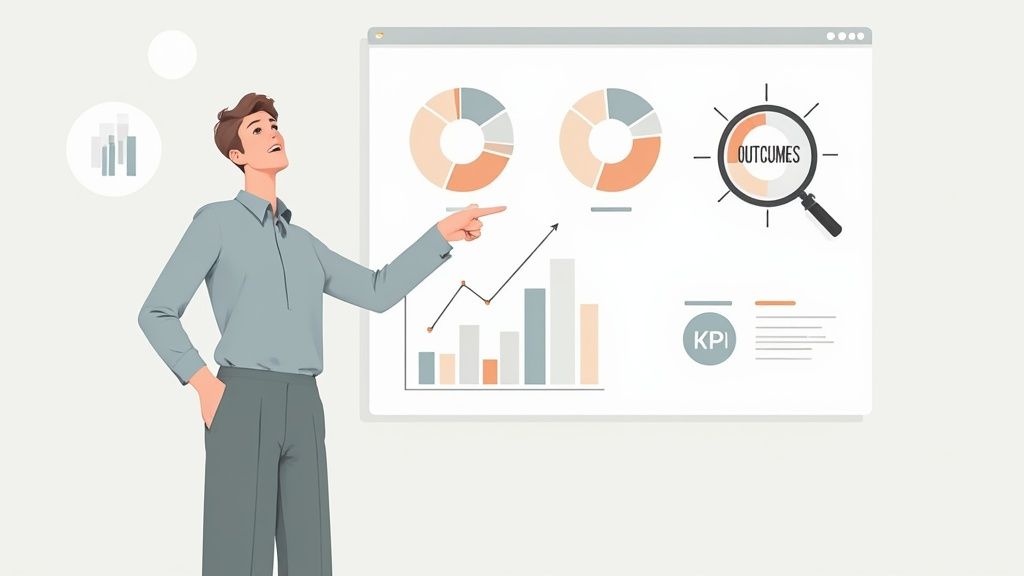
Think of data as the hard evidence that makes your mission real. A moving story can capture a funder's heart, but solid data is what earns their confidence. It proves your programs are not just well-intentioned, but truly effective.
And the pressure is on. With a 15% jump in registered nonprofits since 2020 and a tightening of federal grants, the competition is fierce. In fact, 20% of nonprofit leaders now say that increased competition is their number one concern. In response, funders are demanding stronger proof of performance, from community needs assessments all the way to a clear return on investment from past grants. You can learn more about how to use case management data to secure competitive grant funding on caseworthy.com.
Moving from Outputs to Outcomes
One of the biggest mental shifts required is focusing on outcomes over outputs. It's a common stumbling block, but getting this right is absolutely critical for winning grants today.
Outputs are the direct results of your activities. They measure what you did. Think: "we served 500 hot meals" or "we held 20 workshops." These numbers are useful, but they don't tell the whole story.
Outcomes are the specific changes your program creates for people. They measure what happened because you did it. For example: "participants reported a 40% reduction in food insecurity" or "75% of workshop attendees found a job within three months."
Funders want to invest in outcomes, not just outputs. Your ability to track and report on the actual change you create is what will set your proposal apart from the dozens of others on their desk.
Focusing on outcomes means you have to be much more intentional about data. You have to define what success looks like from day one and then build the systems to actually measure that change over time.
Fostering a Data-Centric Culture
Getting good with data isn't just about buying new software; it's a cultural change that has to come from the top. It means making data a normal part of the conversation, from program staff meetings all the way up to the board room.
Here are a few practical ways to get started:
Start Small, Be Consistent: You don't need a massive, complex system overnight. Pick two or three key metrics for your most important program and start tracking them. Then, make discussing those numbers a regular part of your weekly team meetings.
Make Data Accessible: Nobody likes staring at a spreadsheet. Use simple dashboards or visual reports to make the data easy for everyone to grasp. When your team can see the impact of their work in real-time, it's a huge motivator.
Celebrate Data-Informed Wins: Did your data reveal an insight that helped you improve a program? Did it help you land a grant? Celebrate that! It reinforces the value of the effort and keeps everyone engaged.
By embracing data, you stop asking for a donation and start presenting a compelling investment opportunity. You give funders the confidence they need to partner with you, ensuring your organization can keep making a real difference for the people you serve.
Choosing Your Grant Management Tools and Software
Are you still juggling scattered spreadsheets, a chaotic inbox, and stacks of paper to manage your grants? If that sounds familiar, you’re not alone. But this manual approach is like trying to build a modern house with a hammer and a handsaw—it’s slow, risky, and holds your mission back.
Making the leap to dedicated grant management for nonprofits technology isn't a luxury anymore; it's a strategic necessity.
The right platform can truly transform that chaos into clarity. Imagine your team spending less time hunting for documents or wrestling with report formatting and more time building relationships with funders and delivering on your programs. The goal here is to free your people from the administrative grind, not chain them to another complicated tool.
Many nonprofits have been hobbled by disconnected systems that make tracking budgets and staying compliant a constant struggle. As one recent report highlighted, organizations are finally ditching their "paper clip and Scotch tape" solutions. They're moving to integrated systems that bring data, budgets, and program milestones into one central hub. Learn more about how modern platforms provide real-time financial reporting and live program dashboards to enhance grants management.
Evaluating Your Software Options
The sheer number of software options can feel overwhelming. The secret is to start by looking inward, not outward. Before you even book a single demo, take the time to map out your current grant workflow.
Where are the bottlenecks? Is it tracking dozens of different deadlines? Is it getting everyone on the same page for a proposal? Or is it the nightmare of pulling together financial reports? This simple self-assessment is your best guide to finding a tool that solves your actual problems.
Your evaluation should focus on features that directly address these pain points. Look for software that does more than just store information—it should automate repetitive tasks and give you clear insights. A platform with a centralized dashboard, for instance, can provide an immediate, bird's-eye view of your entire grant pipeline.
This is a great example of how a modern grant management dashboard pulls key data and workflows into one clean interface.

Visuals like this are powerful. They turn dense, complex data into something you can understand in seconds, helping your team make smarter decisions, faster.
Must-Have Features Checklist
When you start comparing different platforms, a checklist is your best friend. It keeps you focused and ensures you're evaluating every option against the same criteria. A feature might sound flashy in a sales pitch, but if it doesn't fit how you actually work, it's just noise.
Here are the non-negotiable features you should be looking for:
- Centralized Document Management: Think of it as a single, secure library for every grant-related file—proposals, budgets, award letters, and final reports. No more version-control confusion or frantic searches for email attachments.
- Automated Reporting Tools: The ability to generate financial and programmatic reports with a few clicks is a game-changer. Good systems even come with pre-built templates that match common funder requirements, saving you dozens of hours.
- Real-Time Budget Tracking: You need a clear, live view of how grant funds are being spent against what was approved. This is crucial for preventing overspending and proving every dollar was used as intended.
- Task and Deadline Calendars: An integrated calendar that automatically logs every application and reporting deadline is a lifesaver. It should send reminders to the right people so nothing ever slips through the cracks again.
The best grant management software doesn't just store information; it actively helps you manage it. It should prompt action, highlight risks, and make collaboration seamless for your entire team.
Making the Final Decision
Once you have a shortlist of vendors that check the boxes, it's time to see them in action. Schedule live demos, but don't just sit back and watch. Come prepared with specific scenarios from your own day-to-day work. Ask the salesperson to show you exactly how their platform would handle your most common (and most frustrating) tasks.
Pay close attention to the user experience. If the software isn't intuitive and easy for your team to navigate, it won't get used, no matter how many bells and whistles it has. Finally, ask about their customer support and training resources—a smooth rollout depends on having good help when you need it.
To help you get started, check out our in-depth guide on the best grant management software for nonprofits on the market today.
7. Avoiding Common Grant Management Pitfalls
Let's be honest, effective grant management is as much about sidestepping common mistakes as it is about following best practices. Even the sharpest organizations can stumble into traps that put their funding at risk, sour relationships with funders, and ding their reputation. Think of this section as your guide to keeping your grant process running smoothly and building unshakable trust.
Staying on top of the grant lifecycle demands a sharp eye. A simple slip-up in tracking expenses, a blown reporting deadline, or a poorly handled conversation with a program officer can create a domino effect of problems. The secret is to spot these potential issues from a mile away and build your defenses right into your daily workflow.
Mismanaging Grant Funds
One of the most critical—and surprisingly common—mistakes is failing to track and spend grant funds correctly. This is rarely intentional. It usually happens when grant money gets dumped into the general operating fund without a clear system to keep it separate.
Picture this: your nonprofit lands a $50,000 grant, but it’s restricted to a specific youth literacy program. Without a dedicated tracking system, a portion of that money accidentally pays for administrative salaries that have nothing to do with the program. When it's time for the final report, the numbers just don't line up. That leads to a very awkward conversation with the funder and could easily jeopardize any future support.
A grant is a contract, not just a gift. Every dollar has a job to do, as defined by the funder. Failing to honor that is a breach of trust that’s incredibly hard to mend.
To keep this from happening, you need rock-solid financial controls from the moment the grant is awarded. Your accounting software should have separate codes or classes for each grant, making sure every single expense is put in the right bucket. Make it a habit to review your budget-versus-actual reports regularly—this way, you’ll catch any red flags before they turn into full-blown crises.
Neglecting Funder Communication
Another classic error is treating the funder relationship like a one-and-done transaction. It's a familiar story: a flurry of communication during the application phase, followed by radio silence once the check arrives. Then, months later, a report suddenly appears in their inbox. This silence can easily be mistaken for a lack of progress or, even worse, a sign that things are going off the rails.
Great grant stewardship is all about consistent, proactive communication. You're trying to build a real partnership here, not just check boxes on a to-do list.
- Send quick, positive updates. Did your program hit a cool milestone? Shoot them a short email to share the good news.
- Share compelling stories. A powerful quote from a program participant or a great photo from an event shows the funder their investment making a real difference.
- Don't hide from challenges. If you hit a roadblock, let your program officer know. They’ll appreciate your honesty and might even have advice or be able to offer some flexibility.
This kind of ongoing conversation builds incredible trust and can turn a funder into one of your biggest champions.
Falling Victim to Mission Drift
The pressure to bring in money can be immense, and it sometimes tempts organizations to chase grants that aren't quite the right fit. This is what we call mission drift—when a nonprofit starts tweaking its programs to align with a funder's interests instead of its own core purpose.
Sure, it might bring in some cash in the short term, but mission drift ultimately waters down your impact, confuses your community, and stretches your team to the breaking point. Before you even start writing a proposal, you have to ask the tough question: "Does this opportunity actually move our mission forward, or are we contorting our mission to get the money?" Your best defense is a disciplined grant pipeline that stays laser-focused on funders who are genuinely aligned with what you do. Sticking to your guns is how you build a stronger, more sustainable organization in the long run.
Recognizing these traps is the first step. The table below outlines these common pitfalls alongside their potential consequences and, most importantly, practical strategies to steer clear of them.
Common Pitfalls and Proactive Solutions
By building these avoidance strategies directly into your grant management process, you create a safety net that protects your funding, your reputation, and your ability to focus on the mission that matters most.
Creating Your Grant Management Action Plan
Alright, we’ve covered the what and the why. Now, let's get our hands dirty and turn all that knowledge into a real, working plan. This is where the rubber meets the road.
We'll break down how to build or overhaul your grant management system into three straightforward phases. Think of it as a roadmap to get you from where you are now to where you want to be—confidently and without getting overwhelmed.
It all starts with an honest look in the mirror. You can't chart a course to a new destination without knowing your starting point. This first phase is all about laying a solid foundation before you start building the house.
Phase 1: Assess and Align
Before you can fix anything, you have to understand exactly what’s broken—or just what could be working a whole lot better. This is your chance to map out your current grant process, pinpoint the real headaches, and define what "success" actually looks like for your organization.
- Map Your Current Workflow: Get a whiteboard and physically draw out every single step you take, from finding a grant opportunity to sending that final impact report. Where do things slow down? Where does communication break? Find the bottlenecks.
- Set Crystal-Clear Goals: Vague ambitions won't cut it. Do you want to increase grant funding by 20% this year? Or maybe cut the time your team spends on reporting in half? Get specific and make it measurable.
- Tie Everything to Your Mission: This is the perfect time to make sure your grant strategy is actually serving your core purpose. Formalize your plan of record, which acts as your organization's North Star for all strategic decisions.
Phase 2: Implement and Train
With a clear vision locked in, it's time to build the engine that will power it. This phase is about choosing the right tools and, just as importantly, getting your team comfortable and skilled in using them. Remember, the fanciest software is just a fancy paperweight if no one knows how to use it.
It's also crucial to be realistic about the effort involved. A typical foundation grant proposal can easily take 15-20 hours to put together. A big, complex federal grant? You could be looking at over 100 hours of work.
Knowing that overall success rates hover around 10%, and that 95% of nonprofits rely on private foundations for funding, helps you manage expectations and allocate resources wisely. You can dig into more of these numbers by checking out the latest grant statistics and trends on instrumentl.com.
Phase 3: Optimize and Grow
Here’s the thing: your grant management system isn't a "set it and forget it" project. It’s a living, breathing part of your organization that needs regular care and attention. This final phase is about creating a rhythm of continuous improvement, driven by hard data and honest feedback.
A successful action plan doesn't end at implementation. It creates a feedback loop where you consistently measure results, learn from both wins and losses, and refine your approach to get better over time.
To make this happen, you need to track your progress with clear metrics.
- Track Key Metrics: Start monitoring things like your application success rate, the average time it takes to write a proposal, and your reporting compliance rate (how many reports get submitted on time).
- Gather Team Feedback: Your team is on the front lines. Talk to them regularly. What’s working well? What’s still a pain point? Their insights are pure gold for making smart adjustments.
- Review and Adapt Annually: Set aside time at least once a year for a deep-dive review of your entire grant system. Celebrate what you’ve accomplished, tackle the lingering challenges, and set fresh goals for the year ahead.
Grant Management FAQs
Jumping into the world of grants can feel overwhelming, and it's natural to have questions, especially when your nonprofit is growing. Let's tackle some of the most common ones I hear from organizations trying to build a solid grant strategy.
Think of this as a quick-start guide to clear up confusion and help your team confidently navigate the grant process.
What’s the First Step in Creating a Grant Process?
Before you do anything else, you need to do a serious self-assessment. I always tell teams to map out their current process—warts and all. How do you find grants right now? Who writes the proposal? How do you track deadlines and submit reports?
Write it all down. This simple exercise is incredibly revealing. You’ll immediately see where things get stuck, where communication breaks down, and what’s falling through the cracks. Once you have that honest picture of your starting point, you can build a new workflow that actually works for your team and your capacity.
How Can Small Nonprofits Manage Grants with Limited Staff?
When you're a small shop, it's all about focus and smart systems. Don't try to chase every single grant opportunity you see. That’s a recipe for burnout. Instead, concentrate on building real, lasting relationships with a handful of funders who are genuinely passionate about your mission. Quality over quantity will save you an incredible amount of time.
A small nonprofit's secret weapon is its ability to connect authentically with funders. Pour your energy into the grantmakers who are true believers in your work.
You don't need fancy software to get started. Use simple tools like a shared Google Calendar for deadlines and a well-organized cloud drive (like Google Drive or Dropbox) to keep all your documents in one place. Create templates for everything you can—proposal narratives, budgets, and progress reports. This standardization is a lifesaver that frees up precious hours and keeps your submissions consistent.
What Are the Most Important Metrics to Track for Grant Reporting?
Funders want to see more than just how you spent their money. They want to know what changed because of it. The most powerful metrics you can track are your outcome metrics. These show the real-world impact your programs are having.
It’s the difference between an output and an outcome. Instead of just reporting outputs like "we served 100 people," you should focus on outcomes like:
- The percentage of participants who found stable housing after finishing our program.
- A measurable increase in literacy scores among the students we tutored.
- The reduction in recidivism rates for clients who used our reentry services.
Of course, you still need to track process metrics, like hitting all your reporting deadlines and logging your communication with funders. These prove you're a reliable partner and a good steward of their investment, which is crucial for building the trust you need for a renewal.
Ready to transform your grant management from a chaotic scramble to a strategic advantage? Fundsprout uses AI to help your nonprofit find perfectly matched funders, write compelling proposals, and effortlessly manage compliance. Stop juggling spreadsheets and start winning more grants.
Try 14 days free
Get started with Fundsprout so you can focus on what really matters.