Hiring a Grant Writer: A Nonprofit’s Playbook for 2026
Your complete guide to hiring a grant writer. Learn to assess needs, budget, recruit, interview, and onboard the right talent for your nonprofit's mission.

Abdifatah Ali
Co-Founder
You probably know the feeling. A promising grant opportunity lands in your inbox, the deadline is close, the guidelines are dense, and no one on staff has the time to turn scattered program knowledge into a polished application. The executive director starts drafting at night. A program manager hunts for outcomes data between meetings. Finance gets pulled in at the last minute for a budget narrative. Then the submission goes out rushed, incomplete, or not at all.
That cycle is expensive, even when it doesn’t show up as a line item.
Hiring a grant writer is rarely just about adding another person. It’s about building a repeatable funding function. The right hire helps your team decide which opportunities deserve attention, gathers the right inputs early, translates program work into funder language, and keeps deadlines from becoming emergencies. The wrong hire does the opposite. They create false confidence, waste staff time, and leave your team with little to show for the effort. If you want a useful frame for that risk, this breakdown of the true cost of a bad hire applies more than most nonprofit leaders realize.
Your Guide to a Game-Changing Nonprofit Hire
Most nonprofits don’t start by asking for a grant writer. They start by feeling behind.
A board member says, “We should be going after more grants.” A funder suggests a government opportunity that looks promising. Your staff knows the mission cold, but nobody owns the grant pipeline from identification through submission and reporting. That’s when hiring a grant writer becomes less of a staffing question and more of a capacity decision.
What grant readiness actually looks like
A grant writer can’t fix a weak program model, missing financial controls, or absent outcomes data. They can, however, turn a grant-ready organization into a much stronger applicant.
Grant readiness usually looks like this:
- Clear programs: You can explain who you serve, what you do, and why it matters without rewriting the story every time.
- Basic data discipline: Someone can pull program results, participant counts, and impact examples without a scramble.
- Budget ownership: Finance or leadership can review project budgets and institutional documents quickly.
- Decision authority: One leader can say yes or no to pursuing an opportunity before staff sink hours into it.
- Shared materials: Your team has current boilerplate, leadership bios, audit materials, and organizational attachments in one place.
If several of those pieces are missing, hiring a grant writer is still useful. You just need to hire for both strategy and process, not only writing.
Practical rule: The best grant writers spend less time “writing” than most nonprofits assume. They spend a lot of time qualifying opportunities, organizing inputs, and protecting staff from deadline chaos.
The hire should change how your team works
A strong grant writer gives your organization a rhythm. Instead of reacting to every open opportunity, you start screening for fit. Instead of rebuilding narratives from scratch, you create reusable assets. Instead of treating grants like isolated projects, you manage them as a pipeline.
That shift matters because grants reward consistency. Funders notice organizations that submit focused proposals, follow instructions, and present realistic plans. Your first hire should move you toward that standard.
The budget question isn’t just about affordability
Nonprofit leaders often ask, “Can we afford a grant writer?” The better question is, “What work is already costing us more because no one owns it?” Missed deadlines, weak submissions, disorganized attachments, and staff burnout all carry real consequences.
Hiring a grant writer works best when you treat it as operational infrastructure. Done well, it creates capacity your team can reuse across multiple cycles, funders, and programs.
Deciding Your Path Grant Writer Consultant vs In-House Staff
The first decision isn’t who to hire. It’s what kind of hire you need.
Some nonprofits need a consultant for a defined set of opportunities. Others need an in-house staff member who can build a long-term grants function with deeper internal coordination. The wrong structure creates friction fast.

Start with workload, not preference
A full-time grant writer can be a poor fit even when the role sounds appealing. Hiring a full-time grant writer can cost nearly $100,000 annually, including salary and benefits, and the median number of grants won per organization is 20, which means many nonprofits don’t have enough year-round volume to justify a dedicated staff role, according to this hiring analysis from Millionaire Grant Lady. That same source notes that consultants often charge $30 to $75 per hour for beginners, which gives smaller organizations a way to scale support to actual demand.
Those numbers matter because grant work is uneven. There are intense production periods, quiet research periods, reporting cycles, and long waits between decisions. If your pipeline comes in bursts, consultant support often fits better.
Side-by-side decision guide
| Model | Best fit for | Main advantage | Main risk |
|---|---|---|---|
| Consultant | Intermittent grant volume, specialized needs, short-term pushes | Flexible access to expertise without a long-term payroll commitment | Less integrated with your day-to-day culture and internal politics |
| In-house staff | Steady pipeline, multiple departments, long-range grants strategy | Strong institutional knowledge and better coordination across teams | High fixed cost and risk of underutilization |
When a consultant usually makes more sense
A consultant is often the right choice if your organization is in one of these situations:
- You’re testing the channel: You want to build a grants program without committing to a permanent role.
- You need niche experience: Federal grants, state opportunities, or a specific subject area may require expertise your team doesn’t need full time.
- You have a backlog problem: There are several near-term deadlines, but not enough ongoing volume afterward.
- You’re still building internal systems: A consultant can help establish templates, calendars, and workflows before you decide whether to hire staff.
A practical bonus is objectivity. Consultants are usually more willing to say an opportunity is a bad fit, especially if the scope is clearly defined.
When in-house staff is the better move
An internal hire tends to work best when grants are becoming a core operating function, not an occasional tactic.
Look for these signals:
- Multiple programs need ongoing support
- Leadership wants one point person for grants strategy
- Your team has enough volume to keep someone productively engaged
- Cross-department coordination is a recurring challenge
- You want stronger ownership over reporting, renewals, and grants calendar management
If that sounds like your organization, it’s also worth pressure-testing whether your current team structure can support the role. This guide to nonprofit organizational structure is helpful because grant writers fail in poorly designed reporting lines as often as they fail from lack of skill.
A grant writer with no access to program leads, finance, or decision-makers becomes an editor of scraps, not a strategist.
A quick self-assessment
Use this as a simple screen before you post a job or request proposals.
- Volume check: Do you have enough grant activity across the year to support a dedicated role?
- Complexity check: Are you pursuing specialized opportunities that require prior experience?
- Systems check: Do you have internal materials, data, and approvals organized well enough for someone to work efficiently?
- Management check: Who will supervise this person and review priorities?
- Budget check: Do you need flexibility more than permanence right now?
If your answers point to uncertainty, start with a consultant. If your answers point to sustained workload and clear internal ownership, consider staff.
What doesn’t work
The worst middle ground is hiring someone in-house without enough work, authority, or support. That setup leads to fuzzy expectations, random proposal chasing, and frustration on all sides.
The second worst is hiring a consultant with no defined scope. If every request becomes urgent and every opportunity gets pursued, the consultant becomes a bottleneck and the team starts blaming the person instead of the process.
Building the Foundation Scopes Job Descriptions and Budgets
Most hiring problems start before you speak to a candidate. They begin with a vague role.
If your posting says you need a “rockstar grant writer” who will find grants, build budgets, write proposals, manage deadlines, steward funders, submit reports, and secure awards, you’re not describing one job. You’re describing an entire grants function without defining ownership.
Scope first, title second
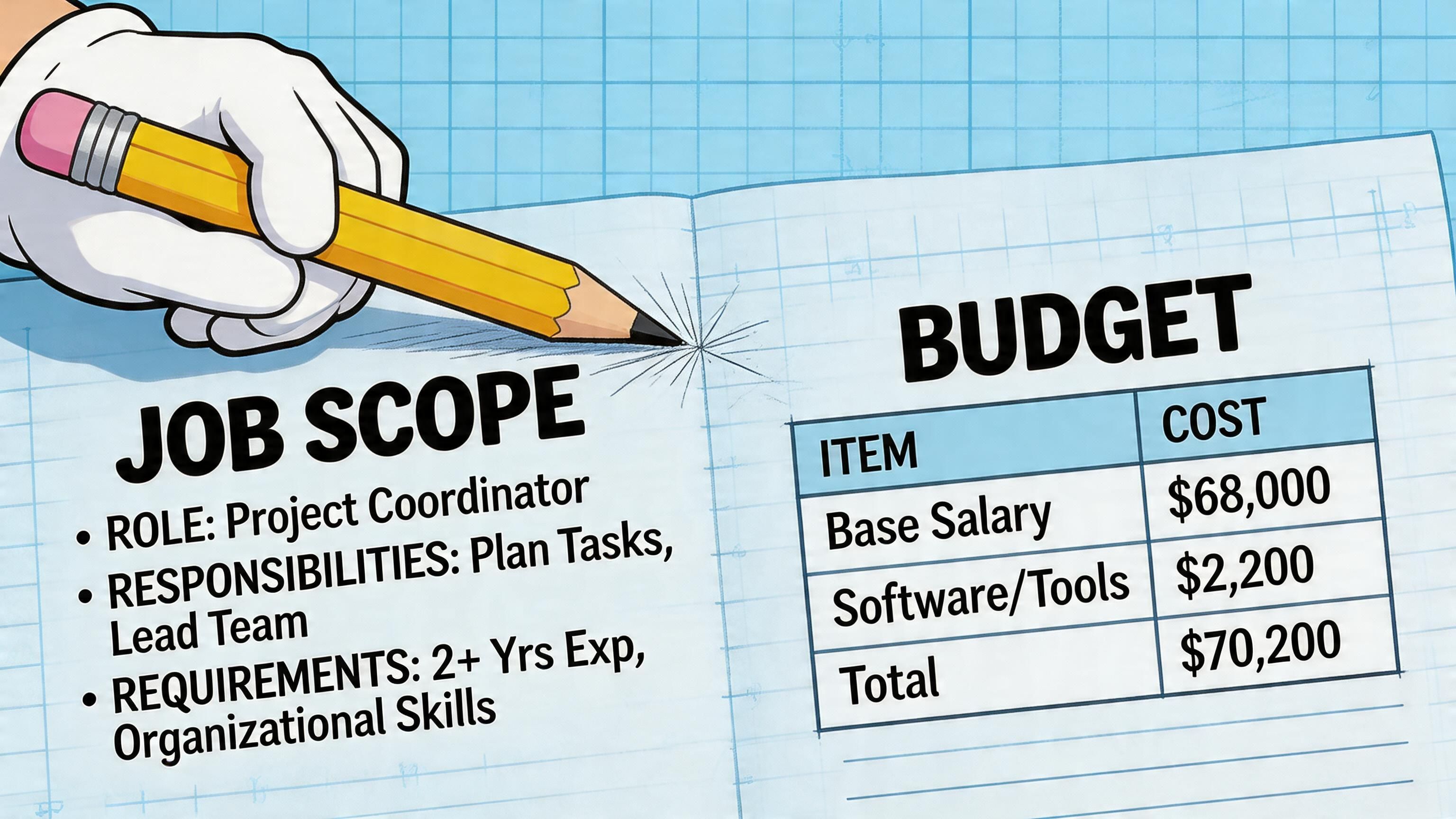
Before you write a job description or consultant brief, decide what you need this person to do in the first six months.
A clean scope usually answers five questions:
- What opportunities will they own? Foundation grants only, or federal and state too?
- What stage of the process will they handle? Research, writing, submission, reporting, or all of it?
- What internal inputs will they receive? Program data, budgets, attachments, strategic priorities.
- Who signs off? Executive director, development lead, finance, program leadership.
- What is out of scope? Event fundraising, donor stewardship, marketing copy, board reports.
Without those boundaries, candidates will fill in the blanks differently, and your budget will drift.
A practical template for an in-house role
Use language like this in a staff job description:
- Core mission of the role: Own the grants pipeline from opportunity review through submission coordination.
- Primary responsibilities: Research funders, analyze guidelines, build proposal calendars, draft narratives, coordinate supporting documents, and maintain a grants tracker.
- Required collaboration: Work with program, finance, and leadership to collect inputs and approvals.
- Qualifications to ask for: Experience with your funding environment, strong project management, comfort with budgets and attachments, and ability to revise from feedback.
- Measures of good performance: Timely submissions, quality of opportunity screening, completeness of application packages, and strength of internal coordination.
That last point matters. Don’t define the job only by wins. Define it by controllable work.
A practical template for a consultant scope
A consultant scope should be tighter. It needs deliverables, timelines, and assumptions.
Include these components:
- Engagement purpose: Example, support a targeted portfolio of foundation and state applications.
- Deliverables: Opportunity research, go or no-go recommendations, proposal drafts, budget narrative support, compliance review, and submission preparation.
- Client responsibilities: Provide program information, budgets, attachments, review feedback, and final approvals by agreed deadlines.
- Timeline expectations: Turnaround windows for drafts and client edits.
- Communication cadence: Weekly check-ins, milestone reviews, or submission planning calls.
Hiring rule: If a consultant agreement doesn’t say who supplies data, who drafts budgets, and who approves final content, expect friction.
Build the full budget, not just compensation
Nonprofits often budget for the person and forget the operating costs around the person. That’s how a “manageable” hire becomes a painful one.
A complete budget should include:
- Compensation model: Salary, hourly, project fee, or retainer
- Benefits and payroll burden: For staff roles
- Training and professional development: Especially if the person needs to deepen sector or funder knowledge
- Software and workflow tools: Grants calendar, document storage, collaboration, and proposal support tools
- Memberships and professional associations: Useful for networking, standards, and sector-specific learning
- Recruiting costs: Time, posting costs, interview labor, and replacement risk
If you need a reality check on the hidden line items involved in staffing, this overview of recruitment cost per hire is a useful budgeting companion.
Put budget tools in the workflow
Grant writing breaks down when finance and program teams use different assumptions. A shared planning tool reduces that problem. For budget development, a reusable grant budget template can help teams define direct costs, match requirements, line items, and narrative support before the application window gets tight.
A short training can help your team align on this work:
What strong role design looks like in practice
Good scopes attract better candidates because serious grant writers want clarity. They want to know whether they’re being hired to lead, to produce, to advise, or to clean up internal confusion. Most are happy to do hard work. Few want to step into a role with hidden expectations and no authority.
That’s why a precise scope is one of the highest-return steps in hiring a grant writer. It protects your budget, sharpens your interviews, and makes onboarding far easier.
The Hunt for Talent Where to Recruit and How to Screen
The best grant writers aren’t always sitting on general job boards. Many work through referral networks, professional associations, regional nonprofit communities, and specialized consulting circles. If you only post once and wait, you’ll often get applicants who are good at applying for jobs, not necessarily good at building competitive proposals.
Where to look first
Start with places where grant professionals already gather and where nonprofit hiring managers can verify credibility through community reputation.
Strong channels include:
- Professional associations: The Grant Professionals Association and regional chapters
- Nonprofit sector job boards: State nonprofit associations, philanthropy networks, and mission-driven hiring communities
- Targeted freelance platforms: Useful when you need project-based support rather than staff
- Peer referrals: Ask comparable nonprofits which writers they’ve used and what kind of grants those writers handled
- Former funder or institutional networks: Especially helpful if you need experience in a specific geography or subject area
Peer recommendations matter because grant work is collaborative and deadline-sensitive. A polished resume won’t tell you whether someone can manage a chaotic review cycle without dropping details.
Stop asking for “success rate” first
One of the most common screening mistakes is leading with a candidate’s advertised win rate. That metric sounds objective, but it often tells you less than you think. As Martina Donkers notes in this analysis of why you shouldn’t use success rate to hire a grant writer, grant outcomes depend heavily on factors outside the writer’s control, and funding rates vary sharply by program. The same source points out that NIH applications average 20% while NSF proposals are under 25%, which is exactly why broad success-rate claims can mislead hiring teams.
A writer who only takes warm renewal work may look “better” on paper than someone who handles difficult public funding opportunities. That doesn’t mean they’re stronger.
Ask, “What kinds of grants have you worked on, for what kinds of organizations, and what was your role in the process?” That question gets you closer to reality.
Screen for fit by portfolio, not slogans
A better screening method is to review candidates against your actual funding opportunities.
Look for evidence in these areas:
- Funding vertical experience: Has this person worked with your mix of foundations, state agencies, federal programs, or local public funding?
- Mission adjacency: They don’t need your exact niche, but they should understand comparable program models and outcomes language.
- Process ownership: Can they explain how they moved from guidelines to a submission-ready package?
- Document quality: Their samples should show structure, specificity, logic, and compliance, not just polished prose.
- Collaboration skill: Strong grant writers can tell you how they gathered data, worked with finance, and revised from stakeholder feedback.
A writing sample review checklist
Use a simple internal rubric when reviewing sample work:
| What to review | What good looks like | Red flag |
|---|---|---|
| Responsiveness to prompt | The narrative clearly addresses funder priorities and required questions | Generic language that could fit any funder |
| Specificity | Concrete program design, realistic implementation, and clear need statement | Broad claims with little operational detail |
| Budget alignment | Narrative suggests cost awareness and feasible scope | Activities sound expensive or vague with no operational grounding |
| Readability | Tight structure, clear transitions, direct language | Dense paragraphs, jargon, or inflated tone |
| Strategic thinking | Shows what not to promise and how to frame limitations credibly | Overpromising outcomes or proposing work that feels unrealistic |
Signs you’ve found a strategic thinker
A strategic grant writer does more than draft.
They ask whether the opportunity fits your mission. They challenge weak assumptions. They notice when the available evidence won’t support a strong case. They push for earlier budget review. They flag missing attachments before the final day. In screening conversations, they usually sound like project managers with strong writing skills, not just writers.
That’s what you want. Most nonprofits don’t lose grants because the prose wasn’t elegant enough. They lose because the proposal didn’t fully align, the support documents were weak, or the internal process broke down.
Making the Offer Interview Questions Contracts and Onboarding
By the time you’re ready to make an offer, the goal shifts from evaluation to clarity. Many otherwise solid hires go sideways at this stage. The candidate thinks they’re being brought in to write. The nonprofit expects them to build systems, train staff, and rescue every deadline.
That mismatch can be avoided.

Interview questions that reveal process
Ask behavior-based questions that force the candidate to explain how they work under real conditions.
Try questions like these:
- Tell me about a time a program team gave you incomplete information close to a deadline. How did you handle it?
- Walk me through how you decide whether an opportunity is worth pursuing.
- Describe a proposal that required heavy revision after internal review. What changed and why?
- How do you approach a funder whose guidelines are long, technical, or hard to interpret?
- When finance and program staff disagree on project scope or budget assumptions, what do you do?
- What materials do you need from an organization before you can produce strong work?
- Tell me about a time you advised a client or employer not to apply.
Good answers sound specific. The candidate should mention timelines, missing inputs, revision cycles, and decision points. If every answer stays abstract, keep probing.
Structure the offer around deliverables and working style
The offer should make the role executable. That means putting expectations in writing beyond compensation.
Cover these points clearly:
- What they own: Opportunity screening, drafting, coordination, submission support, reporting, or selected pieces
- Who they report to: One direct supervisor with authority to set priorities
- What access they’ll have: Program leaders, finance, data, organizational records
- How feedback works: Review rounds, turnaround times, final approvals
- How priorities get set: Weekly planning, grants calendar review, or portfolio meetings
That level of detail helps the hire start strong and protects the nonprofit when urgent requests appear later.
Contract terms that prevent avoidable disputes
For consultants, this part matters even more.
The Grant Portal notes that vague success-fee models lead to a 35% failure rate, and also highlights a 28% rise in state/local grants in 2025-2026 alongside the fact that only 22% of writers specialize in geo-specific expertise, which is why contracts need precise language on deliverables, renewals, and relevant geographic experience. That analysis on how to hire a grant writer is worth reviewing before you finalize any consultant agreement.
In practice, your contract should spell out:
- Payment model: Hourly, project-based, or retainer. Avoid commission-based compensation.
- Deliverables: What exactly will be produced and in what format
- Revision boundaries: How many rounds are included and what triggers extra fees
- Client responsibilities: Deadlines for supplying data, budgets, attachments, and approvals
- Timeline assumptions: What happens when internal delays threaten submission
- Renewal and termination terms: Notice periods, unfinished work, document handoff
- Confidentiality and ownership: Who owns drafts, source files, and final submissions
- Geographic or program specialization needs: Especially if your pipeline depends on state or local funding
Contract rule: If you can’t tell from the agreement what a finished engagement looks like, the agreement isn’t ready.
Choose the right fee model
Each model has a place:
| Fee model | Best use | Watch-out |
|---|---|---|
| Hourly | Research-heavy or variable work where scope may shift | Can drift if priorities are not tightly managed |
| Project-based | Clearly defined proposals with known deliverables | Scope creep if the opportunity gets more complex |
| Retainer | Ongoing pipeline management and recurring support | Requires active oversight to ensure the hours are used strategically |
The most important point is ethical alignment. Fee-for-service structures keep the focus on quality work and realistic process management.
A practical onboarding plan for the first month
A strong first month doesn’t start with a deadline. It starts with orientation.
Use a simple onboarding sequence:
Week 1
- Introduce programs, strategic priorities, and decision-makers
- Share prior proposals, boilerplate, budgets, and attachments
- Clarify approval pathways and grants calendar ownership
Week 2
- Review active opportunities and eliminate weak-fit prospects
- Align on proposal workflow, document naming, and review standards
- Meet finance and program leads who will contribute to applications
Week 3
- Build or clean up the grants tracker
- Create a reusable asset library for narratives, data points, and supporting documents
- Identify missing materials that will slow future applications
Week 4
- Assign first live opportunities
- Set check-in cadence
- Confirm what “done well” means for the next quarter
The goal is simple. Your new grant writer should never have to guess where information lives, who approves budgets, or what kind of opportunities leadership wants.
Maximizing ROI Integrating with Fundsprout and Measuring Success
Hiring a grant writer solves only part of the problem. The rest is systems.
Even an excellent grant professional loses time when they have to manually scan for opportunities, decode long guidelines from scratch, rebuild standard language in every draft, and chase missing compliance pieces across email threads. That’s where the combination of human judgment and AI support becomes powerful.
Use AI where bottlenecks are predictable
A grant writer should own strategy, fit assessment, narrative judgment, and internal coordination. Software should handle repetitive analysis, structured drafting support, deadline visibility, and document control.
That division of labor matters because the biggest drain on grant teams is rarely “writing speed” alone. It’s the cumulative friction of:
- Searching across funding sources
- Interpreting long application instructions
- Mapping requirements to internal materials
- Reusing approved language consistently
- Tracking compliance details across multiple opportunities
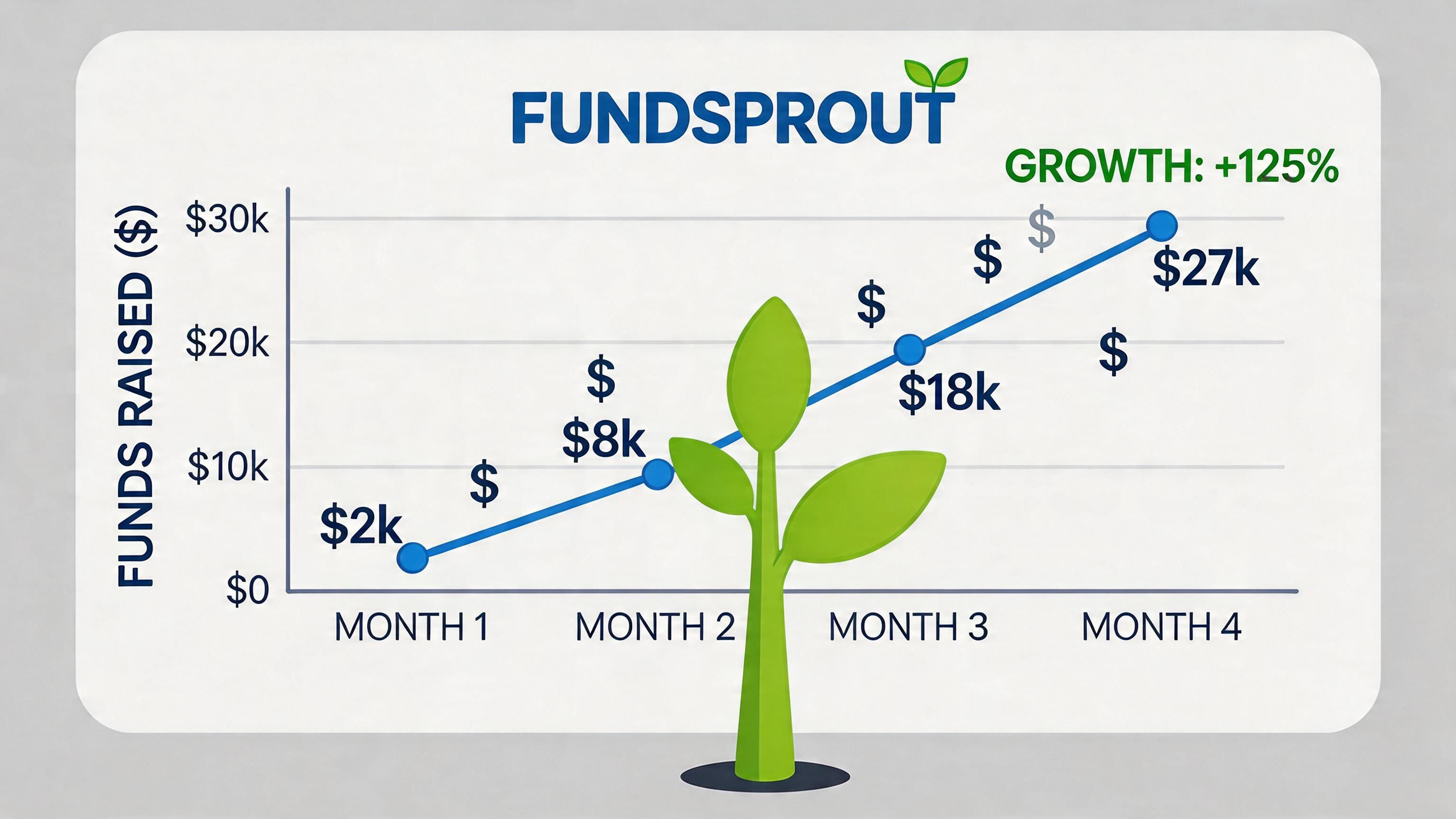
A platform like Fundsprout is useful when you use it to reduce those frictions rather than replace the writer’s judgment.
What the workflow can look like
A practical workflow pairs the grant writer with the tool at distinct points:
| Stage | Human lead | AI-supported task |
|---|---|---|
| Opportunity review | Grant writer or development lead | Daily scanning, preliminary matching, eligibility screening |
| RFP interpretation | Grant writer | Requirement extraction, structured outlines, checklist generation |
| Draft development | Grant writer with program input | Narrative first drafts, reusable language, citation support, version tracking |
| Submission planning | Grant writer and internal team | Timeline management, missing-material alerts, task visibility |
| Post-submission and renewal prep | Grant writer and leadership | Reporting support, audit trail, renewal readiness |
That setup keeps the human in control of quality while removing a lot of manual overhead.
Onboard the tool like you onboard the person
Many teams buy software and expect adoption to happen on its own. It won’t.
Your grant writer needs a clear setup process:
Upload core organizational documents
Include mission language, strategic plans, program descriptions, approved boilerplate, budgets, prior proposals, and impact data.Define your opportunity filters
Geography, funding type, program area, organizational eligibility, and capacity constraints should all be explicit.Set a review cadence
Decide how often the writer or team reviews new opportunities and what criteria trigger deeper pursuit.Standardize internal naming and document storage
This matters for version control and handoff, especially if multiple staff contribute.Agree on where AI can draft and where humans must finalize
Need statements, program descriptions, and compliance checklists may be accelerated. Final framing, tone, and factual verification still need human review.
A useful support tool for this process is an automated grant proposal generator, especially when your team wants to create stronger first drafts from approved organizational materials instead of starting from a blank page every time.
Good AI use in grants doesn’t replace expertise. It gives expertise more time to focus on fit, evidence, and persuasion.
Measure what actually predicts value
Performance measurement is where many nonprofits undo a good hire. They either expect immediate awards from cold prospects or they ignore leading indicators and only look at final funding decisions.
A better approach is to set metrics in layers.
The Funding for Good benchmarks are useful here. Their analysis explains that overall grant writer success rates can range from 50% to 60%, outcomes with new funders are often around 30% to 40% even for excellent writers, renewals with established funders can reach 90%, and the broader industry average remains a competitive 10% to 30%. Those benchmarks come from this review of grant writer success rates.
Those numbers tell you one important thing. Context matters. A writer working on renewals should not be measured the same way as a writer opening doors with new funders.
Better KPI categories
Use three categories of KPIs instead of one blunt win-rate metric.
Pipeline health
Track whether the grants function is becoming more disciplined.
Look at:
- Quality of opportunity screening
- Number of viable opportunities in the active pipeline
- Balance between new funders, renewals, and strategic expansions
- Lead time before deadlines
- Completeness of required materials before drafting begins
These measures tell you whether the function is becoming organized.
Execution quality
Here, you evaluate controllable performance.
Review:
- On-time submission readiness
- Adherence to guidelines
- Internal review turnaround
- Budget and narrative alignment
- Quality of document management and version control
If execution quality is weak, a final loss doesn’t tell you much. If execution quality is strong and the funder is highly competitive, the process may still be working well.
Outcome realism
Outcomes matter, but they should be interpreted by portfolio type.
Use realistic expectations such as:
- Lower expectations for brand-new funder relationships
- Stronger expectations for established funders and renewals
- Careful interpretation of mixed portfolios where some grants are high-difficulty by design
That’s why a dashboard discussion should always separate renewals from cold applications. Otherwise, leadership ends up drawing the wrong conclusion from the data.
Red flags in the first 90 days
The first three months reveal whether the hire and the system are working together.
Watch for these warning signs:
- Everything is treated as a yes
A strong grant writer should decline weak-fit opportunities. - Drafts arrive, but key inputs are still missing
That usually means process discipline is weak. - The writer can’t get access to decision-makers
This is a management failure, not a talent failure. - No central grants tracker emerges
Without one, institutional memory stays fragmented. - AI outputs are used without organizational review
Speed without verification creates risk. - Leadership only asks, “Did we win?”
That question is too late and too narrow.
What a high-functioning setup looks like
At its best, hiring a grant writer and pairing them with a platform like Fundsprout creates a compact grants engine.
The human handles judgment, funder positioning, internal interviews, program framing, and final quality control. The platform supports discovery, requirement analysis, drafting efficiency, compliance tracking, and renewal readiness. Finance and program staff contribute through a clearer process instead of last-minute scramble. Leadership gets visibility into pipeline health instead of periodic surprises.
That’s the ROI. Not just more activity, but better-targeted activity with less internal waste.
When executive directors get this right, grants stop being a side hustle buried in someone’s inbox. They become an operational capability the organization can improve over time.
If your team is ready to turn hiring a grant writer into a stronger grants system, Fundsprout can help you pair human expertise with AI-powered opportunity scanning, proposal support, and compliance tracking so your next hire produces value faster.
Try 14 days free
Get started with Fundsprout so you can focus on what really matters.