Grant Writer Training: 2026 Capacity Building Program
Build your nonprofit's capacity with our 5-week grant writer training. Get a step-by-step curriculum, exercises, and tips for integrating 2026 AI tools.

Abdifatah Ali
Co-Founder
Your program team has the outcomes. Your finance lead can pull a budget. Your executive director knows the community need cold. But when a grant deadline appears, everything turns reactive. People hunt for last year's narrative, copy pieces into a new form, scramble for attachments, and hope the funder sees the mission through the mess.
That cycle doesn't break because staff care less. It breaks because most nonprofits never build an actual grant writer training system. They rely on heroic effort, one strong writer, or a consultant who takes the process with them when they leave.
The better approach is internal and repeatable. Train people to think like grant professionals, work from a standard process, and use AI tools as part of the job from day one rather than as an afterthought. That last part matters more than many leaders realize. A 2025 Grant Professionals Association survey found 68% of grant writers now use AI for drafting, up from 22% in 2024, yet 74% report no formal training, leading to errors in 41% of AI-assisted submissions, according to the Parris Foundation summary of that survey. That's the gap many teams are feeling right now.
Building Your Grant Writing Powerhouse
A strong grants program starts before anyone writes a sentence. It starts with capacity. If your team can't quickly answer basic questions about program design, outcomes, budget logic, service geography, target population, and past results, the proposal will drag no matter how talented the writer is.
That's why the most effective grant writer training programs look less like writing classes and more like operating systems. They teach research, document management, compliance habits, funder matching, narrative development, budget logic, and review discipline. AI belongs inside that system because it helps teams move faster through repeatable work, but it only works well when staff know what to feed it, what to verify, and what should never be automated.
Start with a capacity diagnosis
Before training anyone, identify the primary bottleneck. Sometimes it's weak writing. More often it's scattered information, fuzzy program outcomes, or no clear approval path. A simple skills and systems review can surface that fast. If you need a starting framework, use this download TNA template to map where your team is strong and where the process breaks.
I'd assess five areas first:
- Document readiness: Can staff produce budgets, 990s, board lists, audits, logic models, and program summaries without a fire drill?
- Funder fit discipline: Does the team chase opportunities based on need, or based on alignment?
- Narrative ownership: Do program staff contribute usable content, or does development guess?
- AI workflow judgment: Can staff use drafting tools without introducing inaccuracies or generic language?
- Post-award follow-through: Is reporting treated as part of fundraising, not an administrative leftover?
Practical rule: If your team can't assemble a clean grant packet in one place, more writing practice won't solve the real problem.
Build the system, not just the skill
A powerhouse grants function isn't one great proposal. It's a reliable pipeline. That means assigning who owns opportunity screening, who gathers attachments, who reviews budgets, and who signs off on final submissions.
Capacity building grants can help support that broader infrastructure, not just program delivery. Teams exploring that route can review examples through this nonprofit capacity building grants resource.
When you train this way, AI becomes practical. Staff can use it to organize requirements, draft from approved source material, and speed up iteration. They stop using it like a shortcut and start using it like a disciplined assistant. That distinction is where a lot of grant teams either gain efficiency or create risk.
Laying the Foundation Weeks 1 and 2
Most weak proposals start with weak setup. The first two weeks should have almost no “creative writing” in them. They should focus on readiness and research.
The reason is simple. An NIH R01 award, often used as a benchmark for demanding grant development, requires 100 to 200 hours of work over at least 3 months, and reviewers routinely flag hasty proposals as failures, according to this NIH-focused grant development analysis in PMC. Nonprofit grants differ in format, but the lesson holds. Good submissions are built early.
Week 1 Grant readiness
In the first week, train the writer to understand the full grant lifecycle and the organization's internal dependencies. New grant staff often assume the job is persuasion. In practice, the job begins with preparation.
A useful Week 1 checklist includes:
- Core organizational records: IRS documents, audit or financial statements, board list, leadership bios, annual report, and standard attachments.
- Program proof points: Service model summary, target population, community need statement, outcomes language, partnerships, and implementation timeline.
- Decision rights: Who approves budgets, who signs applications, who reviews legal language, and who owns final submission.
- Ethics and accuracy rules: No unsupported claims, no recycled narrative without review, and no AI-generated text submitted without verification against source documents.
Hands-on exercise
Have the trainee build a Grant Readiness Kit. Not a folder of random files. A structured package with current versions, naming conventions, ownership notes, and a short summary explaining when each item is used.
A good kit usually includes a one-page organizational profile, a standard case for support, approved program descriptions, boilerplate language for equity and partnerships, and current finance documents. The trainee should also note what is missing. Those gaps matter because they predict delay later.
The strongest grant teams know where every attachment lives before they choose the funder.
Week 2 Prospect research
The second week shifts from internal readiness to external fit. Many teams waste the most time chasing funders that don't support their issue area, geography, population, or grant size needs, then blame the narrative when they lose.
Train the writer to research with discipline. They should start from a defined program need, then test each funder against that need. Not the other way around.
Use this review structure:
| Research question | What the trainee should confirm |
|---|---|
| Mission fit | Does the funder support this issue area and population? |
| Geography | Are your service locations eligible? |
| Typical support style | Program support, general operating, capital, planning, or something else |
| Prior giving pattern | Do past grants resemble your request in scope and maturity? |
| Access path | Open application, LOI, invitation, or relationship-first approach |
Hands-on exercise
Assign a Top 10 Funder Brief for one program. Each entry should justify why the funder belongs on the list, what evidence supports that match, what materials are likely needed, and what questions still need answers before outreach.
This exercise trains judgment. A long prospect list feels productive, but a short qualified list is what saves staff time and protects morale. Teams that skip this step usually end up writing to funders they never had a realistic chance with.
Mastering the Proposal Weeks 3 and 4
Writing gets easier when the first two weeks are done well. The writer isn't staring at a blank page. They're working from a clear opportunity, a complete readiness kit, and a set of funder expectations that have already been filtered.
This is also where AI should become part of the formal curriculum. Not as “write the grant for me,” but as structured support for deconstruction, outlining, and first-draft development.
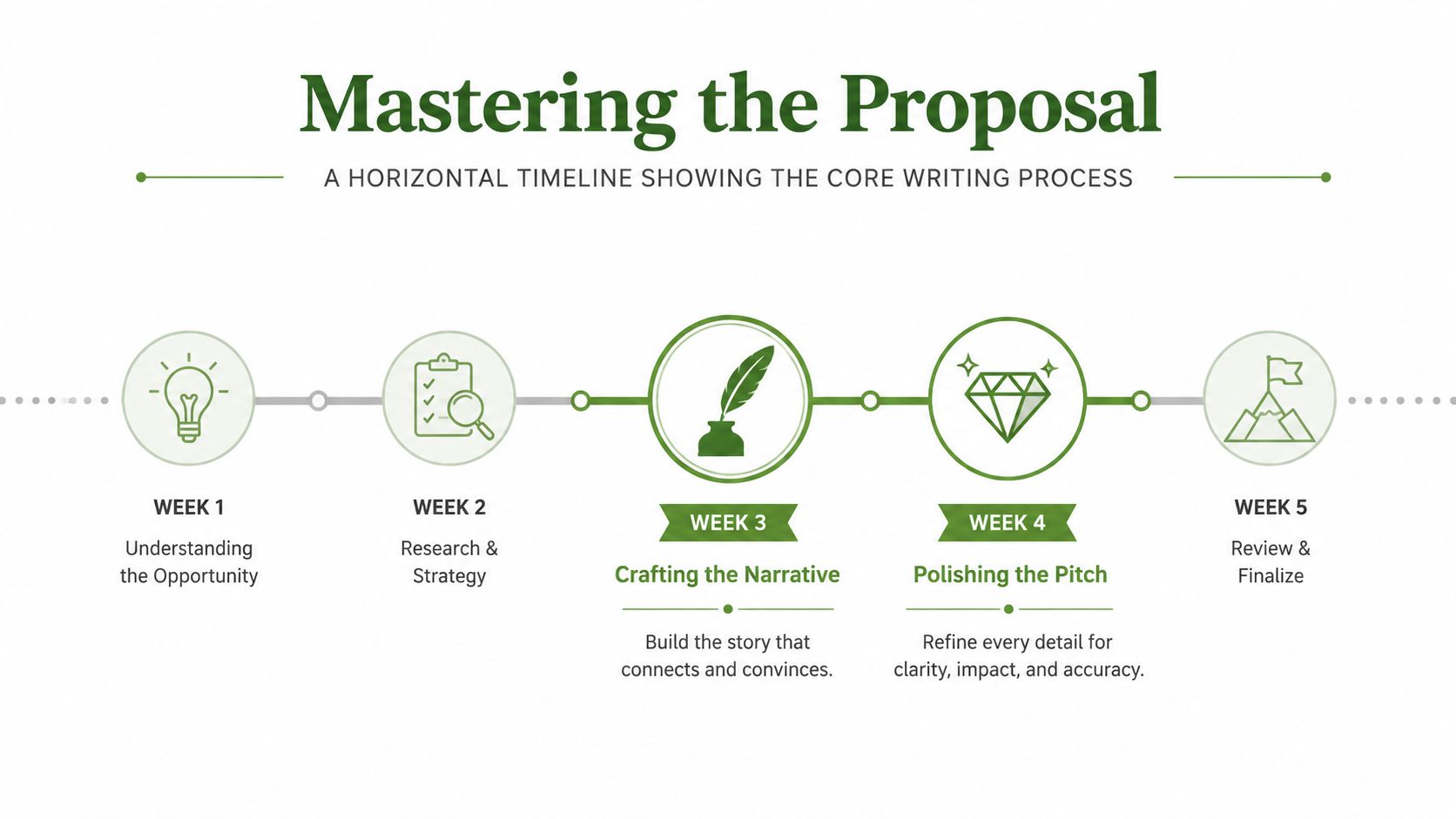
Week 3 Deconstruct the RFP before drafting
Most inexperienced writers open the application and start composing. Strong writers slow down first. They read for requirements, scoring logic, hidden assumptions, and attachment traps.
I train teams to mark up every RFP in four passes:
Eligibility pass
Confirm that the organization, project type, geography, and applicant profile all fit.Instruction pass
Pull word limits, formatting rules, required forms, deadlines, and mandatory attachments into one working sheet.Evaluation pass
Identify what the funder is really scoring. Need, feasibility, outcomes, budget credibility, partnerships, sustainability, or organizational strength.Content pass
Match each prompt to existing source material from the readiness kit and flag what still needs internal input.
An RFP analyzer is particularly valuable. Used correctly, it converts a dense notice into a working outline and task list. That saves time, but the primary benefit is clarity. The trainee can see what the funder is asking before anyone starts polishing prose.
For teams that struggle with outcomes language, this guide to writing impact statements is a practical companion during this stage.
A proposal usually loses long before submission. It loses when the team misreads the funder and writes to its own priorities instead.
Week 4 Draft with AI, edit with judgment
By Week 4, the trainee should draft from approved documents rather than from memory. AI becomes efficient and safe at this stage. Feed it the organization's source material, the RFP outline, approved language, and current program data. Then use it to produce working drafts of sections such as the need statement, program description, implementation plan, and evaluation approach.
The trainee's role changes here. They are no longer typing every first sentence from scratch. They are acting as editor, verifier, and strategist.
That means they should check for:
- Voice drift: Does the draft sound like your organization, or like generic nonprofit language?
- Evidence discipline: Does every claim trace back to approved internal material?
- Prompt compliance: Did the draft answer the exact question asked?
- Redundancy: Are sections repeating instead of advancing the argument?
- Specificity: Did the draft describe the actual program model, not a broad mission statement?
There's an important strategic reason to train this way. Grant writer success rates can reach up to 90% for established programs submitted to existing funders, but fall to 30% to 40% for new programs, and improvement comes from evidence of impact and meticulous alignment with funder priorities rather than proposal polish alone, as outlined by Funding for Good. That's why Week 4 shouldn't overemphasize elegant wording. It should train fit, proof, and discipline.
What works and what fails
A quick comparison helps new writers internalize the difference:
| Weak practice | Strong practice |
|---|---|
| Reusing last year's proposal with light edits | Rebuilding the response around the current RFP |
| Letting AI write from a blank prompt | Feeding AI approved documents and a structured outline |
| Leading with mission statements | Leading with the funder's stated priorities and the program's evidence |
| Treating editing as grammar cleanup | Treating editing as alignment, accuracy, and reviewer guidance |
The practical exercise for Week 4 is to create a full first draft, then run a red-team review. Someone outside the drafting process should read only the RFP and the draft, then mark where the proposal fails to answer the question, overclaims, or assumes knowledge the reviewer won't have. That habit improves quality faster than endless line edits.
Handling Budgets and Relationships Week 5
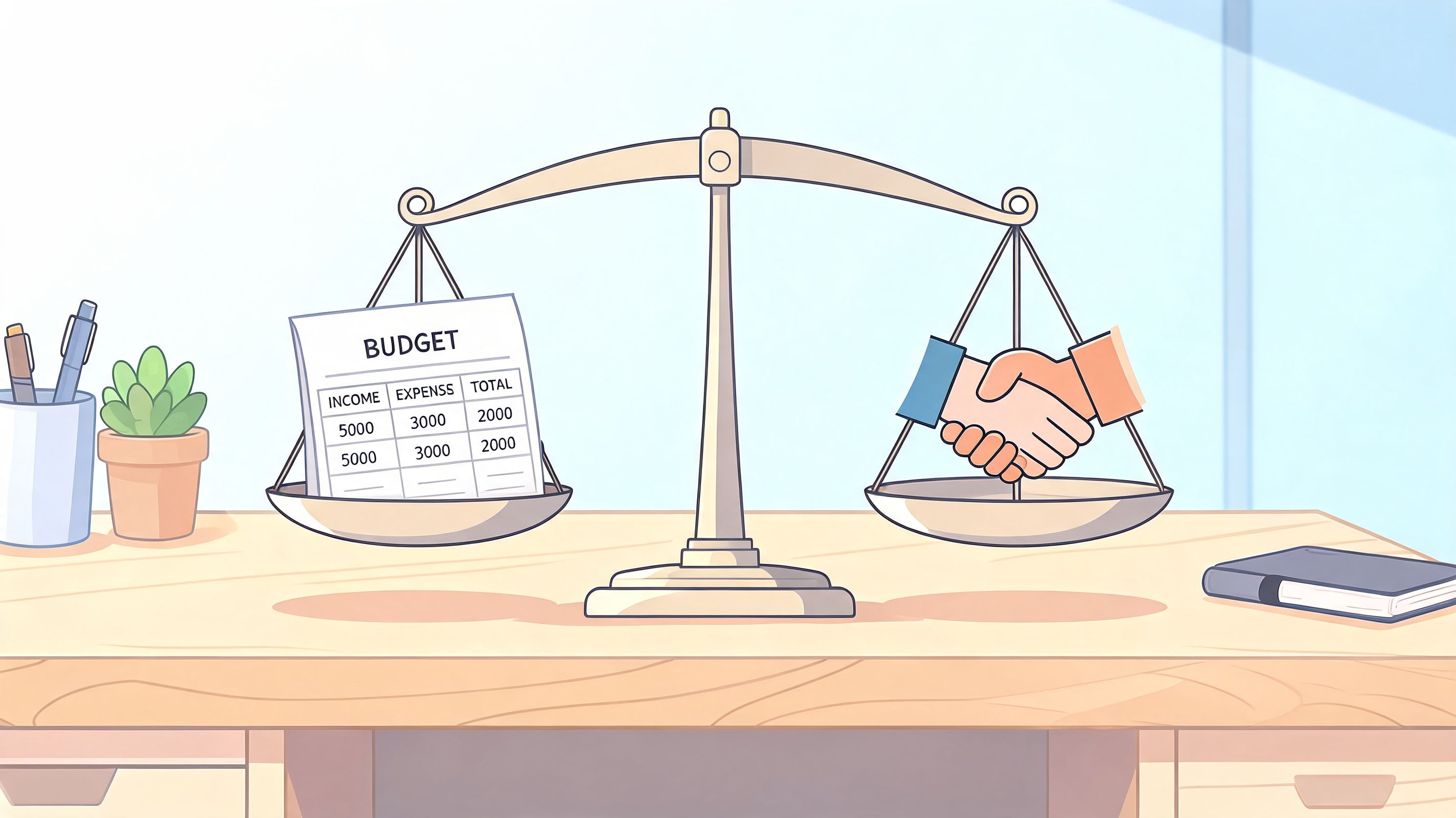
Weak grant programs split narrative from money and relationships from submissions. Strong ones don't. In Week 5, train the writer to think in two directions at once. Can the budget prove the story, and can the relationship outlast the deadline?
That skill has real market value. The Grant Professionals Association's 2024 Compensation Survey reports a mean salary of $83,911 for grant professionals, reflecting the value organizations place on research, persuasive writing, financial acumen, and relationship management, as summarized by Grantboost's certification overview. Good training should develop all four.
Budgeting as a credibility test
A grant budget isn't a spreadsheet attachment. It's evidence that the proposed work can happen. If the numbers don't support the staffing, timeline, supplies, and reporting burden described in the narrative, reviewers notice.
Train the writer to build a simple line-item structure:
- Personnel: Salaries and wages directly tied to delivery
- Fringe or benefits: If applicable under your organization's standard practice
- Program costs: Supplies, participant support, travel, consultants, technology, evaluation, and direct implementation expenses
- Indirect or administrative costs: Included only when allowed and clearly explained
Then add budget notes. Many newer writers improve fastest during this step. Notes translate rows into logic. They explain why a cost is necessary, how it was calculated, and how it supports the proposed work.
For teams that need a clean starting point, this grant budget template resource is useful for training exercises.
Practical exercise
Take the proposal drafted in Week 4 and build a matching budget plus budget narrative. Then compare the line items against the work plan. If the proposal mentions outreach staff, data collection, transportation, or training materials, the budget should reflect them. If the budget includes a line item that never appears in the narrative, fix one or the other.
Field note: Reviewers rarely trust a beautiful narrative paired with a shaky budget. The budget tells them whether your team understands execution.
Relationship building through the LOI
The second half of Week 5 should focus on communication. Grants are not just transactions. They're part of a longer conversation about mission fit, confidence, and stewardship.
A useful training exercise is the Letter of Intent. The LOI forces clarity because there's no room for filler. The trainee has to state the need, name the program, explain why the fit is right, and show credible capacity in a short format.
A solid LOI usually includes:
- A concise opening that connects your mission and the funder's priorities.
- A specific program description with clear beneficiaries and service approach.
- A short case for support grounded in your organization's experience and readiness.
- A clear request that reflects the actual scope of work.
After the trainee drafts it, have them practice a follow-up email and a brief funder call script. That helps them stop seeing funders as portals and start seeing them as people with priorities, constraints, and limited attention.
This short explainer can reinforce that mindset before practice:
From Submission to Stewardship An Ongoing Process
A submitted grant is not finished work. It becomes one record in a longer operating cycle. If your team doesn't track what was submitted, what was promised, what follow-up is needed, and what reporting dates are coming, you'll keep relearning the same lessons and losing renewal opportunities.
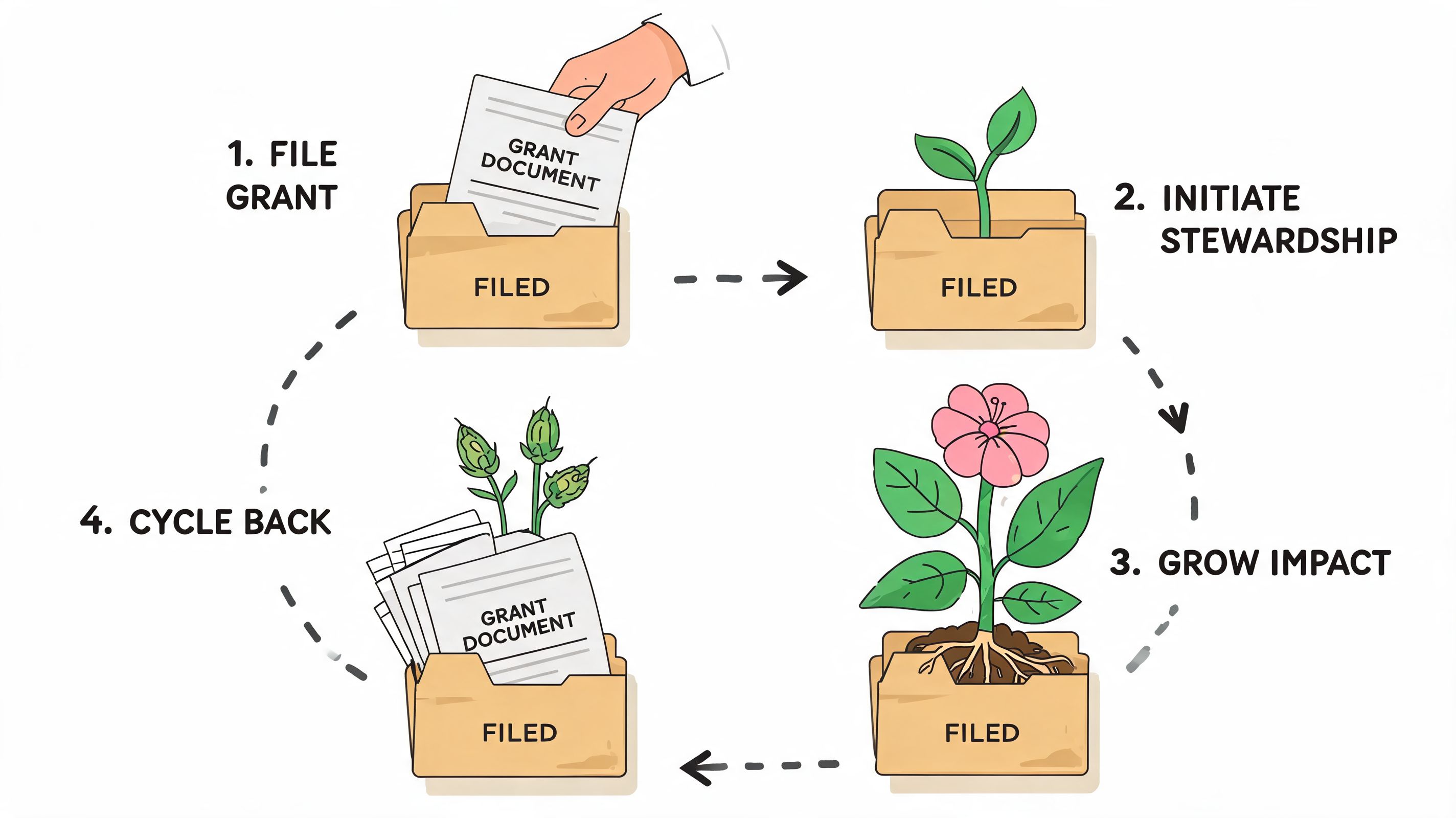
Structured training matters here, too. A study of grant writing workshops found that trained faculty had an 80% success rate, an 8.7 percentage point improvement over non-trained peers, according to the Society of Research Administrators International workshop analysis. The practical lesson for nonprofits is that repeatable process improves outcomes. Post-submission management is part of that process.
What to track after submit
Every grants team should maintain a simple tracking system. It doesn't need to be complicated, but it does need to be complete.
Track these fields at minimum:
| Category | What to record |
|---|---|
| Submission record | Funder, program, request amount, date submitted, decision timeline |
| Proposal file | Final narrative, final budget, attachments, and submitted version |
| Follow-up actions | Thank-you note, clarification requests, meeting reminders |
| Reporting obligations | Interim report dates, final report dates, metrics promised |
| Renewal signals | Program officer feedback, funding history, next cycle timing |
Many organizations either build momentum or stall at this stage. Teams that document every application can reuse what worked, improve what didn't, and onboard new staff without starting from zero.
Stewardship is part of grant writer training
Stewardship should be taught as a frontline fundraising skill. The writer needs to know what was promised in the proposal because those promises shape reporting, funder communication, and future asks.
Have trainees draft three post-award templates:
- A thank-you message sent after award notification
- A reporting prep checklist tied to each grant's required outcomes and financials
- A renewal briefing note summarizing what the funder supported and what results the team should be ready to share
Good stewardship starts before the award. It starts when the proposal makes promises the organization can actually keep.
A grant team onboarding checklist
To make the five-week program sustainable, turn it into a one-page onboarding checklist for every new staff member or volunteer involved in grants. Include:
- Systems access: Shared folders, calendars, and grant tracking tools
- Core documents: Read the readiness kit and organization profile
- Process training: Prospect review, draft workflow, approval sequence, submission rules
- Communication norms: When to involve finance, programs, leadership, and external partners
- Stewardship duties: Reporting calendar, funder updates, and file maintenance expectations
That checklist converts training from an event into infrastructure.
Creating a Culture of Continuous Grant Success
The genuine win isn't teaching one person to write a better proposal. It's creating a nonprofit where grants stop depending on memory, panic, or one staff member who knows where everything lives.
That culture shift happens when leaders treat grant writer training as organizational capacity, not remedial writing help. Programs supply usable content. Finance contributes early. Leadership clarifies priorities. Development manages process. Staff use AI tools inside clear rules, with approved materials and human review. The result is a cleaner pipeline, faster drafting, fewer compliance mistakes, and stronger submissions.
A five-week curriculum works because it mirrors how strong grant teams operate. Readiness first. Research before pursuit. Structured deconstruction before drafting. Budget logic tied to narrative. Stewardship tied to future funding. Each part reinforces the others.
If you lead a small nonprofit, this is how you stop reinventing the wheel every cycle. If you lead a larger development shop, this is how you scale quality across multiple writers and program teams. In both cases, the principle is the same. Build a system that outlasts individual staff and gets smarter with every submission.
Grant funding will never become easy. It can become more disciplined, more efficient, and more predictable. That starts when you train for the actual work, including AI proficiency, instead of pretending the job is only about writing.
If your team is ready to build a modern grant operation instead of another last-minute scramble, Fundsprout can help you put that system in place. It supports the full workflow, from opportunity matching and eligibility screening to RFP analysis, drafting support, planning, tracking, and reporting, so your staff can spend less time chasing process and more time strengthening strategy, funder fit, and program impact.
Try 14 days free
Get started with Fundsprout so you can focus on what really matters.