France Merrick Foundation: A Nonprofit's Guide to Grants
A complete guide to the France Merrick Foundation for nonprofits. Learn about funding priorities, the application process, and how to win a grant in Maryland.

Abdifatah Ali
Co-Founder
If you lead a nonprofit in Maryland, you've probably had this experience. A capital need is staring at you every day. The roof needs work. The classroom is undersized. The equipment is old. The program is strong, but the infrastructure around it is limiting what you can deliver.
That's the moment when the france merrick foundation should move from “one more name on a funder list” to a serious strategic prospect.
For the right organization, this isn't a casual application. It's a funder worth planning around. But it's also a foundation that rewards fit, discipline, and project clarity. If your request sounds like general operating support dressed up as a project, you'll likely waste time. If your project has a clear endpoint, a realistic budget gap, and a credible plan for long-term sustainability, you're in a very different position.
Decoding the France Merrick Foundation for Grantseekers
Most nonprofit leaders don't need another generic funder profile. They need a fast answer to one question. Is this foundation worth pursuing for our organization right now?
For many Maryland nonprofits, especially in Greater Baltimore, the answer can be yes. But only if you read the foundation the way an experienced grant reviewer would. France-Merrick is best understood as a project funder with a strong appetite for capacity-building work, particularly when that work leaves the organization stronger after the grant ends.
That distinction matters. Some foundations will entertain broad program expansion language or lightly defined “community impact” framing. France-Merrick is less forgiving. It tends to make more sense for requests tied to a concrete build, renovation, equipment need, preservation effort, or another project with a defined beginning and end.
The first fit check
Before drafting anything, test your opportunity against four practical questions:
- Are you a Maryland nonprofit? If not, stop here.
- Does the project clearly benefit Greater Baltimore or another Maryland community?
- Can you describe the request as a one-time, bounded project rather than ongoing operations?
- Will your organization still sustain the work after the grant period ends?
If you're shaky on any of those, the odds of a productive application drop quickly.
Practical rule: Don't chase France-Merrick because the foundation is prominent. Chase it because your project fits the way the foundation thinks.
The strongest applicants usually aren't the ones with the most emotional story. They're the ones that make the board's job easier. They show why the project is necessary, why the organization can carry it out, and why the result will last beyond the grant.
That's where strategy matters. A good France-Merrick application isn't just compliant. It interprets the foundation's signals correctly.
Mission History and Guiding Philanthropic Principles
The quickest way to misread a foundation is to treat it like a generic institutional funder. France-Merrick has a family philanthropy lineage, and that history still shapes how it gives.
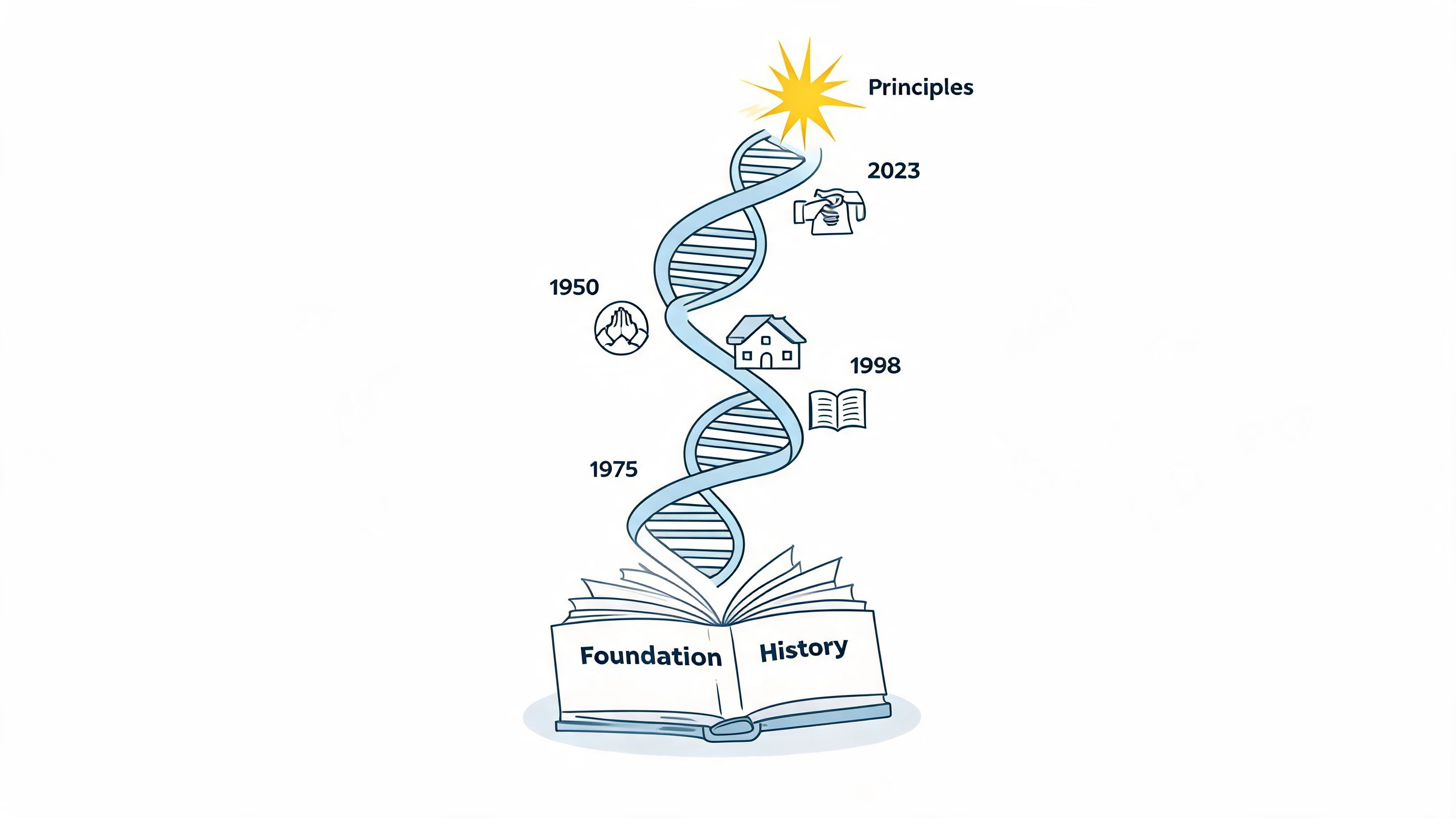
The France-Merrick Foundation was established in 1998 through the merger of the Jacob and Annita France Foundation, founded in 1959, and the Robert G. and Anne M. Merrick Foundation, established in 1962, creating one of Maryland's largest private foundations with $213 million in assets and nearly $10 million in annual giving according to its Foundation Directory profile.
That background tells you something important. This isn't a trend-driven grantmaker built around short-lived funding fashions. It comes out of long-running Baltimore philanthropy, and its posture reflects that. The foundation looks for work that improves community life in ways that are tangible, durable, and responsibly managed.
What that history means in practice
Organizations often focus only on program categories. That's necessary, but incomplete. You also need to understand a foundation's operating temperament.
France-Merrick's public language points to values such as collaboration, learning, impact, integrity, and racial equity advancement. Those aren't decorative words. They signal how your proposal will be read:
- Collaboration matters because isolated projects without community buy-in can look thin.
- Impact matters because vague aspirations won't carry the request.
- Integrity matters because sloppy budgets and weak documentation raise concerns quickly.
- Learning matters because strong applicants show how they'll assess results and adapt.
- Racial equity advancement matters because the foundation wants community benefit to be more than a slogan.
The philanthropic DNA applicants should mirror
A common mistake is writing to France-Merrick as if it were merely buying a building, paying for equipment, or filling a gap. That's too narrow.
The stronger framing is this: your project is a community asset investment. The physical improvement, preservation effort, or program-related project should lead to better access, better service delivery, stronger organizational capacity, or a healthier civic environment.
Foundations with deep regional roots often care as much about stewardship as they do about innovation.
If your proposal reads like a short-term patch, it's weak. If it reads like disciplined stewardship of a mission-critical project, it's much closer to the foundation's philanthropic logic.
A Nonprofits Guide to Funding Priorities and Eligibility
France-Merrick is broad enough to attract many nonprofits and specific enough to disqualify many of them. That's why early screening matters.
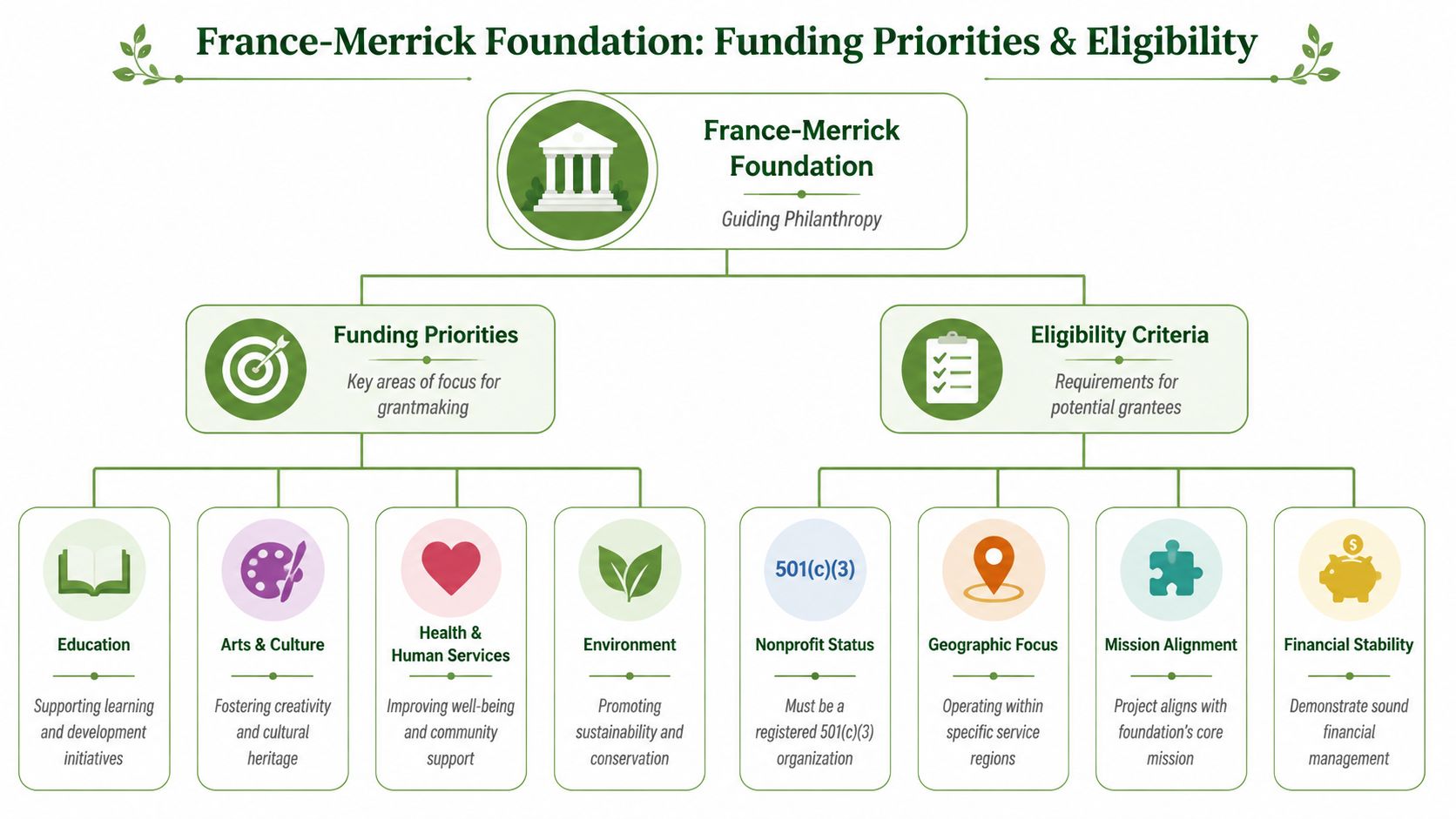
The foundation concentrates its funding in Maryland, especially Greater Baltimore, and in 2024 it made 218 grants ranging from $100 to $500,000, with a median grant of $10,000, while maintaining a focus on project-specific support rather than annual or operational funding as described on the foundation's Who We Are page.
That single fact pattern should reshape how you evaluate fit. The grant range is wide, but the median grant is modest, which means not every aligned project receives a large award. Don't build an application strategy around the maximum number. Build it around what your project can justify.
Where your project may fit
The foundation funds six major areas. In practical terms, applicants often fit best when they can clearly place the project in one of these buckets:
| Program area | What tends to read as strong fit |
|---|---|
| Civic and culture | Facility improvements, preservation, or project-based capacity work tied to public cultural benefit |
| Community development | Place-based projects that strengthen neighborhoods or community infrastructure |
| Conservation | Projects with environmental stewardship, land, or sustainability dimensions |
| Education | Time-bound improvements that strengthen the learning environment or institutional capacity |
| Health and human services | Projects that improve access, facilities, or delivery conditions for essential services |
| Historic preservation | Work that protects or restores historically important places or assets |
The broad categories can mislead applicants into thinking almost any nonprofit work qualifies. It doesn't. The foundation's giving pattern points toward defined projects, often with a physical, structural, or long-term capacity component.
What usually doesn't fit well
Many organizations are eligible on paper and still poor prospects in reality.
Watch for these weak-fit situations:
- Annual operating asks: If your request is really payroll support, unrestricted help, or an annual gap-fill, it conflicts with the foundation's stated preference.
- Indefinite programs: A program that continues forever without a clear project phase is harder to position.
- Geographic mismatch: Serving Maryland loosely isn't the same as showing direct local relevance.
- Fragile financial management: If your systems, audit readiness, or financial narrative are underdeveloped, the request becomes riskier.
A helpful benchmark is whether you could explain the project to a board member in three sentences. If that explanation sounds diffuse, the proposal likely will too.
For teams building a broader prospecting strategy, this kind of fit analysis is the difference between a focused pipeline and a bloated one. Resources on foundation grants for nonprofit organizations can help teams sort true prospects from foundations that only look promising at first glance.
The real opportunity
The best opportunity with France-Merrick is often capital or capacity-building work that produces visible organizational durability. Renovations, construction-related needs, preservation efforts, and infrastructure investments often align more naturally than broad program expansion language.
That doesn't mean every request must involve bricks and mortar. It means your proposal should answer a board-level question clearly: What lasting organizational strength will this grant create?
If you can't answer that crisply, your project may belong with another funder.
Navigating the Grant Application and Review Process
France-Merrick's process is structured, and that's good news for prepared applicants. The mistake is assuming “rolling” means casual. It doesn't. The process is designed to screen aggressively at the front end and spend deeper review time only on the strongest fits.
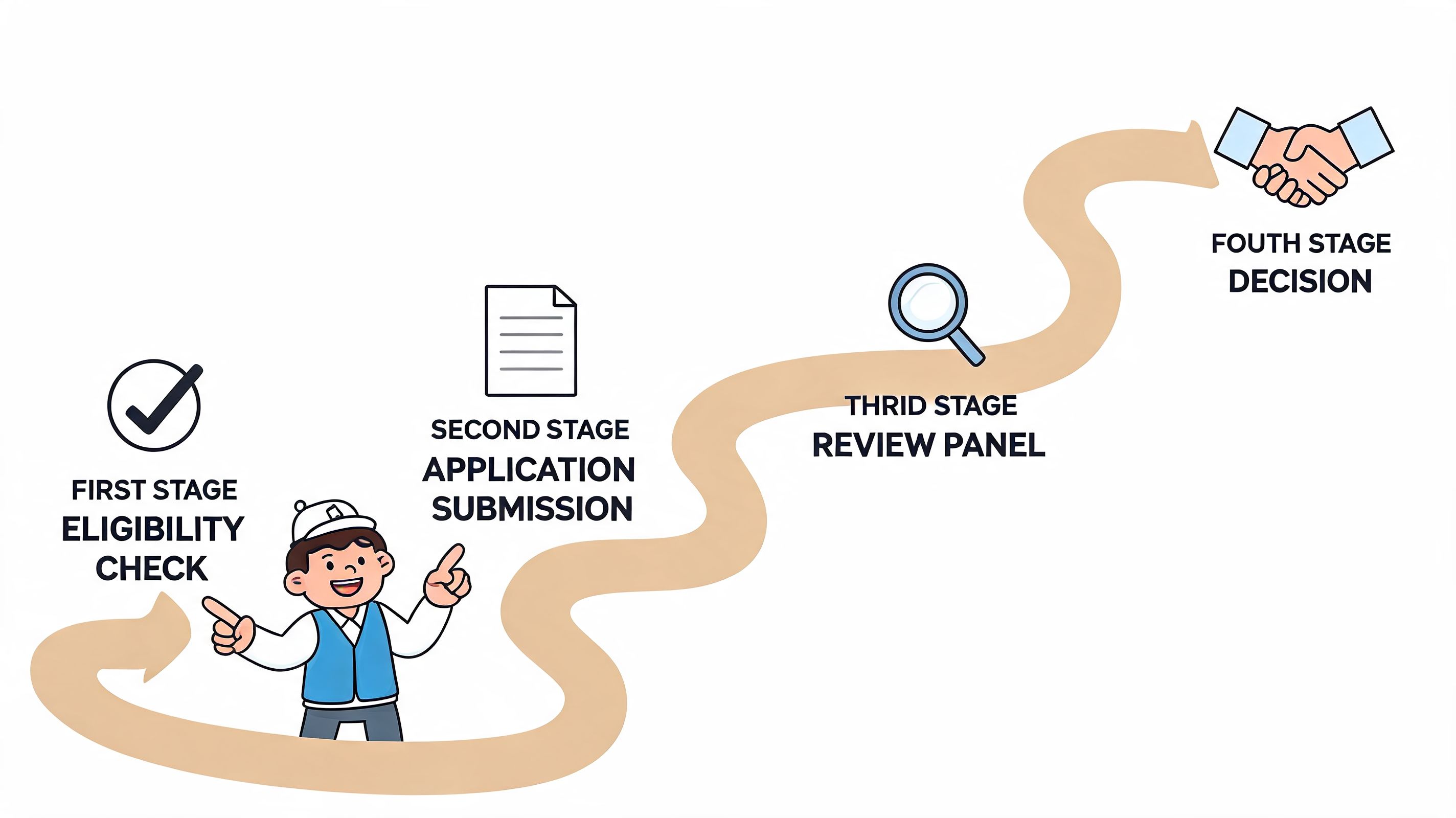
The application begins with a 1 to 3 page Letter of Inquiry submitted through the online portal, and that initial stage filters approximately 80 to 90 percent of inquiries before a full proposal is invited, according to the foundation's grant process overview.
That filtration rate should change how you approach the LOI. It isn't a short version of the proposal. It's a gatekeeping document. Your job is to prove fit fast.
What the LOI needs to do
A strong LOI usually handles five things without wandering:
- States the project plainly: Name the project and define the problem without dramatic excess.
- Shows the funding gap: Explain what remains unfunded and why foundation support matters now.
- Establishes credibility: Confirm nonprofit status, leadership oversight, and project readiness.
- Connects to mission and geography: Make local relevance unmistakable.
- Signals sustainability: Show that the organization can maintain the benefit after the grant.
Many weak LOIs fail because they spend too much space on organizational history and too little on the actual request.
The foundation doesn't need to be impressed that your organization exists. It needs confidence that your project is ready, bounded, and worth deeper review.
Understanding the decision tracks
France-Merrick uses different review rhythms depending on request size. Smaller requests under the threshold listed on the foundation's site move on a monthly decision cycle. Larger requests follow quarterly LOI closing dates and then move through invitation and proposal steps on a more structured calendar.
That means timing matters. If your project is tied to construction schedules, procurement, or campaign milestones, reverse-plan from your real project needs instead of waiting until the work is urgent.
A practical resource for newer teams is this guide on how to apply for grants, especially when you need to organize attachments, approvals, and narrative sequencing before the portal opens.
What happens after invitation
If invited, the full proposal phase becomes a test of organizational maturity. During this stage, budget detail, audited financials, timelines, and business practices matter more.
A quick visual recap helps because the process is easier to manage when the stages are separated clearly.
Common process mistakes
- Submitting too early with an undercooked project
Rolling access doesn't mean “send the draft and hope.” It means you can enter when your project is ready.
Confusing need with readiness
Need matters, but foundations fund execution capacity, not just urgency.
Treating the portal like a formality
Portal-based applications reward teams that organize board signoff, financial materials, and project language in advance.
- Revenue stability: Identify the streams that will support ongoing maintenance or program use.
- Leadership oversight: Clarify who owns implementation and who monitors results.
- Operational planning: Show that staffing, maintenance, and follow-through have already been considered.
- Board engagement: Signal that the project isn't isolated from governance.
- They solve a visible constraint: A facility limitation, preservation need, or capacity barrier is usually easy to identify.
- They have a defined completion point: The project can be finished, reported on, and assessed.
- They create long-term benefit: The grant leaves something behind that the organization can keep using.
- They fit the region clearly: The local benefit isn't abstract.
- What community-serving problem is being addressed?
- What specific project will address it?
- Why is this organization ready to complete the work?
- What lasting benefit remains after the grant ends?
- Centralized documentation: Keep the signed agreement, approved budget, payment records, and internal approvals in one place.
- Live budget tracking: Don't wait until report time to compare actual spending with projections.
- Project milestone notes: Document delays, deviations, and material decisions while they happen.
- Outcome evidence collection: Save photos, usage updates, and any internal performance measures connected to the project.
- Calendar control: Set reminders well ahead of the final report deadline and the later reapplication date.
- Prospect qualification standards so you don't chase weak fits.
- A master document set with updated organizational materials.
- A narrative library that can be customized without copy-paste drift.
- A compliance checklist for every awarded grant.
- A pipeline view that shows where future gaps may emerge.
If the LOI is sharp, the full proposal has a reason to exist. If the LOI is fuzzy, the process usually ends there.
Crafting a Proposal That Aligns with FMF Values
If you're invited to submit a full proposal, your job changes. At that point, you're no longer proving that your organization is eligible. You're proving that the project is an investable choice.
The strongest France-Merrick proposals usually share one trait. They're written from the funder's risk perspective, not just the nonprofit's need perspective.
Lead with the asset, not the aspiration
Many nonprofits write proposals that emphasize the dream. Better access. Deeper engagement. Stronger outcomes. All of that matters, but France-Merrick tends to respond best when the proposal starts with the specific project asset being created or strengthened.
If you're seeking support for renovation, don't bury the renovation under broad mission language. Name the space. Name the use. Name the operational problem it solves. Then connect that physical improvement to mission delivery.
That same logic applies to equipment, preservation work, and one-time infrastructure projects. The board needs to see what the grant will buy, change, or complete.
Show sustainability without sounding defensive
Because the foundation favors project support over ongoing operations, sustainability becomes a key review lens. Applicants often handle this poorly in one of two ways. They either ignore the issue or overpromise.
A better approach is to show concrete sustainability in plain language:
This doesn't need to sound grand. It needs to sound believable.
Proposal test: If a reviewer asked, “What happens after our grant is spent?” your application should answer that before they ask.
Put measurable outcomes in the right place
One recurring mistake in project proposals is measuring only activity. New room completed. Equipment installed. Construction phase finished. Those are outputs, not the full value story.
France-Merrick is more likely to respond when you connect the completed project to actual organizational use. For example:
| Weak framing | Stronger framing |
|---|---|
| We will renovate the building | We will renovate the building to improve service delivery and support long-term organizational capacity |
| We need equipment | The equipment will allow us to deliver services more effectively and sustain project outcomes |
| This supports our mission | This removes a documented barrier to delivering mission-critical work |
That's a subtle shift, but it matters. You're not just requesting money for a thing. You're making the case that the thing is a durable capacity lever.
For teams drafting narratives, a practical nonprofit grant proposal template can help organize need, project description, outcomes, and budget logic without turning the proposal into boilerplate.
Budgets win or lose confidence
Your budget should make the request feel disciplined. If the numbers are inconsistent with the narrative, reviewers notice. If the campaign context is missing, reviewers notice that too.
Strong budgets for this foundation usually do three things well. They isolate the project scope, show what other support is committed or pending, and explain exactly where the funding gap sits. That makes the proposal easier to trust.
Learning from Past Grantees and Funded Projects
The easiest way to understand France-Merrick is to look at the pattern behind its giving rather than searching for a single ideal applicant. The foundation doesn't fund one nonprofit type. It funds projects that strengthen community-serving organizations in practical ways.
Recent initiatives such as the Meet the Moment Fund show a responsive side to the foundation's grantmaking, supplementing its core interest in long-term capital and capacity-building work, as noted on the foundation's Meet the Moment Fund page.

That's useful because it prevents a narrow reading of the foundation. Yes, capital and infrastructure matter. But the deeper principle is responsiveness to community needs through bounded, purposeful funding.
What successful projects usually have in common
Instead of focusing on names alone, look at the traits funded projects tend to share:
That combination is why so many strong France-Merrick prospects come from organizations with real infrastructure needs. A repaired or improved space can enable better service delivery for years. That's easier to justify than a broad request for generalized program expansion.
The lesson for applicants
Applicants sometimes think they need to imitate another organization's exact project type. They don't. The core lesson is to imitate the logic behind funded work.
A strong project usually answers these questions cleanly:
If your proposal can't be summarized through those four questions, it may still be too conceptual for this funder.
The presence of responsive initiatives like Meet the Moment also suggests something else. France-Merrick isn't rigid for the sake of rigidity. It has a core strategy, but it can adapt when circumstances justify it. That's encouraging for applicants whose projects sit just outside a classic capital frame, as long as the request still shows discipline, urgency, and community value.
Managing Compliance and Planning Your Next Steps
Winning the grant isn't the finish line. With France-Merrick, post-award management is part of the relationship, and teams that treat compliance casually can create future funding problems for themselves.
The foundation requires a final report one year after final payment, and grantees are ineligible to reapply for two years after the final payment is made, according to the foundation's reporting requirements.
That reapplication gap is the strategic issue many teams underestimate. If you receive a grant and then assume you can return quickly for the next phase, your pipeline planning may break down.
Compliance is operational, not administrative
Some organizations treat grant reporting like a back-office task to finish near the deadline. That approach is risky with a foundation that expects disciplined stewardship.
France-Merrick's reporting expectations point to a simple truth. You need to manage the grant from day one as if the report is already being written. That means keeping documents, tracking spending against the approved budget, recording changes in timeline, and collecting evidence of project outcomes as the work unfolds.
If your team struggles with compliance systems generally, it helps to ground the issue in broader operational practice. This explainer on business compliance meaning for small firms is useful because it frames compliance as day-to-day discipline rather than legal jargon. That mindset applies directly to grant management.
What good post-award management looks like
A well-run France-Merrick grant usually includes these internal habits:
These are simple habits, but they protect institutional memory. They also make staff transitions less disruptive.
Plan around the two-year gap
The reapplication waiting period forces discipline, and that's not a bad thing. It pushes organizations to think in pipeline terms rather than one-foundation terms.
If France-Merrick funds a capital phase, your next funding conversations may need to come from other foundations, public sources, major donors, or campaign support while the waiting period runs. That means your development plan should map dependencies early.
A practical way to think about it is through sequencing:
| Timeline point | What your team should be doing |
|---|---|
| Before award | Confirm reporting owner, documentation process, and next-step funding prospects |
| During project | Track spending, milestones, and any variance from the approved plan |
| Near final payment | Forecast report deadlines and the reapplication blackout period |
| After final report | Shift focus to complementary funders and the next project phase |
Many smaller nonprofits get squeezed at this stage. They win a project grant, execute the work, and then discover they built too much of the future plan around the same funder.
Dealing with timeline uncertainty
One challenge with private foundations is that exact decision timing is often less predictable than applicants want. France-Merrick gives useful process guidance, but nonprofits still need internal planning buffers.
That's why smart teams build a grants calendar with assumptions rather than wishful thinking. They don't schedule contractors, procurement, or public announcements as if approval is guaranteed on the earliest possible date. They create room for review, revision, and board timing.
The strongest grants teams don't just submit well. They model uncertainty well.
This matters even more for executive directors wearing multiple hats. If the same person is managing programs, board communication, facilities issues, and fundraising, the application itself is only one part of the workload. The follow-through can be heavier than the initial submission.
Build a repeatable system, not a one-off application
France-Merrick is important, but it shouldn't become a standalone workflow that lives in one person's inbox. The healthier approach is to build a repeatable system your team can use across funders.
That system should include:
When teams do this well, they stop experiencing grants as repeated emergencies. The France-Merrick application becomes one strategic move inside a larger funding architecture.
If that sounds ambitious for a lean team, it doesn't have to start big. Even a simple shared tracker, a reporting calendar, and clearer proposal ownership can improve performance fast. What matters is consistency.
Fundsprout helps nonprofits turn that consistency into a system. If your team needs a better way to identify aligned funders, organize application requirements, draft proposals from real organizational materials, and stay on top of reporting deadlines, Fundsprout gives you one place to manage the full grant lifecycle without relying on scattered spreadsheets and last-minute scrambling.
Try 14 days free
Get started with Fundsprout so you can focus on what really matters.