Bonfils Stanton Foundation Grants: A Guide for 2026
Explore the bonfils stanton foundation. Guide for nonprofits: mission, grants, eligibility, and tips for a winning 2026 proposal. Maximize funding!

Abdifatah Ali
Co-Founder
You're probably looking at the Bonfils-Stanton Foundation for the same reason most Colorado nonprofits do. You need funding that helps the organization breathe, not another tightly restricted grant that pays for one slice of work while payroll, rent, software, and leadership time stay under pressure.
That's why this funder deserves a closer read. Bonfils-Stanton isn't just another local foundation with a broad mission statement. It has a distinct Colorado identity, a clear set of fields it cares about, and a funding structure that tells you a lot about what kind of applicant it wants to back. If you understand that structure, your application gets sharper fast. If you miss it, you can write a polished proposal that still feels off-target.
Understanding the Bonfils-Stanton Foundation's Identity
The first mistake applicants make is treating Bonfils-Stanton like a generic private foundation. It isn't. The Bonfils-Stanton Foundation was established in 1962 in Colorado by Charles Edwin Stanton, following the death of his wife, Mary Madeline (May) Bonfils Stanton, and its mission centers on arts and culture, community service, and science and medicine. It also gives 3 annual awards to Coloradans for significant contributions in those same fields, according to its grantmaker profile.
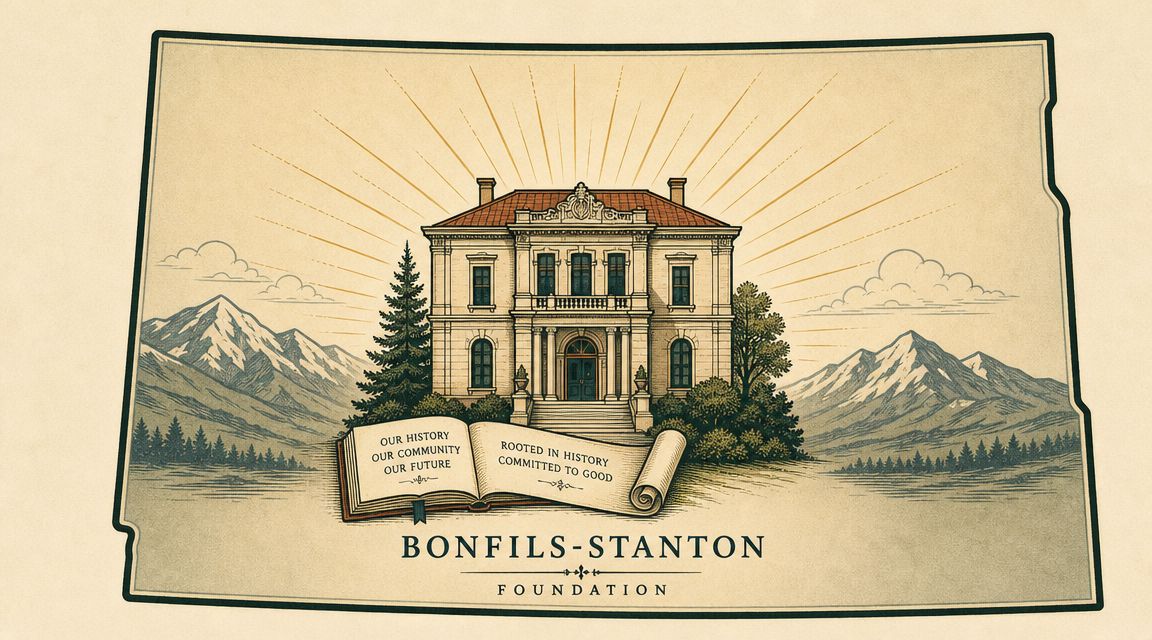
That history matters because it signals two things. First, this is a foundation with a long civic memory in Colorado. Second, it doesn't just fund activity. It recognizes leadership and contribution in public view. That tends to favor organizations that can explain their role in the broader cultural or community ecosystem, not just describe a single program.
What that means for applicants
If your proposal reads like a transactional request, it will likely feel thin. Bonfils-Stanton's identity suggests reviewers want to see an organization that understands its place in Colorado and can explain why sustaining that work matters.
A stronger framing usually sounds like this:
- Community position: Explain the role your organization plays in the local area.
- Field contribution: Show how your work strengthens arts, community service, or science and medicine beyond one event or one client cycle.
- Organizational maturity: Present your nonprofit as a steward of mission, not just a spender of grant dollars.
Practical rule: Don't pitch Bonfils-Stanton as if it's buying outputs. Pitch your organization as an institution worth backing.
For smaller teams, that can feel intimidating. It shouldn't. You don't need to sound grand. You need to sound grounded. A neighborhood arts group, a community-serving nonprofit, or a mission-driven health organization can all make this case if they connect daily work to long-term value in Colorado.
If you're still building your local foundation strategy, this broader guide to foundation grants for nonprofit organizations can help you position Bonfils-Stanton within a wider funding mix.
Exploring Core Grant Programs and Award Sizes
A common mistake shows up early. A team needs flexible cash for payroll, rent, and program coordination, but submits a tightly framed project request because it feels more "grant-like." With Bonfils-Stanton, that choice can weaken the application. The foundation gives many applicants a better opening than that.
The main pathway for operating support
The quarterly community grants are the core option for many organizations. Awards range from $5,000 to $60,000, and the program is built primarily for unrestricted operating support, as noted earlier.
That matters because the competitive question is not whether one project sounds appealing. It is whether your organization is a sound vehicle for ongoing community benefit. Strong applicants use that flexibility well. They explain what general support would stabilize, improve, or preserve across the organization, then connect that use of funds to mission results.
A stronger request usually does three things:
- Shows the operating need plainly: Identify the pressure point, such as staffing capacity, rising administrative costs, or uneven revenue.
- Connects operations to outcomes: Explain how core expenses support the work the foundation cares about.
- Demonstrates sound judgment: Give reviewers confidence that leadership can direct flexible funding where it will matter most.
Applicant strategy plays a key role. If you force your case into a project box, you often create avoidable problems: an artificial budget, a narrow work plan, and a weaker explanation of why unrestricted support fits.
A targeted option for urgent arts funding
The Arts & Culture Rapid Response Grant is much narrower. It was launched as a relief-oriented fund for eligible Denver-metro arts and culture organizations affected by funding disruptions, with awards from $5,000 to $20,000, as noted earlier.
Treat this as a stabilization request. Reviewers are likely looking for a credible explanation of disruption, its operational effect, and how the grant would help the organization maintain continuity. A sweeping artistic vision alone will not do that work.
For qualified groups, the trade-off is straightforward. This program may be easier to frame if your challenge is immediate and specific, but it is also less flexible as a narrative. Your application needs to stay close to the disruption itself and the organization's response.
The fast-turn technical assistance option
The technical assistance grant serves a different purpose. It supports discrete capacity-building needs such as consultants, planning, technology, training, and professional development. Awards go up to $5,000 and decisions are made on a rolling basis, with a relatively quick turnaround, as noted earlier.
That makes it useful for contained projects with a clear scope. Good examples include board training, strategic planning facilitation, a donor database cleanup, or a limited technology upgrade.
Poor fits are easy to spot. If the actual need is staff salary support, cash-flow relief, or broad organizational stabilization, this program will not solve the problem.
Bonfils-Stanton Foundation grant programs overview
| Grant Program | Focus | Award Range | Primary Goal |
|---|---|---|---|
| Quarterly Community Grants | Unrestricted operating support | $5,000 to $60,000 | Support core organizational operations |
| Arts & Culture Rapid Response Grant | Relief for eligible Denver-metro arts and culture organizations affected by funding disruptions | $5,000 to $20,000 | Stabilize organizations facing funding disruption |
| Technical Assistance Grants | Consultants, planning, technology, training, professional development | Up to $5,000 | Build organizational capacity quickly |
Competitive applications match the actual need to the right program. Weak ones reshape the need to fit the wrong grant.
Confirming Your Eligibility and Geographic Focus
Before you draft anything, force a simple go or no-go decision. That saves time and keeps your team from polishing an application that was never well matched.
Start with fit, not hope
For Bonfils-Stanton, the first question is whether your organization aligns with the foundation's Colorado-centered mission areas. If you can't make a clean case that your work sits in arts and culture, community service, or science and medicine, stop there. Stretching for relevance rarely works.
The second question is geography. The foundation is rooted in Colorado, and some opportunities are narrower than that. The arts rapid response funding, for example, is specifically limited to organizations serving Denver, Adams, Arapahoe, or Jefferson counties and to nonprofits or fiscally sponsored groups with budgets under $2 million, as noted earlier.
Use this screening checklist
- Mission match: Your work clearly fits arts and culture, community service, or science and medicine.
- Colorado relevance: Your organization can explain why its work matters within the state's communities.
- Correct grant type: You're applying to the program that matches your actual need.
- Organizational status: If a program requires nonprofit status or fiscal sponsorship, you can document it.
- Geographic precision: If the opportunity is county-limited, your service area clearly falls inside it.
Where applicants go wrong
A lot of nonprofits talk themselves into “close enough.” That usually shows up in one of three ways.
One, they lead with a project that's adjacent to the foundation's interests but not central to the organization's purpose. Two, they ignore the geographic boundaries on a special initiative. Three, they submit a restricted-project narrative to a funder that's signaling interest in organizational strength.
If you need several paragraphs to explain why you fit, you probably don't fit well enough.
If your organization does pass this screen, move ahead confidently. If not, redirect the effort. The best grants strategy isn't applying more widely. It's applying more selectively.
The Application Timeline and Process
A common Bonfils-Stanton mistake looks like this. The team is eligible, the program fit is real, and everyone assumes the application will be straightforward. Then the deadline gets close, the finance numbers do not match the narrative, the request amount keeps changing, and a solid opportunity turns into a hurried submission.
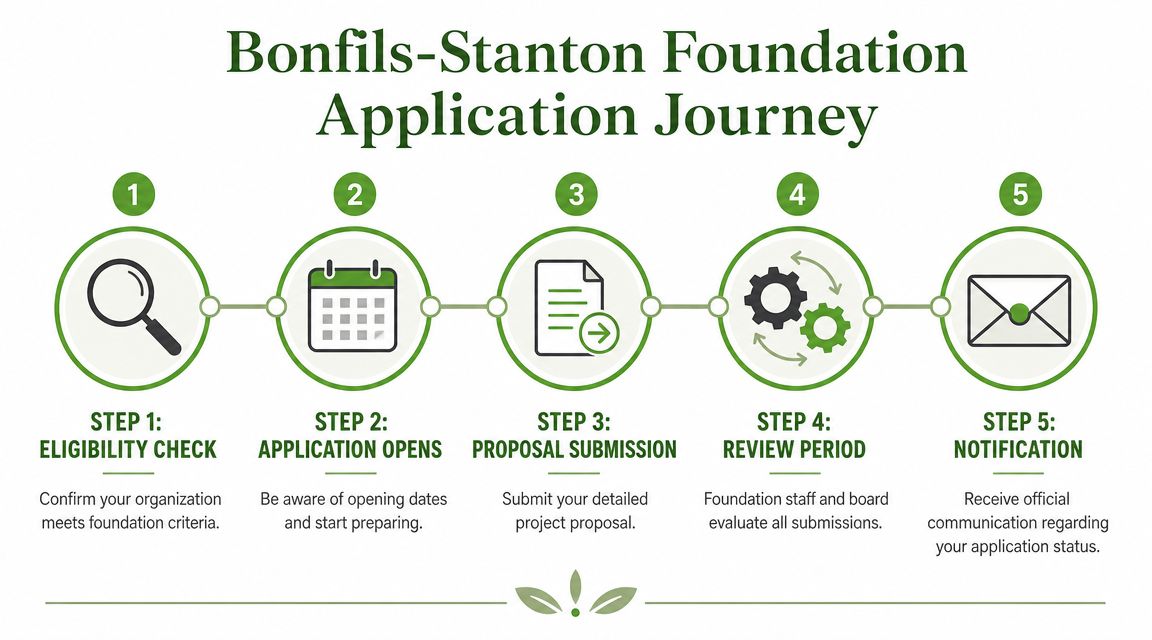
Quarterly cycles favor disciplined prep
Bonfils-Stanton offers recurring opportunities to apply, which helps organizations that plan ahead. It does not help organizations that treat each cycle as a last-minute reset button.
The practical takeaway is simple. Start before you enter the portal. Confirm the request type, settle on the amount, and make sure leadership agrees on the reason this funding matters now. With a funder that often supports general operations, internal alignment matters as much as polished writing. Reviewers can tell when an organization is describing a real institutional priority versus assembling a request because a deadline is open.
If your team needs a drafting framework before you begin, this guide on how to apply for grants is a useful starting point.
Technical assistance requests need tighter scoping
Technical assistance moves on a faster timetable than a standard grant request, so the usual long-form institutional narrative is less useful here. A stronger request defines the capacity problem in plain terms, names the outside help needed, and shows what will improve once that help is in place.
Applicants often overcomplicate things. They write as if they are asking for broad endorsement of the whole organization, when the better move is to present a contained need with a credible plan to address it. Clear scope beats extra background.
A process that improves submission quality
Confirm internal readiness first
Before drafting, get agreement from program, finance, and executive leadership on the request purpose, amount, and timing.Build to the actual grant type
If you are seeking operating support, make the case for organizational strength, financial stewardship, and why flexible dollars will help. If you are seeking technical assistance, define the problem, vendor or consultant need, and expected result.Assemble attachments early
Budgets, board lists, fiscal sponsorship records, and narrative language should point in the same direction. Weak applications often break down because the documents suggest different priorities.Review for strategy, not just grammar
A final read should answer tougher questions. Does this request sound like a real organizational priority? Is the amount sensible? Does the proposal reflect how the foundation prefers to fund, or does it still read like a restricted project pitch?
Teams that do this work early usually submit cleaner, more credible applications. That matters here, because Bonfils-Stanton is not just funding an idea. It is funding its confidence in how your organization will use the support.
What Reviewers Value in Your Proposal
A competitive Bonfils-Stanton proposal doesn't just answer questions. It makes reviewers comfortable funding the organization behind the request.
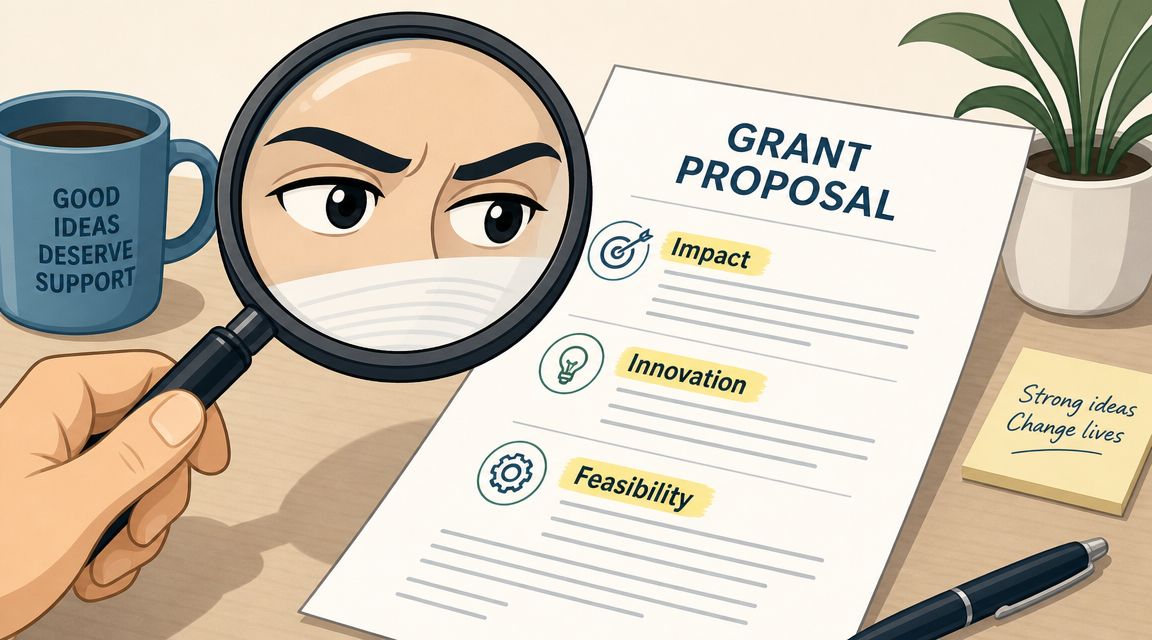
Strong operating support cases sound different
When a funder leans toward general operating support, reviewers are looking for more than a description of activities. They want signs that your organization is stable enough to use flexible support well and self-aware enough to explain where it will matter most.
That means your proposal should answer unspoken questions such as:
- Does this organization understand its role clearly
- Can leadership make good decisions with unrestricted support
- Is the case for support tied to mission, not convenience
- Does the nonprofit sound durable, responsive, and useful to its community
A weak application often buries these answers under program detail. A stronger one surfaces them directly.
What to emphasize in the narrative
Focus less on novelty and more on relevance. Bonfils-Stanton's fields are broad enough that many organizations can claim alignment. Reviewers need to see why your work is necessary, trusted, and worth sustaining.
Here's the narrative approach I'd use:
- Lead with organizational purpose: Start with what your nonprofit does in the community and why that role matters.
- Show demand without overstating: Describe the pressure, need, or gap your organization responds to in plain language.
- Connect operations to impact: Make it obvious that staffing, infrastructure, and management are not overhead distractions. They're how the mission gets delivered.
- Demonstrate judgment: Explain how leadership decides where resources go and what trade-offs it manages.
Review lens: Unrestricted funders aren't asking, “Is this project interesting?” They're asking, “Is this organization worth trusting?”
A useful way to stress-test your draft is to remove all program jargon and read it again. If the proposal still communicates purpose, credibility, and value, you're on the right track.
Don't confuse breadth with vagueness
Organizations often think operating support proposals should be broad and flexible. That's true, but broad isn't the same as vague. You still need specificity about pressures, priorities, and intended use.
A sentence like “this grant will help us continue our mission” is too thin. A better approach explains which operating realities the organization is managing and why flexible support helps leadership respond responsibly.
This short video is also a good reminder that strong proposals balance mission, clarity, and feasibility.
What usually hurts an otherwise solid proposal
Three problems come up again and again.
One is writing a project grant narrative for an operating support opportunity. Another is presenting unrestricted support as if it were a fallback because the organization couldn't define a sharper use. The third is failing to explain why the organization matters in its local context.
The fix is simple. Treat the nonprofit itself as the case to be funded.
Learning From Recently Funded Projects
The best way to understand Bonfils-Stanton is to look at the kinds of requests that make intuitive sense for this funder. Not fabricated success stories. Realistic profiles that reflect how the foundation's structure rewards fit.
Example one with a clear general operating case
A Denver arts organization seeking support for staffing, facilities, and public programming is a natural fit for the quarterly community grants when it frames the request as core operating support. That kind of logic appears in a public example from Birdseed Collective, which announced a Community Grant of $25,000 for FY2026 to support general operations in arts programming, including staffing and rent, in its grant announcement.
Why is that profile strong? Because it doesn't pretend the mission happens apart from operations. It links the funder's unrestricted approach to the actual mechanics of delivering community-based arts work.
Example two with a field-building arts fit
Central City Opera publicly thanked the foundation for continued support of its artists training program in a festival update. Even without treating that page as a source for broader grantmaking data, it illustrates a pattern that's helpful to applicants. Bonfils-Stanton appears comfortable supporting organizations that contribute to Colorado's cultural infrastructure, not just one-off public events.
That's an important clue. If your organization develops talent, preserves cultural life, or anchors access to arts participation, say that plainly. Don't reduce your work to attendance language alone.
Example three with a technical assistance logic
A smaller arts nonprofit might use the technical assistance route for a scoped donor database upgrade, strategic planning consultant, or staff training effort. What makes that kind of request competitive isn't scale. It's clarity.
A strong technical assistance application usually has three traits:
- Specific problem: The organization can name the capacity gap.
- Scoped solution: The request fits the fund type cleanly.
- Organizational payoff: The assistance improves how the nonprofit functions after the grant period.
Good fit is often easier to spot in the use of funds than in the prose. If the request itself sounds clean, the proposal usually gets easier to write.
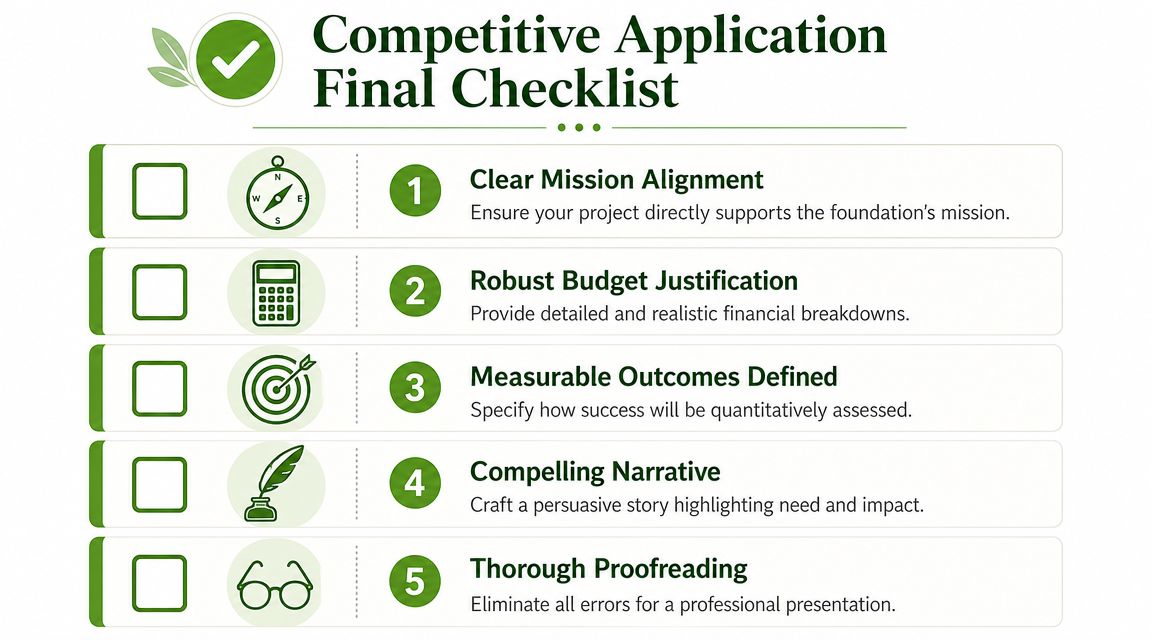
Your Final Checklist for a Competitive Application
If you're serious about Bonfils-Stanton, finish with a screening process that's blunt enough to catch weak points before submission.
Use this before you apply
Mission alignment is obvious
A reviewer should see the fit with arts and culture, community service, or science and medicine quickly, without interpretive work.The request matches the grant type
Operating support requests should read like operating support requests. Technical assistance requests should be narrow, practical, and implementation-ready.Leadership judgment comes through
Your narrative should make clear who is making decisions, what pressures the organization faces, and how funds will be used responsibly.The amount requested feels proportionate
Even without overexplaining the budget, the request should feel credible relative to your organization's scope and stated needs.Attachments support the same story
If your narrative says one thing and your financials suggest another, reviewers will notice.
Common pitfalls to avoid
The most common mistake is misreading unrestricted support. Applicants hear “general operating” and submit something broad, generic, and under-argued. Flexible funding still requires a precise case.
Another frequent problem is forcing a project frame onto a funder that wants to understand organizational strength. If the proposal spends all its energy on one program and barely explains the institution, the request can feel mismatched.
A final issue is weak budget communication. You don't need a complicated presentation, but you do need a coherent one. If your team needs a cleaner format, a practical grant budget template can help organize the numbers and narrative before submission.
Submit when the application sounds like your organization at its best, not when it sounds like what you think a foundation wants to hear.
The Bonfils-Stanton Foundation is often a good target for nonprofits that need stable support and can explain their value in Colorado clearly. The organizations that tend to compete best are not the ones with the flashiest language. They're the ones with the cleanest fit, the strongest institutional story, and the discipline to ask for the right kind of funding in the right way.
Fundsprout helps nonprofits find funders that fit, turn guidelines into workable proposal drafts, and keep deadlines, attachments, and reporting organized in one place. If you want a faster way to build a stronger grant pipeline, explore Fundsprout.
Try 14 days free
Get started with Fundsprout so you can focus on what really matters.