Letter of Support for Grant: A Quick Guide to Securing Funding
Boost your grant proposal with a letter of support for grant. Get expert tips, real-world examples, and ready-made templates to secure funding.


Abdifatah Ali
Co-Founder
A letter of support for a grant is so much more than a simple endorsement. It's a powerful testimonial from a partner organization, a key community leader, or an influential figure who can vouch for your project's value and your ability to deliver. Think of it as third-party proof that your proposed work is not just a good idea, but a necessary one with real community backing.
Why A Support Letter Is Your Grant Seeking Superpower

In the hyper-competitive world of grant funding, your proposal tells your story. But a compelling letter of support proves that story is true. Grant reviewers have a tough job; they're constantly assessing risk and trying to predict which projects will actually make a difference. They need more than just your word for it.
Put yourself in their shoes. A beautifully written proposal is a great start, but it's still just one side of the story. Letters of support provide the crucial outside perspective that can elevate an application from good to fundable. They show you aren't working in isolation and that other respected organizations are willing to stake their own reputations on your success.
Proving Community Buy-In And Viability
When a funder sees a collection of thoughtful support letters, it sends a clear signal: this project has deep roots in the community it aims to serve. It's not just an idea cooked up in an office. This kind of external validation is critical for showing:
- Collaborative Strength: It’s proof that you have real, active partners who are invested in your mission and ready to roll up their sleeves with you.
- Real-World Impact: These letters often include specific stories or data about your past work, offering tangible evidence that you get results.
- Reduced Risk: For a funder, a strong network of support acts like a safety net. It suggests the project is more likely to succeed and be sustainable long-term.
This is especially vital when you consider that average grant success rates can be as low as 10-30%. Seasoned grant professionals often see much higher success, in large part because they know how to secure powerful letters that showcase genuine community alignment.
A grant proposal explains what you will do and how you will do it. A letter of support explains why it matters to the community, straight from the community itself. That's the difference between an application that gets filed away and one that gets funded.
Differentiating Your Application
Picture a reviewer slogging through a pile of proposals that all sound vaguely similar. Suddenly, they come across yours, which includes a powerful letter from a respected city council member or a major nonprofit partner. Your application immediately stands out. It adds a layer of credibility that you simply can't create on your own within the narrative.
Before we dive into crafting these letters, it helps to remember what they're supporting. If you need a refresher, you can explore our comprehensive guide on what a grant proposal is to see the full picture.
Ultimately, a strong letter of support serves as a character witness for your entire organization. It confirms your reputation, your competence, and—most importantly—your authentic connection to the people you serve.
Finding and Partnering With the Right Supporters
The power of a support letter is determined long before anyone types a single word. It all comes down to one critical decision: who are you asking? A letter from someone vaguely connected to your work won't move the needle, but a strong endorsement from a respected, relevant partner can make your entire proposal shine.
Think of it as casting for a play. You need credible voices who can reinforce your story from different, influential angles. You're not just collecting signatures; you're building a coalition that proves your project has real community backing and is set up for success.
Identifying Your Most Influential Advocates
It’s tempting to cast a wide net, but what really matters is quality, not quantity. Funders can spot a token letter a mile away. They're looking for proof of genuine, deep-rooted partnerships.
So, who should be on your shortlist?
- Collaborating Organizations: These are your heavy hitters. A letter from an organization you've worked with directly provides firsthand proof that you can deliver on your promises.
- Government Officials: An endorsement from a mayor, city council member, or state representative signals that your project aligns with public priorities. It shows stability and tells funders you’re a serious player.
- Community Leaders: Don't just think about official titles. A letter from a respected neighborhood association president, a local pastor, or a well-known community advocate can speak volumes about your grassroots support.
- Academic Partners: If you’re running an evidence-based program, getting a letter from a university professor or a researcher is pure gold. It validates your methodology and tells reviewers your outcomes are credible.
Making It Easy for Them to Say Yes
Let’s be honest—the people you want letters from are busy. The easier you make it for them, the better the letter you’ll get back. The trick is to do the heavy lifting yourself by giving them a pre-packaged "support toolkit."
A classic rookie mistake is sending a vague email and just hoping for the best. A far better approach is to provide a toolkit that gives your supporter everything they need to write a specific, data-rich letter without it turning into a multi-hour project for them.
I once saw a nonprofit apply for funding for a youth mentorship program. They needed a letter from a very busy city official. Instead of just asking, they sent a simple one-pager with:
- The official grant name and a brief project summary.
- Three bullet points on how their program directly supports the city's youth initiatives.
- A specific data point: "Our pilot program served 75 at-risk youth last year, with 85% showing improved school attendance."
- The deadline and exactly who to send the finished letter to.
This simple act of preparation made it almost effortless for the official’s staff to draft a powerful letter that echoed the grant’s key themes. That targeted approach was a huge factor in getting funded because it demonstrated clear, influential government support.
The Anatomy of a Persuasive Support Letter
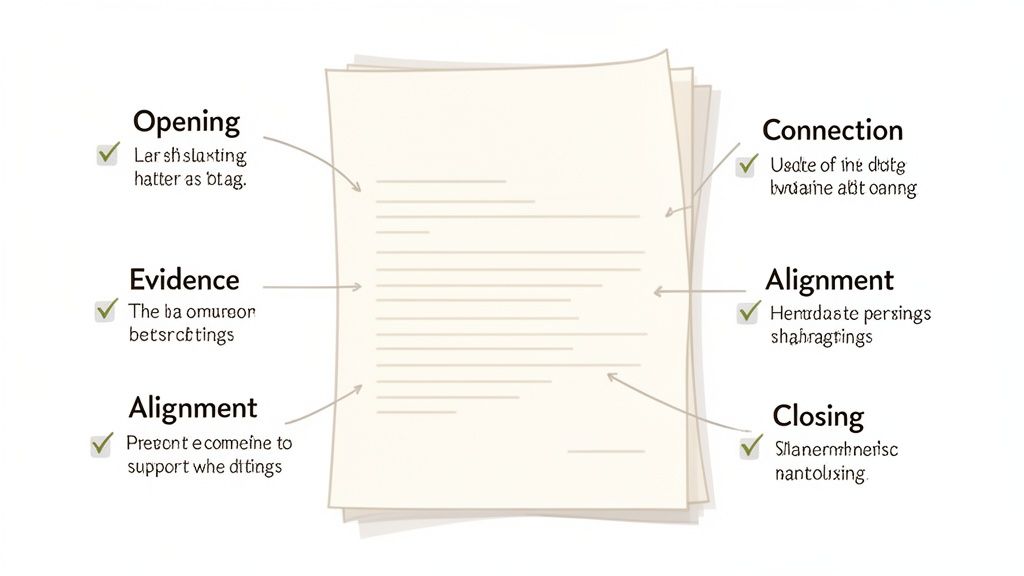
A truly great letter of support for a grant does more than just offer a thumbs-up. It constructs a rock-solid, evidence-based case for why your project must be funded. Think of it as a narrative with a job to do. Each section plays a specific role, and when they work together, they create a story that sticks with the funder long after they’ve read it.
Let's break down the essential pieces.
The opening has to establish credibility, and it has to do it fast. The writer should state exactly who they are, their title, and how they know your organization. Anything less, and you risk the reviewer skimming right past it. This first paragraph also needs to clearly and enthusiastically endorse your specific project—not just your organization in general. That's a critical distinction. It shows the supporter actually read the proposal and gets what you're trying to do.
Connecting the Supporter to the Project
This is the heart of the letter. It’s where you answer the reviewer’s biggest question: Why does this person or organization care? This section needs to paint a clear picture of the relationship and shared history between your two groups.
- Talk About Past Wins: Get them to reference specific joint initiatives. Naming that successful summer program you ran together last year is a world away from a generic "we have a long-standing partnership."
- Show Mission Alignment: Have them explain how your project helps them achieve their own goals. This reframes the letter from a simple favor to a genuine strategic alliance.
For example, a local health clinic supporting your community garden initiative could say something powerful like, "This program directly addresses the food insecurity we see in 40% of our patients, making it a vital extension of our own work." Suddenly, the connection is logical and undeniable. This is a core principle of value-based proposal creation, where you demonstrate mutual benefit.
Back It Up with Concrete Evidence
Now we move from endorsement to evidence. This is where your letter proves its worth. The most memorable letters are packed with specifics—data, numbers, and stories that make your project feel real. General statements are forgettable. Specifics get funded.
Ask your supporters to include hard numbers or even a brief, compelling anecdote. Data gives you credibility, but stories create the emotional hook that makes a reviewer sit up and pay attention.
Instead of just saying 'we support their work,' they should be showing it: 'Our joint after-school program last year served 500 families, and this new proposal is the critical next step to deepen that impact.'
In an environment where average grant success rates can be as low as 10-30%, these details make all the difference. Experienced grant writers often push their success rates to 30-40% with new funders, and a huge part of that comes from demonstrating pre-existing relationships through authentic letters of support. Funders see this as proof of a solid network, which they value just as much as slick writing.
The Closing and Call to Action
Finally, the letter needs to stick the landing with a strong, confident closing. It should restate the endorsement, express genuine optimism for the project's success, and—this is key—provide clear contact information for the supporter.
A simple, forward-looking sentence reinforces the supporter's commitment and leaves the reviewer with a final, positive impression. It’s the last piece of the puzzle that turns a good letter into an indispensable part of your proposal.
Tailored Templates for Every Kind of Partner

Let's be honest: a generic, one-size-fits-all letter of support for a grant just doesn't work. The letters that truly move the needle are the ones tailored to the specific relationship you have with the writer, playing up their unique perspective and credibility.
Giving your partners a smart template does more than just save them time. It’s a strategic move to ensure their letter hits every point a reviewer is looking for. Think of it as a framework, not a script. Your goal is to guide them in creating a message that sounds like them but also perfectly reinforces your proposal's core arguments. This turns a simple endorsement into a powerful piece of supporting evidence.
For a Partner Organization
When another organization you work with writes a letter, it's all about demonstrating a proven, effective partnership. You want the reviewer to see a history of collaboration and real, tangible results. This isn't just a friendly note; it's proof that you know how to work with others to get things done.
Your template should prompt them to include:
- A specific shared history: Ask them to name a past project you worked on together and when it happened. Details make it real.
- Quantifiable results: What did you accomplish? For example, "Through our joint financial literacy workshops, we helped 250 families improve their credit scores by an average of 15% last year."
- A clear future commitment: The letter needs to spell out exactly how they’ll support this new project. Will they share resources, commit staff time, or provide client referrals?
A letter like this tells the funder you’re a safe bet because you already have successful working relationships in place.
For an Academic Institution
A letter from a university or researcher lends your project a kind of data-driven authority that is incredibly valuable. This endorsement needs to lean into the evidence, the research, and the "why" behind your methods. It positions your project as a smart, well-designed intervention.
Nudge your academic partner to:
- Validate your project’s design: The letter should state that your proposed methods are grounded in proven models or best practices in their field.
- Reference supporting data: If their research helped identify the need you're addressing, this is the perfect place to highlight it.
- Offer their expertise: Can they specify how their institution will offer evaluation support, access to data, or ongoing expert consultation?
An academic letter of support isn't just an endorsement; it's an intellectual co-signature. It tells the funder that your project is not only compassionate but also smart and effective.
For a Government Official
When you get a letter from a city agency, a mayor, or a state representative, it signals that your project matters to the wider community and aligns with public priorities. It’s an official stamp of approval that suggests stability and relevance.
When you work with their staff, guide them to focus on:
- Connecting to public goals: The letter should explicitly link your project to a known public initiative, like the city’s five-year housing plan or a county-wide public health campaign.
- Highlighting constituent benefits: The impact should be framed in terms of its value to the people they serve.
- Reinforcing your credibility: An official’s support implies that your organization is a trusted, stable presence in the community.
For a Community Leader or Beneficiary
This is where the heart of your proposal comes alive. While other letters provide data and strategic validation, this one tells a human story. It should feel personal, genuine, and grounded in the real-world difference your work makes. While a template can provide structure, always encourage them to speak from the heart.
Your prompts should gently guide them to:
- Share a personal story: A short, powerful anecdote about how your organization helped them or their neighbor can be unforgettable.
- Describe the need from their perspective: Why is this project so important for the community right now?
- Express genuine hope: The tone should be less formal and more about authentic gratitude and excitement for what’s possible.
By using thoughtfully tailored templates, you empower each partner to write the most compelling and relevant letter they can. It’s a step beyond just asking for a favor—it’s about strategically shaping the story you tell together. This same strategic thinking applies to the very first page of your proposal, too. For more on that, take a look at our guide for writing a fantastic cover letter for a grant proposal.
Common Mistakes That Can Weaken Your Proposal
A well-intentioned but poorly executed letter of support for a grant can actually do more harm than good. I've seen it happen—a letter meant to bolster a proposal ends up subtly undermining its credibility. Even small stumbles can signal to a reviewer that a partnership isn't as solid as you claim or that you've rushed the details. Getting this right means avoiding a few common, but critical, pitfalls.
One of the most glaring mistakes is using generic, boilerplate language. Believe me, funders read hundreds, if not thousands, of these letters. They can spot a copy-and-paste job from a mile away. When a letter feels impersonal and recycled, it tells the reviewer that the supporter isn’t genuinely invested in your project. It's just a box they checked for you.
The Problem of Vague Endorsements
A letter that's all fluff and no substance is a massive missed opportunity. It fails to give reviewers the hard evidence they're looking for. A vague statement doesn't just add zero value; it can make your claims feel hollow.
Let's look at a real-world example:
- Before: "We are happy to support their new community health initiative. Their work is very important to the people we serve."
- After: "Our agency referred 45 clients to their pilot program last quarter. We can directly attribute a 30% increase in preventative care appointments among that group to their outreach."
See the difference? The "after" example turns a lukewarm endorsement into a powerful piece of evidence. It offers specific, quantifiable proof of your impact and shows the partnership is real and functional. It makes your project's value concrete.
Forgetting the Human Element
Data is absolutely crucial, but don't forget the stories behind the numbers. A letter packed with statistics but completely devoid of a human touch can feel sterile and detached. From my experience, the letters that truly resonate with reviewers are the ones that include a brief, compelling anecdote illustrating the why behind the project.
A letter that only lists numbers proves your project is logical. A letter that shares a story proves your project is necessary. A great letter of support does both.
Another big miss is failing to connect the dots for the funder. If your partner writes a glowing letter about your organization but never once mentions how the proposed project aligns with the grant's specific goals, the reviewer is left wondering if your partner even read the application. It’s a huge red flag.
Logistical Errors That Signal Carelessness
Finally, you have the simple, avoidable mistakes that can make your entire application look sloppy. A missing signature, the wrong date, or addressing the letter to the wrong foundation—these things scream that the process was rushed. The small details matter more than you think.
Be on the lookout for these classic slip-ups:
- Missing a signature or proper letterhead: This makes the document look unofficial and immediately strips it of its credibility.
- Failing to proofread: Typos and grammatical errors are distracting and pull focus from an otherwise strong message.
- Submitting an outdated letter: Reusing a letter from an old application without updating it is one of the fastest ways to get your proposal tossed.
In the grant world, where success rates for new programs often hover around 30-40%, you can't afford these kinds of unforced errors. A strong set of support letters builds the trust and validates the community alignment that a proposal, on its own, simply can't. It's often the very thing that turns a good application into a funded one. If you want to dive deeper, you can discover more insights about grant statistics and trends to stay ahead of the curve.
Getting Your Letter of Support Workflow Under Control
Let’s be honest—managing all the moving parts of getting letters of support can feel like herding cats. You're juggling multiple requests, trying to remember who you've talked to, tracking deadlines, and making sure every letter is tailored and powerful. Relying on a patchwork of spreadsheets and endless email chains isn't just a headache; it’s a recipe for mistakes that can seriously undermine your grant proposal.
When you're disorganized, the common mistakes we talked about earlier start to creep in. That's when you see those little tripwires that funders notice immediately.
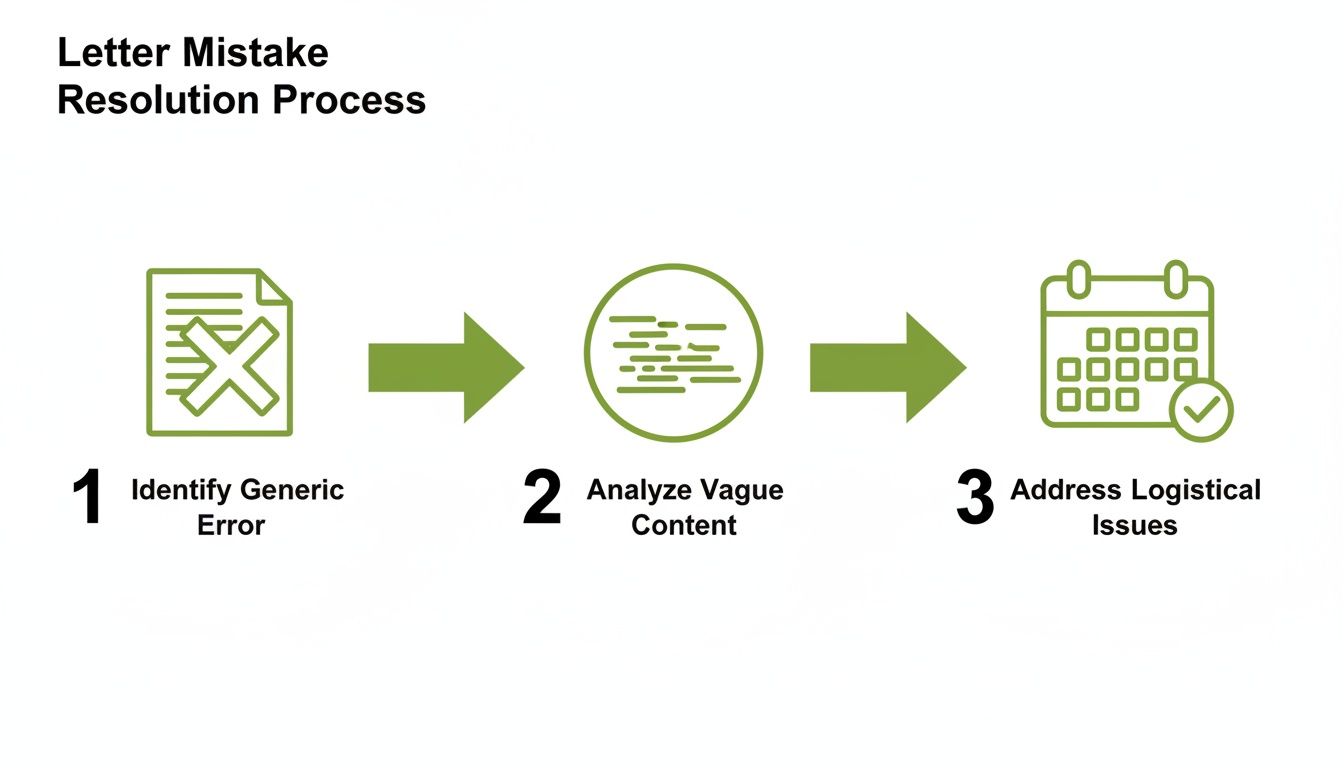
Generic, copy-pasted content? Vague endorsements that lack punch? Logistical slip-ups like a missing signature? These are all red flags that scream "rushed" or "disorganized" to a grant reviewer.
A Better Way to Manage It All
This is exactly where modern grant management platforms come in. Think of it as your central command center. Instead of digging through old inboxes and random folders, you have one place to store all your partner contact info, pull up past letters for inspiration, and see the status of every single request at a glance. It creates a single source of truth for your entire team.
These systems also handle version control, which is a lifesaver. You never have to worry about accidentally attaching an old draft to your final submission.
Here’s a quick look at how this plays out in the real world:
- You pinpoint the perfect person to write a letter. You can then use an AI assistant to help you draft a personalized outreach email, pulling their contact details right from your integrated list.
- Once they're on board, you can track the letter's progress on your grant timeline and even set up automated reminders as the deadline approaches.
- The final, signed letter gets uploaded and stored, ready to be dropped into your proposal package. No more last-minute panic or version-control nightmares.
When you have a solid system in place, you’re not wasting mental energy on administrative tasks. You can focus on what really matters: building genuine, lasting relationships with the people who support your work. As you explore these tools, you can learn more about the role of AI for grant writing and how it can give your mission an extra boost.
Ready to stop chasing down letters and start building a powerful, organized grant strategy? Fundsprout gives you the tools to manage your partnerships, track every deadline, and craft winning proposals with confidence. See how Fundsprout can help your nonprofit today.
Try 14 days free
Get started with Fundsprout so you can focus on what really matters.