Invitation for Bidding: A Guide for Nonprofits
Understand the invitation for bidding (IFB) process. Our guide helps nonprofits decode IFBs, compare them to RFPs, and write winning bids to secure funding.

Abdifatah Ali
Co-Founder
You find a strong opportunity for a building renovation, a food distribution contract, or a transportation service expansion. The scope fits your mission. The funding is real. Then you open the document and see a term many nonprofit leaders don’t deal with often: invitation for bidding.
That moment throws people because an IFB doesn’t read like a grant application. It reads like procurement. The buyer already knows what they want, how they want it delivered, and how they expect bids to be submitted. Your job isn’t to persuade them with a broad narrative. Your job is to prove that your organization can meet the exact requirement, at the exact format requested, without missing a single compliance step.
For nonprofits, that shift matters. An invitation for bidding can open doors to capital work, facility improvements, grant-funded construction, equipment purchases, and public contracts that sit outside the usual foundation or program grant pipeline. It can also punish sloppy submissions fast. That’s why nonprofit teams need a practical translation, not procurement jargon.
Why an Invitation for Bidding Could Be Your Next Big Win
A common scenario looks like this. Your organization finally has a path to replace an aging roof, build out a community kitchen, launch a facility upgrade, or bid on a funded service contract tied to public dollars. You expect a proposal process. Instead, you get a bid package full of drawings, forms, certifications, pricing sheets, and hard instructions.
At first glance, that can feel like bad news. It usually isn’t.
An invitation for bidding is often the clearest procurement path a nonprofit will ever face because the buyer is telling you exactly what they need. There’s less room for interpretation, less emphasis on branding language, and more weight on whether you can comply and deliver. For smaller nonprofits, that can be an advantage. You don’t need the flashiest pitch. You need a disciplined response process.
The opportunity is bigger than many leaders realize. Suppliers and contractors that respond effectively to invitations to bid can generate up to 69% of company revenue from winning those bids, according to Bangert’s overview of invitation to bid. That statistic comes from the contractor world, but the lesson carries over for nonprofits. If your organization operates facilities, manages capital projects, or provides services through public funding channels, bids can become a serious revenue and implementation pathway.
Practical rule: If the work is clearly defined and the buyer is focused on fairness, price, and compliance, don’t treat the IFB like a traditional grant. Treat it like a controlled process where precision wins.
That mindset shift changes everything. The teams that do well with bidding don’t wait for inspiration. They build repeatable habits, read every requirement, and submit exactly what the buyer asked for.
Decoding the Invitation for Bidding
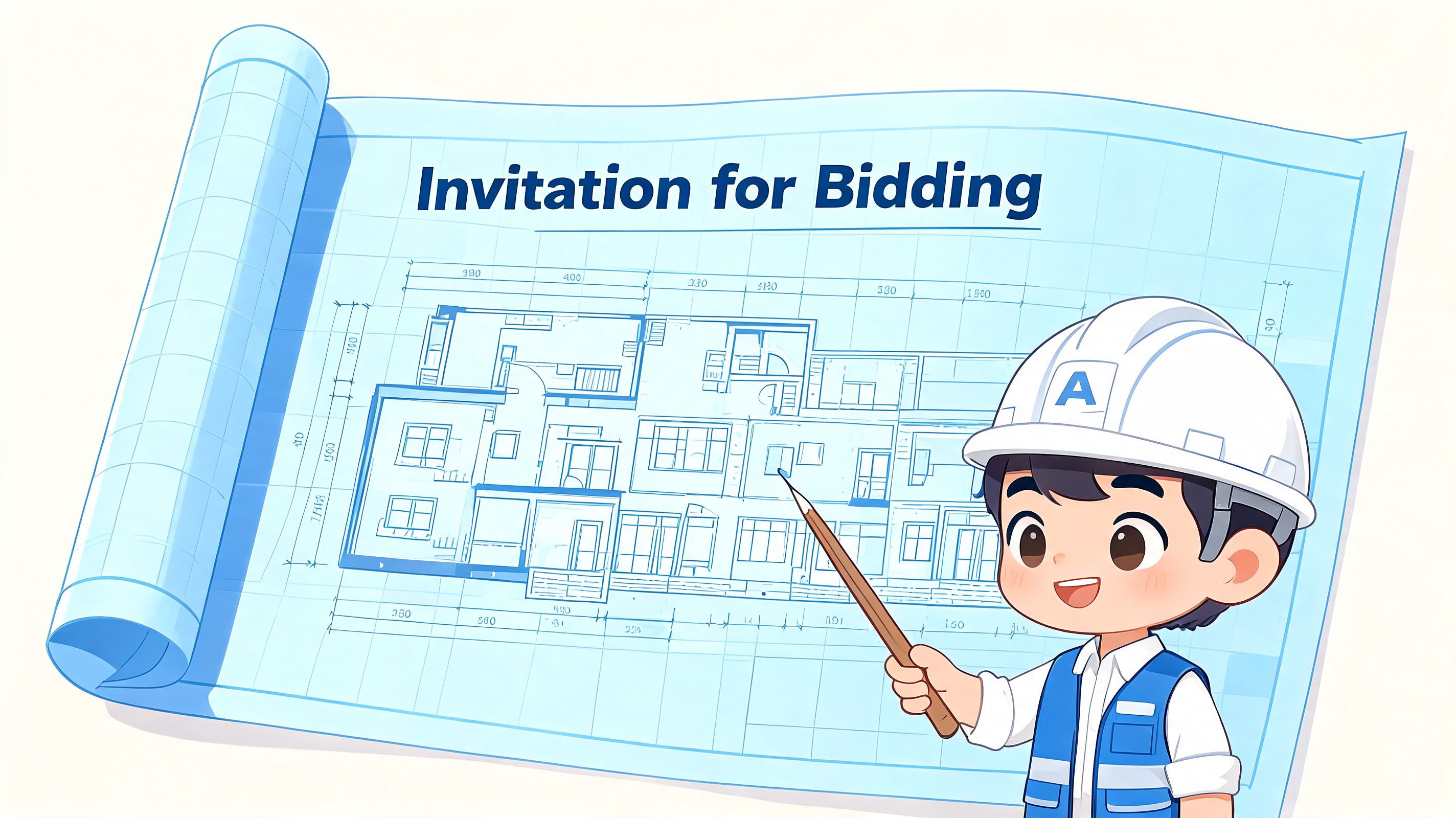
An invitation for bidding works like a shopping list for a very specific recipe. The buyer isn’t asking, “What would you cook?” They’re asking, “Can you provide these exact ingredients, in this exact quantity, under these exact conditions, and what’s your price?”
That’s the core idea.
In an IFB, the buyer usually knows the scope in advance. They’ve defined the goods, the service, the timeline, the forms, and the submission rules. In many public settings, they also advertise the opportunity broadly so multiple bidders can compete under the same conditions. The process is built to reduce bias, support transparency, and create an apples-to-apples comparison.
What an IFB usually includes
Most bid packages include a mix of operational, legal, and pricing documents. In practice, nonprofit teams should expect items like:
- Bid forms that must be completed exactly as issued
- Scope documents such as drawings, specifications, or service requirements
- Timeline details including start dates, completion expectations, or delivery schedules
- Submission instructions covering where, when, and how the bid must be delivered
- Security requirements such as a bid bond when required by the buyer
Procore’s explanation of the process notes that ITBs commonly include bid forms, project drawings, timelines, and bond requirements in formal procurement settings, especially construction and public projects, in its library guide to invitation to bid.
What buyers care about most
With an invitation for bidding, the buyer usually isn’t looking for a creative theory of change. They’re looking for a bidder who meets the specification and offers a competitive price while satisfying all mandatory conditions.
That’s why nonprofit leaders get tripped up when they bring a grant-writing mindset into a bid environment. A strong mission statement won’t rescue a missing attachment. A polished executive summary won’t fix a pricing form you altered. The IFB format rewards exactness.
In an IFB, your strongest writing skill is following instructions without improvising.
That doesn’t mean strategy disappears. It means strategy moves upstream. You decide whether to bid, whether you can perform, and how to organize internal review. Once you commit, the process becomes less about persuasion and more about disciplined execution.
IFB vs RFP vs RFQ Explained for Nonprofits
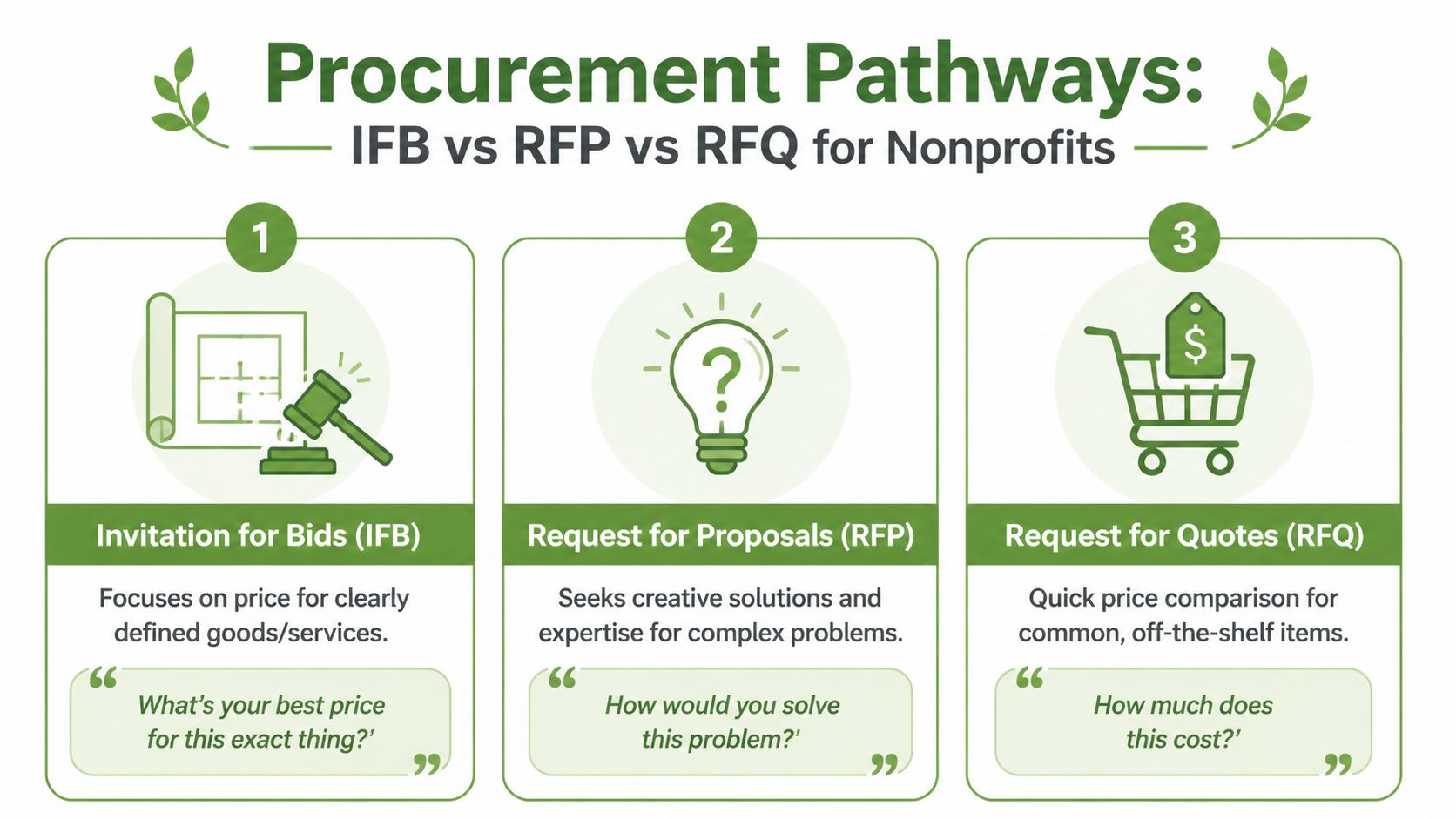
Nonprofit teams often use these terms interchangeably. That creates confusion, wasted time, and the wrong response strategy. An IFB, an RFP, and an RFQ may all be procurement documents, but they ask very different questions.
If you understand the question, you can build the right answer.
The simplest way to tell them apart
An IFB asks: what’s your price for this clearly defined work?
An RFP asks: how would you solve this problem?
An RFQ asks: what do you charge for a common good or service?
That sounds basic, but it changes how your team should read the package, assign responsibilities, and decide whether to pursue it at all.
A nonprofit example
Say your organization is developing a community center.
You might face an RFP first if a funder or government agency wants ideas for how the center should operate, what services it should prioritize, or how the project should be designed and managed.
You might face an IFB later when the plans are complete and the owner is ready to procure a contractor for a defined scope like site preparation, mechanical work, or roof installation.
You might face an RFQ when you need simple pricing on office furniture, standard equipment, or routine supplies.
The mistake I see most often is this: teams respond to every procurement document as if it were an RFP. They write too much, interpret too freely, and miss the cues about what the buyer values.
IFB vs. RFP vs. RFQ Which One Are You Facing
| Factor | Invitation for Bid (IFB) | Request for Proposal (RFP) | Request for Quotation (RFQ) |
|---|---|---|---|
| Primary purpose | Get a price for a clearly defined need | Get a proposed approach to a complex need | Get quick pricing for a standard item or simple service |
| Buyer already knows scope | Usually yes | Not always | Usually yes |
| Room for creativity | Limited | High | Very limited |
| Main evaluation focus | Compliance and price | Approach, qualifications, and price | Price and availability |
| Best nonprofit response style | Follow instructions exactly | Tailor a strategic narrative and work plan | Respond quickly and accurately |
| Common use case | Construction, defined services, equipment with fixed specs | Program design, consulting, technical support | Commodity purchasing |
For a deeper overview of adjacent procurement formats, Fundsprout’s guide to RFPs and RFQs for nonprofits is a useful companion when your team is sorting document types before assigning work.
The real decision test
Use this quick internal filter before you start drafting:
- If the scope is fixed: Treat it like an IFB. Precision matters more than storytelling.
- If the buyer wants your method: Treat it like an RFP. Your approach and expertise carry more weight.
- If it’s a straightforward price check: Treat it like an RFQ. Speed and accuracy matter most.
A lot of procurement frustration comes from solving the wrong problem. Read the document to see whether the buyer wants compliance, ideas, or a quote.
That distinction saves time and protects your team from submitting polished responses that fail because they answered the wrong question.
Navigating the Public Procurement Lifecycle
A nonprofit ED usually feels the pressure at the same moment. Program staff see a contract that fits the mission. Finance sees tight margins and reporting risk. Operations sees a deadline with no room for mistakes. That tension is normal in public procurement because the process is built to protect public and grant-funded dollars, not to make bidding easy for applicants.
For nonprofit teams, the key shift is this: an IFB is not just a funding opportunity. It is a controlled process with fixed checkpoints, formal records, and limited discretion. The U.S. General Services Administration describes sealed bidding as a method used when requirements are clear, award can be based mainly on price and price-related factors, and discussions with bidders are generally unnecessary, as outlined in its overview of sealed bidding under FAR Part 14. That structure matters for nonprofits because it rewards administrative discipline as much as mission alignment.
What actually happens from release to award
Most IFBs move through the same five stages, even if the forms and portals differ by agency or funder.
Solicitation development
The buyer sets the specifications, contract terms, required certifications, pricing format, and submission instructions. If the documents are vague, bidders price different assumptions and the process gets messy. If the documents are clear, everyone is competing against the same scope.Public notice or bid distribution
Government entities usually post the opportunity publicly or send it to registered vendors. Some grant-funded and private projects use invited bid lists instead. At this stage, nonprofit teams often lose before they begin. If your organization is not registered in the right systems, tracking opportunities consistently, or using tools to screen fit quickly, you will miss bids that were winnable.Question period and addenda
This step gets overlooked, but it is where careful bidders protect themselves. Buyers answer written questions and may issue addenda that change deadlines, quantities, specifications, or forms. A bid based on the original package can become nonresponsive if your team misses an update.Bid submission and opening
The submission window is strict. Portal timestamp, attachment naming, bond requirements, signatures, and pricing sheets all matter. In construction-heavy procurements, tools such as Exayard construction bid software can help teams organize documents and subcontractor inputs, but the nonprofit still owns final compliance.Responsiveness review, responsibility review, and award
Procurement staff usually check whether the bid followed the rules before they compare prices. After that, they assess whether the bidder can perform the work. Only then does the award move forward under the stated standard, often to the lowest responsive and responsible bidder.
Where nonprofit teams get tripped up
Nonprofits often come from grantmaking and donor environments where clarification happens through conversation and context matters a lot. Formal procurement allows much less of that. The agency has to document equal treatment across bidders, so casual outreach rarely helps and sometimes is prohibited.
The practical risk is internal, not theoretical.
- Program staff assume a minor form issue can be fixed later.
- Finance gets pulled in too late to validate pricing.
- Leadership approves the pursuit before checking contract terms.
- No one owns the addenda log, so the team bids from an outdated package.
I have seen capable organizations lose for reasons that had nothing to do with service quality. They missed a required attachment, priced from the wrong version of the scope, or submitted from a portal account that was not fully registered. Those are preventable losses.
How to manage the lifecycle like a serious bidder
Treat the procurement lifecycle as an internal operations process, not a writing assignment.
Set one person to own compliance. Set one person to own pricing. Set one person to do the final check against the solicitation package and every addendum. That separation sounds simple, but it protects against the most common nonprofit failure mode, where everyone assumes someone else reviewed the details.
It also helps to borrow response discipline from RFP work without turning an IFB into a narrative exercise. Teams that already use a structured nonprofit proposal response process usually handle calendars, roles, document control, and review workflows better, even when the procurement format is more rigid.
The organizations that win consistently are not always the largest. They are the ones that treat procurement as a repeatable system. They register early, monitor opportunities regularly, read every addendum, and submit as if a compliance officer will inspect every line, because one will.
How to Write a Winning Bid Response
Winning an IFB is usually less about elegant writing and more about meticulous compliance. That sounds unglamorous, but it’s the truth. In IFB processes, bid responsiveness and responsibility are critical technical thresholds, with non-compliance leading to automatic disqualification in 100% of cases per standard guidelines, according to the MCLA guide for drafting IFB and RFP documents.

That one fact should reshape how your team approaches the entire bid.
Start with a real go or no-go decision
Before anyone starts filling out forms, stop and ask a few blunt questions.
- Can we perform the work as specified? If the scope requires capacity you don’t have, don’t assume goodwill will bridge the gap.
- Can we meet the submission requirements exactly? Some teams are operationally capable but administratively weak.
- Can finance support the pricing and documentation on time? Many bids fail because program staff commit before finance has validated the numbers.
- Do we understand the contract terms? If legal obligations, insurance, or bonding requirements don’t fit your organization, identify that before the final day.
A weak-fit bid consumes staff time, distracts from stronger opportunities, and can damage credibility with the buyer.
Understand responsive versus responsible
These terms sound similar. They are not.
A responsive bid follows the instructions. It includes the required forms, signatures, pricing format, certifications, deadlines, and attachments. It answers what the solicitation asked for without unauthorized changes.
A responsible bidder has the capacity to do the work. That may involve financial records, organizational background, staffing qualifications, project plans, prior performance evidence, or operational readiness.
Here’s the practical distinction:
| Term | What it means in practice | Common nonprofit failure point |
|---|---|---|
| Responsive | You submitted the bid correctly | Missing forms, altered templates, unsigned certifications |
| Responsible | You can actually carry out the contract | Weak financial documentation, unclear staffing, thin operational plan |
Many nonprofit teams focus only on the first and underestimate the second. Public buyers don’t just want a clean packet. They want confidence that you can deliver.
Build a compliance matrix before you draft
Don’t read an IFB casually. Break it apart.
Create a checklist with every requirement pulled into one place. Some teams use a spreadsheet. Others use proposal software. The tool matters less than the habit.
Include:
- Every required document listed in the solicitation
- Submission instructions such as file names, sealing requirements, or delivery method
- Deadline details including date, time, and timezone if stated
- Pricing rules such as line-item structure or no-alteration instructions
- Qualification evidence such as financials, resumes, or licenses
- Amendments and addenda issued after the original release
For construction-related work, specialized tools can help operations-heavy teams manage drawings, subcontractor coordination, and scope tracking. If your nonprofit regularly bids facility or capital projects, Exayard construction bid software is one example of a tool worth reviewing alongside your internal grant and procurement workflow.
Field note: The bid response should never be assembled from memory. It should be assembled from a requirement-by-requirement checklist.
What usually works
Strong IFB responses tend to share the same habits:
- They preserve the buyer’s structure. Teams don’t rewrite forms or change line items unless the solicitation allows it.
- They assign one owner for compliance. Shared responsibility often becomes no responsibility.
- They validate pricing against scope. Operations, finance, and leadership all review before submission.
- They track addenda carefully. Amendments often change requirements in ways that affect responsiveness.
- They submit early when possible. Last-minute uploads and deliveries create avoidable risk.
What usually does not work
These patterns sink bids repeatedly:
- Treating the IFB like a narrative proposal. Long explanations rarely fix missing compliance items.
- Letting one person manage the entire package alone. Good bids require cross-functional review.
- Assuming a minor omission can be cured later. In formal bidding, that assumption is dangerous.
- Waiting until the last day to read the attachments. The critical instruction is often buried in an exhibit, not the cover page.
If your team needs a simpler primer on response mechanics before taking on a formal bid, Fundsprout’s resource on how nonprofits can respond to RFPs can help newer staff build the muscle of structured solicitation review.
The best bid teams aren’t the most poetic. They’re the most organized.
Finding and Analyzing Bids with Fundsprout
The hardest part for many nonprofits isn’t just writing the response. It’s finding the right opportunities early enough to prepare, then turning a dense bid package into a workable action plan.
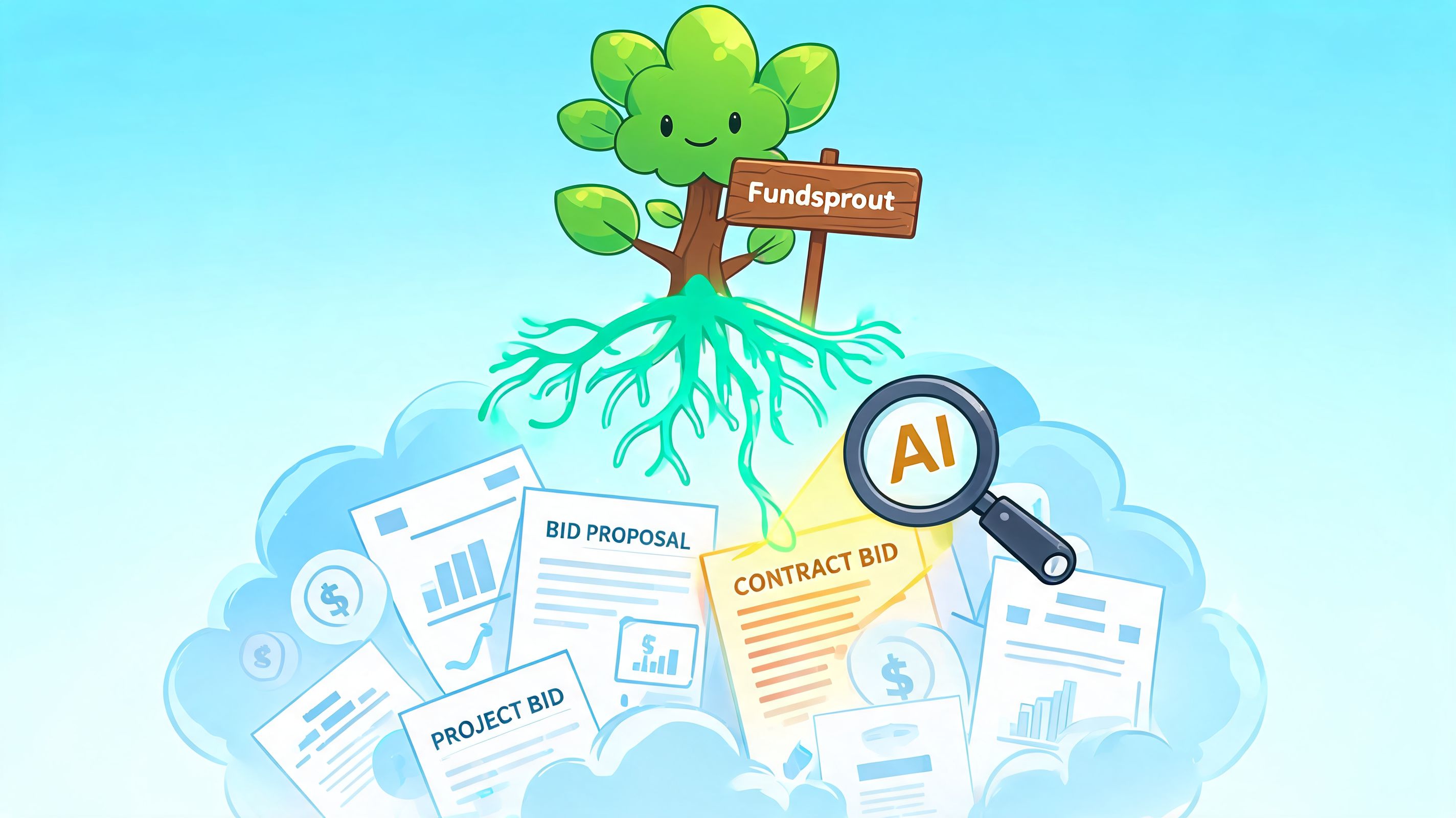
That’s where a platform built for mission-driven funding work can help. Instead of relying on scattered manual searches, nonprofits can use Fundsprout to discover relevant public and institutional opportunities across federal, state, and local channels through its funding discovery workflow. That matters because bid opportunities often sit outside the places grant teams check every day.
The second problem is compliance analysis. An IFB can contain instructions across the main solicitation, attachments, exhibits, pricing forms, and later amendments. Teams lose time when they manually hunt for requirements each time they reopen the file.
A better way to use technology on bids
Use an analyzer to pull out the operational facts first:
- Required forms and certifications
- Submission deadlines and delivery instructions
- Mandatory attachments
- Scope items that affect pricing
- Evaluation and qualification language
- Any references to bonds, insurance, or financial documentation
That creates a working checklist your team can assign. Development can own narrative or organizational materials if any are needed. Finance can own pricing support. Operations can validate delivery capacity. Leadership can review representations and authorizations.
Technology won’t make a weak bid strong. It will make a complex bid more manageable.
That’s the value for nonprofits. Better visibility, faster triage, and fewer compliance misses.
From Bidding to Building Your Mission
An invitation for bidding can look cold compared with a grant application. The language is stricter. The process is less relational. The room for interpretation is narrower.
That doesn’t make it inaccessible.
For nonprofits, bidding is a learnable system. Once your team understands the logic, the process becomes much less intimidating. You stop asking, “How do we make this sound compelling?” and start asking better questions. Can we perform the work? Can we prove it? Can we submit exactly what the buyer requires? Those are operational questions, and nonprofit leaders answer operational questions every day.
The strategic value for nonprofit growth
A mature nonprofit funding strategy shouldn’t rely on one lane. Grants matter. Individual giving matters. Contracts and competitive bids can matter too, especially when your mission includes facilities, infrastructure, public service delivery, or funded capital improvements.
That’s why invitation for bidding deserves a place in the executive director’s toolkit.
- It diversifies revenue pathways
- It builds organizational discipline
- It opens access to larger scoped work
- It strengthens cross-team coordination between development, finance, and operations
The organizations that succeed here usually aren’t the biggest. They’re the ones that learn the rules, build a repeatable review process, and treat compliance as part of mission delivery instead of separate from it.
You don’t need to become a procurement lawyer to compete. You need a practical process, a clear decision framework, and a team that respects the details.
If your organization is ready to find more bid and grant opportunities without losing control of compliance, Fundsprout can help you build a stronger pipeline, analyze complex solicitations, and keep every requirement organized from first review to final submission.
Try 14 days free
Get started with Fundsprout so you can focus on what really matters.