Winning Grants for Food Banks 2026: Your Essential Funding Guide
Unlock vital funding with our 2026 guide to grants for food banks. Find opportunities, write winning proposals, & manage awards to fight food insecurity.

Abdifatah Ali
Co-Founder
Relying on individual donations alone feels like a constant scramble for most food bank leaders. It’s a feast-or-famine cycle that makes real planning nearly impossible. Grants for food banks are the lifeline that breaks this cycle, offering the stable, predictable funding you need to shift from just putting out fires to building a truly sustainable organization.
This stability is what empowers you to build a more resilient local food system and seriously scale your impact on the community.
From Treading Water to Making Waves: Why Grants Matter
If you’re running a food bank, you know the feeling all too well. One week, a big food drive fills the warehouse to the brim. The next, you’re staring at empty shelves, wondering how you’ll meet the growing need. This rollercoaster of unpredictable donations forces you to operate in survival mode, making it incredibly difficult to think beyond the next distribution day.
That’s precisely why building a grant-seeking strategy isn’t just another administrative chore—it’s the backbone of your long-term vision. Grants change the entire equation, moving your funding from a question mark to a reliable asset.
Moving Beyond Crisis Management
With predictable grant funding, you can finally lift your head up and plan months, or even years, down the road. Instead of constantly worrying about covering next month's rent or fuel costs, you can start investing in the infrastructure and programs that attack the root causes of hunger.
Think about a common scenario: a mid-sized food bank gets plenty of fresh produce donations but struggles to distribute it all before it spoils. Donations cover the basics, but there's never enough left over for capital improvements. A single, well-written capacity-building grant could be a complete game-changer.
- Refrigerated Trucks: A grant could fund a refrigerated vehicle, allowing you to safely get fresh fruits, vegetables, and dairy out to families in food deserts.
- Inventory Software: You could implement a real inventory management system, like one from Oracle NetSuite, to track expiration dates and streamline distribution. This simple tech upgrade drastically reduces waste.
- Expanded Cold Storage: A grant might cover the cost of a new walk-in cooler or freezer, which means you can finally say "yes" to those large-scale perishable donations from grocery partners and local farms.
A single, well-targeted grant doesn't just provide money; it unlocks potential. It’s the difference between merely distributing canned goods and being able to deliver nutritious, fresh meals that tackle nutritional inequality head-on.
Building a Resilient, Scalable Operation
Grants are what allow you to build an operation that can withstand unexpected challenges. We saw this play out on a global scale recently. In 2024, food banks in the Global FoodBanking Network served 38 million people by distributing a record-breaking 762 million kilograms of food. That’s a 17% increase from the year before, driven largely by strategic investments that made their supply chains more agile and responsive.
A smart grant strategy allows you to replicate that kind of success right in your own community. It gives you the resources to launch new programs, hire staff with specialized skills, and build stronger partnerships with local growers and retailers. Ultimately, grants provide the foundation you need to not only feed more people but to do it more effectively and with greater dignity. It's how you go from an organization that just responds to hunger to one that is actively working to end it.
How to Find Grant Opportunities That Actually Fit
If you’ve ever spent weeks pouring your heart into a grant proposal only to get a rejection letter, you know the frustration. It’s a massive drain on a small team’s already stretched resources. The most successful food banks aren't the ones applying for every grant out there; they're the ones who find the right grants—where their mission, programs, and community perfectly align with what a funder wants to support.
It's time to stop the "spray and pray" approach. Shifting to a focused, strategic search turns grant seeking from a constant headache into a manageable process. You'll start thinking like a funder, learning to quickly spot the high-potential opportunities and politely decline the long shots. This ensures your team’s precious energy is invested where it counts.
This strategic approach is what takes a food bank from just surviving to truly thriving, turning a crisis into sustainable community impact.
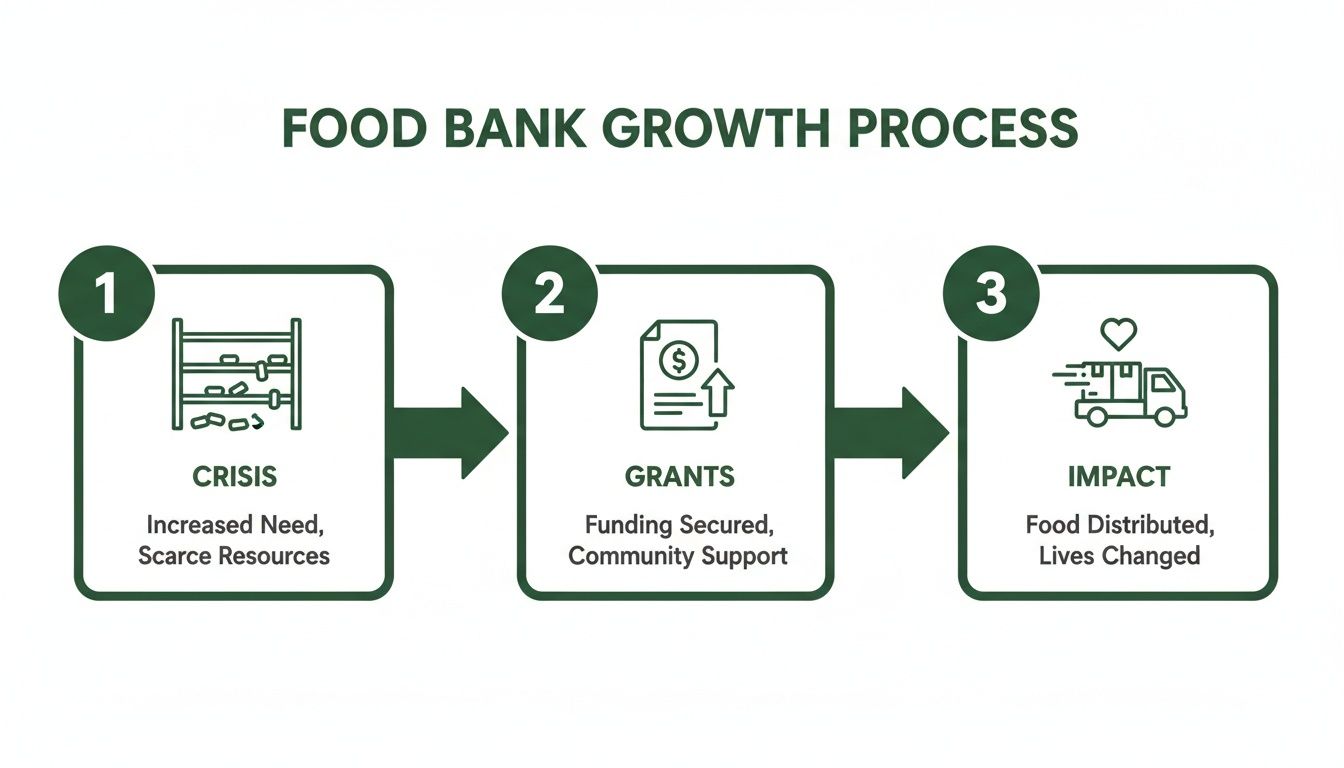
As you can see, grants are the fuel that moves an organization from facing empty shelves to delivering truckloads of food. It’s a journey from reacting to a crisis to building long-term food security.
Where to Start Your Search for Food Bank Grants
A solid grant strategy involves looking in several places at once. Federal, state, and foundation funders all operate on different timelines and have unique priorities. By casting a wide but targeted net, you build a more resilient funding pipeline.
Federal Funding: Your first stop should be Grants.gov, the official portal for all federal opportunities. The key here is to use specific search terms. Instead of just "food," try "food security," "nutrition assistance," or "community food projects." You can also set up saved searches to get email alerts when agencies like the USDA post new grants.
State and Local Governments: Don't overlook what's happening in your own backyard. Many state agencies fund anti-hunger work directly. For example, the California Association of Food Banks often promotes state-level opportunities like the SUN Bucks program. Dig into your state's Department of Agriculture or Social Services websites to see what's available.
Community Foundations: For many local food banks, this is the sweet spot. Community foundations are chartered specifically to support the geographic area they serve, which means you’re already aligned on that front. Their applications are often less burdensome than federal ones, making them a fantastic place to start if you're new to grant writing.
Uncovering Corporate and Foundation Gems
Beyond government funding, a huge amount of support comes from corporate and private foundations. Many large companies have dedicated philanthropic arms focused on strengthening the communities where their employees live and work.
For instance, The PG&E Corporation Foundation recently awarded a $250,000 grant to support California food banks, and the Gilead Foundation committed over $3 million to fight food insecurity. These aren't just one-offs; they're part of sustained corporate responsibility programs. Head to the websites of the largest employers in your region and look for pages titled "Corporate Giving," "Foundation," or "Community Investment."
My Favorite Tip: Check the annual reports or "Our Funders" pages of other nonprofits in your area—not direct competitors, but organizations working on related issues like housing or healthcare. See who is giving to them. This is one of the quickest ways I've found to identify funders already invested in your community.
As you find potential funders, start a simple prospecting spreadsheet. You’ll want to track the funder's name, deadline, potential award size, and—most importantly—their stated mission and funding priorities. A simple "yes/no" column on alignment will help you instantly see where to focus.
By concentrating on these well-matched opportunities, you stop wasting time and dramatically increase your chances of success. And if you want to broaden your search, our guide on available grants for nonprofit organizations is a great place to discover even more possibilities.
Building Your Grant Application Toolkit
A fantastic grant opportunity lands in your inbox, but the deadline is just two weeks away. Panic sets in. Where is the latest board list? Who has the final numbers for the operating budget?
We’ve all been there. The most successful food banks I’ve worked with avoid this fire drill by treating grant readiness as a constant state of being, not a last-minute scramble. Getting your house in order long before a deadline ever appears is the real secret to a less stressful, more successful application cycle.
It’s about building an organizational "go-bag." When that perfect grant pops up, you won’t waste precious days digging through files. You’ll be ready to focus on what actually wins funding: telling a powerful story about your impact.
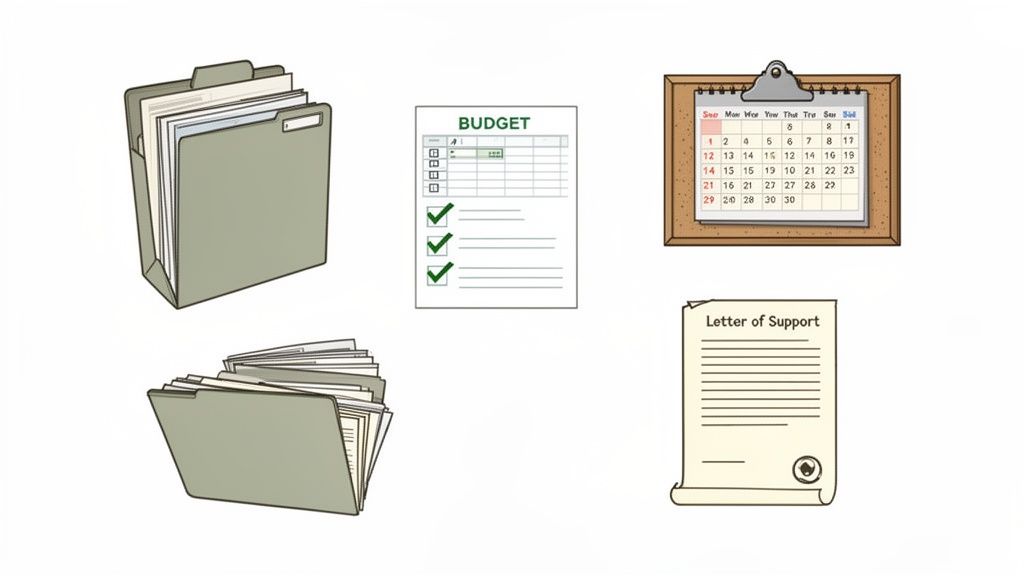
Gathering Your Core Organizational Files
Before you can tell your story, you need to prove who you are. Funders need to see that you're a legitimate, well-run organization. Think of these as your non-negotiables—the documents almost every single grant application will require.
The best practice is to keep these updated and stored in a shared digital folder (like a Google Drive or Dropbox) where your team can always find the latest versions.
Essential Grant Proposal Document Checklist
To get you started, here is a checklist of the standard documents you'll need for most grant applications. Having these prepared in advance is a game-changer.
| Document Type | Purpose | Key Information to Include |
|---|---|---|
| IRS Determination Letter | Proves your 501(c)(3) status. | A clean, scanned copy of the official letter. |
| Mission & Vision Statements | Clearly states your organization's purpose. | A powerful, single paragraph that gets to the heart of what you do. |
| Board of Directors List | Shows community leadership and oversight. | Names, professional affiliations, and their roles on your board. |
| Organizational Chart | Illustrates your team's structure. | A simple diagram of staff roles and reporting lines. |
| Annual Operating Budget | Provides a financial overview of your food bank. | The complete budget for the current fiscal year. |
| Financial Statements | Demonstrates financial health and accountability. | Your most recent audit or review, Form 990, and a current balance sheet. |
Having these documents ready will streamline your application process, allowing you to focus on crafting a compelling narrative rather than hunting down paperwork.
A robust application toolkit must include clear financial documentation. Knowing how to present your organization's financial health, much like mastering balance sheets for small business, is crucial for impressing funders. Your financial story has to be just as compelling as your program’s story.
Prepping Your Program and Supporting Materials
Once you have the core files handled, the next step is to prepare the materials that bring your work to life. These documents add the color, evidence, and context that will make your request stand out. While you'll need to tailor them for each specific grant, having strong templates ready is a massive time-saver.
Here are some key supporting documents to work on:
- Standard Program Descriptions: Get a one-page summary drafted for each of your key programs (e.g., your mobile pantry, backpack program, or senior boxes). Detail the need it addresses, the activities involved, and who you serve.
- Boilerplate Budget Narrative: Create a template that explains your standard expense categories, like personnel, food acquisition, and transportation. You can then just plug in the numbers for each proposal. Our grant budget template is a great starting point.
- Key Staff Resumes or Bios: Keep updated, two-page resumes or short professional bios for your Executive Director and key program managers.
- Letters of Support: Don't wait for a deadline to be on the clock. Proactively ask for general letters of support from key community partners—think of the school principal you work with or the local health clinic that refers clients to you.
This level of preparation is what separates amateur efforts from professional grant-seeking operations, especially when you're going after bigger, more complex funding.
The scale of funding for food security is enormous. For example, the United Nations World Food Programme secured US$6.52 billion for its 2025 operations in just the first few weeks of the year. These multi-year contributions highlight a global standard for sustained aid that all food banks, regardless of size, should strive to build through diversified grant strategies. You can see how these large-scale contributions work by exploring the WFP's 2025 funding updates.
When your toolkit is ready, you move from a reactive position to a proactive one. You'll be able to confidently seize opportunities, turning the grant application process from a dreaded task into a strategic, mission-advancing activity.
Turn Your Data Into a Story That Funders Can't Ignore
Let's be honest: a grant proposal is a sales pitch. But you're not selling a product; you're selling confidence. You're asking a funder to trust that their investment in your food bank will make a real, tangible difference in people's lives. The way you do that is by telling a story.
This is where your hard-won data—all those pounds of food and families served—meets the human heart of your mission. A winning proposal takes those numbers and weaves them into a narrative that frames the problem of hunger in your community and positions your organization as the clear, effective solution. It's about making a program officer feel genuinely excited to champion your work.
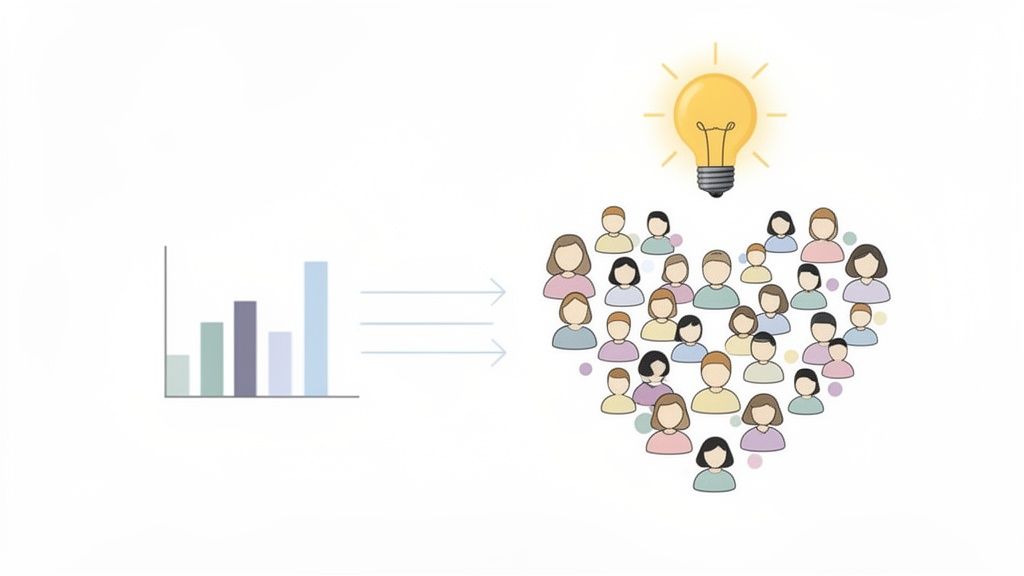
Go Beyond the Numbers
Every grant reviewer has seen the national hunger statistics a thousand times. They know the problem is big. What they don't know is what it looks like on the ground, in your town. Your job is to paint that picture so vividly they can't look away.
Take a look at this common but uninspired approach:
The Generic:
"Our county has a food insecurity rate of 14%, which is above the national average. We distribute over 500,000 pounds of food annually to address this need."
It’s factual, but it has no pulse. It doesn't explain why your work matters more than anyone else's.
Now, let's breathe some life into it:
The Compelling:
"In our community, 1 in 7 families faces the constant stress of choosing between rent and groceries. This isn't just a number for the seniors on fixed incomes in the Northwood neighborhood or the kids at Elm Street Elementary—it's a daily reality. Our mobile pantry isn't just delivering food; it's delivering relief, ensuring a parent doesn't have to water down the milk to make it last the week."
See the difference? We used the same core data but gave it a face and a location. The problem becomes immediate, personal, and much more urgent.
Show Them the "So What?"
Your story needs to be built on a foundation of solid proof. Funders want to see both what you do (your activities) and what changes as a result (your outcomes). Many nonprofits get stuck on the first part, but it's the second part that truly gets funders excited.
Outputs (The "What"): These are your activity numbers. They're essential, but they're not the end of the story.
- Pounds of food distributed
- Number of families served
- Number of volunteer hours logged
Outcomes (The "So What?"): This is the measurable change you create. This is where the magic happens.
- Instead of just "pounds distributed," show increased access to nutritious food: "Our partnership with local farms allowed us to increase fresh produce distribution by 40%, ensuring 800 families received fruits and vegetables every single week."
- Instead of "families served," show improved health: "By providing low-sodium and diabetic-friendly food boxes, 65% of clients surveyed at our partner health clinic reported they could better manage their chronic conditions."
- Instead of "volunteer hours," show strengthened communities: "Our backpack program provides weekend meals for 300 students, and the school has already reported a 15% decrease in student absences on Mondays."
Your narrative must always connect the dots for the funder. The formula is simple: Here's the problem. Here's our solution. And here is the specific, measurable change your investment will make possible.
Make Your Budget Tell a Story
Think of your budget as the financial chapter of your narrative, not just a spreadsheet. Every single line item needs a justification that connects it directly to the outcomes you've promised. You have to explain the "why" behind every dollar.
Don't just write: "Transportation - $15,000." That's a red flag for a lazy application.
Instead, justify it: "The requested $15,000 for transportation covers a year's worth of fuel and maintenance for our refrigerated truck. This one vehicle is the backbone of our Farm to Family program, allowing us to rescue 10,000 pounds of fresh produce monthly from local growers and deliver it to three rural communities, serving an estimated 500 households in a recognized food desert."
This explanation makes the $15,000 feel like a strategic investment, not just another cost. You've tied the expense directly to the activity (rescuing produce) and the outcome (serving families in food deserts), showing you're a responsible steward of their money.
It’s also worth noting that strong community backing can be a powerful piece of evidence in your grant narrative. For instance, U.S. food banks saw remarkable fundraising stability in 2024, with the average donor value hitting a new high of $409—a 5% increase year-over-year. Citing this kind of support from individual givers proves that the community already trusts and values your work. You can find more data like this when you explore the 2025 Food Bank Benchmark report.
To pull this all together, platforms like Fundsprout can be a helpful resource. They can analyze a funder's RFP to help you create a proposal outline and generate narrative drafts that weave your data and impact into a single, powerful story. This ensures your application connects with funders on both an emotional and a logical level.
Managing Your Grant and Securing Future Funding
That email finally lands in your inbox: "Congratulations, you've been funded!" It's a huge win, and you absolutely should celebrate. But in the world of grants for food banks, this isn't the finish line. Think of it as the starting gun for the next, equally important race.
How you manage this grant—your execution, your reporting, your communication—is what separates a one-time check from a long-term funding partnership. This is your chance to show the funder they made the right call. You're proving you're a reliable steward of their money and a powerful force for good in your community. Get this part right, and the renewal process feels less like a competition and more like a collaboration.
Mastering Post-Award Management
Once that grant agreement is signed, it’s all about execution. You made a plan, and now your job is to bring it to life with precision. This means tracking your spending and your impact right from day one. Funders need to see accountability, and a straightforward, consistent system is your best tool.
You don't need fancy, expensive software for financial tracking. Honestly, a well-organized spreadsheet that logs every expense against your approved budget categories works perfectly for most small nonprofits. The secret is just being meticulous. Every dollar has to be documented and clearly tied back to the grant's goals.
The same rigor applies to tracking your impact. You promised to deliver specific results, and now you have to show your work.
- Set up a simple data collection process. This could be a check-out log at your pantry or a quick survey for families at a mobile distribution. Just start gathering the numbers you need to tell your story.
- Track your outputs and your outcomes. It's crucial to count both what you do (pounds of food distributed, number of families served) and what changes because of it (more clients reporting access to fresh produce, fewer missed meals).
- Put someone in charge. Designate one person on your team to own the grant tracking and reporting. This simple step prevents crucial details from slipping through the cracks and ensures your data is consistent.
Your grant report isn't just a boring requirement—it's your single best piece of marketing for the next funding cycle. It’s your opportunity to turn raw data into a powerful success story that makes the funder feel great about their decision to support you.
Nurturing Your Funder Relationship
I've seen it happen too many times: a food bank wins a grant and then goes completely silent until the first report is due. This is a massive mistake. The program officer who advocated for your proposal is your most valuable ally inside the foundation.
Your goal is to build a genuine partnership, not just a transactional relationship. This doesn't mean spamming their inbox. It’s about strategic, thoughtful communication.
Did you hit a major milestone ahead of schedule? Send a brief, celebratory email. Did the local news feature your work? Share the link. These small, positive touchpoints keep your organization on their radar and give them concrete examples of their investment at work. For a deeper dive, our guide to grant management best practices has even more strategies for this.
Turning a Grant Into a Lasting Partnership
The best way to think of your program officer is as a partner in your mission. They are invested in your success. When you keep them in the loop and are upfront about your progress—even when you hit a snag—you build a deep well of trust.
When it's time to ask for a renewal, that relationship is priceless. With a proven track record of success and a history of open communication, you make it easy for them to champion your cause internally. They’re no longer betting on an unknown quantity; they're advocating for a proven partner.
This is how the most successful food banks lock in funding year after year, creating the financial stability they need to truly make a dent in hunger.
Your Top Questions About Food Bank Grants, Answered
If you're running a food bank, the idea of chasing grants can feel like one more thing on an already-full plate. It’s a world that seems complex and intimidating, especially when you're focused on the urgent work of getting food to families.
Over the years, I've seen the same questions come up again and again from leaders at small-but-mighty nonprofits. Let's tackle those head-on with some straight-to-the-point answers and practical advice from the field.
Can We Still Win Grants with a Small Team?
I hear this constantly from smaller food banks, and my answer is always a resounding yes. It's a common myth that you need a full-time, dedicated grant writer to even have a shot. The truth is, plenty of small organizations win grants every year.
The trick is to be strategic. Don’t start by trying to land a huge, complicated federal grant. Instead, look local. Your community foundation, the bank down the street, and regional businesses are often the best places to begin. Their applications are usually less cumbersome, and they have a built-in reason to care about your success—it’s their community, too.
Your secret weapon here is a team approach. You don't need a single expert; you just need to divide and conquer.
- Play to your strengths. Maybe your director is a great storyteller who can write the main narrative. Your numbers-savvy board treasurer can tackle the budget, and a detail-oriented volunteer can handle proofreading and attachments.
- Lean into your story. Local funders, in particular, are often more moved by a clear mission and powerful evidence of your impact than by a proposal filled with jargon. Authenticity wins.
- Build momentum. Start by landing a few smaller grants. Every "win" becomes proof of your credibility, making you a much stronger candidate for bigger grants down the road.
What Is the Biggest Mistake Food Banks Make?
The most common and costly mistake I see is what I call the "spray and pray" approach. This is when an organization creates one generic proposal and blasts it out to dozens of funders, hoping something will stick. It almost never works, and it wastes an incredible amount of time.
Grant seeking isn't a numbers game; it's a matchmaking game. Your proposal isn't really about what you need. It’s about showing how funding your work helps a foundation achieve its goals.
This means you have to do your homework before you write a single word. Dive into a funder’s website. Read their annual report. Most importantly, look at who they’ve given money to in the past. If a foundation focuses on arts education, your request for a new freezer is a non-starter. But if you run a backpack program providing weekend meals for kids, and they fund youth wellness initiatives? Now you've got a match.
Before starting any application, ask yourself this: "Why should this specific funder give money to our specific project?" If you don't have a clear, compelling answer, move on. Your time is too valuable to waste on a long shot.
How Do We Measure Impact in a Compelling Way?
Saying you distributed 500,000 pounds of food is fine, but it doesn't tell the full story. That's an output—a measure of your activity. Funders today want to see outcomes—the tangible change that happened because of your work.
To make your case truly convincing, you have to pair your hard data with human stories. This one-two punch shows both the scale of your operation and the real-world difference it makes.
Think about upgrading your metrics like this:
- Go beyond just pounds. Start tracking the percentage of fresh produce or protein you distribute. This shows a commitment to nutrition, not just filling stomachs.
- Count people, not just food. How many households are you serving? Can you break that down by the number of children or seniors reached?
- Tell your partners' stories. If you supply smaller pantries, get data from them. How many new families were they able to serve because of your food deliveries? That's your impact, too.
- Find the human angle. Pair your statistics with a powerful, anonymous quote from a client. A short story about a parent who can now afford their child's medication because your pantry freed up their grocery budget? That’s what sticks with a grant reviewer.
When you combine the "what" (your data) with the "so what" (the story), you transform a dry report into an irresistible case for support.
What Should We Do After a Grant Rejection?
It stings to get a "no," but take it from me: rejection is a completely normal part of this process. The key is to see it not as a failure, but as free feedback. Don't just file the letter away.
First, politely reach out and ask for feedback. Not every foundation has time for this, but many program officers are willing to share a few pointers if you ask professionally. Was your budget confusing? Was the project simply not a fit for their current priorities? Their insights are gold.
Next, use that feedback immediately. If a funder found your impact metrics unclear, that's a signal to strengthen that section for all future proposals. A rejection can reveal a weak spot in your core materials that you can now fix.
Finally, keep the relationship warm. Send a thank-you note to the program officer for their time. Make sure they're on your email newsletter list so they can continue to see the great work you're doing. The fit might not have been right this year, but you might be perfect for a new initiative next year. Staying on their radar in a positive way keeps that door open.
At Fundsprout, we believe that every mission-driven organization deserves the resources to thrive. Our AI-powered platform helps you find the right grants, write winning proposals, and manage your funding with confidence. Stop the endless search and start building your success story today at https://www.fundsprout.ai.
Try 14 days free
Get started with Fundsprout so you can focus on what really matters.