How to Win Grant Money for Homeless Programs
Secure grant money for homeless services with our playbook. Learn to find funding, write winning proposals, and manage compliance for your nonprofit.


Abdifatah Ali
Co-Founder
Your team is probably living a familiar cycle. Program staff need answers now. Outreach can't pause. Shelter costs don't wait. Clients need transportation, case management, behavioral health referrals, landlord engagement, and a path to permanent housing. At the same time, someone on your side is opening yet another grant portal, trying to figure out whether the opportunity is even a fit.
That's why most advice about grant money for homeless programs falls short. A list of grant names doesn't solve the problem. The problem is operational. You need to know which funding stream fits your model, whether your organization can access it directly, how to shape a budget that reviewers will trust, and how to build reporting systems before an award lands.
The upside is that grant strategy matters at the community level, not just inside your development calendar. A major U.S. policy analysis found that a permanent $100,000 annual increase in federal homeless assistance for programs targeting individuals decreases the average community's unsheltered homeless population by 35 single adults and 11 people in families. That same analysis noted that the added beds are used by people who would otherwise be unsheltered.
That changes how you should think about grant seeking. This isn't paperwork in search of revenue. It's program design in search of the right capital.
The Playbook to Secure Funding for Homeless Services
The strongest organizations don't chase every opportunity with the word “homelessness” in the title. They build a program that fits the way public and private funders buy outcomes. Then they document that fit with discipline.
If you're trying to secure grant money for homeless services, start with one blunt question: what exactly are we asking a funder to pay for? Not in broad mission language. In operating language. Street outreach. Diversion. Emergency shelter. Rapid re-housing. Permanent supportive housing. Behavioral health-linked services. Landlord engagement. Data and reporting infrastructure.
That distinction matters because homelessness funding is rarely flexible money. It usually comes with program rules, eligible cost categories, partnership expectations, and performance standards. Organizations get into trouble when they describe a broad community need but can't connect it to a fundable delivery model.
Practical rule: Funders don't reward the broadest mission. They reward the clearest path from dollars to housing outcomes.
A workable playbook has four parts:
- Fit the program to the funding stream. Don't start writing until you know where the money flows and who can apply.
- Shape the budget around outcomes. Reviewers can spot an overhead-heavy request immediately.
- Write for operational credibility. Your narrative has to prove you can deliver, track, and report.
- Treat post-award management as part of fundraising. Renewals often depend on compliance as much as need.
The organizations that improve their win rate usually aren't better storytellers first. They're better operators first. Their grant writing looks stronger because the underlying program is tighter, the partnerships are real, the budget is coherent, and the data plan exists before submission day.
Navigating the Grant Funding Landscape
Most nonprofits waste time at the top of the funnel. They search broadly, save dozens of opportunities, and only later discover they aren't eligible, they need a government pass-through, or the grant doesn't fund their service type.
Public homelessness funding is segmented. According to Georgia's Emergency Solutions Grants guidance, ESG supports street outreach, emergency shelter, rapid re-housing, and homelessness prevention, while SAMHSA's PATH program funds outreach and behavioral health-linked services. The same guidance also reflects a practical reality many teams learn too late: HUD and other federal streams are often routed through state or local intermediaries rather than paid directly to a nonprofit.
Know where the money actually moves
Here's the quick way to assess the field before you waste a week on the wrong prospect list.
| Funding path | Best fit | Common catch |
|---|---|---|
| Federal direct | Larger organizations with compliance capacity | Registration, reporting, and eligibility can be demanding |
| State pass-through | Providers aligned with state-administered program rules | Timelines and subaward structures vary |
| Local government or CoC-linked funding | Agencies active in coordinated community systems | Collaboration often matters as much as the narrative |
| Private foundations | Pilot models, gap funding, capacity support, innovation | Foundations may like the idea but not core operations |
The term Continuum of Care matters here even when a grant doesn't say it in giant letters. Many homeless-service grants operate inside local systems built around coordinated entry, regional planning, data-sharing expectations, and public-private partnerships. If your organization isn't active in that ecosystem, your application can read disconnected from the local response.
Match the grant to the service model
Don't ask “What grants exist?” Ask these instead:
- What service are we delivering? Outreach, shelter, rapid re-housing, supportive housing, prevention, or behavioral health-linked support.
- Who is the applicant? Your nonprofit, a city, a county, a lead agency, or a collaborative.
- What does the funder want to purchase? Bed nights, housing placement, retention, engagement, or infrastructure.
- What proof do we already have? Program data, referral relationships, landlord partners, HMIS capacity, fiscal controls.
A small nonprofit can absolutely win grant money for homeless programs. But small teams usually do better when they stop treating every opportunity as equally reachable. That's where systems help. A practical first step is keeping one decision sheet for every opportunity: eligibility, geography, service fit, partnership requirement, reporting burden, and deadline risk.
For teams that need operational support beyond a spreadsheet, Accordus for Nonprofits is a useful example of specialized back-office support when internal capacity is thin. For prospecting itself, it also helps to study guides focused on federal grants for nonprofits so your team can separate direct-federal opportunities from pass-through programs before drafting anything.
The fastest way to lose time is to chase a grant before confirming who the eligible applicant really is.
Designing a Fundable Program and Budget
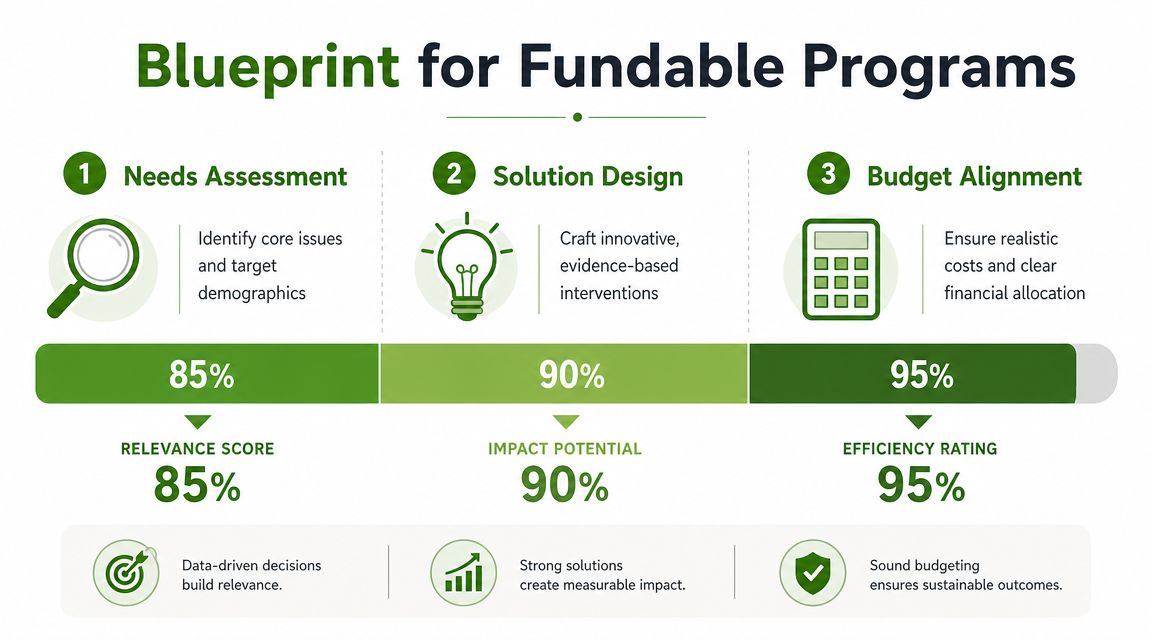
A proposal usually wins or loses before the first narrative paragraph is written. If the program model is fuzzy, the service mix is hard to follow, or the budget looks detached from results, no amount of polished writing will save it.
Funders want to see a delivery system, not a wish list. That means they should be able to trace the request from outreach to enrollment, from enrollment to housing placement, and from placement to retention support. If your model depends on referrals, landlord engagement, public partners, or behavioral health coordination, show those pieces as operating components rather than side notes.
Build around what funders already prioritize
The cleanest recent benchmark comes from major public homeless-assistance funding. In HUD's 2023 unsheltered-homelessness awards, 69% of funding was allocated to housing, 29% to outreach and engagement, and the remainder to administrative and data-system costs. That same analysis noted that proposals that don't map line items to this outcome mix are less competitive.
That doesn't mean every budget must copy those percentages line for line. It does mean reviewers increasingly expect your spending pattern to show that housing outcomes are the center of the design, not an afterthought.
A strong homelessness budget usually signals three things:
- Housing is the primary investment. Rental assistance, move-in support, housing navigation, landlord coordination, and stabilization activity are visible.
- Outreach and engagement are purposeful. They're funded enough to move people into the pipeline, not treated as disconnected field work.
- Administration supports accountability. Data entry, reporting, supervision, and compliance are present, but they don't dominate the request.
Write the budget as a theory of change
I've seen many teams submit budgets that are technically balanced but strategically weak. They list staff, supplies, and occupancy without explaining how those costs produce placement and retention. Reviewers then see a service organization asking for reimbursement, not a housing intervention asking for investment.
Use a simple budget narrative structure:
- Name the function. Example: housing navigation, tenancy support, outreach engagement, data reporting.
- Tie it to an operational milestone. Example: referral intake, unit identification, lease-up, retention follow-up.
- State the reason the cost is necessary. Example: landlord recruitment shortens unit search and supports transitions into permanent housing.
- Connect it to reporting. Example: case management intensity and housing placement activity will be tracked in the program's reporting workflow.
If a line item can't be linked to a service milestone or reporting duty, reviewers may read it as generic overhead.
A useful internal exercise is to put your budget into a one-page table with four columns: cost item, program function, outcome supported, and reporting source. That one page will expose weak spots quickly. If you need a starting point, a nonprofit program budget template can help teams turn a rough cost list into a budget reviewers can follow.
Writing a Proposal That Wins Over Funders
Once the program is designed well, proposal writing gets much easier. You're no longer inventing a story. You're documenting a model that already makes operational sense.
The mistake I see most often is writing a heartfelt but generic narrative. Reviewers don't need another abstract statement that homelessness is complex. They need confidence that your organization knows how to move people from crisis to housing and can prove it.
Make the need statement local and operational
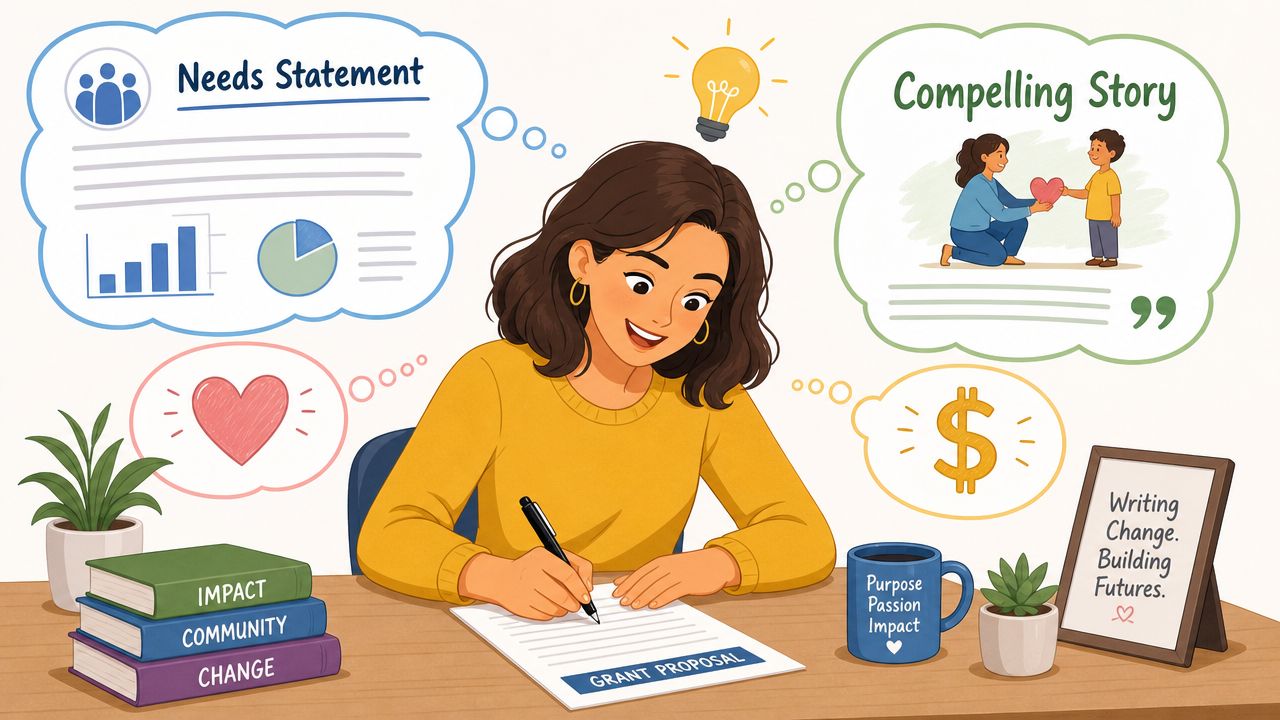
Your need statement should do two jobs. First, show that the problem is real in your service area. Second, explain why your organization's specific intervention belongs in the response.
Don't overfill this section with broad national language. Use local conditions, referral bottlenecks, shelter exits, landlord access barriers, coordinated-entry gaps, or behavioral health access issues that your program is positioned to address. Then move quickly into your service model.
A good need statement sounds like this in practice: people are entering the system through outreach, shelter, or referral channels, but they're getting stuck before housing placement because your community lacks enough navigation, landlord engagement, stabilization support, or coordinated service capacity. That creates a direct case for the grant request.
Justify the model with evidence, not slogans
If you're proposing Housing First, rapid re-housing, or voucher-linked placement support, don't just name the model. Explain why it is credible.
A systematic review of housing interventions found that Housing First and housing-voucher models can materially accelerate placement and retention. One included study reported that the intervention group reached stable housing in a mean of 91.25 days versus 199.15 days for controls. That kind of evidence strengthens a technical proposal because it ties your program design to measurable housing outcomes.
You don't need to overdo it. One well-used piece of evidence is more persuasive than a page of loose citations.
Reviewer test: Can someone reading your proposal tell why this model should work in your setting, with your population, through your delivery partners?
Structure the core narrative around decisions
A winning proposal usually answers four practical questions in order.
Why this population?
Describe who you serve and why they face barriers in the current system.
Why this intervention?
Show how your activities close a known gap. Outreach without a housing pathway is weak. Shelter without exit planning is weak. Case management without landlord strategy is weak.
Why your organization?
Point to partnerships, staffing, workflow discipline, or referral credibility. If you participate in local systems, say so clearly.
How will you know it worked?
Use outcome targets that fit the model. Time-to-housing, housing retention, early transition to independent housing, engagement rates, and reporting completeness are stronger than raw service counts alone.
Here's where many teams can save real time. Use tools that help streamline grant application processes so staff aren't rebuilding checklists, approvals, and document requests from scratch on every submission. The less time you spend chasing attachments and version control, the more time you can spend sharpening the case.
A short visual break can help your team align on the writing process before final edits.
Avoid the language that weakens otherwise good proposals
A few phrases consistently make proposals less convincing:
- “We will provide a full range of services.” Too vague. Name the services and sequence.
- “Our program will support clients by addressing all their needs.” Fine as a value statement, weak as a delivery description.
- “We have a dedicated team.” Everyone says this. Show functions, not adjectives.
- “We expect to make a meaningful impact.” Replace with concrete outcomes and reporting methods.
Instead, write sentences that tie action to accountability. Example: staff will conduct housing search, landlord engagement, lease-up coordination, and follow-up stabilization, with activity documented through the program's case and reporting workflow. That sounds more fundable because it is more manageable.
Mastering Submission and Post-Award Management
Submission week exposes every weak system in an organization. Missing attachments, outdated board lists, unsigned forms, mismatched budgets, and portal issues don't just create stress. They cost real opportunities.
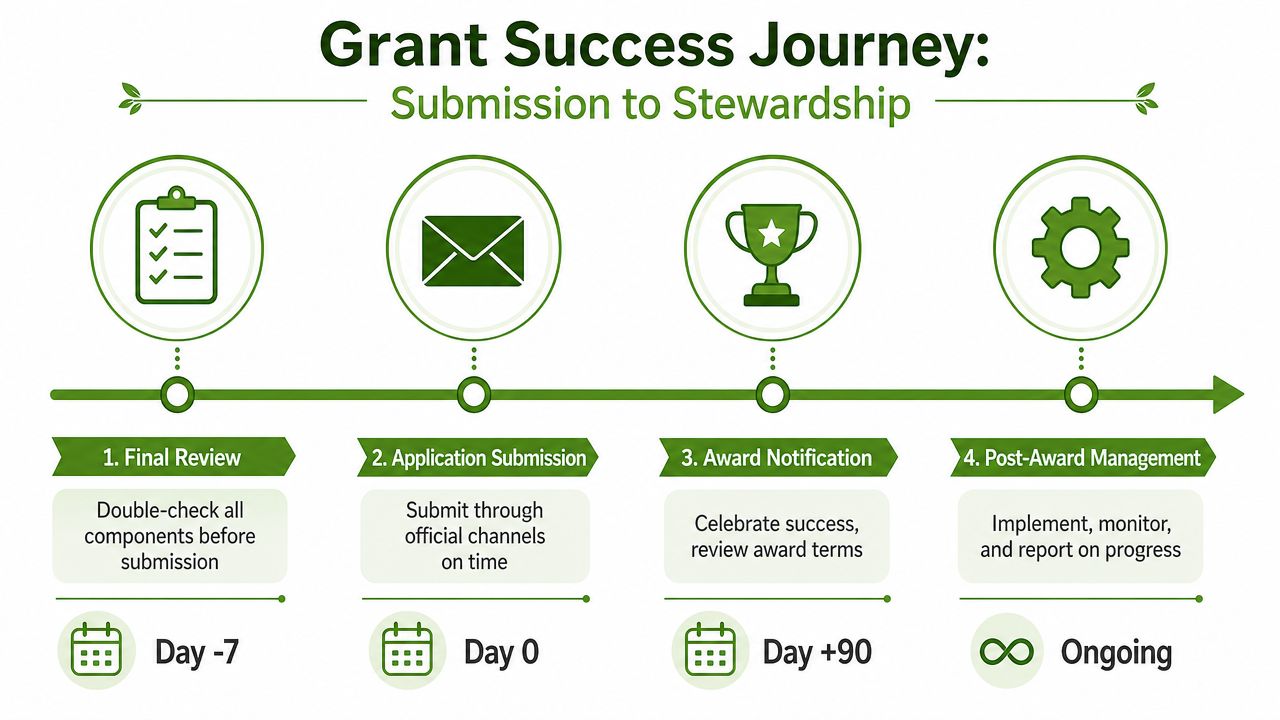
Treat submission as an operations function, not a last-minute writing event. The strongest teams build a closeout process before they open the portal.
Run a submission checklist that catches preventable errors
A practical final review should include more than proofreading.
- Eligibility confirmation: Recheck applicant type, geography, service model, and partnership requirements against the notice.
- Attachment control: Make sure every required upload is the final version, named clearly, and approved internally.
- Budget consistency: Totals, narratives, and worksheets should match exactly.
- Portal readiness: Confirm registrations, user permissions, and login access well before deadline day.
- Executive approval: Get sign-off on narrative, budget, and compliance statements before submission.
Submit early enough that a rejected upload or portal issue is an inconvenience, not a crisis.
I also recommend keeping a submission packet in one folder that includes the final narrative, budget, attachments, signatures, and a PDF of what was submitted. If a funder comes back with a question weeks later, you need one clean record of the package.
Build post-award systems on day one
Winning the grant is not the finish line. It's the start of a reporting relationship.
The most common post-award mistake is waiting until the first report is due to decide how data and spending will be tracked. By then, staff are reconstructing activities from memory, finance is coding expenses retroactively, and nobody is sure which output belongs in which report.
Set up these controls immediately after award:
| Function | What to establish right away |
|---|---|
| Finance | Grant code, approved budget categories, spending review process |
| Program | Intake workflow, service documentation rules, outcome tracking fields |
| Compliance | Reporting calendar, deliverable owners, file storage standards |
| Leadership | Regular review cadence for budget burn and program performance |
Good post-award management protects renewals because it creates evidence. You're not just saying the program worked. You're showing documented delivery, budget discipline, and timely reporting.
For teams formalizing this process, a guide to grant management best practices can help translate a one-time award into a repeatable compliance routine.
From a Single Grant to a Sustainable Funding Engine
The best grant strategy doesn't end with one win. It compounds when your organization learns from each cycle and gets sharper.
A single award can produce more than funded services. It can give you cleaner outcome data, stronger partner relationships, a tested budget structure, and a narrative you can refine for the next opportunity. That's how a grant program turns into an engine.
Most nonprofits think they have a grant-writing problem when they really have a systems problem. Their documents live in too many places. Program staff and development staff define success differently. Budget narratives are rebuilt from scratch. Reporting sits in one person's inbox. Then every application feels harder than it should.
The fix is usually straightforward:
- Standardize core language. Keep approved descriptions of your model, population, partnerships, and outcomes.
- Capture evidence continuously. Don't wait for the next application to collect program proof.
- Review every result. After each submission, note what slowed you down, what reviewers questioned, and what data you wish you had.
- Protect institutional memory. Staff turnover is common. Your grant operation can't depend on one person remembering everything.
That mindset changes how you pursue grant money for homeless programs. You stop acting like each opportunity is an isolated event. You start treating funding as a repeatable operating function tied to program quality.
The organizations that stay competitive over time usually do three things well. They know which funding streams fit their model. They build budgets that point clearly to housing outcomes. And they manage awards in a way that strengthens the next proposal.
If your team wants a faster way to find aligned opportunities, organize proposal work, and stay on top of compliance after award, Fundsprout is built for exactly that. It helps nonprofits match grants to real program fit, turn requirements into workable application plans, draft stronger narratives with supporting materials, and keep reporting organized from submission through renewal.
Try 14 days free
Get started with Fundsprout so you can focus on what really matters.