A Guide to Grant Compliance Tracking Software for Nonprofits
Discover how grant compliance tracking software helps nonprofits stay audit-ready, manage deadlines, and secure funding. Explore features, benefits, and ROI.

Abdifatah Ali
Co-Founder
At its core, grant compliance tracking software is your single source of truth for every grant your organization manages. It’s designed to cut through the administrative chaos, automating the tedious work of tracking deadlines and requirements so you can stay on top of everything without living in a spreadsheet.
This kind of system replaces that frantic, manual approach with calm, controlled oversight and crystal-clear audit trails. It’s how you build undeniable trust with funders and, just as importantly, free up your team to focus on the mission.
Why Staying Audit-Ready Is a Nonprofit Superpower
Think about it. You’re juggling a dozen grants, maybe more. Each one has its own unique deadlines, reporting formats, and strict spending rules. Trying to manage all of that in a massive, color-coded spreadsheet isn’t a system—it’s a ticking time bomb.
This reactive approach is where human error creeps in, putting your funding and reputation on the line. For too many nonprofits, this high-wire act is just another Tuesday.
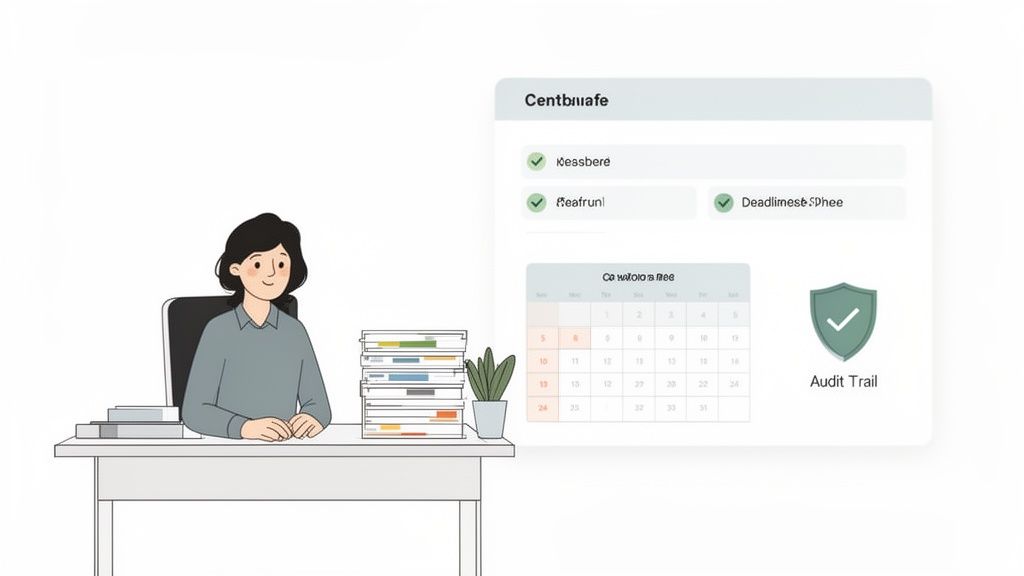
This is precisely where the right software steps in. It’s about more than just keeping organized; it's about being prepared for the intense scrutiny of a single audit. A good tool is your best defense, turning compliance from a source of dread into a real strategic advantage.
By creating a reliable and verifiable plan of record for every dollar, you’re always ready to prove your impact and accountability.
The High Cost of Non-Compliance
Let's be honest—the pressure to be accountable has never been higher. Compliance tracking tools now dominate the market, holding a massive 60.2% revenue share as regulatory demands get tougher every year.
Even a small slip-up can lead to funders clawing back money or, worse, damage to your reputation. These are the exact issues that trip up 30-40% of small organizations that are still stuck using manual methods. It’s not just about dodging penalties; it’s about proving you’re a great steward of the funds you’ve earned.
The table below breaks down the real-world differences between sticking with spreadsheets and moving to a dedicated system.
Manual vs Automated Grant Compliance Tracking
Simply put, while spreadsheets are familiar, they introduce significant risks that automated software is specifically designed to eliminate.
Building a Foundation of Trust
At the end of the day, being audit-ready isn't just about passing an inspection. It’s about building unshakable trust with your funders, your board, and the community you exist to serve. A clean audit is proof that you’re managing your resources responsibly.
While your main concern is grant-specific audits, having strong financial practices is just good business. It prepares you for any kind of financial review, and it helps with understanding what triggers an IRS tax audit. Tools like Fundsprout's AI-powered platform are becoming essential for modern nonprofits that want to achieve this level of transparency and operational excellence.
The Features That Actually Make a Difference in Grant Management
So, what's really inside grant compliance tracking software that helps you sleep at night? It’s not just about fancy charts; it’s about practical tools designed to solve the real-world headaches that fundraising teams know all too well. These features work together, turning that constant, low-level anxiety about compliance into a calm, proactive strategy.
Let's pull back the curtain on the five core features that are absolute game-changers.
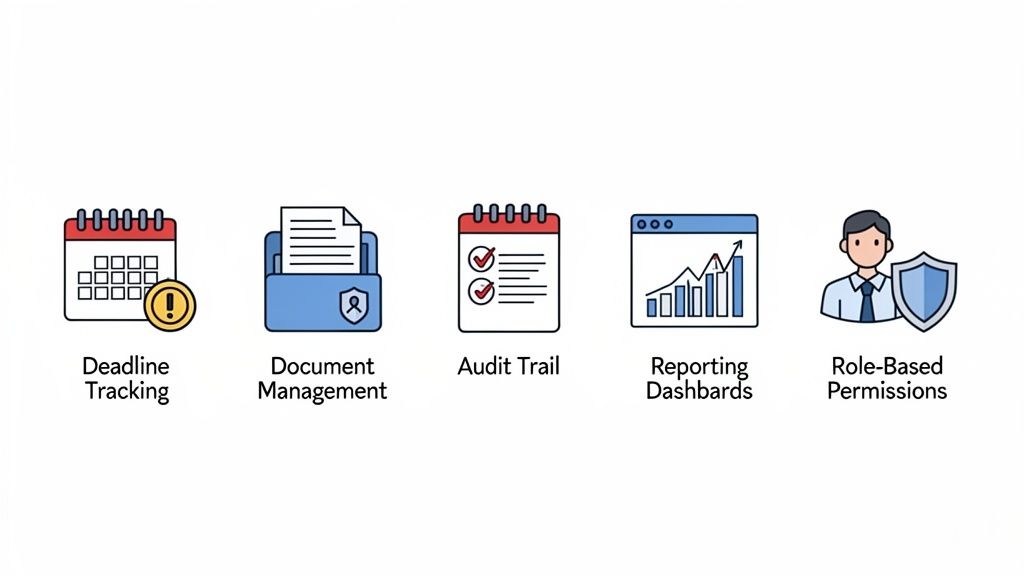
Automated Deadline and Milestone Tracking
We've all been there—that sudden jolt of panic when you realize a major report is due tomorrow. A simple missed deadline can put future funding at risk and strain a great relationship with a funder. This is exactly where automated deadline tracking comes in as your first line of defense.
Think of it as a smart calendar that doesn't just show the final due date. It maps out every single step along the way, from the first draft to the final sign-off. The system sends automatic reminders to the right people at the right time, giving your team plenty of runway to get things done without the last-minute scramble. In a platform like Fundsprout, for instance, you can set up custom alerts for each grant's unique requirements, so nothing ever gets missed.
Centralized Document Management
Let’s be honest: grant files often live a chaotic life, scattered across desktops, email threads, and a maze of cloud folders. Then an auditor calls, asking for a specific receipt from two years ago, and the treasure hunt begins. That chaos isn't just stressful; it's a huge compliance risk.
A centralized document system puts an end to that. It’s a single, secure digital library for everything related to your grants.
Think of it as your single source of truth. Every proposal, budget, email, and expense receipt is tied directly to the specific grant it belongs to.
When you need to pull a document, it’s right there in seconds. This level of organization shows funders you’re a responsible steward of their investment and makes you audit-ready 24/7.
Unshakeable Audit Trails
How do you prove who signed off on a budget change or when a final report was actually sent? Without a concrete record, it's often just your word against theirs. An audit trail is a non-negotiable feature because it creates that undeniable proof for you.
This tool works quietly in the background, automatically logging every single action. It creates a time-stamped, unchangeable history of everything that happens.
- Document Uploads: See exactly who added a file and when.
- Status Changes: Know the precise moment a report was marked "Submitted."
- User Edits: Track any changes made to grant data or financials.
- Communications: Keep a log of messages sent to funders through the platform.
This detailed log provides a rock-solid record of your compliance activities, leaving no room for doubt during a review. It's the ultimate tool for transparency and accountability.
Real-Time Reporting and Dashboards
We all know the pain of spending days, or even weeks, cobbling together reports for the board or a major funder. It involves pulling numbers from one spreadsheet, narrative from another, and financial data from somewhere else entirely. Modern software completely automates this.
With a good reporting dashboard, you get a bird's-eye view of your entire grant portfolio in real time. You can see upcoming deadlines, track expenses against your budget, and monitor your progress on program goals with just a few clicks. Better yet, when it's time to generate a report, platforms like Fundsprout can automatically fill in funder templates with the right data, cutting down manual work by up to 80%. This doesn't just save a ton of time; it dramatically cuts the risk of human error.
Secure Role-Based Permissions
Not everyone in your organization needs access to every piece of grant information. Your program manager probably shouldn't be able to edit financial reports, and maybe your executive director only needs to view progress, not make changes. Role-based permissions give you granular control over who can see and do what.
This is critical for keeping your data secure and accurate. You can set up custom access levels for each person on your team:
- Program Managers: Can update progress on deliverables but can't touch the budget.
- Finance Staff: Have full access to manage expenses but can't change the grant narrative.
- Executive Directors: Get a high-level, view-only look at everything for oversight.
By assigning specific roles, you build a system of checks and balances that protects sensitive information and prevents accidental (or intentional) mistakes. It’s a key feature of any serious grant management software for nonprofits and a sign of a well-run, professional operation.
The Real ROI of Grant Compliance Software
For any nonprofit running a lean operation, every dollar has to pull its weight. When you're looking at grant compliance tracking software, it’s easy to see it as just another line item in the budget. But that’s missing the point. This isn't just an operational cost; it's a direct investment in your organization's financial health and its ability to grow your mission. The return you get isn't just about dodging penalties—it's about real, measurable gains in saved time, secure funding, and smarter strategic planning.
Just think about the hours your team sinks into manually pulling together reports, hunting through email chains for that one crucial document, or anxiously double-checking spreadsheet formulas. That administrative quicksand is a direct drain on your mission. Good software pulls you out by automating those repetitive tasks, freeing up your team to focus on what actually matters: building relationships with funders and running incredible programs.
Reclaiming Your Team's Most Valuable Asset: Time
Time is the one resource you can never get back, and in the nonprofit world, it's always in short supply. Every hour spent wrestling with grant administration is an hour not spent on fundraising, program delivery, or thinking about the big picture. Grant compliance software gives you those hours back by taking the most time-consuming tasks off your team's plate.
What if you could cut the time it takes to build a quarterly funder report from two weeks down to just a couple of hours? Instead of manually piecing together data from a dozen different places, the software does the heavy lifting, pulling accurate, up-to-the-minute information into ready-made templates. For a small team, that kind of efficiency isn't just nice—it's a game-changer.
This is about more than just working faster. It's about reallocating your team's talent and passion. When your grant manager isn't bogged down in administrative muck, they can focus on nurturing the funder relationships that lead to renewed grants and brand-new opportunities.
A huge chunk of that time-saving comes from simply getting a handle on the application process itself. With grant applications on the rise globally, just keeping track of everything has become a major challenge. For small nonprofits, this flood of work can easily lead to a missed deadline or a compliance fine, which can average a painful 10-15% of the grant's value. Cloud-based tools have been shown to slash that processing time by 40-60%, turning what was once chaos into a smooth, manageable workflow. You can dive deeper into the grant management market data at Precedence Research.
Securing and Protecting Your Grant Revenue
For many nonprofits, grant funding is the oxygen that keeps the mission alive, so protecting it is non-negotiable. The biggest financial threat you face isn't a missed opportunity—it's a clawback, where a funder demands their money back because of a compliance slip-up. A single reporting error or misallocated expense can put tens, or even hundreds, of thousands of dollars at risk.
Think of grant compliance software as your financial insurance policy. It creates a clear, unchangeable audit trail for every dollar, ensuring all spending is documented correctly and lines up perfectly with the funder's requirements. This drastically lowers the chances of making a costly mistake.
But this isn't just about preventing losses. It’s also about building a rock-solid reputation for accountability. When it’s time to ask for a grant renewal, you can confidently show a flawless track record of how you managed their previous funds. That makes you a far more attractive and trustworthy partner, which often translates directly into a higher chance of getting renewed and even increased funding.
Turning Compliance Data into Strategic Insight
The savviest nonprofits don't just use compliance software to play defense; they use it to go on offense. All the data you're collecting—from how you spend grant funds to the outcomes you're achieving—is a goldmine of strategic insight just waiting to be tapped.
By analyzing this information, you can pinpoint which of your programs are delivering the most bang for the buck, giving you hard evidence of your impact. This data-driven approach shifts your grant proposals from simple asks to compelling investment cases. You can show funders exactly what their money accomplished, backed by data they can trust.
This strategic edge carries over into all of your future applications. A platform like Fundsprout helps you use that performance data to:
- Optimize Future Proposals: You can weave proven results from past grants directly into your new narratives.
- Strengthen Funder Reports: Go beyond feel-good stories and present quantifiable statements about your impact.
- Identify Trends: See which types of grants and programs are consistently delivering the best results for your mission.
At the end of the day, the ROI of grant compliance tracking software is measured in reclaimed hours, protected revenue, and a smarter, data-informed strategy. It's an investment that pays for itself by helping your organization work more efficiently, lock down its funding, and prove its impact with absolute clarity.
Weaving Your New Software into Your Daily Workflow
Getting a powerful new tool is exciting, but let's be honest—the real work begins when you have to weave it into the fabric of your team's day-to-day operations. Successfully rolling out grant compliance software isn't about just flipping a switch. It's a thoughtful process of turning a platform into a seamless part of how you get things done.
This is less about technology and more about people. It's about your internal processes and having a clear vision for how your team can finally work smarter, not harder. By breaking down the transition into a few manageable stages, you can ensure everyone feels confident and empowered by the change.
The whole point is to get a great return on your investment, and that ROI comes from a combination of saving time, improving security, and freeing up brain space for bigger-picture strategy.
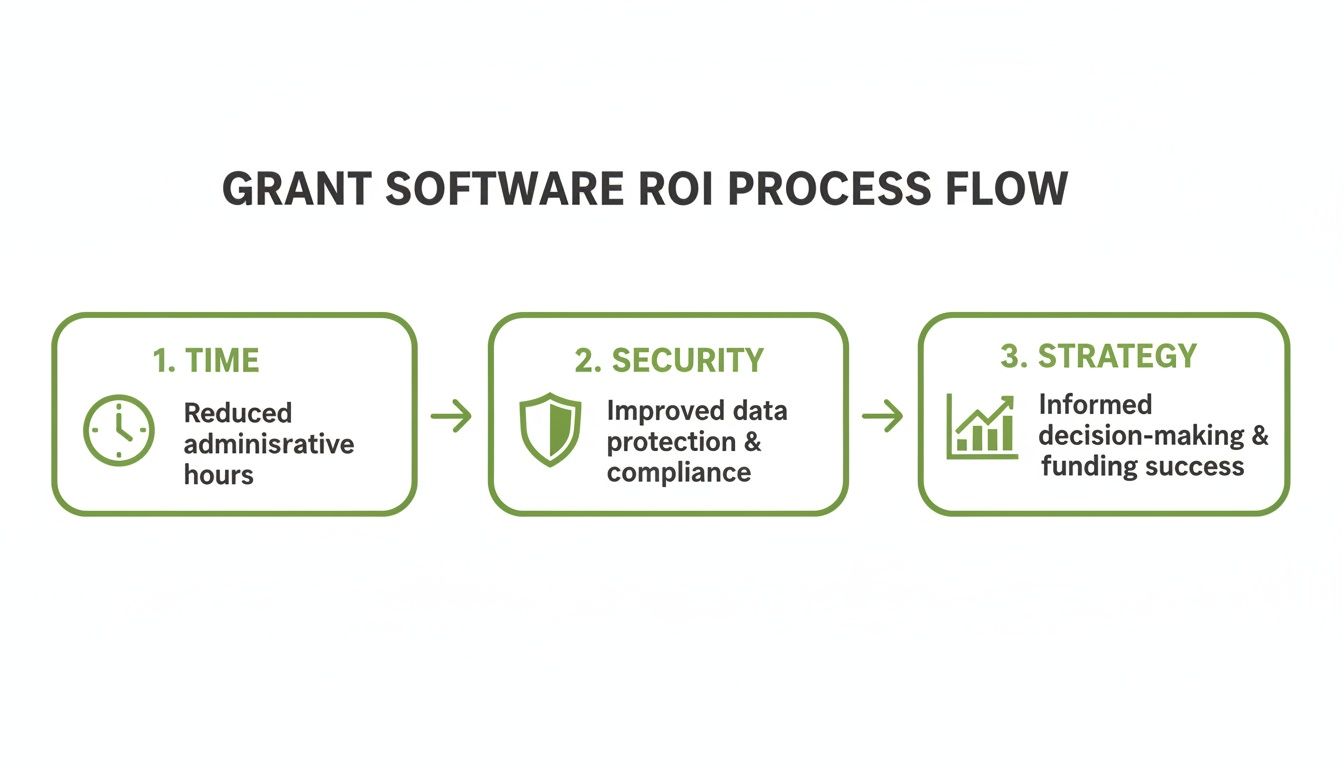
As you can see, the journey starts by getting time back. That reclaimed time leads directly to better funding security and, ultimately, lets you make more strategic decisions for your organization.
Start with a Clean Slate: Data Migration
Your journey begins with the data you already have. The goal here is to bring all your historical grant information into the new system without creating a digital junkyard. A messy migration can trip you up from day one, so a clean start is everything.
Before you even think about importing, take some time to tidy up your current spreadsheets. This means standardizing how you write funder names, getting rid of duplicate entries, and making sure all the financial data is accurate. Most modern platforms, including Fundsprout, have guided import tools that help you map your spreadsheet columns to the right fields in the software, which is a huge help.
Pro Tip: Don't try to move everything at once. Start by migrating a single, fairly simple grant as a pilot project. This lets you test the process, spot any quirks, and build your confidence before tackling your entire grant portfolio.
Getting this first step right ensures the foundation of your new system is solid and built on information you can actually trust.
Get Your Team on Board: Adoption and Training
Even the most amazing software is useless if nobody uses it. Getting your team to embrace a new system—especially folks who are comfortable with the old way of doing things—is absolutely critical. The key is to show them how this new tool solves their biggest headaches, rather than just being more work.
Training should be practical and specific to each person's role. Show your program managers how the dashboard will save them hours pulling reports. Walk your finance team through how automated expense tracking gets rid of all that manual data entry.
To make the transition smooth and get everyone excited, try these steps:
- Find Your Champion: Pick one person on your team who is comfortable with technology to be the go-to internal expert. They can answer questions and be a positive voice for the new system.
- Focus on the "Why": Don't just talk about features. Explain exactly how the software will reduce their administrative slog and free up their time for more mission-focused work.
- Offer Ongoing Help: Adoption doesn't happen in a day. Schedule regular check-ins and maybe a few refresher training sessions to help build good habits.
Design Your New Way of Working
Once your data is in and the team is trained, it's time to map out your new workflow. This is where you outline the entire grant lifecycle inside the software, from the first inkling of an idea all the way to the final closeout report. A well-designed workflow creates consistency and makes sure everyone knows who's responsible for what.
With a platform like Fundsprout, you can create a template for each new grant that automatically populates with all the key tasks and deadlines. This kind of standardization is a game-changer for making sure nothing falls through the cracks.
Your workflow should clearly define:
- Who Owns What: Who is responsible for writing the narrative, who pulls together the budget, and who hits "submit" on the final report?
- Automated Nudges: Set up automatic reminders for upcoming deadlines—far enough in advance to avoid those last-minute panics.
- Progress at a Glance: Use the main dashboard to get a real-time view of where every single grant is in its lifecycle. No more guessing.
By creating this kind of structure, you turn compliance from a reactive scramble into a proactive, manageable system. For more ideas on how to set this up, check out our guide to grant management best practices to get your new workflow started on the right foot.
How to Choose the Right Software for Your Nonprofit
Picking the right grant compliance tracking software can feel overwhelming. With a flood of options on the market, each one promising to be the magic bullet for your grant management woes, it's easy to get lost. But this decision is a big one—it will shape your team’s daily work, the accuracy of your reporting, and ultimately, your relationship with funders for years.
This isn't just a niche concern anymore. The grant management software market is expanding rapidly, currently valued at around USD 2.56 billion and expected to climb to USD 4.23 billion by 2030. Cloud-based platforms are driving this growth, making up over 61% of the market, largely because of their flexibility and high-level security. For nonprofits, this trend is a game-changer, offering powerful tools that can slash administrative work by up to 50%.
The key is to cut through the marketing noise and focus on what will genuinely make your team’s life easier.
Key Criteria for Evaluating Vendors
Let’s be honest: not all software is built the same. A system designed for a massive national foundation will likely be a clunky, overpriced nightmare for a small community-based organization. As you begin your search, zero in on these four essential criteria to find a true partner, not just a piece of tech.
Ease of Use and Team Adoption
The most feature-packed software on the planet is worthless if your team dreads using it. Look for a clean, intuitive interface and a dashboard that gives you a clear snapshot of your entire grant portfolio at a glance. During a demo, ask the most important question: Could a brand-new hire figure this out without a week of training?Crucial Integration Capabilities
Your grant software can't operate in a vacuum. It absolutely must connect seamlessly with the tools you already use, especially your accounting software like QuickBooks or Sage. This is non-negotiable. A solid integration kills double data entry and ensures your financial reports are always accurate and ready for review.Security and Data Protection
You are the guardian of sensitive information, from your organization's financials to funder data. A vendor's security protocols are paramount. Dig into their security measures—look for data encryption, regular backups, and role-based permissions that let you control exactly who sees what.Scalability to Match Your Growth
The software you choose today has to work for the organization you'll be tomorrow. Think about your growth trajectory. Does the pricing model and feature set scale up as you secure more funding and expand your programs? You don't want to be forced into this same exhaustive search process again in two years.
A Practical Checklist for Vendor Demos
Once you have a shortlist, the demo is where the rubber meets the road. Don't just sit back and watch a presentation. Go in armed with pointed questions that get to the heart of your daily challenges. This is your chance to see how the software handles the real, messy scenarios your team wrestles with.
A great demo shouldn't just show you what a platform does; it should show you how it will solve your specific problems. Be ready to challenge the salesperson with your toughest compliance headaches.
Use this checklist as your guide during vendor demos to make sure you get the answers you really need.
Vendor Selection Checklist
Here are key questions to ask potential software vendors to ensure their platform aligns with your nonprofit's specific needs and long-term goals.
Taking the time to ask these tough questions will pay off. For a broader view of the landscape, reviewing a list of the 12 Best Compliance Management Software Options can provide valuable context on how different platforms compare.
Tools like Fundsprout are designed to be that all-in-one solution, integrating AI-powered assistance with the core compliance features needed to confidently answer these questions. By taking a structured, question-driven approach, you can move beyond the sales pitch and make a smart, informed decision that positions your nonprofit for success.
Got Questions? We’ve Got Answers.
When you’re thinking about bringing a new tool into your workflow, a lot of questions pop up. It’s a big decision, and you need to get it right. Here are some of the most common questions we hear from nonprofit leaders trying to get a handle on grant compliance.
Is This Software Really Worth It for a Small Nonprofit?
Yes, and honestly, it might be even more critical for smaller teams. When you’re running lean, every single grant is a lifeline. A missed deadline or a compliance slip-up isn’t just a headache; it can be a financial disaster.
It's easy to think of spreadsheets as "free," but that's a dangerous illusion. The real cost is hidden in the hours your team wastes on manual data entry, the ever-present risk of a costly human error, and the nightmare scenario of a funder clawing back money. Modern, cloud-based tools are priced to be accessible, even for the tightest budgets.
Think of it this way: the software pays for itself by preventing just one major mistake. Better yet, it frees up your small team to stop chasing paperwork and start focusing on what really matters—your mission. That's an ROI you can see almost immediately.
How Hard Is It to Ditch Our Spreadsheets?
I get it. The idea of moving years of grant data from a complex web of spreadsheets sounds like a nightmare. But in reality, the move is almost always smoother than people fear. Good software is built by people who understand this exact pain point, so they’ve designed intuitive systems and guided onboarding to make it as painless as possible.
Most platforms have smart data import tools that let you map your old spreadsheet columns directly to the new system, cutting out a huge chunk of manual work. A tool like Fundsprout, for example, has a dedicated support team ready to walk you through setup, train your staff, and get your workflows customized just right.
The secret to a smooth transition is a simple plan. Pick a project lead, book a few training sessions, and start by moving just one or two active grants over as a pilot. That little bit of focused effort up front will pay off tenfold in long-term efficiency and peace of mind.
This approach lets your team get comfortable and build confidence before you migrate your entire grant portfolio.
What's the Difference: Grant Management vs. Grant Compliance Software?
You’ll hear these terms thrown around, sometimes interchangeably, but there’s a key difference in focus.
- Grant Management Software is the big-picture tool. It covers the entire lifecycle, from researching new funders and writing proposals all the way through managing the award and reporting on your impact.
- Grant Compliance Tracking Software zooms in on everything that happens after you get the check. It’s hyper-focused on making sure you follow every rule, track every deadline, monitor spending against the budget, and keep a perfect audit trail.
The good news? The best modern platforms don't make you choose. Integrated systems like Fundsprout blend both functions. They give you powerful tools for finding and winning grants, seamlessly connected to ironclad features for managing compliance post-award. This breaks down data silos and creates one single source of truth for your entire grants strategy.
How Does This Actually Help with Funder Reports?
This is where you'll feel one of the biggest sighs of relief. The old way of cobbling together reports—pulling numbers from one spreadsheet, narrative from a Word doc, and receipts from a dozen email threads—is a recipe for stress and mistakes.
Grant compliance software centralizes everything. As you work through the grant period, you’re tagging expenses, activities, and outcomes directly to the specific grant they belong to. It becomes a living record of your progress.
When a reporting deadline looms, the system does the heavy lifting. With just a few clicks, it can pull all that pre-organized data and populate the funder's required template. This doesn't just save you days of tedious work; it ensures the report you submit is accurate, consistent, and fully documented. You end up looking like the reliable, professional partner every funder wants to keep supporting.
Ready to turn grant compliance from a source of stress into a strategic advantage? Fundsprout gives you the AI-powered tools to stay audit-ready, slash reporting time, and secure your funding. Explore Fundsprout today and see how you can get back to focusing on your mission.
Try 14 days free
Get started with Fundsprout so you can focus on what really matters.