Top 12 Free Grant Writing Classes Online for Nonprofits in 2026
Discover the best free grant writing classes online. Our 2026 guide reviews top courses for building skills in proposal writing, budgeting, and compliance.

Abdifatah Ali
Co-Founder
Securing funding is the lifeblood of any nonprofit, but hiring a professional grant writer or paying for expensive courses isn't always feasible. This is especially true for small organizations, program managers juggling multiple roles, and executive directors trying to maximize every dollar. The good news is that a wealth of high-quality, free grant writing classes online are available to help you build this critical skill without touching your budget. These resources can equip you with the knowledge to find promising grant opportunities, craft compelling proposals, and manage grant reporting requirements effectively.
This guide cuts through the noise to bring you a curated list of the best free courses available. We've done the research to provide a detailed, comparative roundup, moving beyond simple descriptions. For each option, you will find a concise review covering its duration, ideal learner level, certificate availability, and key takeaways. We will also provide screenshots and direct links to get you started immediately. As you begin your training, it's helpful to consider some foundational best practices for online learning to ensure you get the most out of your chosen course.
Our goal is to give you a clear, practical roadmap. We’ll analyze offerings from established platforms like Candid Learning and NonprofitReady.org, explore government-led training from Grants.gov and the EPA, and review specialized courses from experts like Holly Rustick. Whether you are a complete beginner needing to understand the grant lifecycle or an experienced fundraiser looking to sharpen specific skills, this article will help you identify the perfect training path to meet your organization's needs and start winning grants.
1. Candid Learning
Candid Learning is an essential starting point for anyone new to the nonprofit sector, widely regarded as a gold standard for foundational grant skills. Formed from the merger of Foundation Center and GuideStar, Candid provides authoritative data and training for the social sector. Its reputation makes it a trusted resource for building core competencies.
What sets Candid apart is its consistent offering of free grant writing classes online, available as both live webinars and on-demand recordings. This dual-format access ensures you can fit learning into a busy schedule. Their flagship course, "Introduction to Proposal Writing," is a must-watch, breaking down the standard proposal format into manageable components. You’ll leave with a clear understanding of what funders expect in each section, from the executive summary to the budget.
Key Features & Offerings
- Live & On-Demand Training: Access monthly live webinars or watch recorded sessions anytime.
- Practical Resources: Courses come with downloadable handouts, sample proposals, and budget templates that you can adapt for your own use.
- Beginner-Focused Curriculum: Classes like "Introduction to Finding Grants" and "Budgeting Basics for Nonprofits" are designed specifically for those with little to no experience.
Key Takeaway: Candid provides the fundamental building blocks for writing compelling proposals to foundation and corporate funders. Their templates and straightforward instruction demystify the process for newcomers.
Pros:
- Nationally recognized provider trusted by US nonprofits.
- Regularly scheduled live classes with Q&A opportunities.
- Recordings are available for those who miss a live session.
Cons:
- Content is heavily focused on foundation and corporate grants, not federal grants.
- The website has a large volume of resources, which can require some navigation to pinpoint the exact free class you need.
Website: learning.candid.org
2. NonprofitReady.org
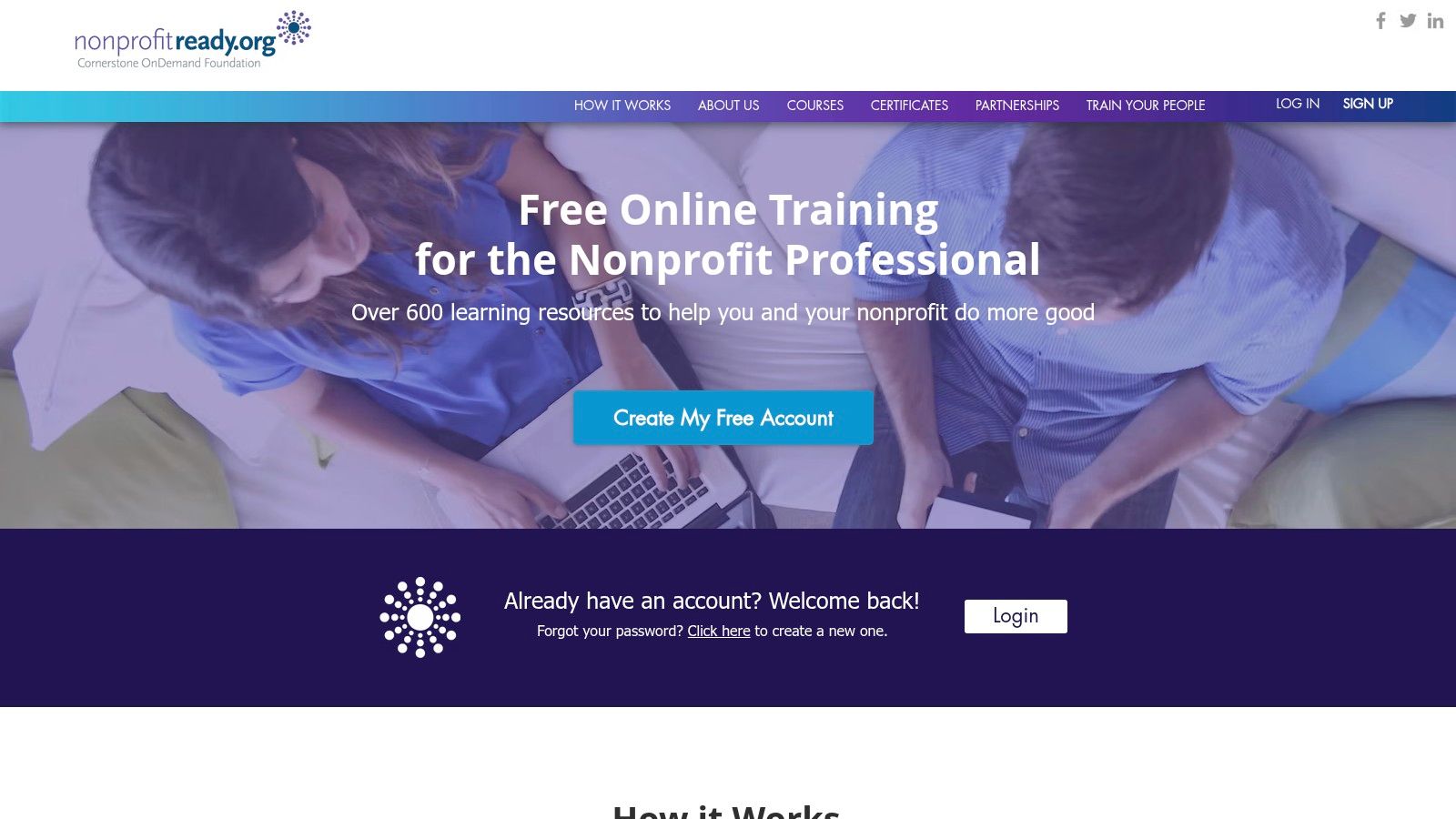
NonprofitReady.org is a fantastic resource for professionals seeking quick, practical training across a spectrum of nonprofit management topics. Operated by the Cornerstone OnDemand Foundation, its entire library of professional development content is completely free. The platform is especially useful for those who need to learn grant writing fundamentals without a significant time commitment.
What distinguishes NonprofitReady is its microlearning approach to providing free grant writing classes online. Instead of long, single-session webinars, content is broken into bite-sized modules that can be completed in just a few minutes. It also organizes these modules into structured learning tracks, such as the "Grant Writing" track, which guides you from prospecting and relationship-building all the way through to writing the proposal narrative and creating a budget. This format is perfect for busy professionals or for onboarding new team members who need to get up to speed quickly.
Key Features & Offerings
- Structured Course Tracks: Follow curated paths like "Grant Proposal Writing" that cover the entire process in a logical, step-by-step sequence.
- Bite-Sized Modules: Most courses are composed of short videos and activities, making it easy to learn on a coffee break.
- Certificates & Transcripts: Earn certificates of completion for individual courses and entire tracks, and download a learner transcript to document your professional development.
Key Takeaway: NonprofitReady is ideal for building a foundational grant writing skill set through self-paced, easily digestible content. It excels at getting new development staff or "accidental grant writers" trained on core concepts efficiently.
Pros:
- Entirely free with thousands of courses available after a simple sign-up.
- The modular, bite-size format is perfect for busy schedules.
- Great for onboarding new staff or volunteers at small nonprofits.
Cons:
- Content is introductory and may not be deep enough for writing complex federal or research grants.
- Lacks the live interaction and Q&A opportunities found in webinar-based platforms.
Website: www.nonprofitready.org
3. Grants.gov Applicant Training
When your organization decides to pursue federal funding, Grants.gov is the official starting point, and its applicant training is indispensable. While other platforms focus on the art of persuasive writing for foundations, Grants.gov provides the essential technical "how-to" for navigating the complex world of government grants. It’s the authoritative source, ensuring you follow the exact procedures required by federal agencies.
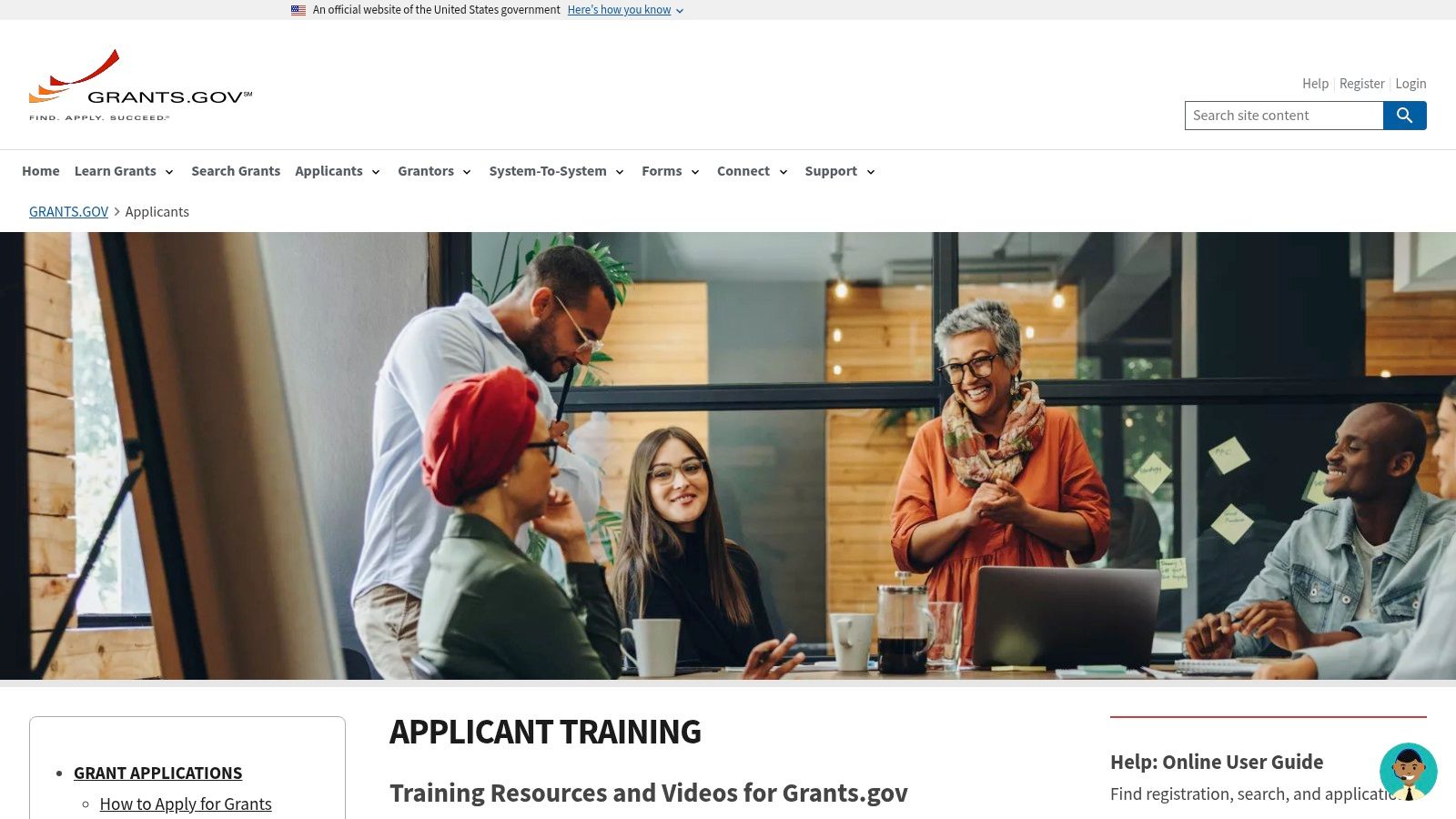
What makes this resource unique is its singular focus on process and compliance. The training consists of videos and guides that walk you through every step of the federal application workflow, from initial organization registration to using the Workspace and submitting forms. These tutorials are a practical alternative to the narrative-focused free grant writing classes online and are critical for avoiding the common technical errors that can lead to an automatic rejection before your proposal is even read.
Key Features & Offerings
- Step-by-Step Videos: Detailed video guides cover applicant registration, using Workspace, and understanding user roles.
- Quick-Start Guides: Downloadable checklists and guides offer a quick reference for the submission process, perfect for keeping on hand as you work.
- Up-to-Date Process Overviews: The content is regularly updated to reflect changes in the federal application system, ensuring you are always following current protocols.
Key Takeaway: Grants.gov offers the procedural training needed to successfully submit a federal grant application, focusing on the technical mechanics rather than the creative writing aspect.
Pros:
- Authoritative and official source for the federal application process.
- Clear, step-by-step walkthroughs are ideal for first-time federal applicants.
- Completely free and accessible to anyone.
Cons:
- Content is strictly about application mechanics, not proposal writing strategy or narrative development.
- The training does not cover how to find opportunities, which requires using a different tool or a free grant database for nonprofits.
Website: grants.gov/applicants/applicant-training.html
4. U.S. Department of Justice — JustGrants Training
While not a traditional writing course, the U.S. Department of Justice’s JustGrants training is an indispensable resource for anyone pursuing federal funding. The platform provides critical, self-guided eLearning videos and resources focused on the entire federal grants lifecycle. This is less about persuasive narrative and more about the equally important technical compliance needed to successfully apply for and manage a government award.
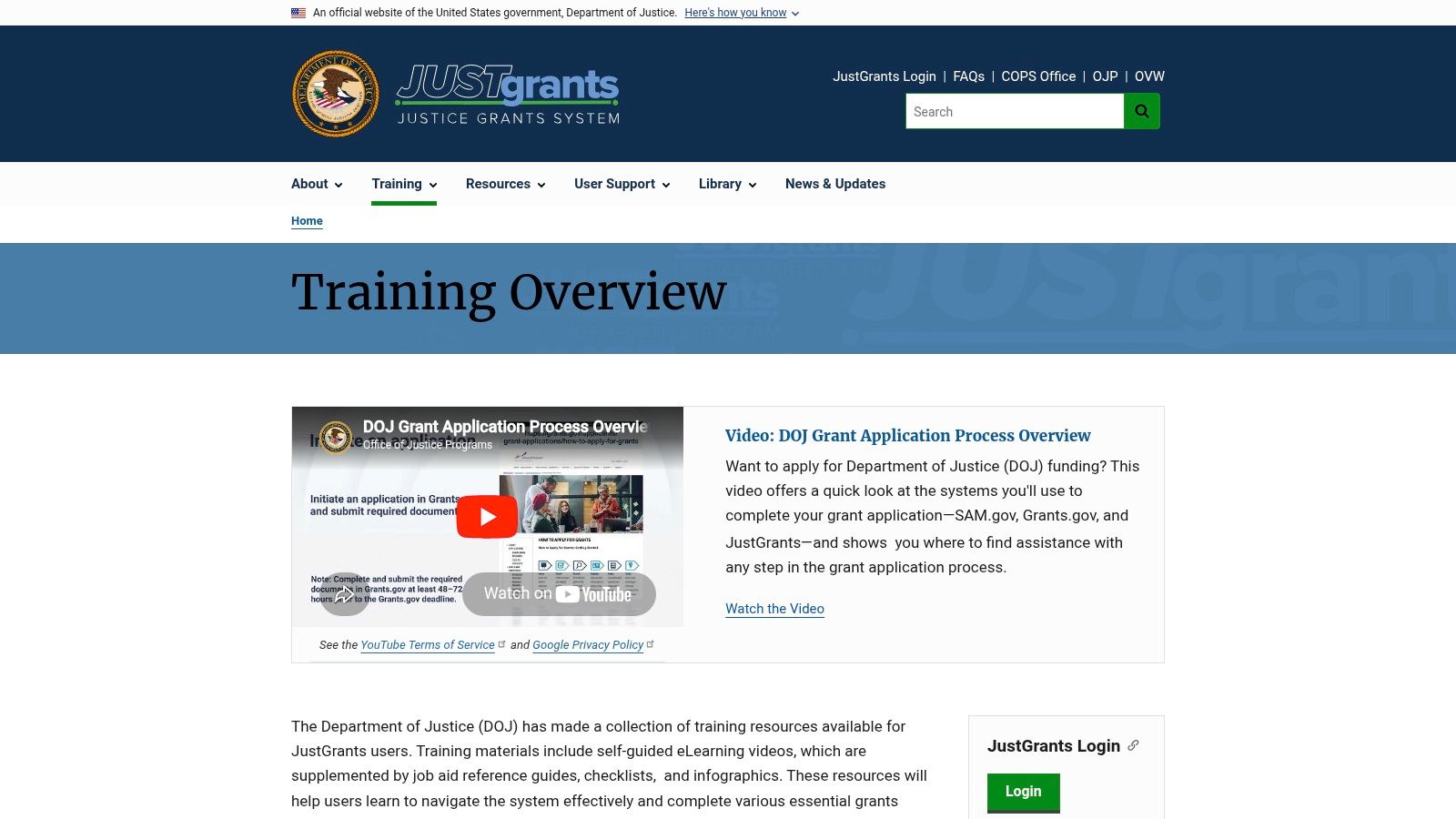
What makes this a unique entry among free grant writing classes online is its focus on the federal grant system’s mechanics. The training demystifies the interconnected world of Grants.gov, SAM.gov, and the JustGrants portal itself. Understanding these systems is a prerequisite for submission, and this training ensures your perfectly written proposal isn't rejected due to a technical error. It covers both pre- and post-award processes, giving writers and program managers crucial context for budget development and reporting requirements.
Key Features & Offerings
- Modular eLearning: Bite-sized videos and tutorials walk you through specific actions within the federal grant application and management systems.
- Downloadable Job Aids: Access checklists, step-by-step guides, and reference documents that you can keep on hand during the application process.
- System-Wide Orientation: Provides an orientation to the entire federal grants ecosystem, explaining how different government platforms interact.
Key Takeaway: JustGrants training equips you with the technical skills to navigate the federal application process, ensuring your proposal gets submitted correctly and your organization stays compliant.
Pros:
- Strong compliance focus is invaluable for program, finance, and administrative staff.
- Clear visual tutorials demystify complex federal government systems.
- Directly sourced from a major federal grant-making agency.
Cons:
- Content is specific to the Department of Justice and may not generalize perfectly to all federal agencies.
- Does not concentrate on the craft of proposal writing or narrative development.
Website: justicegrants.usdoj.gov/training
5. U.S. EPA Grants Webinars
While not a traditional grant writing class, the U.S. Environmental Protection Agency (EPA) offers essential training for any organization seeking federal funding in the environmental sector. These webinars are invaluable for understanding the complex world of government grants, focusing on compliance, policy, and management rather than proposal narrative. Attending these sessions helps you build the administrative backbone required to successfully manage a federal award.
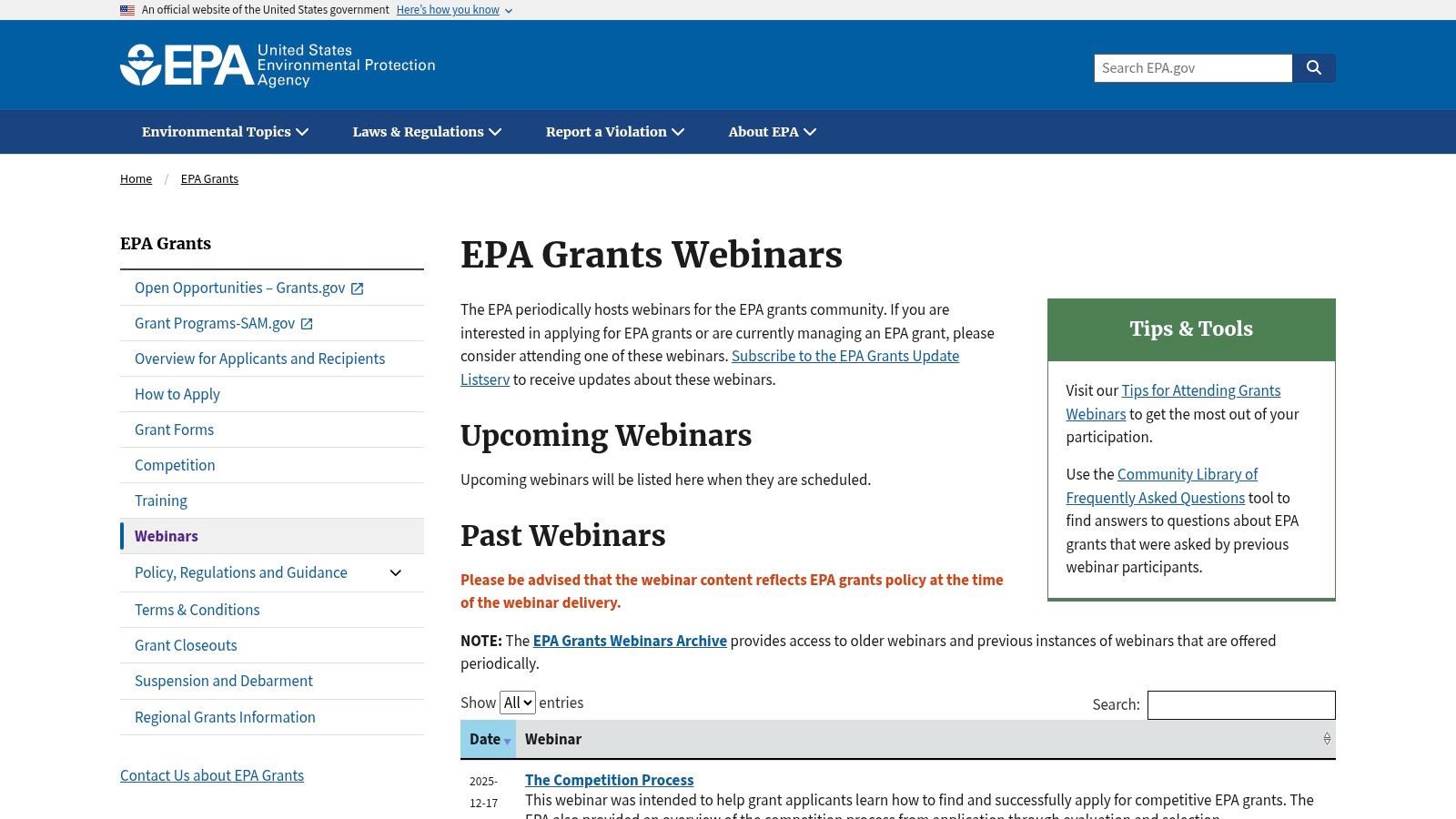
What makes the EPA's offerings distinct is the source of the information: it comes directly from the agency's grant specialists. This provides a rare opportunity to learn precisely what a federal agency expects regarding budgeting, reporting, and adherence to Uniform Guidance. For organizations intimidated by federal bureaucracy, these free grant writing classes online demystify the process and highlight common pitfalls to avoid, ensuring you can manage funds correctly once awarded.
Key Features & Offerings
- Policy & Compliance Briefings: Get direct instruction on critical topics like Uniform Guidance (2 CFR 200), subaward management, and EPA-specific grant policies.
- Live & On-Demand Sessions: Participate in live webinars that often include a Q&A session with EPA staff, or access a library of recorded training sessions at your convenience.
- Timely Federal Updates: Stay informed about recent changes to federal grant rules and application procedures that could impact your eligibility and reporting requirements.
Key Takeaway: The EPA provides a masterclass in federal grant compliance, equipping your team with the knowledge to avoid costly administrative and financial errors on environmental or related grants.
Pros:
- Authoritative instruction directly from federal program and grant management staff.
- Helps organizations avoid common compliance and budgeting errors that can derail a federal award.
- Content is highly specific to the requirements of managing government funding.
Cons:
- Focus is almost entirely on regulatory and policy topics, not the art of persuasive grant writing.
- Training sessions are periodic and topic-specific rather than a continuous, structured course.
Website: https://www.epa.gov/grants/epa-grants-webinars
6. Instrumentl Trainings
Instrumentl offers a dynamic and modern approach to grant education, focusing on practical, actionable strategies for the entire grant lifecycle. While Instrumentl is known for its powerful grant prospecting platform, its free training workshops and webinars provide tremendous value on their own, making it a key resource for grant professionals looking to sharpen their skills and stay current.
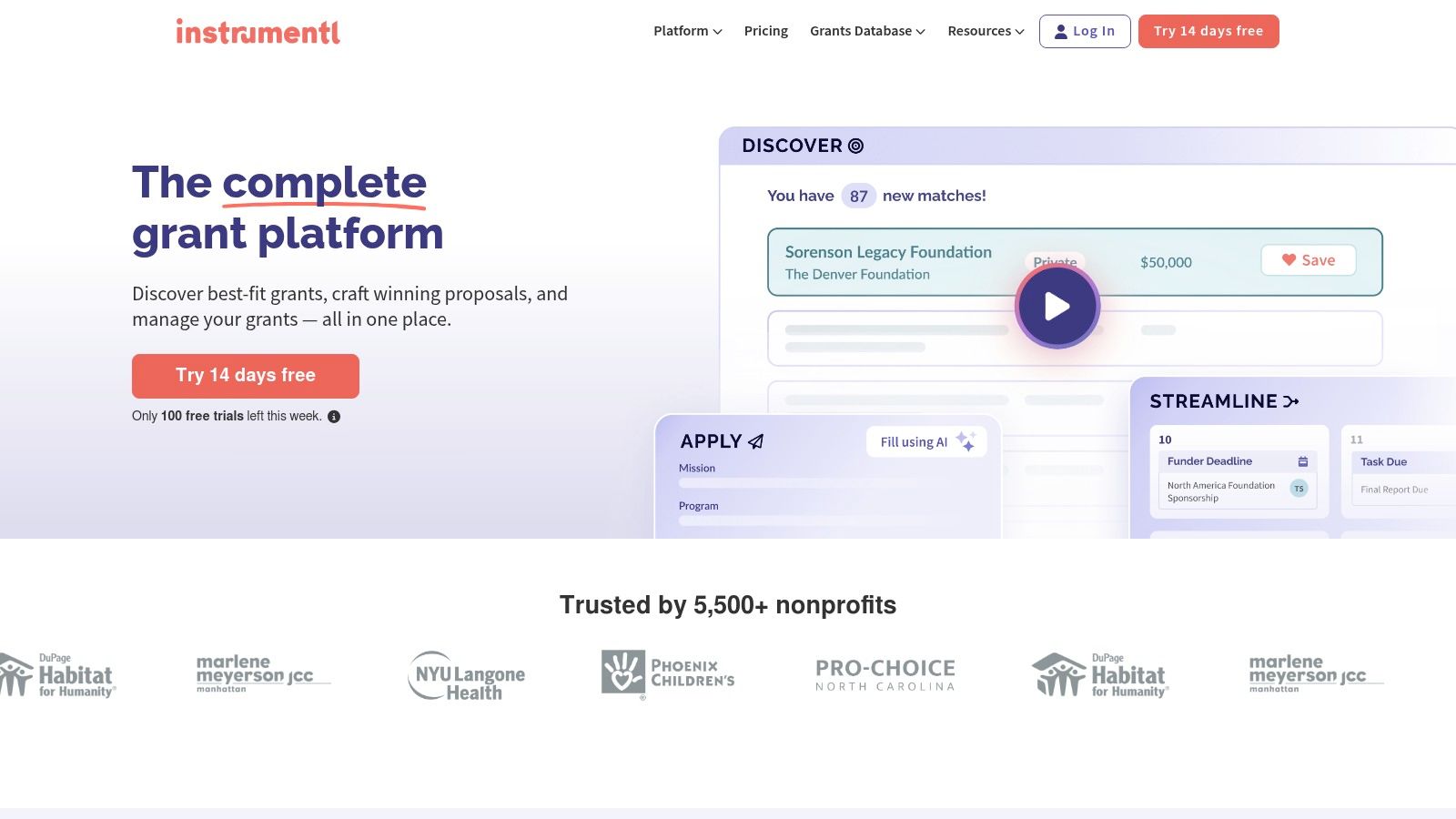
What makes Instrumentl's content stand out is its focus on efficiency and data-driven tactics. Their free grant writing classes online are often led by seasoned practitioners who share real-world templates and workflows. Sessions cover everything from crafting a compelling case statement to advanced prospecting techniques, equipping attendees with contemporary tools and methods. The availability of past recordings means you can access a deep library of expert advice at any time.
Key Features & Offerings
- Expert-Led Webinars: Frequent workshops with guest experts on topics like grant strategy, budgeting, and funder relationship building.
- Practical Templates: Many sessions include downloadable resources like budget templates, project planners, and sample narratives.
- On-Demand Library: Access to a rich archive of past recordings and help-center articles, allowing for self-paced learning.
Key Takeaway: Instrumentl's trainings are ideal for grant writers who want to move beyond the basics and learn modern, efficient tactics for finding and winning grants. The content bridges the gap between writing theory and real-world application.
Pros:
- Tactics and templates are highly practical and can be applied immediately.
- Covers a diverse range of topics for both private and public grants.
- Presenters are often active grant professionals with up-to-date insights.
Cons:
- Live sessions sometimes include brief product demonstrations for the Instrumentl platform.
- Some advanced content may assume familiarity with concepts best managed through a tool like their own; you can explore options in our guide to nonprofit grant writing software.
Website: www.instrumentl.com/webinars
7. CharityHowTo
CharityHowTo is a training platform designed for busy nonprofit professionals, offering a rotating selection of free webinars alongside more in-depth paid courses. Its strength lies in providing quick, actionable insights that small teams can immediately apply to their fundraising strategies. The platform is known for its practical, checklist-style approach to complex topics.
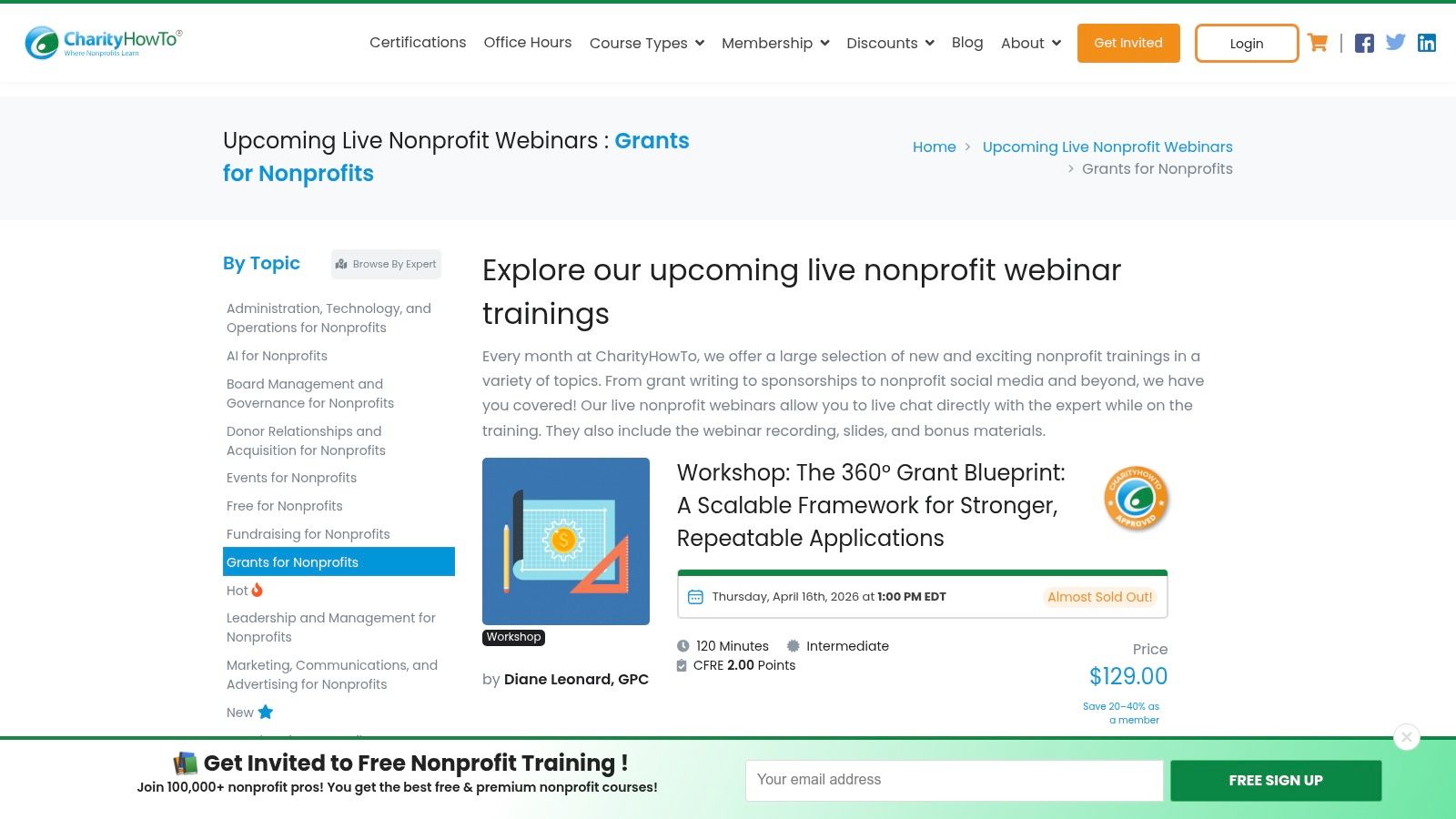
What makes CharityHowTo a valuable resource is its frequent schedule of free grant writing classes online, covering specific, targeted subjects. Instead of a single, all-encompassing course, you might find a webinar on "How to Write a Grant Budget" one month and "How to Find New Grant Opportunities" the next. This format is ideal for skill maintenance or getting a quick refresher on a particular part of the grant lifecycle. Learning about common pitfalls is also crucial; for instance, many proposals fail for preventable reasons, and understanding the most common reasons grant proposals get rejected can significantly improve your success rate.
Key Features & Offerings
- Rotating Free Webinars: Access a steady stream of no-cost sessions on grant planning, prospecting, and writing essentials.
- Actionable Resources: Most sessions come with downloadable slide decks, checklists, or handouts that serve as practical job aids.
- Easy Sign-Up Process: Registering for free live webinars is straightforward, with clear schedules posted on their website.
Key Takeaway: CharityHowTo delivers concise, practical training in a webinar format that's perfect for busy nonprofit staff needing quick, targeted guidance without a major time commitment.
Pros:
- Practical frameworks and checklists are designed for immediate application.
- The frequent cadence of free sessions is great for ongoing professional development.
- Topics are often highly specific and tactical.
Cons:
- The depth of content varies, with advanced topics usually reserved for paid courses.
- It's not a sequential program, so it’s less suited for building a comprehensive foundation from scratch.
Website: https://www.charityhowto.com/nonprofit-live-webinars/grants-for-nonprofits
8. Alison — Grant Writing for Non-Profits
Alison offers a uniquely direct and self-paced introduction to grant writing, perfect for individuals needing a rapid orientation without the structure of live webinars. The platform provides a free, on-demand course that covers the essential lifecycle of a grant proposal, from initial readiness and research to building relationships with funders after an award is secured. It's an excellent resource for onboarding volunteers or junior staff members who need a quick, foundational overview.
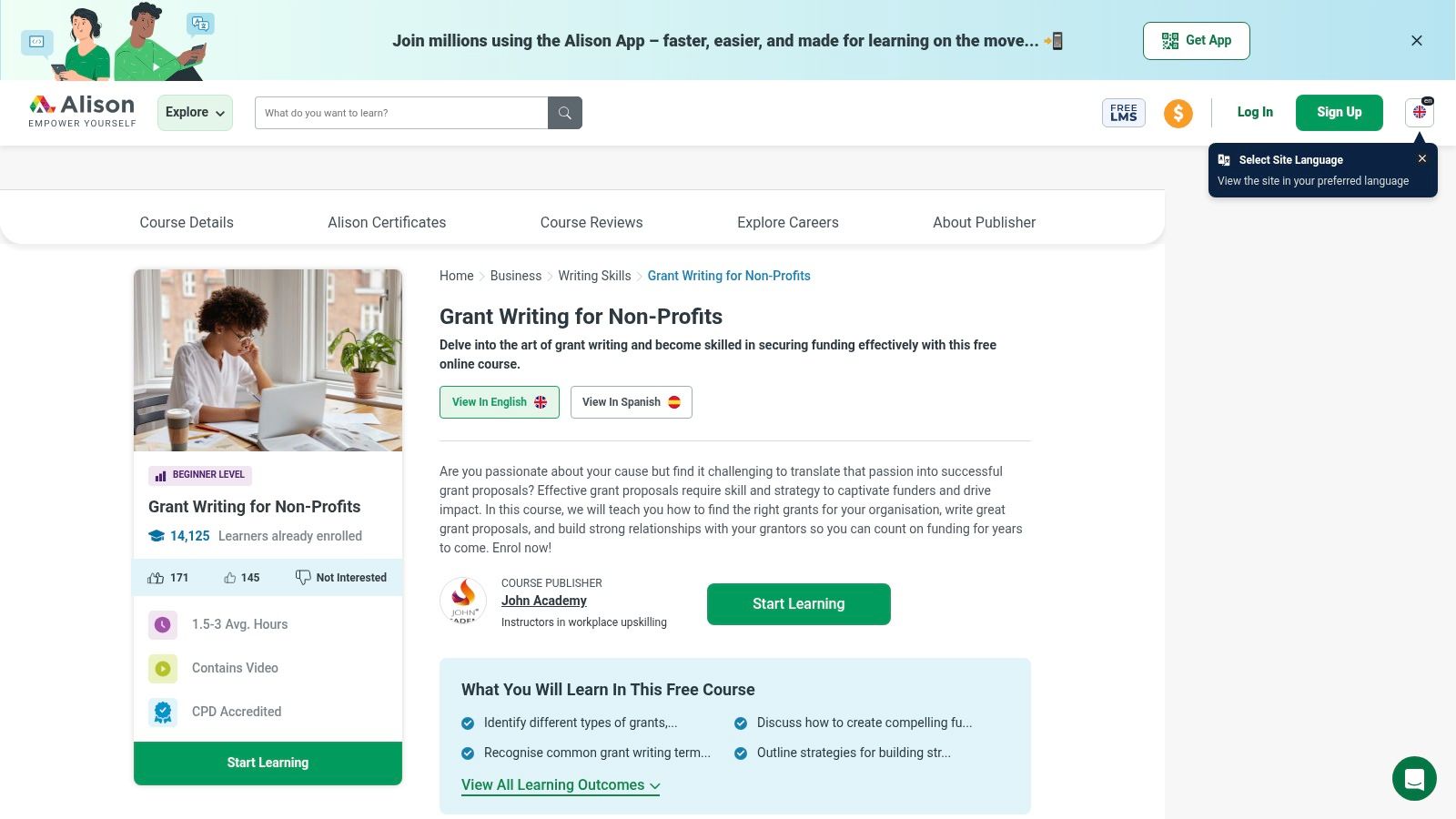
What makes Alison’s offering stand out among other free grant writing classes online is its low time commitment and absolute accessibility. The course is broken down into short, manageable modules with brief assessments to check your understanding. This format allows you to learn the core components of a proposal, budgeting principles, and post-award reporting at your own pace, fitting lessons into even the most fragmented schedules.
Key Features & Offerings
- On-Demand Modules: The entire course is pre-recorded and available 24/7, allowing you to start and stop as needed.
- Progress Tracking: The platform tracks your completion of each lesson and assessment, making it easy to pick up where you left off.
- Certificate Option: While the learning content is entirely free, there is an option to purchase a certificate upon completion if you need a documented credential for your resume or professional development file.
Key Takeaway: Alison is best for a no-frills, high-level introduction to the grant writing process. It’s an ideal starting point for volunteers or new hires who need to grasp the basics quickly and independently.
Pros:
- Completely free to access all learning materials with no hidden costs.
- Low time commitment makes it useful for quick onboarding or a basic skills refresher.
- Self-paced format provides maximum flexibility for busy schedules.
Cons:
- A certificate of completion requires payment.
- Content is introductory and lacks the depth, interactivity, and specific casework found in more advanced courses.
Website: alison.com/course/grant-writing-for-non-profits
9. Learn Grant Writing (7 Steps to Writing Grants)
Learn Grant Writing offers a highly focused, no-fluff introduction designed to give newcomers a clear, step-by-step framework. Its free mini-course, "7 Steps to Writing Grants," is an excellent orientation for anyone feeling overwhelmed by the grant writing process. Instead of broad theories, it provides a direct, actionable roadmap from identifying a need to submitting a proposal.
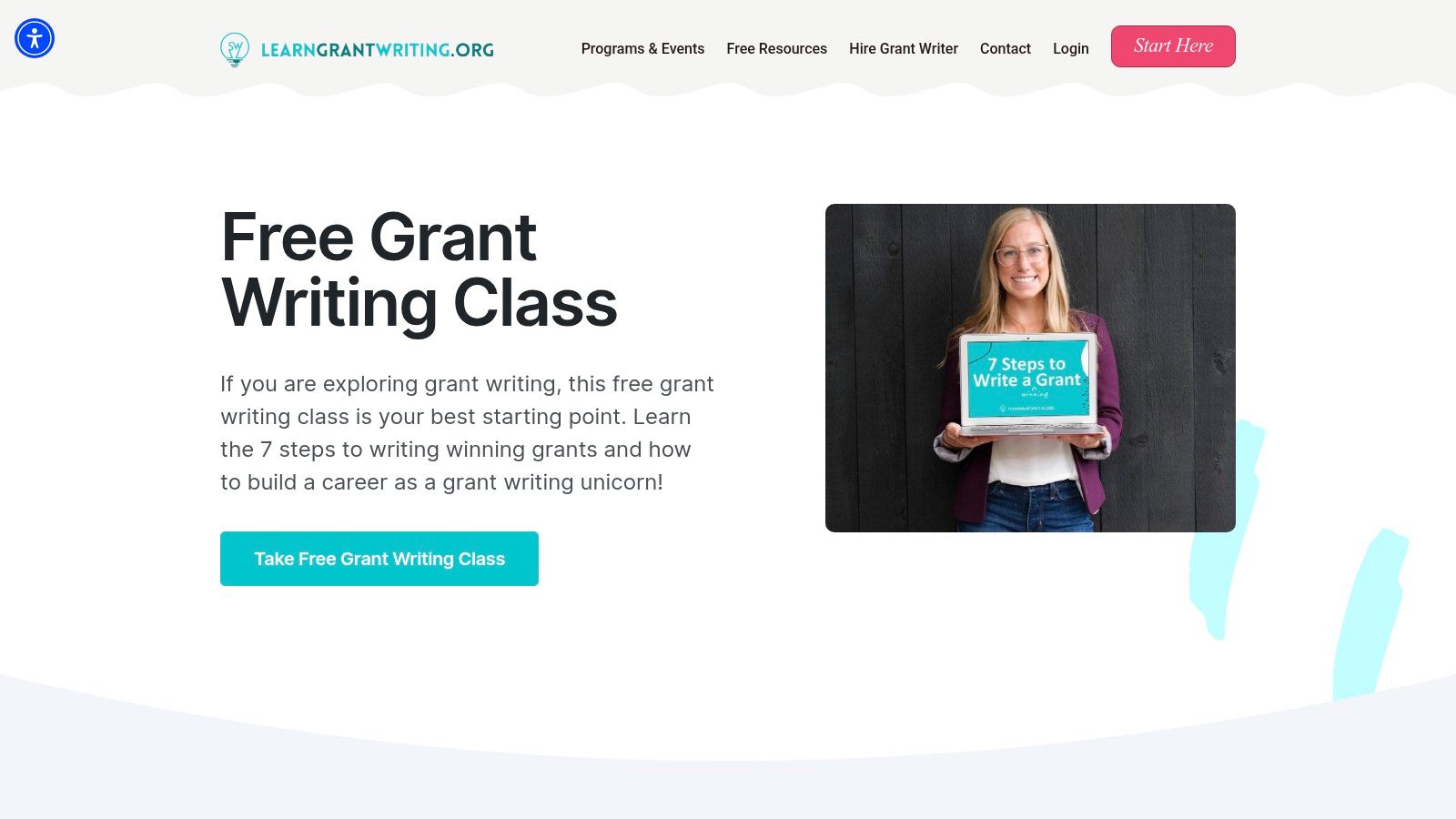
What makes this resource stand out is its brevity and practicality. The on-demand course is one of the more concise free grant writing classes online, making it perfect for busy nonprofit leaders or accidental grant writers who need a quick, big-picture overview before diving deeper. The session covers the entire grant lifecycle, including how to structure a narrative, develop a budget, and even tips for building a grant writing career.
Key Features & Offerings
- Step-by-Step Framework: The course is built around an easy-to-follow seven-step process that demystifies grant writing from start to finish.
- On-Demand & Focused: The short, single-module format is accessible anytime and respects your time by getting straight to the point.
- Downloadable Resources: Includes supplementary materials and practical advice on workflow management for aspiring grant writers.
Key Takeaway: This is the ideal starting point for a complete beginner who needs a quick, confidence-building overview of the entire grant writing process before committing to a more intensive program.
Pros:
- High signal-to-noise ratio; avoids jargon and complex theories.
- Provides a good big-picture overview to orient new grant seekers.
- Actionable framework is easy to remember and apply.
Cons:
- Content is strictly introductory; deeper lessons and coaching require paid offerings.
- Limited guidance on navigating specific funder requirements or federal grants.
Website: https://www.learngrantwriting.org/free-grant-writing-course/
10. Spark the Fire Grant Writing Classes
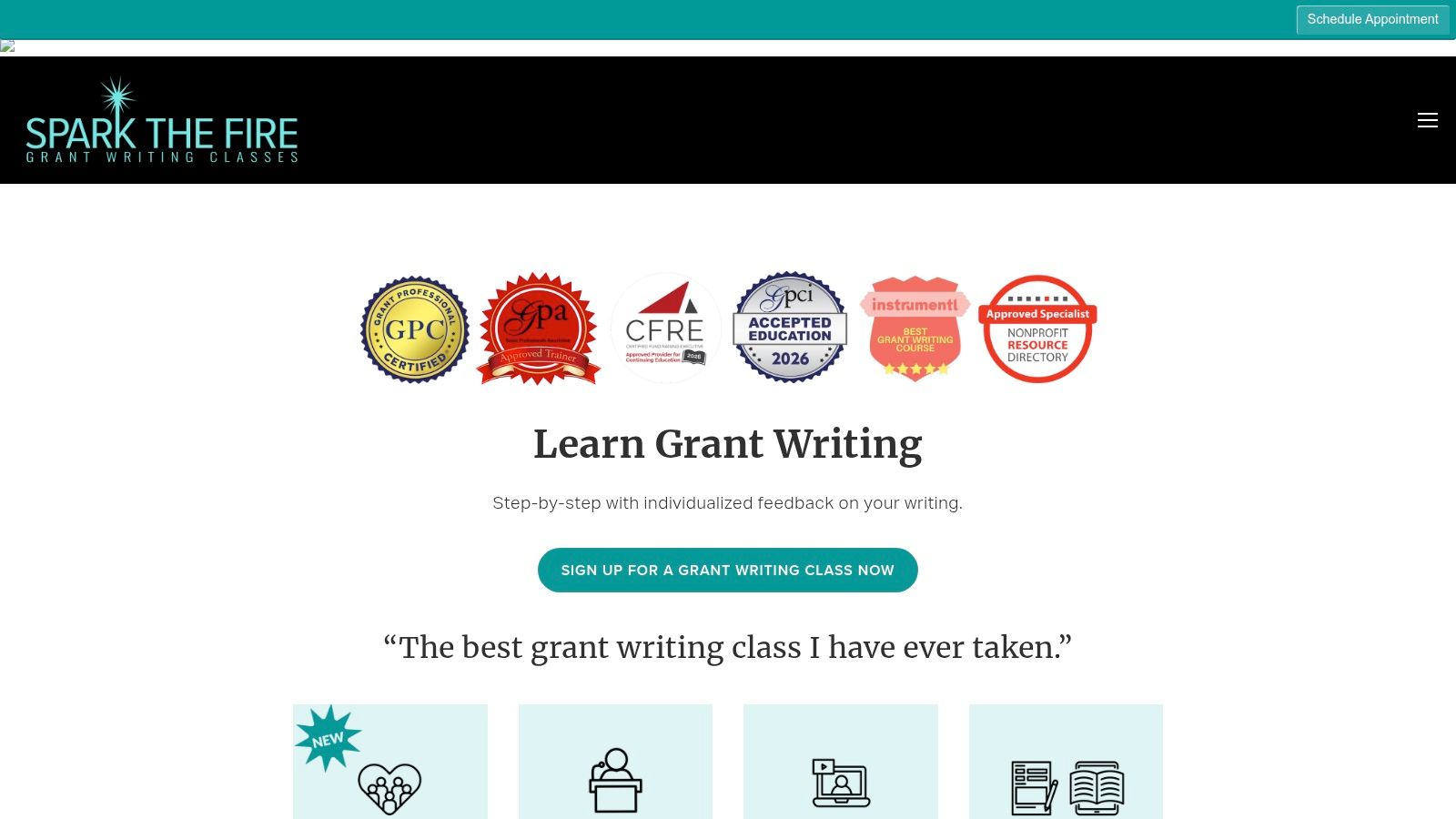
Spark the Fire offers a focused, high-impact approach for those needing a quick and practical introduction to grant writing. Rather than providing a broad library of courses, its model centers on a free one-hour class designed to deliver actionable fundamentals efficiently. Led by experienced grant professionals, this session is perfect for busy nonprofit leaders or teams who need to get up to speed without a significant time commitment.
What makes Spark the Fire a valuable resource is its direct, no-nonsense style. The class concentrates on the core components of a proposal, teaching you how to frame your story and needs in a way that resonates with funders. The format, available as both a live webinar and an on-demand recording, offers flexibility for individuals and makes it an excellent tool for group training or onboarding new development staff.
Key Features & Offerings
- Live One-Hour Classes: Participate in scheduled live sessions that often include a Q&A segment with the instructor.
- On-Demand Recordings: Access the free class anytime, making it easy to fit into any schedule or use for team training.
- Practitioner-Led Instruction: Learn from trainers who have direct, real-world experience writing and winning grants.
Key Takeaway: This is the ideal option for a fast-paced overview of proposal writing basics. It provides the essential knowledge to get started without the commitment of a multi-week course.
Pros:
- Time-efficient format is great for busy professionals and teams.
- Instruction is grounded in practical, real-world grant writing experience.
- Serves as an effective, no-cost introduction to the field.
Cons:
- The short, one-hour format limits the depth of content and lacks hands-on practice.
- Deeper dives into advanced topics require enrolling in their paid programs.
Website: sparkthefiregrantwriting.com
11. Grant Writing & Funding (Holly Rustick)
Grant Writing & Funding, led by seasoned professional Holly Rustick, offers a practical, systems-based approach to grant development. This platform is ideal for individuals at small nonprofits or aspiring freelance consultants who need to build a grant writing process from scratch. The training focuses less on theory and more on creating repeatable workflows and effective templates.
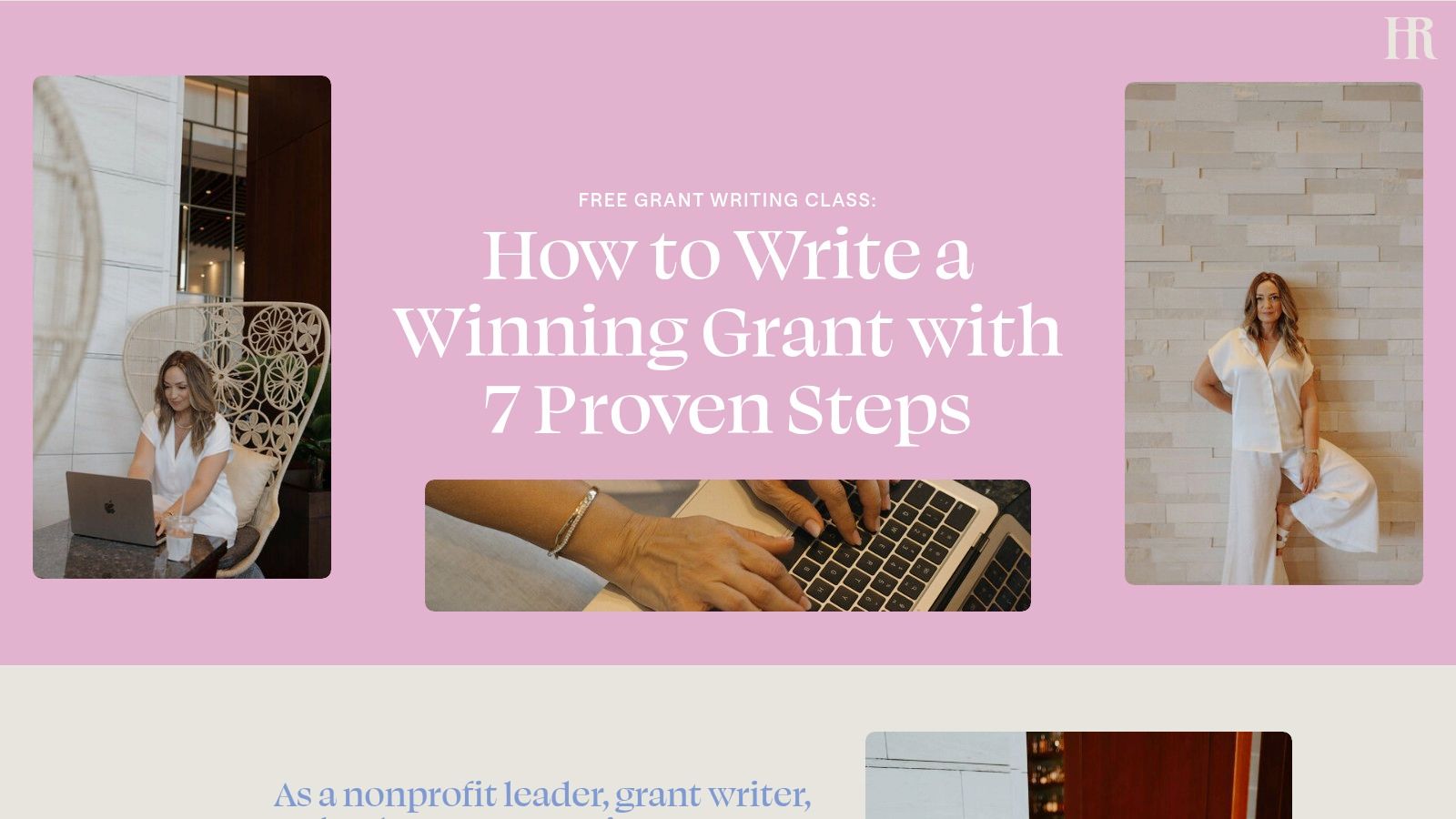
What makes this resource stand out is its focus on operational efficiency. The free grant writing classes online are delivered as short, structured video lessons that you can complete in under an hour. Holly Rustick's instruction provides clear, actionable steps for planning your proposal, crafting the narrative, and preparing a budget. The dual perspective, catering to both in-house nonprofit staff and external consultants, is a unique benefit.
Key Features & Offerings
- Focused Video Lessons: Quick, digestible training modules that cover the core components of a grant proposal.
- Consultant-Friendly Content: Unique insights and advice tailored to those looking to start a freelance grant writing career.
- Practical Systems & Templates: Emphasis on creating efficient workflows with downloadable resources to help you get organized immediately.
Key Takeaway: Holly Rustick’s training excels at teaching you how to build a functional grant writing system, making it perfect for small shops or solo practitioners who need structure and efficiency.
Pros:
- Clear, practitioner-oriented teaching style from an experienced professional.
- Extremely helpful for small nonprofits without a dedicated grant writer.
- Actionable templates and workflow advice you can implement right away.
Cons:
- Materials are introductory and may need to be supplemented for advanced grant seekers.
- Complex federal grant topics are not covered in depth in the free offerings.
Website: grantwritingandfunding.com/free-grant-writing-class
12. Bloomerang Webinars
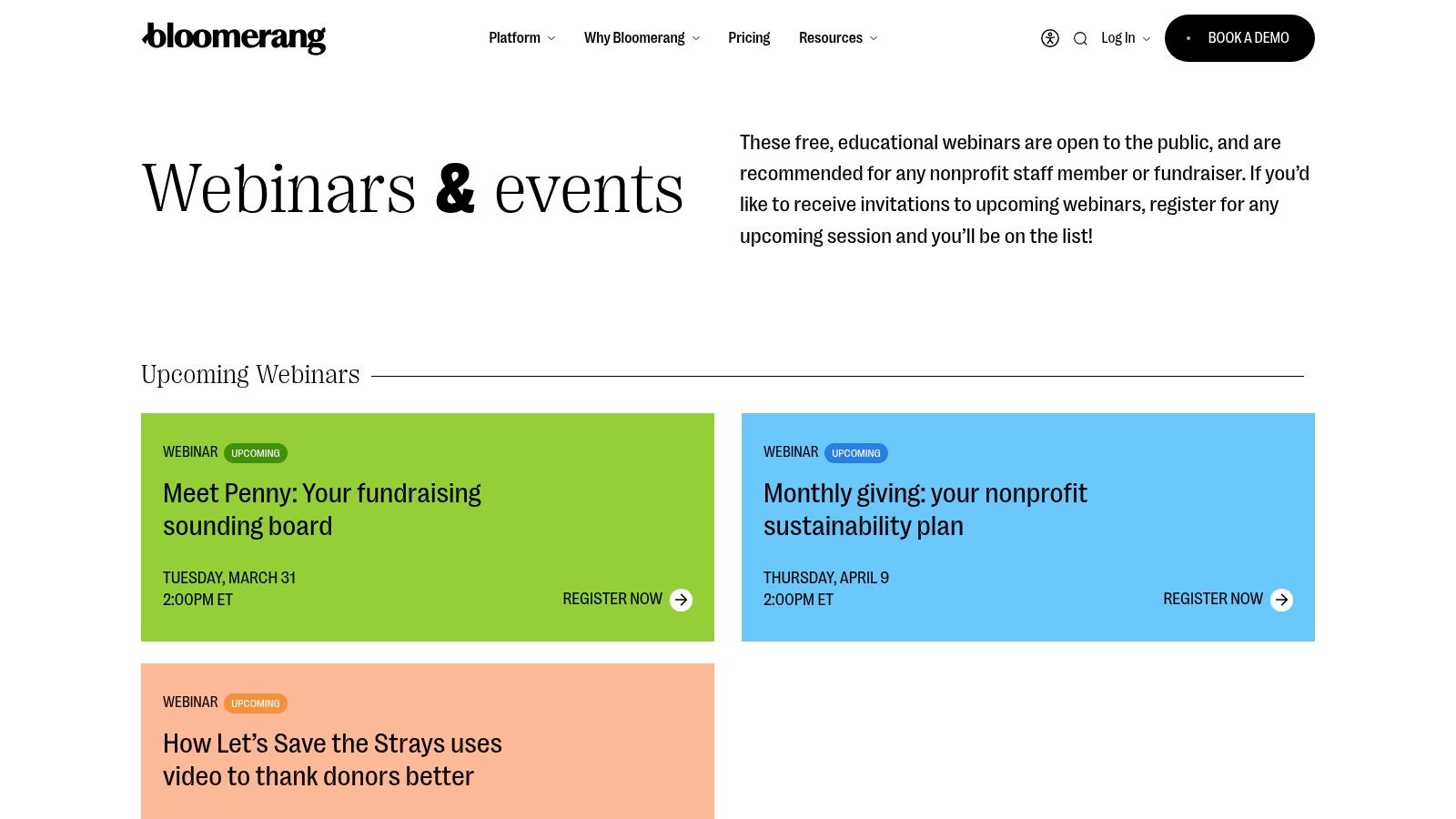
Bloomerang, a popular donor management software provider, extends its value to the nonprofit community by hosting a consistent stream of free educational webinars. While not a formal training academy, its webinar series frequently features seasoned grant professionals who deliver practical, actionable grant writing workshops. This makes it a reliable source for topical and timely fundraising education.
What makes Bloomerang a valuable resource is its partnership with external experts, offering fresh perspectives on grant writing and fundraising strategy. These free grant writing classes online are presented live, allowing for real-time interaction, but are also recorded and archived for on-demand viewing. A standout session like "Introduction to Grant Writing" provides a solid foundation, often accompanied by slides and checklists you can use immediately.
Key Features & Offerings
- Weekly Expert-Led Webinars: Access a steady calendar of live presentations from diverse fundraising consultants and grant experts.
- On-Demand Archive: Missed a session? The entire library of past webinars is available for you to watch at your convenience.
- Actionable Resources: Most webinars include downloadable slide decks, checklists, and templates that help you apply what you've learned.
- CFRE Credits: Some sessions are eligible for Certified Fund Raising Executive (CFRE) credits, adding professional development value.
Key Takeaway: Bloomerang's webinar series is an excellent way to gain insights from a wide range of fundraising experts without a financial commitment. The provided handouts are especially useful for turning knowledge into action quickly.
Pros:
- Reliable, weekly schedule of new free educational content.
- Features a variety of expert speakers, offering different viewpoints.
- Provides practical slides and checklists that can be implemented right away.
Cons:
- Content is not structured as a sequential course, so you must pick and choose relevant topics.
- The breadth of topics means advanced or highly specialized grant writing training can be infrequent.
Website: bloomerang.com/webinars-events/
12 Free Online Grant Writing Classes — Comparison
| Resource | Core focus ✨ | Quality ★ | Price/Value 💰 | Best for 👥 | Standout 🏆 |
|---|---|---|---|---|---|
| Candid Learning | Live & on‑demand proposal classes, templates, budget basics | ★★★★ | 💰 Free | 👥 Nonprofit practitioners; foundation/corporate seekers | 🏆 Trusted national trainer with practical handouts |
| NonprofitReady.org | Microlearning library & grant track; certificates/transcripts | ★★★ | 💰 Free | 👥 New hires, volunteers, small orgs | 🏆 Bite‑size onboarding & documented transcripts |
| Grants.gov Applicant Training | Step‑by‑step federal application workflow, guides & checklists | ★★★★ | 💰 Free | 👥 Federal grant applicants | 🏆 Official source for federal submission process |
| DOJ — JustGrants Training | JustGrants eLearning, job aids, pre/post‑award compliance | ★★★★ | 💰 Free | 👥 Program & finance staff on DOJ grants | 🏆 Strong compliance orientation and tutorials |
| U.S. EPA Grants Webinars | Policy, Uniform Guidance updates, Q&A; recorded webinars | ★★★ | 💰 Free | 👥 Enviro orgs & federal applicants | 🏆 Direct agency policy briefings to avoid pitfalls |
| Instrumentl Trainings | Webinars on prospecting, case statements, budgets & templates | ★★★★ | 💰 Free webinars (product demos mixed) | 👥 Grant strategists & prospect researchers | 🏆 Practical prospecting tactics + templates |
| CharityHowTo | Rotating free webinars + paid deep dives; handouts & checklists | ★★★★ | 💰 Free sessions; paid courses | 👥 Busy small teams needing refreshers | 🏆 Frequent, actionable frameworks for quick use |
| Alison — Grant Writing for Non‑Profits | On‑demand intro course with short assessments & tracking | ★★★ | 💰 Free to learn; certificate paid | 👥 Volunteers & brand‑new staff | 🏆 Truly on‑demand, low time commitment |
| Learn Grant Writing (7 Steps) | Concise end‑to‑end framework (LOIs, narratives, budgets) | ★★★ | 💰 Free | 👥 Beginners wanting a clear primer | 🏆 High signal‑to‑noise overview before deeper study |
| Spark the Fire Grant Writing Classes | One‑hour live classes with Q&A; recordings available | ★★★ | 💰 Free (short format) | 👥 Teams needing quick upskilling | 🏆 Time‑efficient practitioner‑led sessions |
| Grant Writing & Funding (Holly Rustick) | Short videos + downloads on planning, narratives, budgets | ★★★ | 💰 Free | 👥 Small nonprofits & freelance consultants | 🏆 Practitioner‑oriented systems & templates |
| Bloomerang Webinars | Weekly expert webinars with handouts, recordings & checklists | ★★★★ | 💰 Free webinars | 👥 Fundraisers & small orgs | 🏆 Reliable cadence of expert‑led, implementable sessions |
Final Thoughts
Embarking on the journey to master grant writing can feel immense, but as we've explored, the path is paved with a wealth of high-quality, free resources. The landscape of free grant writing classes online is no longer a collection of basic primers. Instead, it offers a sophisticated, multi-layered educational ecosystem for nonprofit professionals at every stage of their careers. From the foundational knowledge provided by Candid Learning and NonprofitReady.org to the highly specific, procedural training from government portals like Grants.gov and JustGrants, the opportunity to build a robust skill set without a budget is more accessible than ever.
The key takeaway is that there is no single "best" course. The most effective learning strategy is a blended one. A new program manager might start with an introductory course from Alison to grasp the basics, then move to a CharityHowTo webinar for a specific fundraising technique, and finally, take the Grants.gov applicant training to prepare for their first federal application. This mix-and-match approach allows you to construct a personalized curriculum that directly addresses your immediate needs and long-term career goals.
Selecting Your Starting Point
Choosing the right resource from this extensive list depends entirely on your current role, your organization's needs, and your personal learning style.
- For Executive Directors and Senior Leaders: Your time is limited. Focus on strategic resources. Instrumentl's trainings can offer high-level insights into prospecting, while Bloomerang's webinars can connect grant writing to broader fundraising and donor retention strategies. Your goal isn't to become the primary writer, but to understand the process, manage the workflow, and ask the right questions.
- For Aspiring or Junior Grant Writers: You need a strong foundation. Start with a comprehensive course like Candid’s "Introduction to Proposal Writing" or the 7-Steps course from Learn Grant Writing. These will give you the complete lifecycle of a proposal, from research to submission and reporting.
- For Program Managers: Your focus should be on articulating program impact. Holly Rustick's content and the "Spark the Fire" approach can be particularly useful for learning how to translate your program's daily activities into a compelling, data-driven narrative that resonates with funders. You are the source of the story; these courses teach you how to tell it effectively.
- For Federal Grant Seekers: Do not skip the official government training. The U.S. Department of Justice and EPA webinars are not optional; they are essential. These sessions provide the specific procedural knowledge required to successfully submit a compliant application, which is a different skill set than persuasive writing alone.
Beyond the Classroom: Putting Knowledge into Practice
Completing a course is just the first step. The real learning begins when you apply these concepts. Don't wait for the perfect grant opportunity to fall into your lap. Start practicing now by developing a "master proposal" for your organization's core programs. This document can be a template from which you pull sections for various applications, saving you immense time and effort down the road.
As you begin writing, remember that securing funding is a numbers game that requires persistence and a thick skin. Rejection is a standard part of the process, not a reflection of your program's value or your newfound skills. Each "no" is a data point. Use it to refine your proposal, research different funders, and improve your approach for the next application. By consistently engaging with the materials from these free grant writing classes online and actively applying your skills, you transition from a student into a capable, confident grant-seeking professional ready to secure critical funding for your mission.
Ready to turn your new grant writing knowledge into winning proposals? Fundsprout uses AI to help you draft compelling grant narratives, letters of inquiry, and reports in a fraction of the time. Move from learning to applying your skills by visiting Fundsprout and see how our tools can support your entire grant writing workflow.
Try 14 days free
Get started with Fundsprout so you can focus on what really matters.