10 High-Impact Alumni Fundraising Strategies to Implement in 2026
Unlock your nonprofit's potential with these 10 actionable alumni fundraising strategies. Boost engagement and giving with proven tactics for 2026.

Abdifatah Ali
Co-Founder
For small and mid-sized nonprofits, alumni represent a uniquely passionate and potentially powerful source of support. Traditional, one-size-fits-all appeals, however, are losing their effectiveness. The key to unlocking sustainable growth lies in moving beyond generic campaigns and implementing specific, multi-channel alumni fundraising strategies that build community, honor personal connections, and demonstrate tangible impact.
This article provides a detailed roundup of 10 proven strategies, moving from broad engagement tactics to focused major gift programs. We will break down each approach into actionable steps, key performance indicators (KPIs), and practical examples, creating a blueprint for development teams to build a more resilient and diversified fundraising engine.
The goal is to provide clear, actionable guidance that you can implement immediately. Forget vague theories; this is a practical playbook for modern fundraising. Whether you're looking to re-engage lapsed donors, cultivate your next generation of leaders, or secure legacy gifts, these methods offer a roadmap to deepen relationships and drive meaningful philanthropic investment in your mission. We will explore how to structure everything from peer-to-peer ambassador networks and affinity-based giving groups to planned giving circles and corporate matching gift programs. Let's begin.
1. Segmented Giving Programs by Class Year and Graduation Decade
Grouping alumni by graduation year or decade is one of the most effective alumni fundraising strategies because it acknowledges that a donor's relationship with your organization evolves over time. A recent graduate has different financial capabilities and communication preferences than an alumnus celebrating their 25th reunion. This approach moves beyond a one-size-fits-all model, allowing for specific messaging that resonates with each cohort's life stage.
By dividing your alumni base, you can create targeted campaigns that speak directly to their experiences and capacity. For example, younger alumni (0-10 years post-graduation) often respond well to smaller, recurring gift requests and social media-driven peer-to-peer campaigns. In contrast, established alumni (25+ years) may be more interested in legacy giving, endowments, and major gift opportunities that secure their impact for future generations. For a deep dive into how other industries approach this, reviewing some powerful customer segmentation examples can spark creative ideas for grouping your alumni.
How to Implement This Strategy
- Identify Key Cohorts: Start by grouping alumni into logical segments: Recent Grads (0-5 years), Young Alumni (6-15 years), Mid-Career (16-30 years), and Senior Alumni (30+ years).
- Develop Tailored Messaging: Create unique value propositions for each group. For recent grads, focus on participation and community. For senior alumni, emphasize legacy and mentorship.
- Customize Ask Amounts: Align your fundraising asks with the typical giving capacity of each cohort. Suggest a monthly gift of $10 for a young alum, while proposing a leadership-level gift to someone in their peak earning years.
- Track Everything: Use a robust database to monitor giving patterns and engagement levels for each segment. Managing this data is critical, and choosing from the best CRM software for nonprofits can provide the necessary tools for effective tracking and reporting.
- Recruit Class Ambassadors: Empower influential alumni from each decade to act as peer leaders, championing giving campaigns and encouraging participation from their classmates. Stanford’s reunion-based giving campaigns successfully use this model to drive class-specific competition and pride.
2. Peer-to-Peer Alumni Ambassador Networks
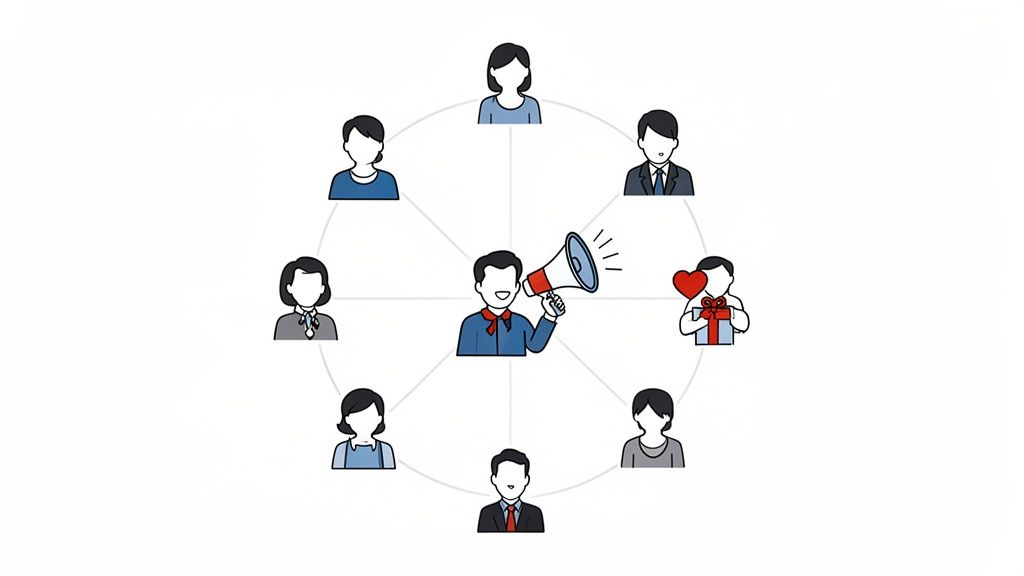
Turning dedicated alumni into fundraising ambassadors is one of the most powerful alumni fundraising strategies because it personalizes the ask and builds on existing relationships. This approach leverages the social capital of your most engaged supporters, empowering them to solicit donations from their classmates and peers. An appeal from a trusted friend or respected classmate often carries more weight than a generic email from the development office, transforming passive donors into active fundraising partners.
This strategy works by identifying influential alumni who have a history of giving and engagement and asking them to become volunteer fundraisers. These ambassadors conduct personal outreach, sharing their own reasons for giving and encouraging others to join them. This peer-to-peer model is particularly effective because it uses social proof and authentic connections to drive both participation and gift size.
How to Implement This Strategy
- Recruit the Right Ambassadors: Identify and invite alumni who are well-connected, respected within their class, and have a consistent giving history. Look for natural leaders and community builders.
- Provide Robust Training and Resources: Equip your ambassadors with clear talking points, campaign messaging, and a toolkit that includes email templates and social media graphics. Offer training on solicitation techniques and how to handle common objections.
- Set Clear Expectations and Goals: Define what success looks like for your ambassadors. Provide them with a manageable list of peers to contact and set reasonable, yet ambitious, fundraising and participation goals.
- Establish a Support System: Create ambassador cohorts that meet regularly, either virtually or in person, to share successes, troubleshoot challenges, and build a sense of team camaraderie. This provides crucial support and motivation.
- Track and Recognize Performance: Use a simple system to monitor ambassador outreach and results. Publicly acknowledge top performers through awards, mentions in newsletters, or special event invitations to show appreciation and inspire friendly competition. The University of Michigan’s reunion giving committees excel at this, mobilizing over 500 ambassadors for their campaigns.
3. Reunion and Class-Based Giving Campaigns
Tying major fundraising pushes to alumni reunion events is one of the most powerful alumni fundraising strategies because it combines nostalgia, peer influence, and a clear deadline. This approach centers on creating a sense of shared purpose and friendly competition among graduating classes, often culminating during their milestone reunion weekends (e.g., 5th, 10th, 25th). It capitalizes on the heightened sense of connection and reflection that alumni feel when reconnecting with classmates and their alma mater.

This method moves beyond individual asks by creating a collective goal, motivating donors through public recognition and class pride. Institutions like Princeton and Dartmouth have built legendary campaigns around this model, raising tens of millions of dollars from single reunion classes. The built-in timeline of a reunion provides a natural fundraising arc with clear touchpoints for engagement, solicitation, and celebration, making it an incredibly effective tool for both participation and major gifts.
How to Implement This Strategy
- Form a Committee Early: Establish a class giving committee 18 to 24 months before the reunion. This group of dedicated volunteers will be essential for peer-to-peer outreach and building early momentum.
- Create a Class Case for Support: Develop a compelling narrative that connects the class’s fundraising goal to a specific, current institutional need. This gives the campaign a tangible purpose beyond a simple dollar amount.
- Publicize Progress: Regularly share updates on progress toward both dollar and participation goals. A public leaderboard showing how the class stacks up against others can fuel a competitive spirit.
- Offer Reunion-Specific Incentives: Provide exclusive giving opportunities for reunion attendees, such as special recognition in the reunion program, access to a VIP event, or unique class-based naming opportunities on campus.
- Recognize Class Leaders: Prominently feature and thank your class giving committee and top donors in all reunion communications, materials, and at the event itself. This public acknowledgment honors their commitment and inspires others to step up. Wellesley College effectively uses this by celebrating classes that achieve high participation percentages.
4. Affinity-Based and Cause-Focused Alumni Giving Groups
Connecting alumni through shared interests, causes, or identities is a powerful alumni fundraising strategy that taps into personal passions. This approach moves beyond the general alumni fund to create focused giving circles around specific areas, such as academic departments, social impact initiatives, identity-based communities, or geographic regions. It allows donors to see a direct line between their gift and a cause they care deeply about, fostering a stronger sense of community and purpose.
When alumni can direct their giving toward a specific passion, their engagement and generosity often increase. For instance, an environmental science graduate may feel more compelled to give to a sustainability fund than a general one. Similarly, identity-based groups like Howard University's Black Alumni Network or UC Berkeley's LGBTQ+ alumni giving circle create a space for community while funding programs that directly support those students. This model transforms giving from a transactional act into a meaningful expression of personal values.
How to Implement This Strategy
- Identify Potential Groups: Survey your alumni to gauge interest in potential affinity areas. Start with 1-2 pilot groups based on strong existing communities, like a "Women in Business" network or a circle for graduates of a specific program.
- Recruit Passionate Leaders: Find dedicated volunteer leaders for each group. These champions are essential for driving peer-to-peer engagement, organizing events, and communicating the group's impact.
- Establish Clear Governance: Create a simple structure for how each group will operate, make funding decisions, and communicate with its members. Transparency is key to building and maintaining trust.
- Create Dedicated Giving Pages: Provide an easy-to-use online giving portal for each affinity group. This simplifies the donation process and allows for accurate tracking of the group's collective fundraising progress.
- Report on Specific Impact: Develop group-specific impact reports and dashboards. Show members exactly what their collective contributions have achieved, such as the number of scholarships funded for first-generation students or the progress of a research project they supported.
5. Planned Giving and Legacy Circle Programs
Planned giving is one of the most powerful long-term alumni fundraising strategies, focusing on securing major deferred gifts through bequests, charitable trusts, and gift annuities. This approach allows alumni to make a substantial future impact, often representing the largest single donation they will ever make. Legacy Circle programs support this by creating exclusive communities that recognize and celebrate these forward-thinking donors during their lifetime, fostering a deeper connection to the institution.
This strategy is particularly effective for engaging mid-to-late career alumni and retirees who have accumulated wealth and are considering their legacy. It provides them with tax-efficient ways to support your mission while maintaining their financial security. Princeton University, for example, receives over $80 million annually from bequests, showcasing the immense potential of a well-structured planned giving program. The key is to build a program that makes a complex process feel personal, accessible, and meaningful.
How to Implement This Strategy
- Identify and Segment Prospects: Focus on alumni aged 55 and over who have a consistent giving history or show wealth indicators. Create a separate communication track for this group to avoid mixing planned giving messages with annual fund appeals.
- Develop a Compelling Case for Support: Clearly articulate how planned gifts will secure the institution's future. Share stories of what past legacy gifts have accomplished to inspire confidence and vision.
- Offer Expert Resources: Provide value by offering free estate planning consultations through partner attorneys or financial advisors. Create accessible digital resources, such as online gift calculators and downloadable guides.
- Create a Legacy Society: Establish a named society, like Penn's Heritage Society, to recognize donors. Host intimate events, webinars, and recognition dinners exclusively for members to build community and show appreciation.
- Integrate Planned Giving into Your Overall Plan: Conversations about bequests and trusts should be a natural part of major gift officer discussions. Ensure this strategy is a formal component of your development goals by building it into your fundraising plan format.
- Provide Flexible Recognition: Acknowledge that not all legacy donors want public recognition. Offer a range of options, from naming opportunities to anonymous acknowledgments, to respect each individual’s preference.
6. Volunteer-Driven Annual Phonathon and Telemarketing Programs
A well-organized phonathon remains one of the most personal and effective alumni fundraising strategies for securing annual gifts. This approach uses dedicated student or alumni volunteers to make direct calls to prospects, creating a human connection that digital channels often lack. The power of a live conversation allows callers to share stories, answer questions in real time, and personally ask for support in a way that resonates with many alumni, especially those who value tradition and direct engagement.
Modern phonathons are not just about cold calling; they integrate with broader digital efforts. A call might be followed by a personalized email with a direct giving link or a text message to confirm a pledge. This hybrid model combines the warmth of human interaction with the convenience of online giving. Programs like Penn State's student-run phonathon, which raises over $5 million annually, demonstrate that this direct outreach method builds both financial support and a stronger sense of community.
How to Implement This Strategy
- Recruit and Train Callers: Your best callers are often engaged students or recent alumni donors. Train them on relationship-building and impact storytelling, not just reading from a script. They should be prepared to have genuine conversations.
- Segment Your Calling Lists: Don't call everyone with the same message. Match callers with prospects based on shared interests, graduation years, or academic programs to create a more natural connection.
- Optimize Call Timing: Schedule calling shifts during peak hours when alumni are most likely to be available, typically evenings from 6:00 PM to 9:00 PM and on weekends.
- Integrate Digital Follow-Up: For alumni who don't answer, have a system in place to send an immediate follow-up email or text message referencing the missed call and providing an easy way to give online.
- Emphasize Impact in Scripts: Move beyond asking for money. Equip callers with powerful, brief stories about how donations directly support students, research, or campus initiatives.
- Provide Clear Giving Options: Make it simple for a donor to commit. Offer multiple pledge levels and payment methods, including credit card over the phone, online links, and recurring gift options. The University of Virginia’s phonathon successfully reaches over 100,000 alumni annually by making the process clear and personal.
7. Corporate Matching Gift Programs and Employer Engagement
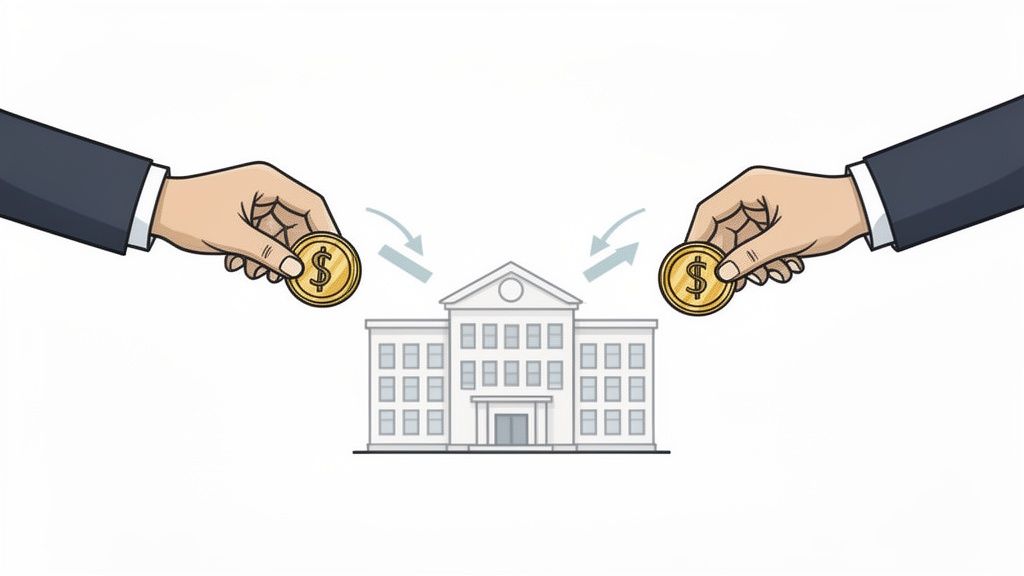
Engaging with alumni at their place of employment is one of the most powerful alumni fundraising strategies because it unlocks a new revenue stream with minimal extra effort from the donor. This approach taps into corporate philanthropy by encouraging alumni to use their employer's matching gift programs, which can double or even triple the value of their original donation. It transforms a single gift into a powerful partnership between the alumnus, their employer, and your institution.
Beyond individual gift matching, this strategy builds valuable relationships with corporations where your alumni have a strong presence. It opens doors for event sponsorships, workplace giving campaigns, and higher-level corporate support. For example, Yale's program processes over 5,000 matches annually, while MIT actively engages alumni at more than 500 corporations, demonstrating the massive potential of a focused employer engagement plan.
How to Implement This Strategy
- Build an Employer Database: Actively collect and maintain accurate employer information for your alumni. Track companies with known matching gift policies and identify those with the highest concentration of your graduates.
- Simplify the Matching Process: Make it incredibly easy for donors to find and submit matching gift requests. Embed a searchable database of participating companies directly on your donation form or confirmation page.
- Communicate Consistently: Include information about corporate matching in every solicitation, from annual appeal letters to email campaigns and social media posts. A simple reminder like, "Does your employer match donations?" can significantly increase revenue.
- Host Workplace Events: Partner with alumni at major companies to host "lunch and learn" sessions or kickoff events for workplace giving campaigns. This brings your mission directly to potential supporters.
- Create Friendly Competition: Foster a sense of community and competition by launching giving challenges between companies with large alumni populations. Publicly recognize the company with the highest participation or total funds raised.
- Provide Impact Reports: Thank both the employee and the employer for their joint contribution. Send tailored reports to corporate partners detailing the collective impact of their employees' giving.
- Target High-Potential Companies: Identify companies with generous matching ratios (2:1 or 3:1) and a significant number of alumni employees. Develop targeted outreach campaigns for these high-opportunity segments.
8. Digital and Direct Mail Omnichannel Alumni Engagement Campaigns
Combining digital channels with traditional direct mail creates a powerful, layered communication strategy that meets alumni where they are. This omnichannel approach acknowledges that communication preferences vary significantly across different generations. While younger alumni may respond best to an Instagram story or a targeted email, older alumni often value the tangible, personal touch of a physical mailer. Integrating both methods ensures your message reaches the widest possible audience and reinforces your appeal across multiple touchpoints.
The core of this strategy is creating a seamless experience. A well-designed mail piece can include a QR code that directs a recipient to a personalized online giving page or a video message. Similarly, a digital campaign can be timed to follow up on a recent mailing, reminding alumni of the opportunity to give. This creates a cohesive narrative that builds momentum and makes it easier for alumni to respond. Princeton’s personalized "Impact Report" mailers, for example, achieved an impressive 8% response rate by connecting a physical piece to clear, compelling stories of donor impact.
How to Implement This Strategy
- Segment Audiences for Both Channels: Divide your alumni lists for both email and direct mail by class year, giving history, and geographic location. Create 5-10 distinct segments for mailings to allow for customized messaging.
- Develop a Coordinated Content Calendar: Plan your campaigns so digital and direct mail efforts support each other. An email could preview a special report that will arrive by mail, or a social media post could celebrate the launch of a direct mail appeal.
- Bridge the Physical and Digital Divide: Always include digital calls-to-action in your mailings. Use QR codes, personalized URLs (P-URLs), and clear links to your website to make the transition from mail to online giving effortless.
- Time Your Follow-Ups: Send a coordinated follow-up email 3-5 days after a mail piece is expected to arrive. This simple touchpoint can significantly lift response rates by serving as a timely reminder.
- Create High-Impact Social Content: Use short-form video (Reels, TikTok) to share student testimonials and campus updates. Stanford’s use of Instagram storytelling successfully drove a 40% increase in engagement among young alumni.
- Test and Analyze Everything: A/B test email subject lines, send times, and content formats. For direct mail, test different appeal letters, ask amounts, and designs on smaller sample groups before a full rollout. Monitor your analytics to see what resonates and refine your approach.
9. Fundraising Events (In-Person and Virtual Galas, Receptions, Dinners)
Fundraising events are a cornerstone of alumni fundraising strategies because they create dedicated moments for community building and philanthropy. These gatherings, from large-scale galas to intimate leadership dinners, serve multiple purposes: deepening relationships, cultivating major gift prospects, and celebrating institutional milestones. Events provide a powerful platform to articulate your mission, share impact stories, and make a direct, compelling case for support in a high-energy, engaging environment.
The modern approach to alumni events blends in-person and virtual components to maximize reach and accessibility. While a gala can generate significant revenue and excitement on-site, a virtual attendance option allows alumni from around the world to participate. For example, Penn Medicine's annual gala consistently raises over $3 million, while Northwestern's virtual gala during the pandemic successfully reached an audience of over 2,000 alumni. The key is to design an experience, whether in-person or online, that fosters connection and inspires generosity. For successful and engaging events, explore various high-impact philanthropic fundraising gala ideas to truly captivate your donor base.
How to Implement This Strategy
- Plan with a Long Runway: Begin planning major events 6-12 months in advance. This provides ample time to secure venues, line up compelling speakers, and build a strong corporate sponsorship pipeline.
- Integrate a Clear Ask: Don't let the fundraising appeal be an afterthought. Weave the call to give into the program authentically, often tied to a powerful story or a specific funding initiative.
- Offer VIP Experiences: Create special opportunities for top prospects and donors, such as a pre-event reception with institutional leaders or reserved seating. This acknowledges their importance and provides valuable cultivation time.
- Facilitate Intentional Networking: Use strategic seating charts, name tags with affiliations, and facilitated introductions to help alumni connect with peers and institutional representatives.
- Follow Up Promptly: Contact all attendees within two weeks of the event. Thank them for coming, share the fundraising results, and for those who haven't given, make a follow-up solicitation.
- Measure Key Metrics: Track attendance, new donors acquired, total funds raised, and post-event engagement to evaluate the event's return on investment. If corporate partners are a focus, you’ll need to build a strong sponsorship package to secure their support.
10. Direct Mail Campaigns with Personalized Impact Storytelling
While digital communication often dominates fundraising conversations, a well-executed direct mail campaign remains one of the most powerful alumni fundraising strategies, particularly for older demographics. This approach moves far beyond generic mailings by combining data-driven segmentation with compelling, personalized stories of impact. Instead of a one-size-fits-all appeal, each piece is customized to a recipient's interests, giving history, or academic background, making the connection tangible and personal.
Modern direct mail is not a standalone effort; it serves as a physical touchpoint in a coordinated, multi-channel campaign. By integrating elements like QR codes that link to personalized landing pages or videos, you can create a seamless journey from the mailbox to a digital giving platform. This method stands out in a crowded digital space, offering a tactile experience that can capture attention more effectively than an email. For instance, Princeton's personalized 'Impact Report' mailers have achieved impressive response rates by telling specific stories relevant to the recipient.
How to Implement This Strategy
- Segment Your Mailing List: Divide your alumni database into 5-10 distinct audiences based on factors like major, past giving to specific funds, or career field. Create unique messaging and impact stories for each.
- Tell a Specific Story: Instead of asking for general support, show the direct impact of a gift. Feature a student's research, a new facility, or a scholarship recipient whose story aligns with the segment's interests.
- Invest in Quality Design: Use high-quality paper, compelling images, and professional design to make your mailer stand out. A well-designed piece signals importance and is less likely to be discarded.
- Integrate Digital Elements: Include a QR code that directs alumni to a personalized landing page or a video message. Track engagement through unique URLs to measure the campaign's digital reach.
- Coordinate with Digital Follow-Up: Send a coordinated email campaign 3-5 days after the mail is expected to arrive. This reinforces the message and provides an easy digital path for giving.
- Add a Personal Touch: For key donor segments, include a handwritten note or use a real signature from a dean or the president. This small detail can significantly increase the perceived value and personalization of the appeal.
Top 10 Alumni Fundraising Strategies Comparison
Integrating Your Strategies for Maximum Impact
Navigating the world of alumni fundraising can often feel like juggling a dozen different initiatives at once. From planning a reunion giving campaign to launching a digital outreach sequence, the sheer number of options can be overwhelming. However, the most successful and sustainable programs are not built on a single, standout tactic. Instead, they are built on the intelligent integration of multiple, complementary alumni fundraising strategies. The true power lies in how these different approaches work together, creating a unified and compelling experience for every graduate.
Think of each strategy detailed in this article not as a standalone item on a checklist, but as a gear in a larger machine. A reunion giving campaign (#3) gains incredible momentum when powered by a dedicated team of peer-to-peer ambassadors (#2). An affinity-based giving group (#4) focused on a specific cause can become a natural pipeline for your planned giving and legacy circle program (#5), identifying deeply committed supporters who want to create a lasting impact. This interconnectedness is the core of a mature and effective development program.
From Strategy to System: Your Actionable Next Steps
The journey from a collection of tactics to a cohesive system begins with a clear assessment of your current position and future goals. Don't try to implement all ten strategies at once. Instead, focus on a phased approach that builds momentum and allows your team to learn and adapt.
Here’s a simple framework to get started:
- Audit Your Assets: Start with your data. Analyze your alumni database to identify segments with the most potential. Are your recent graduates highly engaged on social media but have low giving rates? Do you have a loyal cohort of older alumni who haven't been approached about legacy giving? Let the data point you toward the biggest opportunities.
- Align with a Goal: Select two or three strategies that directly support a primary organizational objective for the next 12-18 months. If your goal is to increase alumni participation rates, focus on peer-to-peer networks (#2) and segmented omnichannel campaigns (#8). If the objective is securing major gifts, prioritizing a legacy circle (#5) and high-touch stewardship will be more effective.
- Build Your Integrated Plan: Map out how your chosen strategies will support one another. For instance, you could use personalized storytelling in a direct mail appeal (#10) to promote an upcoming reunion fundraising event (#9), driving both attendance and donations. Document the touchpoints, assign responsibilities, and set clear, measurable KPIs for each component.
- Measure, Iterate, and Scale: The most effective alumni fundraising strategies are dynamic. Continuously track your progress against your established KPIs. A/B test your messaging, gather feedback from alumni volunteers, and be prepared to adjust your plan based on what the results tell you. Once you find a combination that works, you can confidently scale your efforts and introduce new, complementary strategies into your system.
By thoughtfully combining these approaches, your nonprofit can move beyond sporadic fundraising appeals and build a powerful, sustainable engine for growth. This integrated system not only raises more funds but also deepens relationships, honors the lifelong connection your alumni feel to your mission, and secures your organization's future. Mastering these alumni fundraising strategies is about creating a virtuous cycle where engagement inspires giving, and giving deepens engagement.
While you build powerful relationships with individual alumni, don't overlook institutional funding opportunities that can complement your efforts. Fundsprout helps nonprofits find and win grants by matching you with the right funders and using AI to help you write compelling proposals. Discover how to create a more diversified and resilient funding model at Fundsprout.
Try 14 days free
Get started with Fundsprout so you can focus on what really matters.